
A spirulina powder amino acid profile for bulk buyers should answer a narrow question: does this specific ingredient lot supply the protein composition your finished product needs? A headline protein percentage cannot answer it. The buyer needs an authenticated sample, a report that names the lot, the basis of calculation, the analytical method and enough detail to calculate what reaches one serving.
A screening of commercial Spirulina and Chlorella biomass found meaningful variation in nutritional quality. Treat published values as reasons to test, not as a substitute for your supplier’s lot data. Start by requesting the current spirulina raw material specification and matching sample.
1. Is the report about the ingredient you will receive?
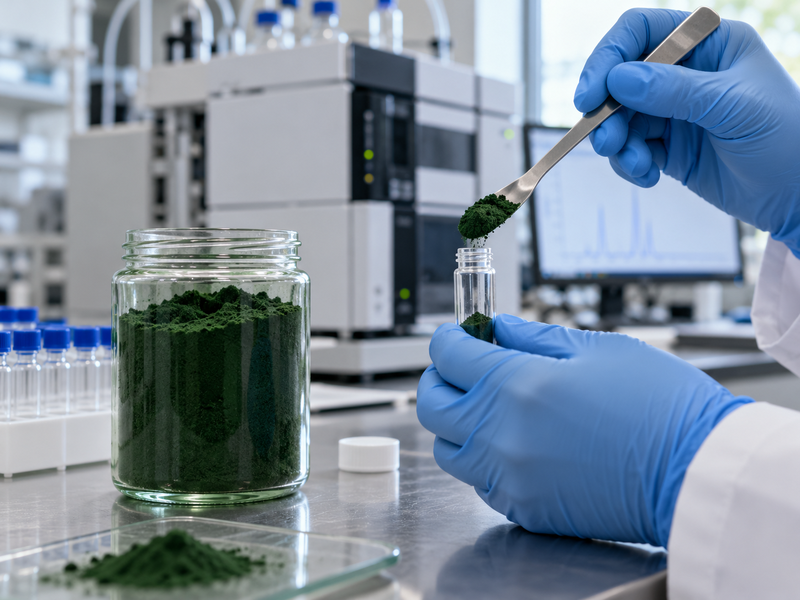
Match the product name, organism identity, lot code, production date and sample code across the bag, certificate of analysis and amino acid report. Ask whether the laboratory tested whole dried biomass or a protein extract. Those materials have different composition and are not interchangeable. If the supplier sends a typical historical profile, keep it for screening only; arrange a report from the commercial lot before approving a nutrient-sensitive claim.
2. What does the report’s measurement basis mean?
Check whether results are grams per 100 grams of powder as received, grams per 100 grams of dry matter, or grams per 100 grams of protein. A large number on the last basis can look impressive while contributing little at the planned dose. Record moisture from the same lot before converting between dry and as-is values. Do not add individual amino acid percentages until their units and denominator match.
| Basis | Useful for | Conversion question |
|---|---|---|
| As received | Formula and label calculation | Was moisture measured on this lot? |
| Dry matter | Comparing manufacturing lots | What is the actual powder moisture? |
| Per 100 g protein | Comparing protein quality | How much protein is in one serving? |
3. Which amino acids need separate attention?
Look for every essential amino acid individually, not only a line labeled “total essential amino acids.” Histidine, isoleucine, leucine, lysine, methionine, phenylalanine, threonine, tryptophan and valine have distinct roles in a protein-quality assessment. Confirm how the laboratory handled amino acids that can be lost or altered during acid hydrolysis, especially tryptophan and sulfur amino acids. A blank cell is not zero; ask for the method or a separately tested result.

4. Does crude protein validate the amino acid sum?
Use crude protein as a consistency check, not as proof that every gram is usable protein. Nitrogen-to-protein conversion can differ by method and material. Ask the laboratory which conversion factor it used, and compare the result with the amino acid sum on the same basis. A discrepancy warrants a method review before procurement writes a guaranteed number into a contract. The commercial biomass study also distinguishes overall composition from protein quality and digestibility.
5. How does the planned serving change the decision?
Multiply each measured amino acid concentration by the amount of spirulina actually added to one finished serving. Then account for manufacturing loss, if your process has evidence of it, and assess the whole formula. A powder tested at 60% protein does not make a beverage with a small spirulina addition a high-protein product. Have regulatory staff check any proposed claim in the destination market using the final product’s analytical and formulation records.

6. What should be in a supplier comparison sheet?
Compare like with like: identical units, matched moisture basis, clearly stated analytical methods and current lot codes. Separate composition from purchasing terms. A slightly different amino acid profile may be immaterial if the ingredient is used for color or flavor, while a protein-positioned formula may require tighter limits. The comparison below is a decision record, not a universal pass/fail specification.
| Evidence | Supplier A | Supplier B | Buyer action |
|---|---|---|---|
| Named lot and as-is basis | Record | Record | Confirm same basis |
| Essential amino acids | Record each | Record each | Calculate per serving |
| Protein method | Record | Record | Resolve method differences |
| Commercial repeat lot | Sample | Sample | Test variability |
7. When should a second laboratory be used?
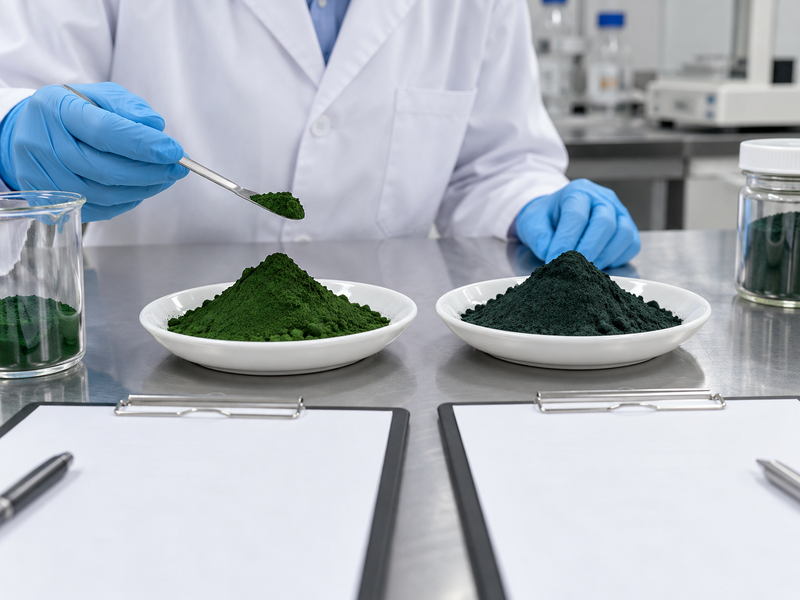
Commission a qualified independent test if a nutrient claim, contract guarantee or large-volume substitution depends on the profile. Send sealed retained samples under an agreed sampling plan. Ask both laboratories to report the same units and preparation method, then investigate disagreement before averaging results. A second test is most valuable when it resolves a specific decision rather than merely adding another certificate to the file.
8. What belongs in the purchase specification?
State the ingredient identity, named analytical methods, reporting units, selected amino acids, moisture basis, agreed tolerances and how out-of-specification results will be handled. Avoid turning a single research paper or attractive sample into a permanent guaranteed composition. Review the first commercial delivery against the approved trial sample, then trend subsequent lots before tightening limits. Keep claim approval separate from supplier acceptance.
FAQ
Is total protein enough? No. It does not show the amounts of individual amino acids or their contribution per serving.
Can a literature table replace a lot report? No. Published work demonstrates possible composition, not the value in a particular shipment.
Should results be dry-basis or as-is? Keep both if useful, but use as-is composition for formula and serving calculations.
Does a high amino acid sum prove digestibility? No. Digestibility is a separate question requiring appropriate evidence.
When should the buyer lock a numerical guarantee? After the method, sample identity and repeat-lot variation have been checked.
For a matched ingredient sample and quote, send your intended application, dose, target amino acid criteria, annual volume and destination. Ask for the current specification and lot-linked report rather than a generic nutrition table.