
A U.S. buyer can receive a convincing spirulina powder sample and still be unable to release the purchase. Its importer file may lack a defined foreign supplier, process information, hazard review, verification rationale, or the identifier needed at customs entry. Spirulina powder FSVP importer documentation is therefore a pre-order decision: can the U.S. importer demonstrate how it will verify this specific food from this specific supplier under the applicable Foreign Supplier Verification Programs (FSVP) rules?
The FDA’s FSVP guidance explains the framework for imported human and animal food. SpirulinaCN’s spirulina page describes whole green biomass powder and batch documentation to request. This article focuses on the U.S. importer’s evidence and decision record; the importer, not an overseas seller, determines its own legal path for the exact use and entry.
Contents
- Who is the FSVP importer for this transaction?
- Is this food ingredient or dietary supplement component?
- How should the imported food and supplier be defined?
- What belongs in the hazard review?
- Which supplier records are worth requesting first?
- How is a verification activity chosen?
- What if a document reveals a gap or failure?
- Which entry data must align with the FSVP file?
- How should samples and COAs be used?
- What makes the file ready for a purchase order?
1. Who is the FSVP importer for this transaction?
Identify the U.S. owner or consignee of the food at the time of entry. Under 21 CFR 1.500, if there is no U.S. owner or consignee then the foreign owner or consignee’s U.S. agent or representative may be the FSVP importer, with the required signed consent. Do not infer the answer from the Incoterm, customs importer of record, or the name on a freight invoice.
These roles can overlap, but the FSVP definition has its own test.
Write down the entity’s legal name, U.S. contact, responsible team, and handoff to the customs broker. If a distributor imports and resells the spirulina to a supplement brand, the distributor and brand should establish who actually meets the FSVP importer definition for that entry. A contract can allocate who supplies data, but it cannot make the legally defined importer disappear.
The importer should arrange qualified personnel for required FSVP activities and preserve an auditable file under the FSVP regulation.
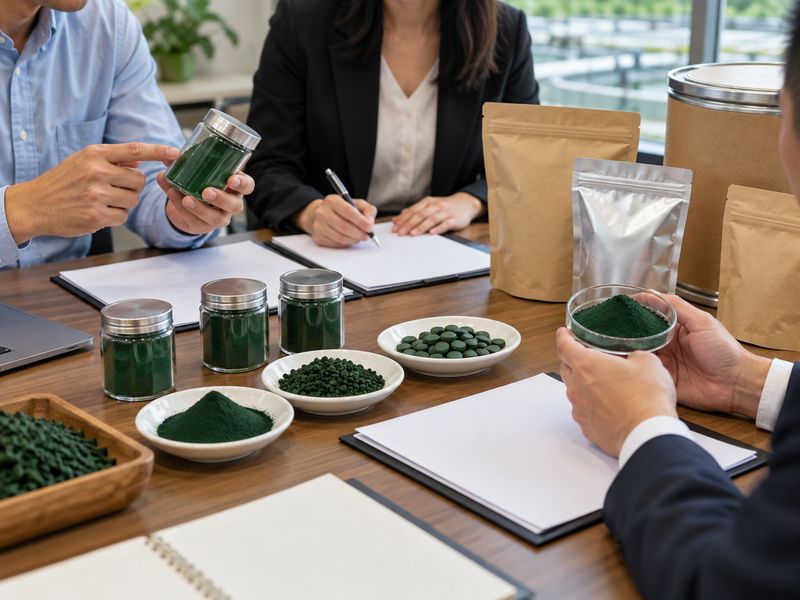
| Party | Ask before ordering | File output |
|---|---|---|
| U.S. buyer | Who owns or consigns food at entry? | FSVP importer determination |
| Foreign supplier | Which facility makes the food? | Named production site |
| Broker | Whose FSVP identity will be entered? | Entry instruction |
| Brand customer | What is the final use? | Food-category decision |
2. Is this food ingredient or dietary supplement component?
The same green powder can be sold into a beverage blend or into supplement manufacturing, but the importer should not assume the FSVP requirements are identical. The FDA’s FSVP key requirements and FSVP guidance describe modified provisions for certain dietary supplements and components when specified supplement current good manufacturing practice conditions are met.
Eligibility depends on what the importer or its customer does and documents under 21 CFR part 111; merely writing “supplement grade” on the invoice is insufficient.
For a conventional food ingredient, establish the standard FSVP path unless a specific exemption or modification applies. For a component that will become a dietary supplement, have the importing organization’s regulatory lead map the actual 21 CFR 1.511 criteria. The importer should document the reasoning, not ask the supplier to make an unsupported legal declaration.
Also separate whole spirulina powder from blue spirulina extract, which has a different composition and may be bought for a different regulatory use.
| Proposed use | Starting question | Evidence to retain |
|---|---|---|
| Beverage or food blend | Which standard FSVP duties apply? | Intended-use and hazard file |
| Supplement component | Do §1.511 conditions actually apply? | Customer/CGMP role and specification record |
| Finished supplement | Which modified route, if any, fits? | Product and importer determination |
| Color extract | Is this even the same food/SKU? | Separate identity and composition record |
3. How should the imported food and supplier be defined?
Build the file around a specific food from a specific foreign supplier. Use a precise item description: Arthrospira platensis whole powder, the agreed grade, relevant particle size, pack type, and intended use. Attach the versioned TDS and the purchase specification. If the supplier offers a higher-protein grade or a different drying or milling route, determine whether the importer must revise its evaluation rather than silently treating both as one item.
Name the actual establishment that manufactures or processes the food, along with the seller if different. A trading company’s address, exporter’s legal name, and production facility can all differ. Ask for a process flow that traces cultivation or incoming biomass through harvest, drying, milling, packing, storage, and shipment. The importer can then connect each potential hazard and control to an actual step and accountable facility.
Keep lot identifiers consistent across sample label, COA, pack mark, and invoice. A sample from a convenient demonstration lot can help formulation, but it does not establish what facility and controls will produce the first bulk order. Request a representative commercial-grade sample with its lot documentation and note any differences from the proposed production lot.

4. What belongs in the hazard review?
The importer needs a documented analysis of known or reasonably foreseeable hazards for the food and whether any require a control, as described in 21 CFR 1.504. A practical spirulina review considers microbiological hazards, environmental contaminants, heavy metals, potential toxin concerns, chemical residues, undeclared allergens introduced by shared handling, and physical foreign material as relevant to the actual process. It does not declare every hazard present in every supplier lot.
The decision is evidence-based and tied to where the material is made and how it is controlled.
Ask what the supplier controls before and after drying, whether contamination can be introduced during milling or packing, and how release testing relates to preventive measures. A low result on one COA is evidence for that lot, but it does not by itself explain process controls or represent every future lot. A supplier hazard-control summary, process flow, specifications, and representative testing trend help the importer assess the supplier’s controls.
The importer should state which hazards it considers significant, the basis for that conclusion, and who controls them. If a later U.S. processor controls a hazard, document that path under the relevant regulatory provision rather than leaving an unexplained blank. Regulatory review should also check whether any separate requirements apply to the imported food.
| Hazard-review prompt | Supplier evidence to request | Importer conclusion |
|---|---|---|
| What could occur in cultivation? | Water and biomass controls | Relevant or not, with basis |
| What changes during drying? | Time/temperature and hygiene summary | Control location |
| What can enter during packing? | Metal/foreign-material and sanitation controls | Verification need |
| What does each lot test? | Specification and methods | Release role versus process control |
5. Which supplier records are worth requesting first?
Request the current TDS, full product specification, representative recent lot COAs, test methods for consequential limits, process and hazard-control summary, manufacturing facility identity, traceability description, and relevant food-safety audit evidence. These are requests, not representations that a supplier has already provided them. Ask for an English-language explanation when a document uses ambiguous abbreviations or combines several grades under one heading.
Rank the documents by the questions they answer. A third-party food-safety certificate can support evaluation, but its site name, activity, and scope must match the manufacturer and spirulina process. A COA must identify the lot, tested analytes, results, units, limits, and methods clearly enough for the importer to compare with the purchase specification. A process flow tells the importer where a hazard may be controlled, but the importer should seek evidence that those controls are implemented.
Keep a request log. Record document title, version, date received, facility and SKU covered, reviewer, and unresolved question. This prevents a sales packet from becoming a collection of unreviewed PDFs. FDA’s FSVP guidance is the primary reference for what the importer must do; supplier evidence only supports that work.

6. How is a verification activity chosen?
FDA’s 21 CFR 1.505 describes foreign supplier evaluation and approval; §1.506 describes supplier verification activities. The importer should select activities according to the hazard and supplier assessment rather than selecting the cheapest document on a fixed checklist. Possible activities include an onsite audit, sampling and testing, or review of relevant supplier food-safety records, subject to the rule’s conditions.
Document why the chosen activity and frequency fit the risk.
An audit report can be useful only if the scope covers the actual spirulina production site and relevant controls. Testing a commercial lot can address a defined specification question, yet it has sampling limits and may not replace process verification. Record who performed each activity, the method, the outcome, and what was done with an adverse finding. If another entity performs work, the importer should determine how it reviews and relies on that work under the rule.
Do not confuse qualification of a supplier with release of a single lot. The file needs both an approved-supplier decision and a receiving plan that checks the material delivered matches the approved specification.
| Verification choice | Useful when | Key limitation to record |
|---|---|---|
| Onsite audit | Process controls need direct review | Scope and auditor competence |
| Lot sampling/testing | A specific analyte needs evidence | Sampling does not prove every unit |
| Supplier record review | Controls have reviewable records | Versions and authenticity |
| Combination | Hazards warrant layered evidence | Who closes conflicting results |
7. What if a document reveals a gap or failure?
Define a hold point before reviewing the first document. Examples: a COA lacks a required contaminant result, the named manufacturer differs from the approved facility, a process step is missing from the flow chart, or an audit finding remains open. Send precise questions to the supplier and record responses. Do not reinterpret a missing test as a passing result or swap in an unrelated certificate.
Under 21 CFR 1.508, the FSVP importer must take appropriate corrective action if it determines a foreign supplier of food does not produce the food in compliance with applicable requirements. The action depends on circumstances. It may involve stopping purchases, investigating, or reassessing the supplier; the importer needs its own documented decision. A commercial deadline does not close a safety or compliance finding.
Set triggers for reassessment: facility change, process or source change, repeat out-of-specification results, recall, new hazard information, or a significant difference in the product sold. Request notification expectations in the supply agreement. The approved file should be maintained as a live record, not a one-time onboarding form.
8. Which entry data must align with the FSVP file?
At entry, the FSVP importer must be identified as required by 21 CFR 1.509. FDA’s FSVP at-a-glance page identifies the DUNS number as the unique facility identifier FDA recognizes for this purpose. The broker should receive the correct legal entity and identifier before the shipment arrives, along with a commercial description matching the approved food. The importer should verify current entry instructions with its broker and FDA resources.
Cross-check the manufacturer, supplier, product description, lot, net quantity, and importer data against the purchase order, invoice, packing list, and FSVP file. An entry line that describes “algae powder” while the file approves a specific spirulina grade invites unnecessary questions. This is an operational alignment exercise; it is not a claim that an FSVP file alone grants admission.
Importers may have separate duties, including prior notice and applicable FDA facility-registration or labeling requirements. Treat those as distinct checks rather than assuming the FSVP record completes the entire import process.
| Data element | File source | Entry check |
|---|---|---|
| FSVP importer legal identity | Importer determination | Same entity and UFI |
| Food description | Approved specification | Same SKU and use |
| Foreign supplier/site | Evaluation record | Same actual manufacturer |
| Lot/quantity | PO and shipment records | COA and package marks agree |
9. How should samples and COAs be used?
Use samples to test the application and verify identity against the proposed grade. Use COAs to review batch-specific analytical results against the buyer’s agreed limits. Neither replaces the importer’s hazard analysis, supplier evaluation, or verification procedure. A sample intended for a beverage blend should undergo the formulation test that matters to that blend; a supplement component may require a different identity and specification protocol.
Ask whether the sample came from the same site and process as the bulk offer. Save the sample lot, date, grade, and associated COA. When the first purchase lot is allocated, request its own COA and compare it with the approved specification. If a test result is close to a limit or the method changes, resolve that before shipment rather than after customs entry.
Avoid presenting FDA’s FSVP as a supplier certification. FDA does not issue a generic “FSVP-approved supplier” certificate through this rule. The importer maintains its own program and records for foods it imports, according to the applicable requirements. A supplier can make that work easier by furnishing accurate, traceable information.

10. What makes the file ready for a purchase order?
Before placing the first order, the importer should be able to point to a named FSVP importer, defined food and supplier, documented applicability decision, hazard analysis or documented modified pathway, supplier evaluation and approval, verification plan, corrective-action process, and entry identifier. The PO should specify the approved SKU, facility, quality limits, required lot documents, and advance notice for relevant changes. The broker handoff should use the same data.
Ask a second reviewer to trace one line from approved sample to proposed bulk shipment. Can the reviewer locate the manufacturer’s identity, the current TDS, an applicable COA, the control evidence, and a responsible person for open questions? If not, the record is not yet operational. Resolve the gap before shipment planning. The importer may need a different path for each destination or end use; do not turn a U.S. food-ingredient decision into a universal certificate.
FAQ
Q1. Can an exporter act as the FSVP importer? The regulation defines the importer by the U.S. owner/consignee at entry or, when there is none, a designated U.S. agent or representative meeting the rule. Determine the specific transaction’s role.
Q2. Does a food-safety certificate replace the FSVP file? No. It may be evidence for part of supplier evaluation, depending on scope and review, but the importer retains its own duties.
Q3. Are supplement components exempt from FSVP? Do not assume so. Modified requirements can apply under specified conditions; the importer must document the applicable route.
Q4. Is a passed COA enough to approve the supplier? No. It addresses tested attributes of a lot, while FSVP also considers hazards, supplier controls, verification, and corrective actions.
Q5. Does the FSVP importer have to be the customs importer of record? The definitions differ. Coordinate both identities with the broker and apply the FSVP definition to the actual entry.
Next step
For spirulina powder FSVP importer documentation, contact SpirulinaCN with the food application, target specification, anticipated quantity, U.S. destination, and proposed importer role. Request the exact SKU’s TDS, process and hazard-control summary, facility identity, representative lot COA, and traceability details for your importer’s review before quoting a commercial lot.