
Spirulina biomass phycocyanin content testing is easily confused with the color value of a blue spirulina extract. Whole green biomass contains many components; an extracted blue ingredient is a different product. For a buyer of raw spirulina powder, the decision is whether the measured pigment in that powder matters to the finished formula, and whether the offered lot will deliver consistent performance.
A study of Arthrospira platensis cultivation measured pigment content under specified growing conditions. Its results show that cultivation context and analytical method matter; they do not certify a supplier’s commercial powder. Ask for a current whole spirulina ingredient sample and lot-linked test.
1. Are you buying whole biomass or blue extract?
Confirm the product identity before comparing numbers. Whole biomass appears green because chlorophyll and carotenoids coexist with phycocyanin and other components. Blue extract is processed to concentrate the blue fraction and may contain a carrier. A biomass report in mg/g cannot be compared directly with an extract color grade such as E18. Put the material type at the top of every quotation and laboratory request.
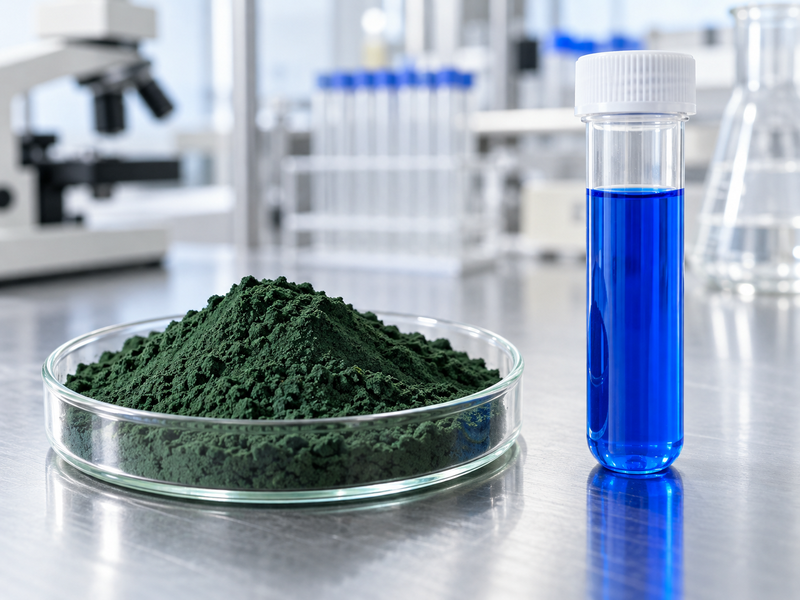
2. How was the pigment released from the powder?
Phycocyanin is measured after a defined extraction from the biomass. Ask the lab for sample mass, extraction liquid, temperature, time, disruption method and clarification step. Incomplete release can understate the amount in the powder. The published research describes spectrophotometric measurement in its experimental workflow. A named wavelength alone is insufficient to compare two laboratories without their preparation methods.
| Report element | Why it matters |
|---|---|
| Named powder lot | Links the result to supply |
| Extraction protocol | Determines pigment recovery |
| Calculation and wavelengths | Supports reproducibility |
| Moisture basis | Enables lot comparison |
3. What do the units mean?
Request milligrams of phycocyanin per gram of whole powder as received, plus moisture if the lab also reports dry-basis values. A value per milliliter of liquid extract needs the extraction volume and starting sample mass before it describes the raw material. A purity ratio is a separate property of an extract, not the phycocyanin mass fraction of the original biomass.
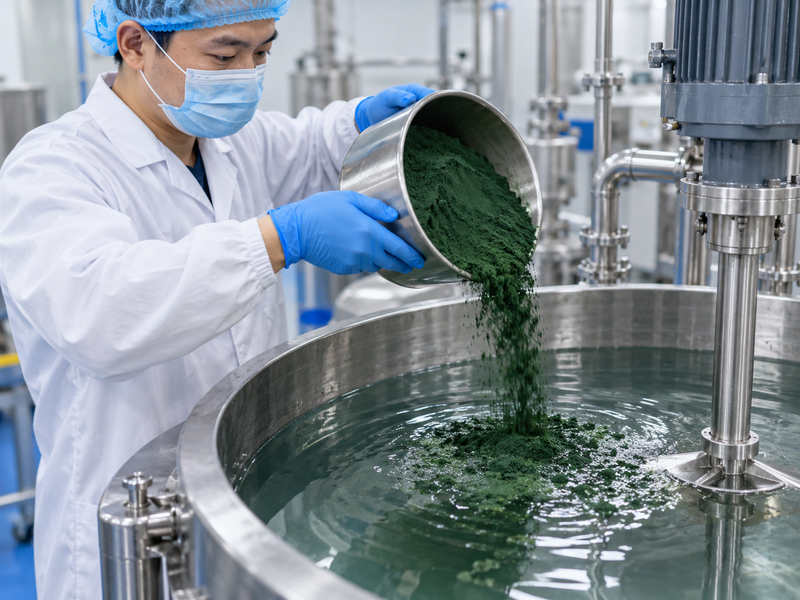
4. Will the assay predict color in your formula?
Treat the assay as one input. Make a product control and two candidate-lot trials at the same addition level. Record color before and after the actual process, flavor and sediment or dispersion. Heat, pH, light and other ingredients may change what the consumer sees. If the objective is strong bright blue rather than whole-algae nutrition, evaluate the blue spirulina extract range as a separate ingredient decision.
5. How should lot variation be assessed?
Request several recent commercial lot results generated with one method. Compare distribution and method uncertainty before setting a minimum. If only one attractive sample is available, commission a second lot and retain part of the first. A tight numerical limit based on one harvest can be costly and may not improve the finished product. Set a color test alongside pigment content where appearance is the actual requirement.
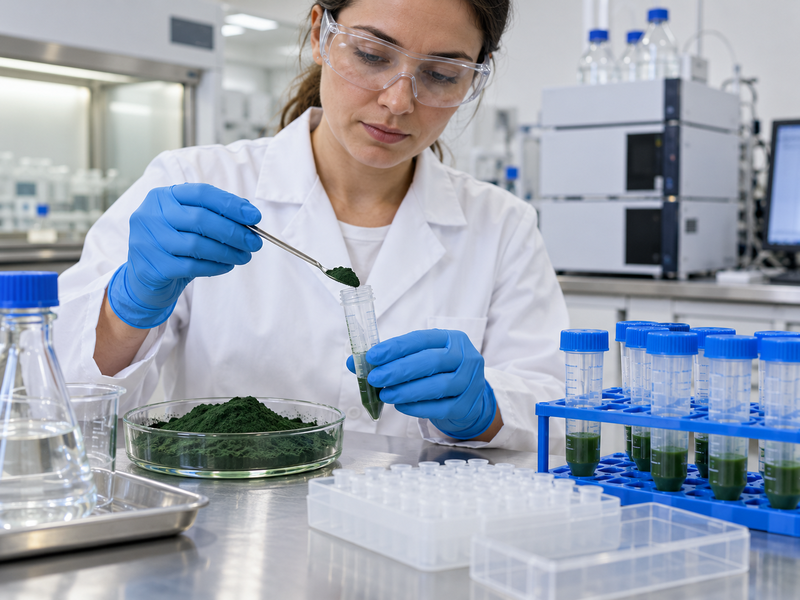
6. What happens during storage?
Use the supplier’s packaging and storage guidance, then test pigment and visual color at the receipt and use points relevant to your operation. Light, oxygen, moisture and temperature exposure should be recorded, not guessed from the powder’s age alone. Avoid publishing a guaranteed retention percentage without a study on the actual grade, package and conditions. Keep unopened retain samples for investigating later deviations.
| Observation | Ingredient test | Product test |
|---|---|---|
| At receipt | Pigment assay and powder color | Trial batch color |
| After storage | Repeat assay on retained lot | Finished-pack color |
| New lot | Same-method comparison | Same-dose comparison |
7. What other evidence must accompany a pigment result?
Check organism identity, microbiology, relevant contaminants, moisture, particle size and lot traceability. Pigment content does not establish food-grade safety. If a supplier promises a particular blue effect from whole green powder, ask for an application trial in your matrix. A blue extract’s carrier and labeling information are not interchangeable with a whole-biomass declaration.
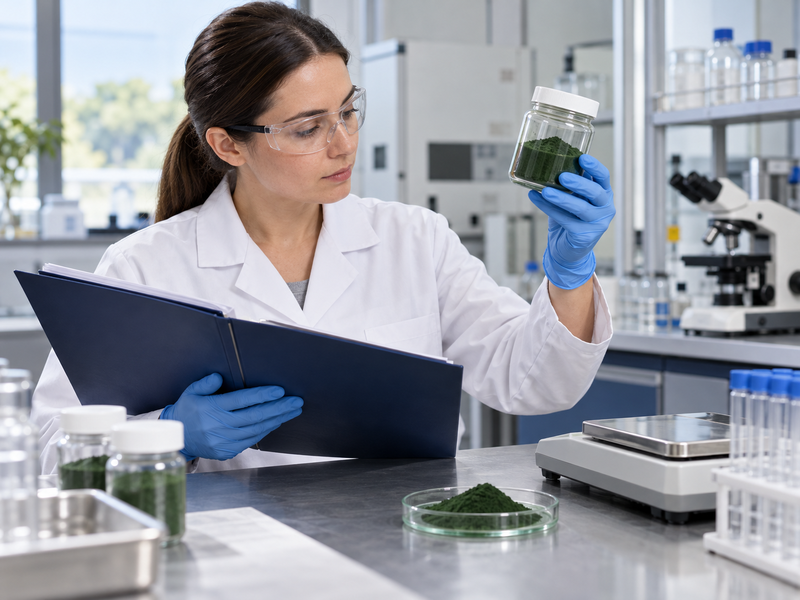
8. How do you write a usable purchase specification?
Name the whole-biomass grade, assay and sample preparation, units, moisture basis, acceptance range and handling of retest disputes. Specify the finished-product color or other functional gate separately. Approve one representative lot for production, then verify the first commercial shipment against the same criteria. Buyers who only need a general green ingredient can avoid paying for a pigment guarantee that does not affect the product.
FAQ
Is phycocyanin content the same as an E-value? No. One reports amount in biomass; the other is a color-value convention for extract products.
Can powder shade replace a pigment test? No. Use a defined analytical method.
Why do laboratories obtain different values? Extraction efficiency, sample condition and calculation methods can differ.
Does a high assay ensure stable color in food? No. Run the intended process and storage trial.
Should every buyer specify phycocyanin? Only when it changes a measurable purchasing or product decision.
Send your application, pigment or color target, intended dose, volume and destination to request the right raw-material grade and lot documents.