
A spirulina bakery formulation guide should begin with the baked product, not a generic powder percentage. Bread, muffins and cookies expose green biomass to different moisture, heat and sensory expectations. Build a controlled formula series and evaluate cooled, packaged products. In a bread study, flour strength influenced how spirulina affected product quality; that finding supports testing the actual flour and line rather than copying a single laboratory recipe.
Contents: 1 · 2 · 3 · 4 · 5 · 6 · 7 · 8 · 9 · 10
1. Which bakery product should be the starting point?
Fix format, serving and visual target
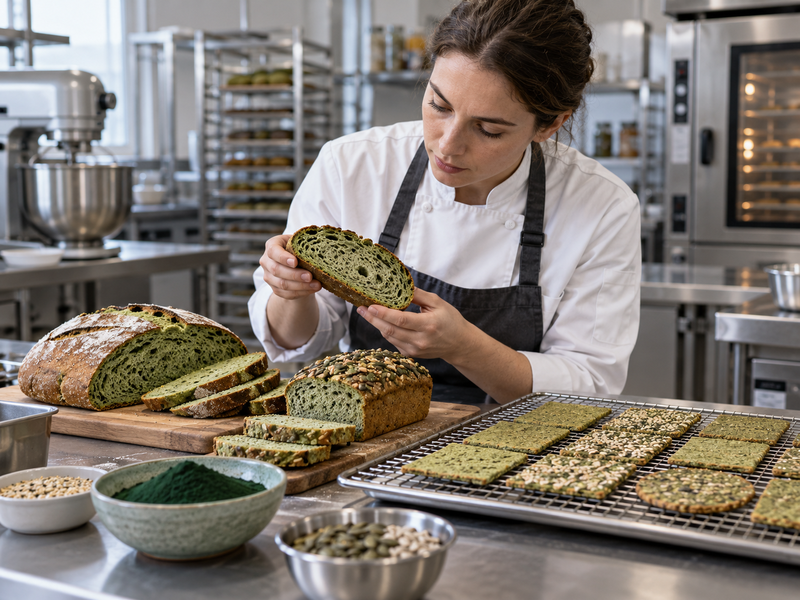
Yeasted bread, cake batter and biscuit dough distribute spirulina differently. Choose one commercial SKU for the initial trial. Record base flour, leavening system, fat, sugar, serving mass and target texture. Decide whether the customer should see a green crumb, a green swirl or a subtle tint. Dark crust can hide internal color; a pale cookie can make color variation conspicuous. Make an uncolored control under the same process conditions.
Define what success looks like after cooling and packing, not just in wet batter. A baker may love a vivid dough that turns olive in the oven. A green crumb can also imply an unfamiliar flavor, so test expectation and eating quality together. For a US conventional food, 21 CFR Part 117 sets the relevant human-food manufacturing framework for covered operations. The useful project brief: one baked item, one intended customer and measurable acceptance criteria.
2. How should the dose ladder be built?
Compare equal-process batches
Prepare several measured inclusion levels while holding flour and other ingredients constant or documenting replacement calculations. Note whether spirulina replaces flour or adds total solids; those two designs change hydration and nutrient calculations differently. Bake in randomized order where feasible to reduce oven-position bias. Evaluate mass, volume, crumb, color, aroma, taste and aftertaste after full cooling. A 2026 low-level bread study reported changes in color and sensory notes at its tested levels; results depend on that flour and method.
Set a sensory ceiling rather than selecting the darkest sample automatically. If a marketing claim needs more spirulina than customers like, revise the product concept or claim. Calculate finished-serving composition after baking, accounting for moisture loss. A raw dough percentage can misstate how much ingredient a consumer receives per portion. The decision point: the selected dose must satisfy baking behavior, taste and accurate declarations.
| Trial level | Record in dough | Record after baking |
|---|---|---|
| Control | Handling baseline | Color and texture baseline |
| Low | Mixing response | Subtle sensory effect |
| Middle | Hydration change | Appearance and flavor |
| High | Process stress | Acceptance limit |
3. What does spirulina do to dough or batter?
Measure structure rather than assuming protein helps
Spirulina powder adds non-gluten solids and can change water demand. In wheat bread, a higher general protein calculation does not mean stronger gluten development. Monitor dough mixing time, extensibility, gas retention and proof response. For cakes and muffins, observe batter viscosity, air incorporation and deposit weight. Cookies may spread differently when dry solids change. Compare each against the uncolored control.
Change water in small measured steps if needed, then repeat bake tests so hydration adjustments do not hide a dose effect. Record ingredient particle size and lot; a finer powder can distribute differently from coarser material. A bread study with different flour strengths found that flour selection influenced outcomes, reinforcing the need for a matrix-specific trial. A useful development note: describe the observed dough behavior and corrective change, not only the final recipe.
4. How can mixing improve color distribution?
Control when powder enters the system
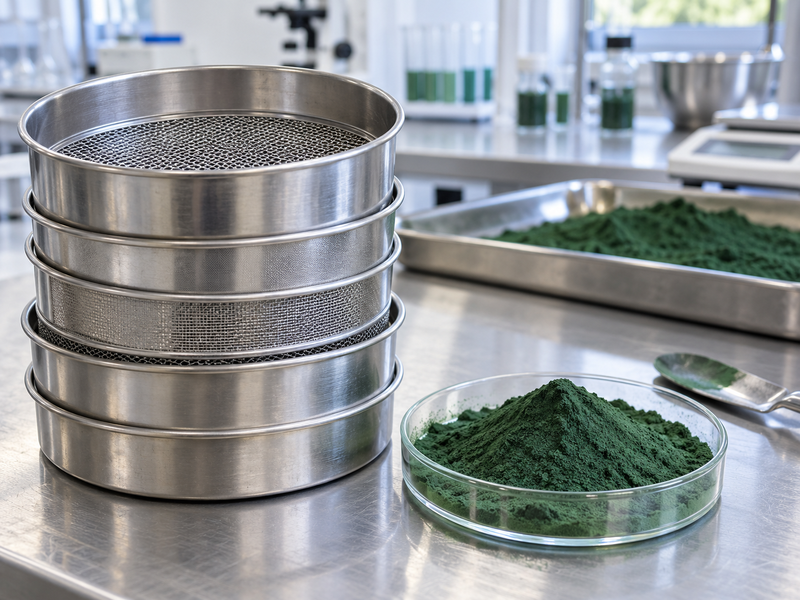
Sieve or premix spirulina with a compatible dry ingredient if the chosen process otherwise creates green clumps. In a batter, compare direct dry inclusion with a small controlled dispersion only when both routes fit plant operations. A liquid dispersion can improve visual uniformity but change total water and mixing energy. For a yeast dough, prolonged mixing to remove streaks may overwork the dough. Test a defined inclusion sequence at the commercial batch size.
Sample early, middle and late deposited portions. A bench bowl scraped by hand can appear uniform while a production mixer leaves pockets. Check powder retained on vessel walls and dust exposure during weighing. A visibly smooth batter does not prove exact spirulina content, so use a sampling plan where claims depend on a declared amount. The production goal: achieve even distribution without creating an unrepeatable manual step.
| Inclusion route | Possible gain | Risk to check |
|---|---|---|
| Dry premix | Fewer specks | Dust and segregation |
| Direct to mixer | Simple route | Clumps |
| Controlled slurry | Faster wetting | Extra water and hold time |
| Layer or swirl | Defined visual | Portion variation |
5. What should the heat trial measure?
Follow product temperature and exposure
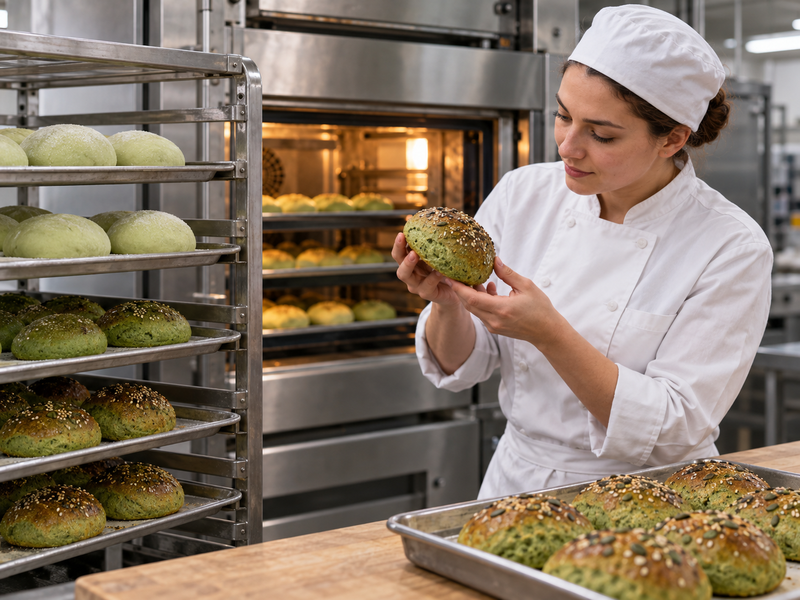
Oven setpoint is not the temperature history of the crumb or cookie center. Measure actual product temperature, bake time and residence position when evaluating color or nutrient retention. Compare fresh batter, partly baked samples where safe and fully baked cooled product using consistent lighting. Never shorten a validated bake solely to preserve green appearance without checking microbiological safety and texture.
A study on spirulina-enriched bread investigated amino-acid outcomes through baking in its specific formula. That is not a blanket statement about every nutrient or bakery process. Track only markers relevant to the intended claim and use an appropriate test. If the product’s visual goal is a green interior, cut samples after full cooling because steam and crumb setting can change appearance. The useful evidence: paired thermal and quality data from the exact SKU.
6. How should sensory acceptance be checked?
Include aroma, bitterness and texture
Give panelists coded controls and spirulina versions in a consistent serving condition. Ask for specific descriptors: earthy or marine notes, bitterness, sweetness balance, crumb feel and aftertaste. A 2026 bread paper reported stronger bitter and marine-related notes in its enriched samples. A brand should test its own powder, flour and flavor system because processing and dose can alter perception.
Do not hide every sample in jam or frosting during the screening stage. Taste plain product before testing normal accompaniments. Include representative intended customers, then document panel limitations. A colorful product can win attention yet lose repeat purchase if taste disappoints. If a flavor adjustment helps, rerun shelf testing because new ingredients may affect stability or label obligations. A practical criterion: define acceptable sensory performance at the planned retail age, not only on bake day.
| Panel attribute | Example prompt | Decision use |
|---|---|---|
| Aroma | What appears on opening? | Ingredient and pack choice |
| Flavor | What lingers? | Dose and flavor system |
| Texture | Is crumb dry or dense? | Hydration and process |
| Appearance | Is green appealing? | Visual target |
7. What physical quality checks belong in the pilot?
Connect lab measures with line defects
Bread needs volume, crumb structure, slice integrity and staling checks. Muffins need dome, spread, moisture and crumb distribution. Cookies need spread, snap or chew and breakage. Establish a product-specific scorecard and compare each spirulina trial with the control. Record portion weight and bake loss, since changes in moisture can affect net quantity and nutrition per serving. Photograph a cut surface under fixed light.
Check line handling after cooling. Green powder may distribute unevenly in batter deposits, and finished pieces may crumble during wrapping. If a texture problem emerges, isolate whether dose, water, flour or bake profile caused it. Changing multiple factors at once makes a commercial recipe hard to control. What operations needs: acceptance limits linked to defects they can observe and actions they can take during a run.
8. How should shelf life be studied?
Test the actual packed baked good
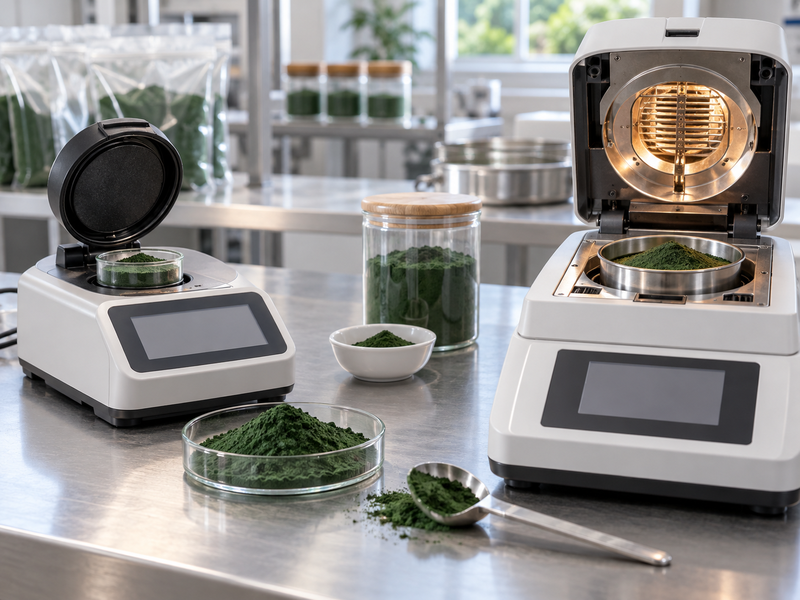
Choose the intended bag, tray or wrapper and study filled packs. Track appearance, odor, texture, moisture or water activity where relevant and microbiological status under the site’s hazard plan. Mold risk and staling differ between soft bread and dry cookies. A shelf-life period from a dry biscuit cannot support a moist muffin. Evaluate both unopened distribution and realistic after-opening conditions if claims or instructions address them.
Check color under planned store lighting, especially with transparent packs. Packaging material must suit the food-contact use and market; FDA’s food-contact guidance outlines US status checks. Accelerated storage can compare candidate packs but does not replace suitable real-time product evidence. The practical target: a baked good still meets sensory and safety criteria when a customer eats it, not just after production.
| Product | Likely shelf issue | Study endpoint |
|---|---|---|
| Soft bread | Staling or mold | Texture and microbiology |
| Muffin | Moisture and aroma | Crumb and odor |
| Cookie | Breakage or softening | Snap and pack integrity |
| Any green item | Color shift | Fixed-light comparison |
9. Which label questions need review?
Match claims to the cooled finished product
Confirm ingredient list, allergen declarations, net quantity and nutrition panel after formula changes. Wheat, egg, milk and nuts may come from the base rather than spirulina. If the brand uses a protein or other nutrition claim, assess the finished baked serving against destination-market criteria. Spirulina powder’s laboratory protein number does not automatically support a claim on a small cookie.
Use plain ingredient language and avoid unsupported therapeutic statements. If spirulina is called out on the front, verify its actual proportion and local naming requirements. Review artwork after line trials, because water, flour or flavor adjustments can change both nutrition and ingredient order. FDA’s food labeling guide is a general US resource; other destinations need separate checks. The final check: label, approved recipe and production record must describe the same baked good.

10. What should a bakery manufacturer hand over?
Transfer formula, process and evidence together
Ask for the named spirulina lot, quantitative recipe, ingredient specifications, mixing order, deposition or shaping data, oven profile, product temperatures, yields, defects and quality results. Include sensory reference samples, packaging specification and shelf-life protocol. A photograph of green crumb cannot show whether the process works at production rate. Agree on change notification for flour, spirulina grade, oven schedule and pack.
Approve early commercial lots against the pilot reference and investigate drift. Compare cost per released unit after scrap, not simply ingredient cost. If the same brand launches bread and cookies, maintain separate specifications and shelf-life records. The next move: select one bakery SKU, run a controlled dose series on the intended line and evaluate cooled packed product before scaling the idea to a range.
| Handoff item | Evidence | Owner |
|---|---|---|
| Formula | Signed version | R&D |
| Process | Line and oven records | Bakery |
| Quality | Texture and sensory data | Quality |
| Market | Artwork and claims review | Regulatory |
Check a recipe transfer on the larger line
Consider a bakery that likes a green loaf from its small test oven. It moves the recipe to a larger line with a different flour. The new dough may absorb more water or proof at another rate. Its crumb may also reach a different temperature despite the same oven setting. Keep the spirulina dose fixed while measuring flour properties, dough handling, proof time and crumb quality.
Log any water or mixing change as a new formula or process version. Then check taste and shelf behavior again. If the loaf darkens, compare measured crumb color with a retained sample. This helps separate normal variation from a real shift. Wait for cooled, packed commercial-line samples to meet the visual target before promising that result. The record also gives production a clear reference for later lots.
Use the same logic when extending the range from bread to muffins. A muffin batter has different aeration, deposit weight and cooling behavior, so its acceptance sheet should be written separately. Keep a control from each production run and compare finished pieces after a common cooling period. That makes routine variation visible before a supplier or oven change is blamed without evidence.
FAQ
Q1: Does spirulina stay bright green after baking? Results depend on formula and heat history; test the cooled product.
Q2: Does spirulina protein strengthen wheat dough? It does not replace the gluten network; measure dough and loaf structure.
Q3: Can one dosage work for bread and cookies? Different matrices need separate dose and sensory trials.
Q4: Can a green ingredient support a protein claim automatically? No. Apply finished-serving data and market rules.
Q5: Should shelf life be borrowed from the base recipe? Reassess the changed product in its intended package.
Next step
Use a spirulina bakery formulation guide as a trial plan for one defined product. Control dose and mixing, measure the actual bake exposure and judge cooled packed samples over time. Request pilot records and current ingredient documents before placing a production order. The resulting recipe can then be repeated with a clear quality standard.