
Spirulina flakes manufacturing for food brands turns whole wet biomass into dried fragments intended for visible texture or controlled portioning. Buyers may assume flakes are simply coarse powder, then encounter major differences in shape, breakage and handling. A useful approval plan examines how sheets or strands are formed, dried, broken, graded and packed, then trials them in the intended food. A primary analysis of commercial Spirulina flakes and powders found that physical form and chemical profile varied among products; its small sample set does not rank every supplier.
Contents: 1 · 2 · 3 · 4 · 5 · 6 · 7 · 8 · 9 · 10
1. What qualifies as a spirulina flake?
Define form with measurable geometry
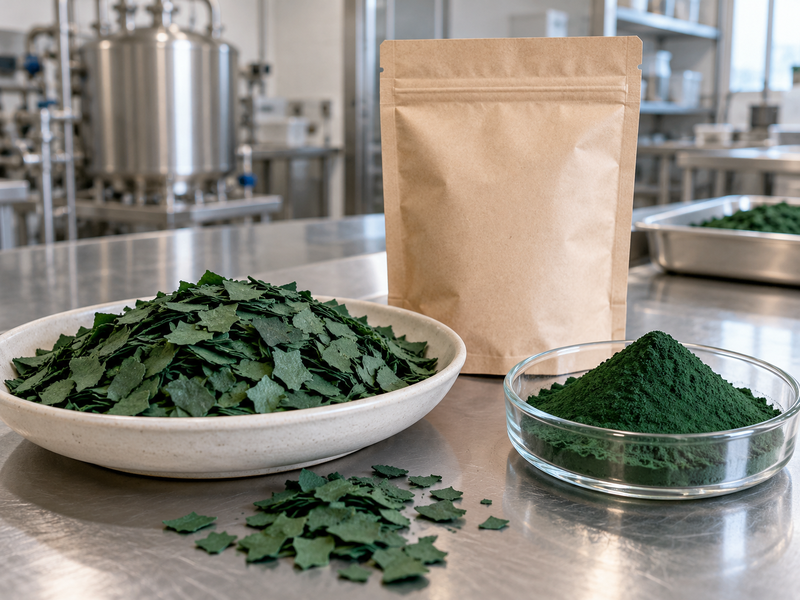
A flake is a dry fragment of whole spirulina biomass, often made from a dried layer or strand and broken to a target size. In commerce, the word can also describe granules or irregular fragments, so the buyer needs photographs and a physical specification. Ask for length or sieve range, thickness where meaningful, fines percentage and color reference. Begin with the finished food: do you need visible green pieces, controlled sprinkle size or a coarse ingredient that disperses after mixing?
The commercial product study observed that products sold as flakes differed in morphology. That supports using a supplier-specific definition rather than a generic dictionary meaning. Clarify whether the material is pure dried whole biomass or contains binders, carriers or seasonings. A food brand should not use a fish-feed flake description as a human-food specification. Link the flake definition to intended use, food-grade controls, lot COA and destination-market review. A photograph helps but cannot replace measured distribution and product identity.
| Form field | Buyer definition | Trial question |
|---|---|---|
| Fragment size | Sieve or length range | Will pieces be visible? |
| Thickness | Reference or measured range | Will texture suit food? |
| Fines | Maximum at receipt | Will pack become powder? |
| Composition | Whole biomass or blend | Does label match? |
2. How can wet biomass become a flake?
Follow forming, drying and breaking
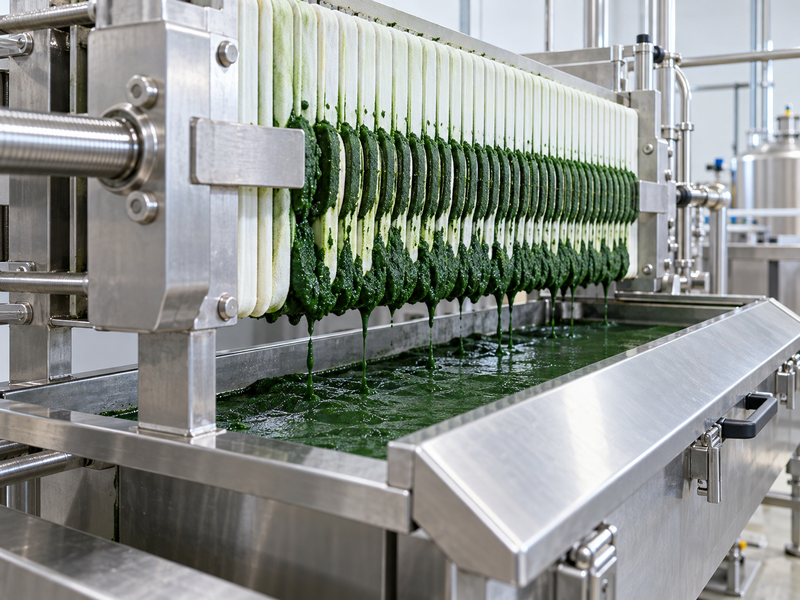
After harvesting and dewatering, biomass may be spread as a layer, formed into strands or otherwise shaped before drying. Once dry, it can be broken and graded to a desired fragment range. A primary Refractance Window drying study notes that film-based dehydration can create sheets or flakes under studied conditions. It illustrates a possible route, not the process used by every commercial seller.
Ask the supplier for its actual flow from wet cake to finished bag. Record contact surfaces, layer thickness control, dryer identification, breakage method, sieving and any rework loop. The hidden variable: mechanical handling after drying may determine final fragment size as much as the forming stage. If a factory crushes large sheets, repeated handling can produce fine powder that it removes or blends back. The buyer should know whether fines are a by-product, a controlled fraction or a different SKU. Request a representative production sample rather than a handpicked tray of attractive pieces.
3. Why does flake thickness matter during drying?
Connect geometry to moisture uniformity
Thick and thin areas can dry at different rates. A layer that looks uniformly green may still contain pockets with higher moisture or water activity. Ask how the supplier controls forming thickness and samples the finished product across the dryer or tray. A drying study using Refractance Window technology measured water-related properties under its process conditions, reinforcing the need to check the dried output rather than infer stability from appearance.
Define finished moisture and water activity limits with a named method, then review multiple production lots. A useful audit question: how does the facility find a thick patch or a poorly dried edge before it enters a bulk bag? If pieces are broken after drying, sample both large and small fractions. The dry flake may then absorb moisture during cooling or open handling, so packaging time and room conditions matter. The buyer can accept natural geometry variation while requiring uniform safety and storage performance.
| Stage | Variable | Check |
|---|---|---|
| Forming | Layer thickness | Spread consistency |
| Drying | Time and temperature | Finished moisture |
| Cooling | Room exposure | Water activity |
| Breaking | Fragment profile | Fines and oversize |
4. How should flake size and fines be specified?
Measure what arrives after transport
Set a target size band and maximum fines fraction based on the intended application. Sieve testing can quantify how much material passes or stays on defined apertures, although irregular flakes may orient differently during shaking. A photograph with scale and a simple dimensional check can complement sieving. The delivery reality: measure an unopened received pack after normal shipping because fragile flakes may fracture between factory and filling line.
Agree on the sample mass, sieve method, handling intensity and whether a broken fragment still counts as an acceptable flake. Store test samples in dry conditions to avoid clumping. If the product is sprinkled onto food, trial it through the actual feeder and package shaker. If it is mixed into dough, evaluate whether pieces stay visible or become powder. A supplier can screen fines before packing, but transport resistance depends on pack fill and handling. Write a receiving criterion that represents the product’s real use, not only a factory-exit photograph.
5. Do flakes and powders have the same sensory profile?
Compare them at equivalent biomass dose
Flakes may deliver a burst of flavor when bitten, while fine powder distributes more evenly through a recipe. Perceived color can also differ because visible pieces draw attention even at a modest dose. The Italian commercial product study compared flake and powder samples and observed differences, but product methods and sources varied; it cannot prove that physical form alone caused each result. Keep the trial controlled: compare equivalent whole-biomass amounts from matched lots if possible.
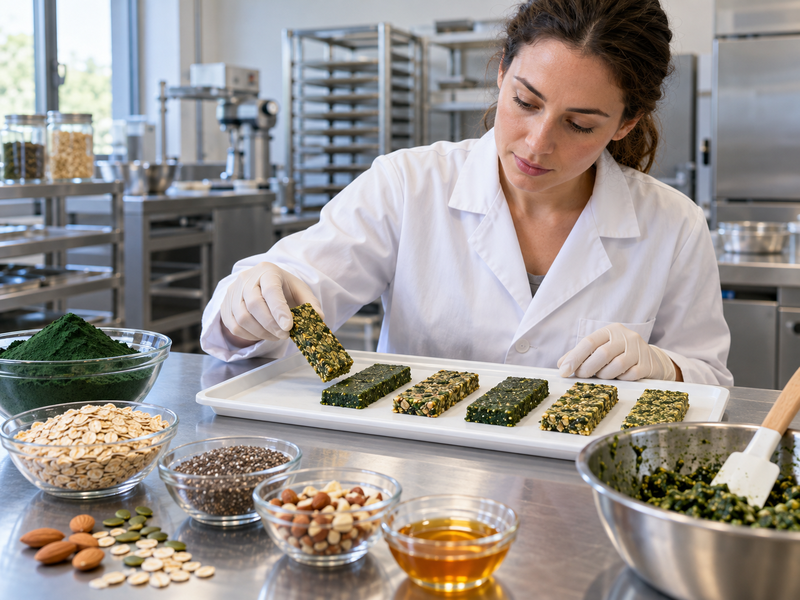
Evaluate dry aroma, flavor after hydration and finished-food appearance. In a bar, a flake may provide visible green flecks but feel fibrous. In a soup or seasoning, it may soften and spread flavor differently from powder. A powder can offer smoother color but more uniform marine notes. Neither is universally better. Define the sensory outcome customers should experience and test after normal shelf storage. A brand should verify whether its package keeps the chosen profile acceptable through the planned life.
| Food format | Flake advantage to test | Powder advantage to test |
|---|---|---|
| Bar | Visible pieces | Even color |
| Seasoning | Garnish texture | Uniform dosing |
| Pasta | Speckled appearance | Even dough color |
| Beverage | Usually less suitable | Easier suspension trial |
6. Which food applications suit flakes?
Use appearance as a deliberate design choice
Flakes can suit visible inclusions, toppings, seasoning blends and products where a distinct botanical-looking fragment supports the brand. They may be less suitable where a smooth texture or uniform green color is required. The choice depends on recipe moisture, mixing shear, heat and serving format. Ask the production team: will the flake survive the mixer and still look intentional after packaging?
Run small tests in a bar, cracker topping or seasoning base before ordering a large quantity. Measure breakage at each process step and observe how fragments change during storage. A primary study of physical forms in pasta and meat analogue models found that biomass form affected food properties in those systems, supporting application-specific trials. It does not predict how a different flake will behave in your recipe. Check dose, label implications and sensory fit against a powder alternative on the same biomass basis.
7. What hygiene and safety checks belong in flake production?
Keep the wet and dry stages controlled
Wet biomass handling, forming surfaces, dryer conditions, cooling and breakage equipment all contact the ingredient. Ask for sanitation records, hold-time limits and controls against foreign material after drying. Larger pieces can conceal uneven drying, so moisture and water activity sampling should reflect geometry. FDA explains that blue-green algae products require applicable manufacturing controls. A flake shape does not change that obligation.
Request finished-lot contaminant and microbiological results appropriate to the intended use and destination. Confirm that the COA covers the actual flake lot, not a powder from the same culture. The trace question: can the supplier identify every wet harvest and dryer run contributing to one flake bag? If crushed oversize is reworked, the rework rule must preserve identity and status. A tidy sample tray does not prove the bulk lot is clean or uniformly dry.

| Control | Evidence to request | Why it matters |
|---|---|---|
| Wet hold | Time and temperature | Intermediate quality |
| Dryer | Run and moisture map | Even drying |
| Breakage | Cleaning and foreign-body check | Dry-stage hygiene |
| Release | Lot-specific COA | Shipment decision |
8. How should flakes be packed for bulk supply?
Protect shape and dryness together
Bulk packaging must limit moisture ingress and physical breakage. A bag filled too loosely can allow fragments to move and fracture; an overfilled or heavily stacked package can crush them. Ask about liner barrier, seal method, fill weight, carton support and stacking rules. Review the route: a pack that works for local delivery may arrive with excess fines after long-distance freight.
Request a transport trial or historical received-pack data. Compare fines and water activity before and after shipment. Include handling instructions for customers who will open a bag repeatedly. If the brand repacks flakes into smaller retail pouches, run a separate trial on the new equipment and package. The supplier’s shelf-life data for bulk bags will not automatically validate a retail pouch. Document pack integrity and lot code location so receiving staff can quarantine damaged units without losing traceability.
9. How should flakes be compared with powder commercially?
Calculate value at finished-product level
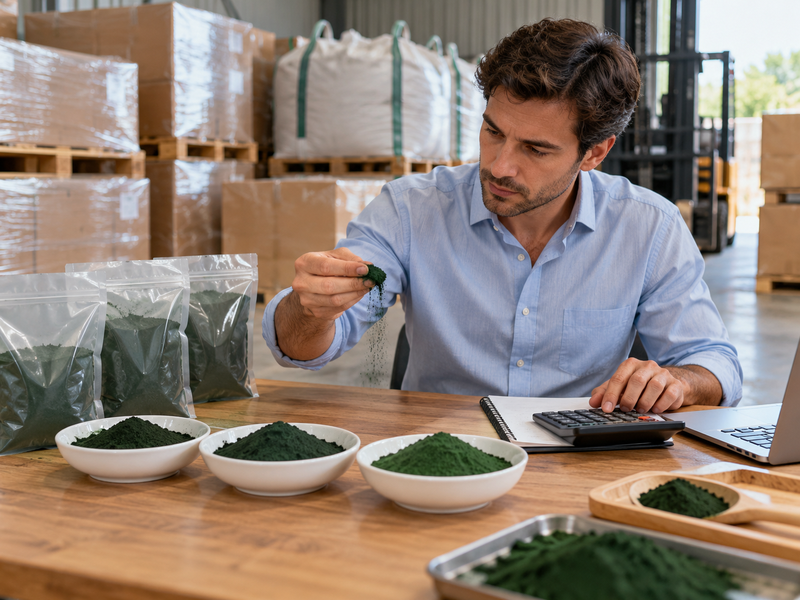
Compare accepted kilograms on the same whole-biomass and testing basis, then account for dose, fines loss, feeder performance and consumer response. A flake can cost more to handle but create an appearance that a powder cannot. A powder may blend faster and yield fewer packaging complaints. Price is only one row: include the production effect and the level needed for the intended visual or sensory outcome.
Ask for matched samples, current quotations and lot COAs. Test both in the same formula and retain finished samples for storage review. Where the Spirulina CN website describes a flake grade, attribute the statement to the site and verify actual size, composition and batch status before using it in your commercial claim. The commercial flake-and-powder study supports treating products individually, not assuming one form has a fixed nutrient or pigment advantage.
| Cost driver | Flake check | Powder check |
|---|---|---|
| Purchase | Lot and pack basis | Same basis |
| Line loss | Fines and breakage | Dust and residue |
| Dose | Visual and flavor target | Color and flavor target |
| Storage | Shape retention | Flow and caking |
10. When is a flake grade ready for a food launch?
Approve the form you can manufacture with
Approve when the supplier defines pure biomass identity, flake geometry, fines, moisture, water activity, sensory profile and contaminant release for the intended market. Confirm that production lots meet those limits and a realistic shipping trial protects the form. Then test flakes on your line and through your retail shelf-life program. The final gate: the flake must still look, handle and taste right after the steps your customers will actually see.
Write notification rules for dryer, forming thickness, breakage method, grading and packaging changes. Retain a physical reference sample and a photograph with scale. A brand can then resolve future size disputes without relying on vague terms such as “large flakes.” Where powder is a stronger fit, choose it openly; the two forms serve different design goals. The qualified grade is the one supported by records and by a successful finished-food trial.
FAQ
Q1: Are flakes simply coarse powder? No. Their sheet or strand origin, shape and breakage behavior can differ from milled powder.
Q2: Do flakes contain more nutrients? Form alone cannot establish that; compare tested lots and processing history.
Q3: Can flakes work in beverages? They may create visible particles and sediment, so run a beverage trial before approval.
Q4: What is the main shipping risk? Breakage into fines and moisture exposure both need evaluation.
Q5: What should be on a flake COA? Lot-linked identity and safety results, plus agreed moisture, water activity and physical criteria.
Trial the fragment customers will see
Request production samples in their real bulk pack, test size after transport and run the flakes through your recipe and line. A clear physical specification and current lot records let procurement buy a repeatable ingredient while product teams protect the appearance they designed.