
Spirulina extract for natural blue sprinkles should be judged on the tiny finished decoration, not on a liquid color swatch. Small sugar strands and nonpareils magnify uneven coating, lose color as dust during handling and may bleed into pale frosting or ice cream. FoodGrid’s commercial blue sprinkle ingredient list shows spirulina extract in a finished decoration, confirming a relevant use case without proving that another substrate or process will pass.
This guide gives a manufacturer a coating, drying and transfer trial that leads to a specific ingredient request and viable cost calculation.
Contents
- How should spirulina extract for natural blue sprinkles be specified?
- How should the substrate be characterized?
- What extract and carrier details matter?
- How should coating uniformity be tested?
- What drying endpoint prevents clumps?
- How should abrasion and dust be measured?
- How can transfer into toppings be checked?
- What does U.S. color regulation say?
- How should cost and yield be compared?
- When is a blue sprinkle grade approved?
1. How should spirulina extract for natural blue sprinkles be specified?
Define the decoration before the color
Specify shape, size distribution, base composition, intended surface finish, blue shade, bulk-pack size and customer use. Sugar strands, nonpareils and shaped decorations have different exposed area and handling stress. A sprinkle mixed into ice cream faces a different moisture and temperature interface from one applied to a dry cookie. Set the commercial target: a uniform visible blue, acceptable free flow, low dust, no unwanted flavor and limited color transfer at the declared use.
Record the finished product’s destination markets and intended ingredient list. A color-preparation carrier can affect the sprinkle label even when used at a small amount. A commercial sprinkle example lists sugar, oils, starch, spirulina extract and other ingredients; it should be treated as that manufacturer’s formula, not copied as a recipe. Decide how QA will judge shade on a random sample rather than selecting the best-looking pieces for a photograph.
| Product field | Define | Why it matters |
|---|---|---|
| Shape and size | Strand, pearl, nonpareil | Surface area and breakage |
| Base | Sugar, starch, fat or glaze | Wetting and adhesion |
| Customer use | Frosting, ice cream, dry bakery | Bleed challenge |
| Pack | Bag or bulk carton | Abrasion exposure |
2. How should the substrate be characterized?
Measure the surface that receives color
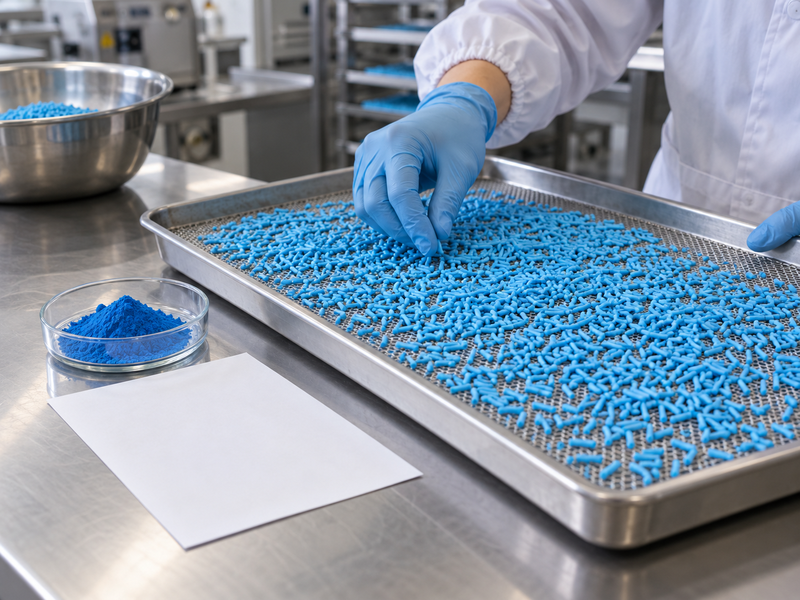
Record incoming particle size, moisture, surface texture and breakage rate before coloring. A porous sugar piece may absorb more coating, while a smooth piece can leave droplets or bare spots. If the base varies between lots, color use and reject rate will vary even with an identical extract. Retain a control lot of uncolored substrate and weigh it before and after coating so shell gain is visible.
Screen the substrate’s behavior when exposed to the planned coating liquid. Does it soften, dissolve at the edge, clump or break in the tumbler? Test the same residence time and batch loading expected at scale. A low-strength blue may demand more coating liquid, which can increase water exposure and drying time. The selection of color grade therefore depends on how much wet mass this specific decoration can accept.
Do not approve a pigment by dipping a large sugar cube when the product sold is a tiny nonpareil.
Buyer action: Put substrate specification and acceptable precoat breakage on the color trial sheet.
3. What extract and carrier details matter?
Request the exact color preparation
Ask for spirulina-extract identity, color assay method and lot value, carrier composition, moisture, particle or liquid form, storage and ingredient declaration. The SpirulinaCN blue-spirulina page notes that extract grades and color values vary; a grade name alone cannot predict coverage on a small sugar surface. A liquid can be easy to spray but adds water. A powder may be economical in shipping but needs dispersion and filtration before nozzles. Compare candidates at the same target finished shade and substrate mass.
Check any film-forming, wax or glaze ingredients in the complete decoration system. The extract may be legally allowed while a carrier or added coating aid still needs separate market review. Ask the supplier whether the offered sample represents routine production and what changes to carrier or assay will trigger notice. Store samples according to the actual TDS until trial; a degraded sample can unfairly fail a viable grade.
| Candidate detail | Verify | Effect on process |
|---|---|---|
| Color value | Method and lot | Dose comparison |
| Carrier | Complete composition | Adhesion, label, drying |
| Form | Powder or liquid | Premix and spray |
| Storage | Temperature/light/humidity | Sample integrity |
4. How should coating uniformity be tested?
Sample the whole tumbler
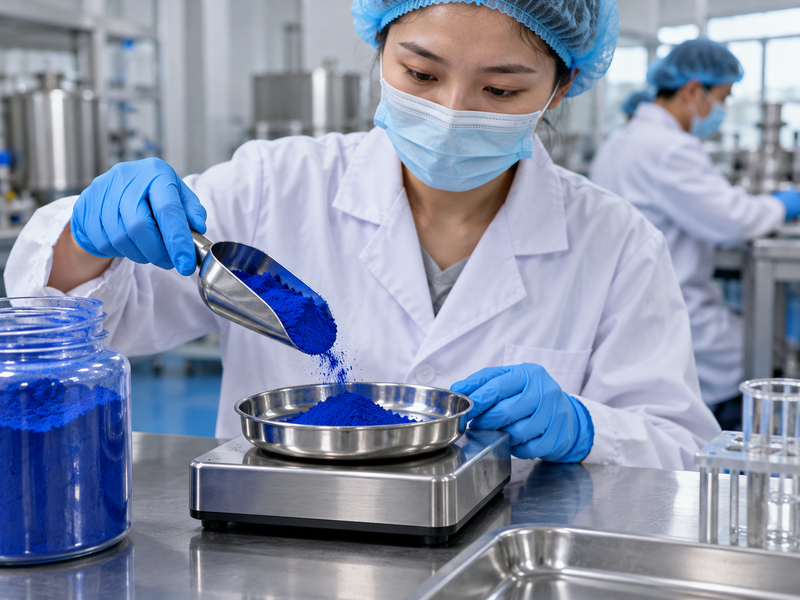
Run a controlled trial with an uncolored control, at least two color doses or grades and fixed substrate mass. Record spray or addition rate, tumble speed, batch load, application time and coat gain. Avoid changing all of them at once. Pull samples from multiple locations and time points, then measure or visually grade shade, bare spots and dark agglomerates. Small pieces can hide a high defect rate when viewed as a colorful pile; inspect random individual pieces as well as the bulk effect.
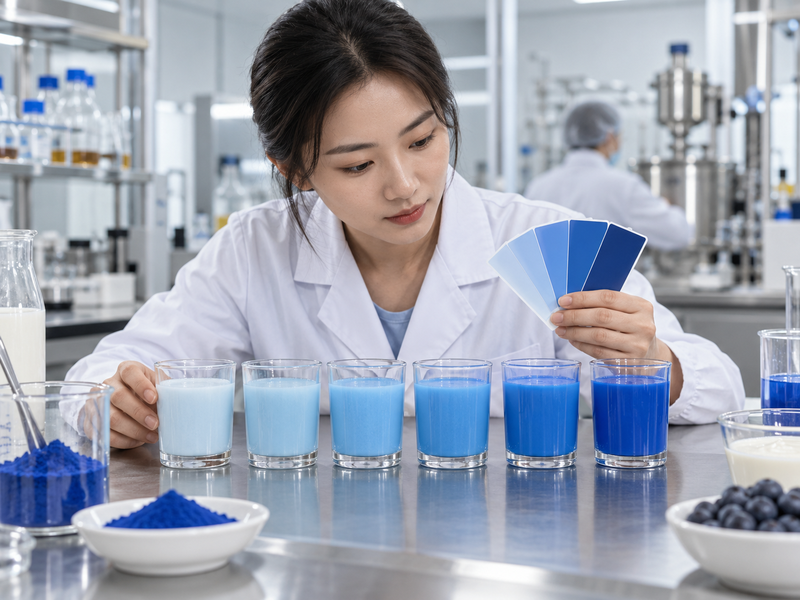
Set a fixed light source, background and reference color. Count the proportion of visibly off-shade pieces and define the acceptable limit before reviewing candidates. If color is uneven, inspect wetting and distribution before increasing pigment. A higher dose may make dark pieces darker while leaving pale ones unchanged. Note whether a second thin coat improves uniformity without unacceptable extra drying. This trial differs from a general confectionery coating test because the product is sold loose, handled in bulk and judged as many small decorations together.
| Trial variable | Hold fixed | Outcome |
|---|---|---|
| Coating application | Substrate and batch mass | Bare-spot rate |
| Candidate grade | Final shade target | Dose and uniformity |
| Number of coats | Final gain | Added drying burden |
5. What drying endpoint prevents clumps?
Decide when pieces can be packed
Record inlet air or room condition, product temperature, drying time and endpoint moisture or water activity where the factory uses those measures. The goal is free-flowing sprinkles that retain their shape and do not transfer wet color. Examine pieces immediately after drying and after equilibration; an apparently dry surface can later become tacky if moisture redistributes. Do not increase drying heat without checking blue color stability and sugar deformation.
Pack a small lot only after it reaches the defined endpoint. Observe clumping under realistic pallet and warehouse conditions, not just in a shallow tray. If one grade adds more water or hygroscopic carrier, include the extra drying time in its cost. A powder that yields a good shade but requires double the cycle time may not fit the production schedule.
Confirm that any anti-caking aid is included in the approved formula and destination label review rather than added ad hoc to rescue a failing run.
6. How should abrasion and dust be measured?
Simulate real bulk handling
After final drying, pass coded samples through a controlled handling sequence that reflects conveying, bag filling, transport and customer pouring. Weigh initial sample, retained intact pieces, fines and any colored dust using the plant’s normal methods. Inspect pack walls and neighboring pieces for rub-off. A beautiful freshly coated sprinkle that leaves blue powder in the bottom of a bulk bag is not a reliable ingredient for a bakery customer.
Measure both color loss and breakage. A brittle substrate can create sugar dust that appears colored even if the blue layer adheres well; a weak color film can rub off intact pieces. Separate those causes by examining pieces under magnification and comparing with the uncolored control. Set limits based on customer use and the plant’s acceptable yield. If a protective glaze improves abrasion, rerun transfer and label checks because the finished system has changed. Keep a retained bulk-pack sample, not only a display jar.
| Handling result | Possible cause | Next test |
|---|---|---|
| Colored dust | Color film rub-off | Adhesion/glaze |
| Sugar fines | Base breakage | Substrate strength |
| Clumps | Moisture or tack | Drying and pack |
7. How can transfer into toppings be checked?
Test where customers use the decoration
Place the approved-dose sprinkles on the intended frosting, ice cream or other customer matrix. Observe color bleed, halo formation and piece integrity at application, after normal display and after a credible warm or thaw challenge. Use a pale substrate so migration is easy to see. A dry, free-flowing sprinkle can still release blue color into a wet topping. The FoodGrid blue sprinkle listing identifies bakery, ice cream and confectionery applications, but each buyer should validate its own contact conditions.
Distinguish acceptable decorative softening from an unacceptable blue ring or streak. Document contact time, temperature, topping pH and moisture. If a colored sprinkle will be packed separately for consumer application, test that route too; it may have less contact time but more handling abrasion. Do not claim “non-bleeding” from a single room-temperature photograph. Ask a prospective customer for the actual usage matrix or supply a clear trial protocol with samples.
8. What does U.S. color regulation say?
Review the current confection category
The operative 21 CFR 73.530 permits spirulina extract for coloring confections, including candy, and also lists dessert coatings and toppings, subject to good manufacturing practice and the rule’s identity, specifications, diluent, labeling and standardized-food provisions. A 2026 expansion was delayed indefinitely. Regulatory staff should classify the actual sprinkle and its intended use rather than assume one phrase covers every decorated food.
Verify the offered extract preparation, its carriers and the finished decoration’s ingredient declaration. If the sprinkle is supplied to food manufacturers, provide an accurate specification and use information; the customer’s final-product compliance remains a separate review. Other countries can treat extracts or coloring foods differently. The fact that a commercial blue sprinkle exists is not legal clearance for a new SKU or export destination. Save a dated regulatory decision with the approved formula.
9. How should cost and yield be compared?
Price saleable sprinkles
Calculate pigment mass per accepted kilogram of finished decoration, then add coating carrier, drying energy or time, losses from fines and off-shade pieces, and any protective finish. A concentrated grade may reduce wet coating load but require careful metering; a cheaper grade may extend drying and raise reject rates. Get comparable supplier quotes at the expected annual volume, pack size and delivery term. Keep the shade target constant across candidates.
Run a sensitivity check for substrate variation. If smaller nonpareils require more coating per kilogram than larger strands, one price cannot represent both products. Record actual process yield rather than using a theoretical full conversion of raw sugar to saleable sprinkles. The most useful quote is for a grade that has already passed the buyer’s abrasion and transfer tests; price-only selection before those trials can lock in a color that customers reject.
| Cost item | Pilot measure | Buying implication |
|---|---|---|
| Pigment | Dose at approved shade | Ingredient cost |
| Coating | Carrier and coat gain | Formula cost |
| Drying | Time and energy | Line capacity |
| Rejects | Dust, clumps, off-shade | Saleable yield |
10. When is a blue sprinkle grade approved?
Lock the complete decoration system
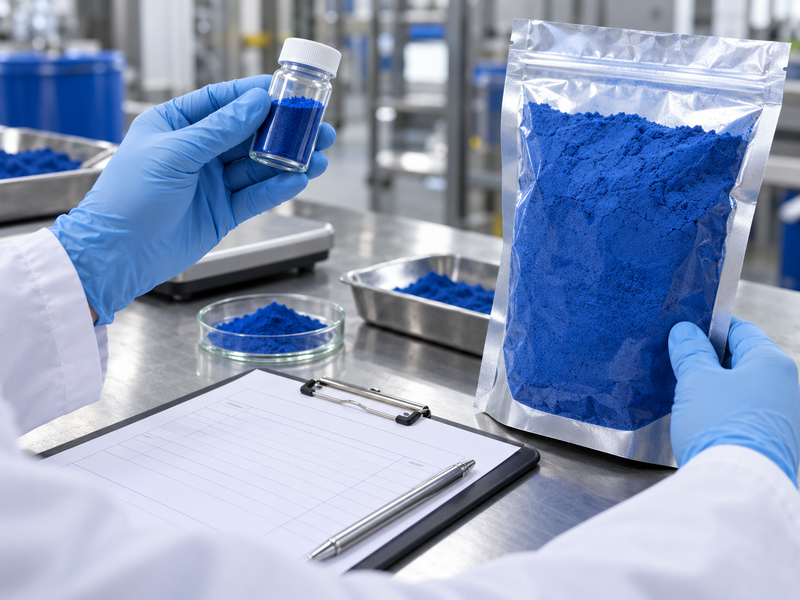
Repeat the selected grade at a production-relevant batch size with the actual substrate, coating sequence, dryer, finish and bulk pack. Approve a physical shade reference plus limits for off-shade pieces, dust, clumps and color transfer in representative customer uses. Record the supplier SKU, lot assay, carrier, dose and mixing method. Hold a retained ingredient sample and finished sprinkle sample so future lots can be compared without relying on memory.
Ask how the supplier will communicate changes to extraction, carrier or assay method. If a new lot changes the color or coating behavior, follow the buyer’s change-control process. A no-go is appropriate if a vivid blue cannot survive bulk handling or topping contact at viable cost. Approval should be based on the sellable decoration after distribution, not a hand-picked studio sample. Purchasing can then request terms for the tested grade and expected order cadence.
Purchase gate: The selected extract must pass uniformity, drying, abrasion, transfer and market review in the finished sprinkle.
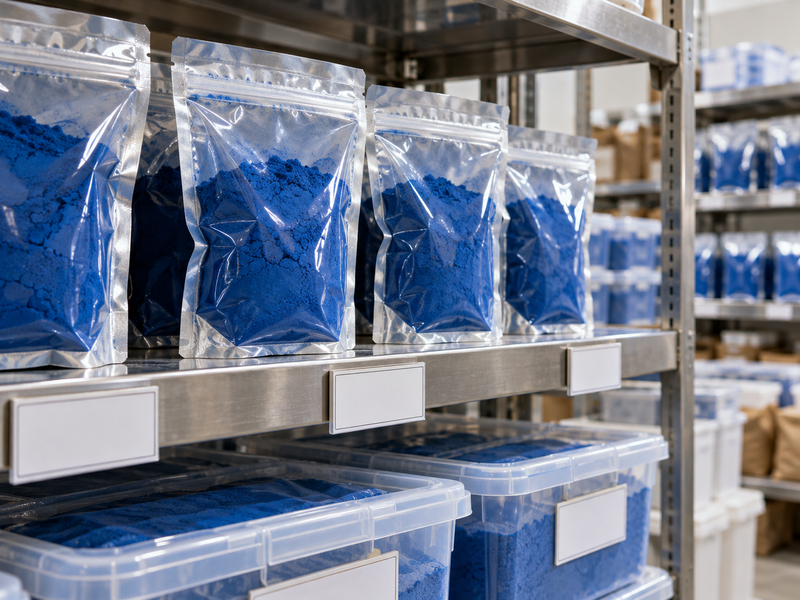
Write the first commercial-run sampling plan before ordering production color. Check random pieces after coating, after drying, at bulk packing and after a defined handling test. Record acceptable blue range, white-piece rate, dust mass and clumping. If a customer will use the sprinkles on moist frosting, retain a transfer sample from each initial lot. This practical record lets the manufacturer distinguish a color-supplier variation from a substrate or dryer change and keeps complaint investigations tied to measurable evidence rather than a promotional image.
FAQ
Q1. Are sugar strands and nonpareils the same color trial? No. Their surface area, breakage and wetting can differ; test each substrate.
Q2. Can higher dose fix white pieces? It may darken coated pieces without covering missed ones; investigate coating distribution first.
Q3. Does a dry sprinkle guarantee no frosting bleed? No. Test contact with the actual moist topping through the intended display period.
Q4. Is spirulina extract allowed for U.S. confection colors? It is listed in current 21 CFR 73.530, subject to all conditions and the actual product classification.
Q5. What sample quantity is useful? Enough to coat a representative substrate batch and retain packed samples for handling and transfer tests.
Conclusion
The useful blue sprinkle is uniform in the bag and stable on the customer’s dessert. To request a compatible extract grade and quote, contact SpirulinaCN with the application, target specification and shade, anticipated quantity, destination, sprinkle shape and base, coating method, dryer conditions, bulk pack and intended topping. Ask for the exact SKU composition and lot COA, then run the substrate and transfer trials before a bulk PO.