
spirulina extract alcoholic beverages can deliver a striking blue, but a commercial launch must clear two separate problems: lawful use in the actual drink category and a shade that lasts through production and sale. This guide gives RTD, beer and other low-ABV teams a practical US review and formulation plan. Current 21 CFR 73.530 lists alcoholic beverages with less than 20% alcohol by volume; a proposed broader 2026 expansion was delayed and is not effective.
The following steps rely on the current listing and TTB’s formula guidance, then require product-specific stability evidence.
Contents
- Which alcoholic drinks are within the listed use?
- What does the delayed 2026 order change?
- How do TTB formula and label reviews fit?
- What ingredient identity must be confirmed?
- How should alcohol and pH be screened?
- How can a base color change the target blue?
- Where should color enter production?
- What package and shelf trials are needed?
- Which supplier documents belong in the file?
- When is the product ready for launch?
1. Which alcoholic drinks are within the listed use?
Apply the literal ABV boundary
The current 21 CFR 73.530 spirulina extract listing allows coloring alcoholic beverages with less than 20% alcohol-by-volume content at levels consistent with good manufacturing practice, among other listed foods. “Less than” excludes a product at exactly 20% ABV as well as one above it. Measure and control the finished product’s ABV across manufacturing tolerance, not just a target printed on a concept sheet. Also check whether a standard of identity applies and whether it permits the added color.
Start with classification: have regulatory staff identify whether the item is a malt beverage, wine, distilled-spirit product or another regulated type and whether FDA’s color listing applies as expected. TTB notes that color-additive intended uses must specifically include alcoholic beverages unless a color is approved for food generally. An RTD cocktail or flavored beer can raise formula and labeling questions beyond the color listing. Do not infer that a “natural” pigment or food-grade certificate makes every alcohol application lawful.
2. What does the delayed 2026 order change?
Use the rule effective today
FDA issued a 2026 order that would expand spirulina extract uses, but FDA’s color-additives status page says the effective date was delayed pending objections. The eCFR cross-reference to 21 CFR 73.530 states that amendment was delayed indefinitely. As of this article’s October 2026 review, the existing enumerated categories remain the operative text. A buyer should not treat a press release, proposal or delayed order as permission for a new beverage category.
The below-20% alcoholic-beverage category came from an earlier effective amendment and remains listed.
A useful habit: save a dated copy or link to the current rule with the product approval file. Recheck it before launch and after a material formulation change. Regulatory status can move, but a future change does not retroactively validate a product made under an unapproved use. Keep legal interpretation with qualified counsel and record the specific finished category, ingredient identity, ABV band and any standard of identity checked. That record is far stronger than a generic statement that spirulina blue is FDA approved.
| Question | Current reading | Buyer action |
|---|---|---|
| Below 20% ABV | Listed category | Verify finished range |
| At or above 20% ABV | Not within this category | Do not infer permission |
| 2026 broad expansion | Effective date delayed | Recheck before relying on it |
3. How do TTB formula and label reviews fit?
Identify the approval path early
The TTB formula approval overview says formula approval is commonly required for alcohol beverages with added coloring or flavoring materials. Whether a particular beer, wine or distilled-spirit product needs a formula and a Certificate of Label Approval depends on its commodity and facts. TTB may require supporting ingredient specifications or laboratory analysis. Ask the regulatory team to check the relevant TTB decision tool before artwork and production slots are locked.
A lawful FDA color use does not finish the alcohol-beverage approval process.
Build one file: include the complete recipe, source and purpose of the color, amount used, process steps, finished ABV and draft label. If a flavor system carries hidden coloring materials, request its full relevant disclosure. TTB’s color-additive guidance for alcohol products explains why an approved color must fit its intended alcohol use. Keep formula, label and product category aligned. A late reclassification can invalidate an otherwise successful color trial.
4. What ingredient identity must be confirmed?
Separate extract from whole biomass
“Blue spirulina” is a commercial description and may refer to several formulated blue products. The US color listing defines spirulina extract as a filtered aqueous extract of dried Arthrospira platensis biomass with phycocyanins as the principal coloring components. Whole green spirulina powder is not the same ingredient. Request the precise color-additive identity, full composition, carrier, color-value method, source organism and relevant certificate. Check the quoted SKU against the listing’s specifications rather than relying on a supplier’s general food-grade claim.
The practical test: ask for an ingredient statement and certificate for the lot used in trials. Confirm whether a liquid color contributes water, preservatives or other components and whether a powder adds a carrier. Those inputs can affect alcohol calculation, sweetness, haze and label declaration. The SpirulinaCN blue spirulina page distinguishes blue extract from whole green biomass and outlines grade questions. Treat it as a starting point for a lot-specific dossier.
A trade name cannot replace regulatory identity in a formula submission.
| Ingredient detail | Why it matters | Required record |
|---|---|---|
| Source and identity | Color listing fit | Specification |
| Carrier or diluent | Formula and declaration | Full composition |
| Color value | Repeatable dose | Method and lot COA |
5. How should alcohol and pH be screened?
Use the actual base and realistic range
Ethanol concentration, acidity, dissolved gases and flavor ingredients can all alter the appearance of a protein pigment. Build a small matrix around the intended final ABV and pH, including manufacturing tolerances. Dose at a matched initial shade and observe immediate mixing, one-day equilibration and storage. Compare the alcoholic base with a non-alcoholic control when useful, but do not assume the control predicts the commercial drink. Record haze, ring formation, sediment and flavor in addition to color.
Beware of shortcuts: a bright pigment dissolved in water is not evidence for a citric, carbonated RTD with ethanol. Spirulina-derived phycocyanin can be sensitive to acid, heat and light, so test the particular grade in the final matrix. If a stabilizer helps one sample, include its cost, taste, label and regulatory role in the comparison. Do not generalize one supplier’s pH recommendation into a universal boundary. The acceptable pH band is a product specification supported by actual packaged trials.
Take samples from the low and high ends of an expected ABV batch range, not just the target midpoint. This helps reveal a color response that could vary across compliant production. Measure ABV on the finished mixed beverage after any color carrier is included. Record the actual acid and alcohol additions so a later batch can reproduce the trial rather than merely matching a nominal label value.
6. How can a base color change the target blue?
Color the drink consumers will buy
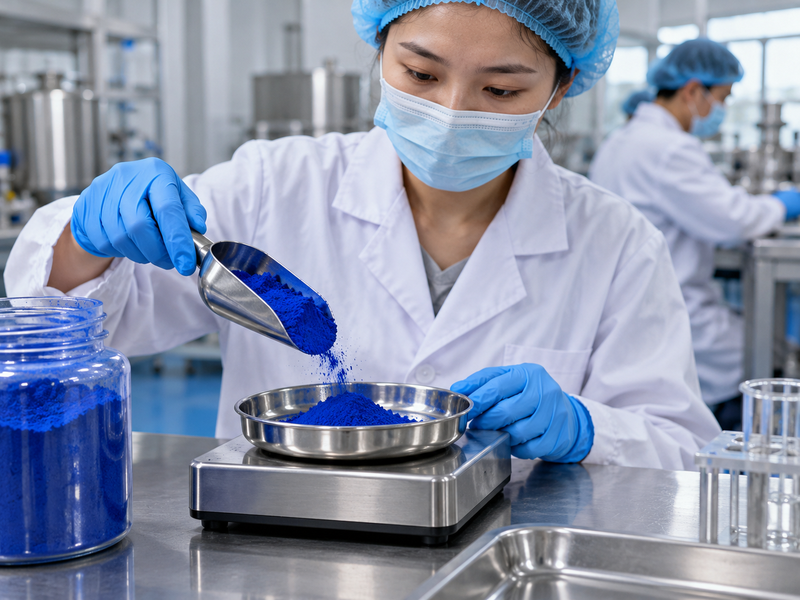
Beer can contribute amber or straw tones; tea, juice and botanical extracts may add yellow, red or brown. Blue added to a yellow base can look green. Haze and foam alter how color appears in a glass or can photograph. Match candidate doses in the complete finished formula rather than a clear laboratory solvent. Test the beverage cold and at likely consumption temperature, in the service vessel used by the brand. Include an uncolored base so the team can identify background changes during storage.
A fair target: agree on a shade reference that marketing, R&D and quality can recognize. Instrumental color readings help track change, while a blinded visual panel catches consumer-facing differences under retail and bar lighting. Avoid chasing a shade with ever-higher pigment dose if the base itself is drifting. Instead, identify which ingredient or process step creates the unwanted color. A blue recipe cannot be approved apart from its original base color and carbonation level.
| Base characteristic | Possible color effect | Trial control |
|---|---|---|
| Yellow or amber | Green shift | Uncolored base |
| Cloud or foam | Muted saturation | Serving-condition photo |
| Botanical color | Storage drift | Time-matched reference |
7. Where should color enter production?
Test the process sequence
The addition point may expose phycocyanin to hot wort, warm syrup, filtration, carbonation or long tank residence. Map every step between dosing and sealing. Trial more than one feasible addition point only where sanitation and process control allow. Measure color after each major operation and at start and end of the fill. If late addition protects shade, confirm that equipment can meter consistently and that the resulting process is acceptable to quality and regulators.
Do not trade color for safety: any modified addition sequence must fit the approved microbial and alcohol-beverage process. If an ingredient arrives in a liquid carrier, assess pump accuracy and tank mixing. If it arrives as powder, check premix dispersion and dust control. Filtration may remove aggregates or leave uneven color. Record these behaviors in a pilot using normal line settings. The best-looking bench glass is irrelevant if the plant cannot deliver the same dose into every commercial unit.

8. What package and shelf trials are needed?
Follow color through distribution
Test the intended can, glass or PET bottle with normal headspace, closure and fill volume. Include dark storage and the light exposure relevant to the retail route. Record temperature history, color, haze, sediment, package staining, aroma and taste at planned dates. A draft RTD that looks stable in a laboratory bottle may fade in clear retail packaging. Carbonation loss and oxygen ingress can also change the visual result. Keep a time-matched uncolored control so background browning is not blamed entirely on the pigment.
Use end-of-life evidence: predefine acceptance criteria and shelf duration before reading the results. Sample both ordinary distribution and a justified short excursion. Do not state a universal shelf life based on a supplier’s model drink or a single accelerated test. If the package, closure or label sleeve changes, repeat the relevant light and oxygen comparison. Marketing should approve the aged sample that a customer could actually buy, not a freshly mixed cocktail shown at the concept meeting.
| Storage arm | Main question | Record |
|---|---|---|
| Chosen package, dark | Intrinsic stability | Hue and sediment |
| Chosen package, display light | Retail appearance | Exposure and shade |
| Controlled temperature excursion | Distribution margin | Time and defects |
9. Which supplier documents belong in the file?
Make the proposed grade auditable
Request current product specification, full composition, certificate of analysis, microbiological and contaminant criteria, color-value method, storage conditions and lot traceability. Ask for a statement of the supplier’s intended regulatory identity and applicable use guidance. Confirm that the sample comes from the commercial process and that future lot changes will be communicated. A color trial based on an untraceable sample cannot support a repeatable purchase specification or TTB documentation.
Keep two sign-offs: regulatory staff should review identity, permitted use, carrier and label wording; quality and R&D should review lot records and performance. Ask the supplier whether any preservative or stabilizer changes the formula submitted for approval. The SpirulinaCN factory overview describes available sourcing and quality topics, but obtain the actual signed documents for the purchased grade. Archive the approved lot, formula version and trial report together so a future reformulation can be assessed against a clear baseline.
When a new lot arrives, compare its blue in a retained production base at the approved dose. Investigate a mismatch before filling the full run. This simple check can catch a color-value or carrier change that remains hidden in a broad specification range. Record whether the new lot also changes haze; a matching shade alone may miss a visible cloud defect.
10. When is the product ready for launch?
Close legal, technical and supply decisions
Release the concept only after the finished drink falls within the applicable below-20% ABV use, any relevant food standard has been checked and the TTB formula and label path is complete. The selected spirulina extract must meet its listing and the supplier’s lot specification. The final drink must hold its approved shade, clarity and sensory quality through the proposed shelf life in the intended package. Document a validated production process and practical lot-release criteria.
Ready for a decision? compare aged pilot samples with the approved shade, review actual batch and ABV records, then sign a controlled formulation. Define requalification triggers for ABV band, pH, color grade, carrier, fill sequence or package changes. If your team needs a traceable extract sample, send SpirulinaCN the intended product and process details. Include target ABV and pH so the discussion starts with a lawful category and a meaningful trial.
A vivid blue launch earns its place through both compliance and repeatable appearance.
| Launch gate | Evidence | Stop if |
|---|---|---|
| Permitted use | Current listing and category review | ABV outside listed range |
| Product quality | End-of-life packaged trial | Shade drifts beyond target |
| Repeatability | Lot and process controls | Trial sample cannot be traced |
Conclusion
Spirulina extract can color US alcoholic beverages below 20% ABV under the current listing, subject to its restrictions and applicable alcohol rules. Confirm classification and TTB requirements early, then test the real base, process and retail package. The delayed 2026 expansion is no shortcut. Put a specific traceable grade through those checks before artwork and volume orders make a correction expensive.
FAQ
Q1: Does the listing cover a drink at exactly 20% ABV? No. The current category says less than 20% ABV.
Q2: Did FDA’s 2026 order make every use effective? No. FDA delayed the order’s effective date pending objections.
Q3: Does FDA color authorization replace TTB review? No. Check formula and labeling requirements for the actual alcohol category.
Q4: Can whole green spirulina powder replace the listed extract? Do not assume so. The listed color has a defined identity and specifications.
Q5: What should the commercial trial prove? Acceptable color and quality through shelf life in the final formula and package.