
microencapsulated phycocyanin food color is a blue pigment formulation in which a protective wall or matrix surrounds or disperses phycocyanin. Buyers often see a promise of better stability without enough detail about wall materials, actual pigment loading or release in their food. This guide turns that claim into a purchase specification and a matched application trial. Published encapsulation studies support testing this approach, but each study’s recipe and conditions differ from a commercial supplier grade.
Contents
- What does encapsulation change?
- Which wall materials should a buyer compare?
- How should pigment loading be reported?
- What happens during reconstitution?
- Which process exposures need testing?
- How should stability claims be checked?
- What labels and restrictions need review?
- Which quality documents belong in an RFQ?
- How should cost be normalized?
- When should a protected grade be approved?
1. What does encapsulation change?
Distinguish a particle from a promise
Encapsulation places phycocyanin within or around another material, often through drying or complex formation. The wall may alter powder flow, moisture uptake, exposure to light or oxygen, and release when mixed with water. It can also dilute color strength per kilogram of delivered ingredient. The same word may describe spray-dried matrix particles, coated particles or a more complex delivery system. Ask the supplier which mechanism and production method apply to the quoted SKU instead of assuming every “encapsulated” blue behaves alike.
The buyer’s question: where must the color appear? A dry drink mix needs free flow in a sachet and a clean blue after reconstitution. A coating may need smooth surface coverage, while a food with little free water may release color slowly or unevenly. The SpirulinaCN blue spirulina overview provides grade-selection context, but a product marketed as blue spirulina is not automatically microencapsulated. Obtain a composition statement and physical description before designing a trial.
If the supplier uses “microencapsulated” to mean a simple carrier blend, ask for a particle description and supporting test data. The distinction affects how the buyer interprets protection, loading and release claims.
2. Which wall materials should a buyer compare?
Evaluate function and declaration together
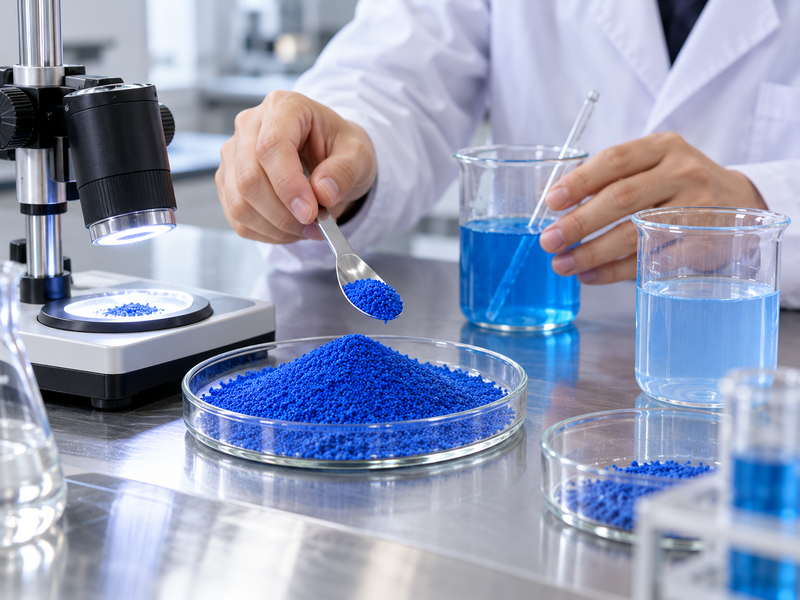
Research systems use maltodextrin, gum arabic, proteins and other food-grade materials. Each can affect solubility, viscosity, sweetness, allergens, moisture behavior and permitted use in a given market. A spray-drying experimental study of wall materials reported that combining maltodextrin and whey protein isolate affected encapsulation efficiency under its optimized conditions. That result does not mean the combination fits a vegan drink, an allergen policy or an acidic application. A different formulation or dryer can yield a different powder.
Ask for the full recipe: request all intentionally added carriers and their approximate contribution at the proposed color dose. Check whether a wall ingredient is already present in the finished formula and whether it changes nutrition or ingredient declaration. If a supplier refuses to identify material components needed for labeling and compliance, the grade cannot progress to a responsible commercial review. Screen any proposed helper system against market rules before investing in long stability studies.
For a dry beverage, compare wall candidates in both the powder blend and the prepared drink. One wall may protect color while the sachet stays dry yet leave visible residue after hydration. Another may disperse beautifully but cake during humid distribution. The purchase specification must name which result matters most and which compromise the brand can accept.
| Wall option | Possible functional question | Buyer check |
|---|---|---|
| Maltodextrin | Does it aid dry handling? | Solids and label |
| Gum arabic | Does it support dispersion? | Viscosity and supply |
| Protein material | Does it protect pigment? | Allergen and diet claims |
3. How should pigment loading be reported?
Use a stated analytical basis
An encapsulated powder’s delivered mass includes its wall. A high price per kilogram can still be economical if little dose reaches the target shade; a cheap powder can be costly if its pigment loading is low. Ask for color value with the exact test method, dilution, wavelength, units and sample preparation. Request total solids, moisture and any declared phycocyanin content or pigment ratio. Do not equate an E-grade trade label with a universal concentration, since suppliers may use different specifications or methods.
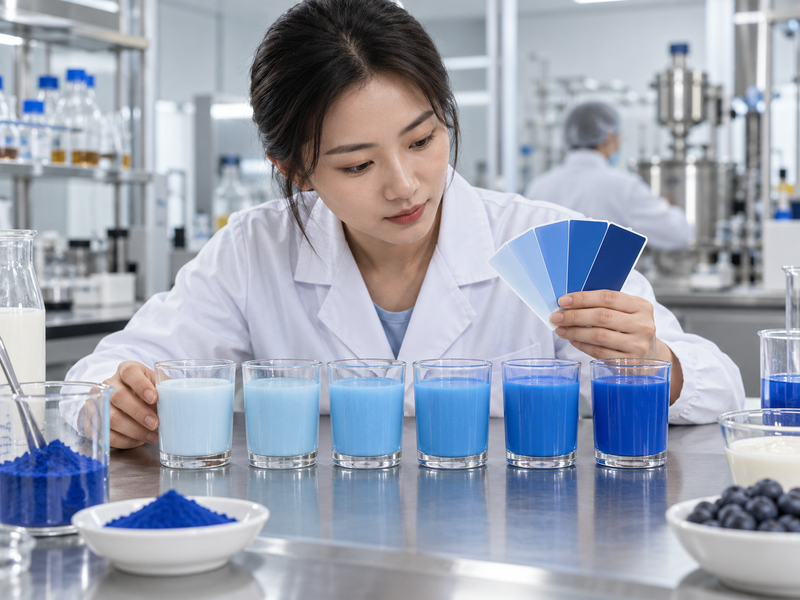
A practical comparison: prepare dose ladders of protected and conventional grades in the same food. Match the finished shade after processing, then compare pigment dose and total carrier input. Note whether an apparent strength advantage disappears after mixing or storage. Keep a retained standard so a future lot can be checked against the approved trial. If the formula is opaque, visual appearance may matter more than a clear-solution absorbance value. Make the comparison in the product consumers will see.

4. What happens during reconstitution?
Follow the particle into water
A powder can look stable on a shelf yet release blue poorly when consumers add water. Test the intended water temperature, volume, mixing energy and waiting time. Record floating powder, clumps, foam, wall residue, shade development and sediment. A narrow laboratory shaker test can conceal the behavior of a spoon-stirred sachet. For factory blending, assess a realistic premix and production line rather than assuming small-scale dissolution will transfer to a tank.
The key observation: a wall that delays pigment exposure may also delay acceptable color. Some research-grade spray-dried systems dissolve readily; other systems are designed for different release behavior. Identify which performance the product needs. If a powder is intended for a dry mix, measure color after immediate mixing and after standing. If it enters a concentrated syrup, test the high-solids intermediate as well as the diluted finished drink. Document the actual customer instruction and evaluate it under typical user variation.
| Reconstitution step | Record | Failure signal |
|---|---|---|
| Dry blending | Flow and segregation | Uneven sachets |
| Initial wetting | Time, water temperature | Floating clumps |
| Final drink | Color and residue | Specks or sediment |
5. Which process exposures need testing?
Map the route from bag to pack
List receiving, storage, opening, weighing, blending, hydration, heat exposure, filling and transport. For a dry mix, humidity at filling and moisture ingress may be the leading risks. For a beverage, acid, oxygen, pressure or heat can dominate after the encapsulated powder dissolves. The wall does not create permanent immunity once the pigment enters water. Run each candidate through the actual limiting steps and collect color after each one, including the final package at its planned shelf life.
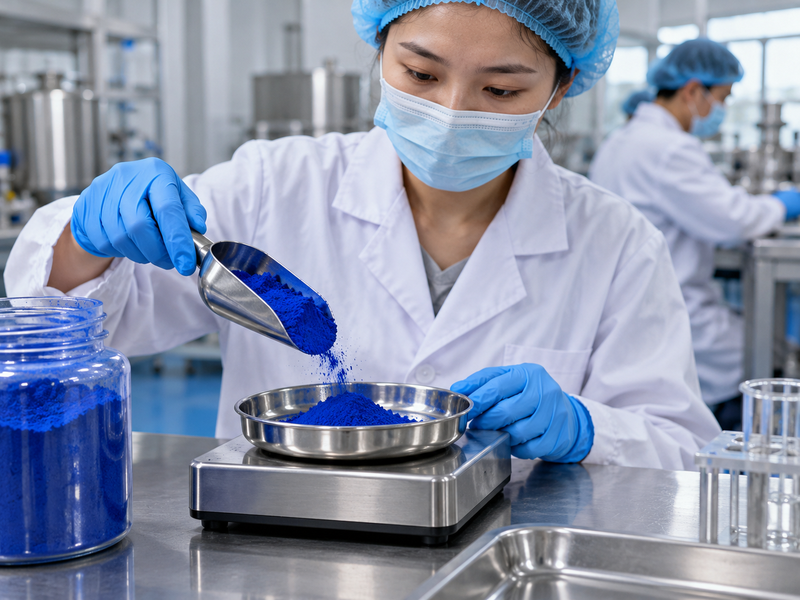
Do not skip the handoff: check whether powder dusts, sticks to equipment or separates in a blend. A candidate that protects blue but causes inconsistent dosing can fail commercially. Request supplier handling instructions and verify them on your own line. Record water activity and packaging barrier where dry stability matters. If the product requires an additional premix or a slower feed rate, add those costs to the evaluation. Technical performance includes production behavior, not just a storage graph.
Map cleaning as well. Fine blue material left in a feeder or seal area can contaminate the next product, raising changeover time. Watch the first and last units of a batch for uneven pigment delivery. If a blend segregates during transfer from the mixer to the filler, sample at both points before blaming the color chemistry. These observations can determine whether encapsulation provides a practical manufacturing advantage.
6. How should stability claims be checked?
Compare matched products over time
Build a control with an ordinary phycocyanin grade at the same day-zero finished shade. Store protected and control samples in the intended pack under documented light, temperature and humidity. Measure color, visible particles, aroma and any texture change at set dates. Use end-of-life acceptability rather than percent pigment retained in a supplier’s model solution. A study may show a real mechanism and still fail to predict your product because water activity, acidity, sugar and package differ.
Read research carefully: a peer-reviewed review of phycocyanin microencapsulation describes several techniques and wall materials, along with their different release behavior. It is a map of options rather than proof for a named commercial SKU. Ask the supplier to provide raw test conditions behind any marketing graph. Check sample age, formulation, packaging and analytical method. A useful claim states what was tested, against which control and for how long.
| Claim | Required evidence | Transfer risk |
|---|---|---|
| Better light stability | Same formula and pack, time series | Different lighting |
| Better heat stability | Actual temperature and hold | Different process |
| Better dry shelf life | Moisture and barrier data | Different humidity |
7. What labels and restrictions need review?
Review the whole color system
In the United States, spirulina extract used as a color additive must fit the current 21 CFR 73.530 listing, including identity, specifications and permitted use. Encapsulation does not turn an unlisted use into a listed one. A wall material, carrier or processing ingredient can also have its own identity and labeling implications. Send the full commercial composition to regulatory staff, not just the pigment name printed on the front of a brochure.
Keep claims narrow: a protected blue color is not evidence of nutritional or health benefit. Check allergen, vegan, organic, sugar and clean-label claims against the actual formulation. For export products, have local advisers review classification and permitted use in each market; US authorization does not settle another jurisdiction. Document supplier-recommended declaration and have brand counsel verify it against the final formula. A technically successful particle still needs a lawful ingredient statement.

8. Which quality documents belong in an RFQ?
Require a usable commercial dossier
Request product specification, process description at a useful level, full ingredient and allergen statement, color-value method, particle-size information, moisture or water activity, microbiological criteria, contaminants, certificate of analysis and storage conditions. Ask whether the tested pilot sample came from a saleable manufacturing route. Clarify lot size, minimum order quantity, repeatability and change-notification triggers. For powders, obtain the packaging barrier and conditions behind the stated shelf life.
The decision aid: place each supplier’s documents against the same checklist. Missing carrier information or a vague color method can make two quotes impossible to compare. Ask for two lots if the initial application test looks promising; then repeat shade and wetting checks. The SpirulinaCN factory quality page describes the kinds of batch records a buyer can request, while the actual approval must rely on documents for the quoted protected grade.
Archive the approved sample, specification revision and communication trail together.
| Document | Why request it | Approval use |
|---|---|---|
| Full composition | Label and formula review | Regulatory |
| Color method and COA | Lot comparison | Quality |
| Storage study | Shelf-life basis | R&D |
9. How should cost be normalized?
Price the acceptable finished shade
Compare quoted prices only after finding each candidate’s dose at the same acceptable finished color. Include carrier contribution, yield loss, waste during charging, premix labor, shipping weight, package barrier and any rework caused by clumping. A protected grade may cost more per kilogram yet require less production waste; another may appear inexpensive but demand a large dose that changes solids. Use an explicit cost per thousand saleable units at end of shelf life.
Show the math to the team: record ingredient mass per batch, usable output, required process changes and approved shelf-life result. Keep estimated cost inputs separate from measured trial outcomes. Purchasing should not assume a small test lot predicts a full-volume unit price; request a commercial quotation against the locked specification. If the protected grade offers no measurable benefit in your product, its added cost needs another clear reason.
If it solves a real failure, quantify the saved waste or avoided redesign without inventing a generic performance premium.
Include inventory exposure in that calculation. A grade requiring refrigerated storage or short post-opening use can generate waste even when its dose is low. Ask how many production runs fit inside one opened pack and whether smaller pack sizes are available. Convert that answer into cost per saleable finished unit rather than carrying an unrealistic assumption that every gram bought reaches a customer.
10. When should a protected grade be approved?
Decide with a staged specification
Move a candidate forward only when its identity and carrier system pass regulatory review, its full application trial meets color and handling criteria, and its commercial supply can repeat the result. Write the approved color target, dose range, reconstitution method, package, storage conditions and lot-release test into the specification. Define changes that require requalification: wall material, pigment source, drying route, pH, process or package. This guards against a technically similar substitute that behaves differently in practice.
Ready to source? send suppliers the product type, processing steps, shelf target and current failure mode. Ask for a traceable commercial sample and evidence that addresses those conditions. The SpirulinaCN contact route can support a grade inquiry, but request confirmation of whether the offered SKU is actually encapsulated and how it is constructed. Approval is earned in the finished food, not in the marketing phrase “protected pigment.”
| Approval gate | Pass condition | Stop condition |
|---|---|---|
| Identity | Full composition reviewed | Unknown carrier |
| Performance | Finished product passes | Only model solution data |
| Supply | Repeat lot controls agreed | Pilot grade unavailable |
Conclusion
Encapsulation can change how phycocyanin handles moisture, processing and release, but the outcome depends on the precise wall system and food. Compare grades at matched finished color, test real reconstitution and storage, and require a complete commercial dossier. A purchasing decision built on those records gives production teams a repeatable blue and saves time otherwise lost to vague stability claims.
FAQ
Q1: Is every blue spirulina powder microencapsulated? No. Confirm the actual particle design and composition for each SKU.
Q2: Does encapsulation guarantee heat stability? No. Heat response depends on the wall system and finished-food process.
Q3: Can a wall material change labeling? Yes. Review its identity, amount, allergen status and market-specific declaration.
Q4: What is the best comparison control? Use a conventional grade at a matched day-zero finished shade in the same product.
Q5: What belongs on the purchase specification? Include composition, color method, lot limits, handling, pack, storage and change notification.