
spirulina blue for chewing gum manufacturing usually means a spirulina extract color used in gum mass, a shell or another surface layer. Manufacturers may achieve a strong blue in a laboratory cup yet see speckling, muted shade or fading after extrusion and storage. This guide compares incorporation and coating routes, then turns the choice into a practical pilot specification. Current US rules explicitly list chewing gum; patent examples show investigated approaches but cannot prove a supplier grade’s performance or a company’s freedom to operate.
Contents
- Is spirulina extract permitted in US chewing gum?
- What blue ingredient should a gum buyer specify?
- Should color enter gum mass or coating?
- How should temperature exposure be controlled?
- What causes spots and uneven shade?
- How can coating trials be made comparable?
- How should flavor and base color be checked?
- What shelf-life tests matter for gum?
- Which supplier documents support approval?
- When is the blue gum ready for scale-up?
1. Is spirulina extract permitted in US chewing gum?
Check the current listing and food category
The current 21 CFR 73.530 spirulina extract listing permits coloring confections, including candy and chewing gum, at levels consistent with good manufacturing practice. The 2013 FDA final rule established the original candy and chewing-gum use. That history matters because the authorization is tied to a defined spirulina extract, not any blue algae powder sold under a similar name.
Review current identity and specifications as well as permitted use.
The first gate: confirm the exact gum format and the regulatory market. A coated gum, uncoated stick and filled piece may present different ingredient and process questions, even when all are chewing gum. Check standards or special product rules that may apply and have label counsel review the actual color declaration and carrier ingredients. Food-grade status alone does not answer whether a particular extract meets the listing. Regulatory permission also says nothing about shade, mixing or shelf life.
Keep the cited regulation in the product approval file with a review date, since gum launches often span several development and packaging cycles.
2. What blue ingredient should a gum buyer specify?
Identify the commercial SKU
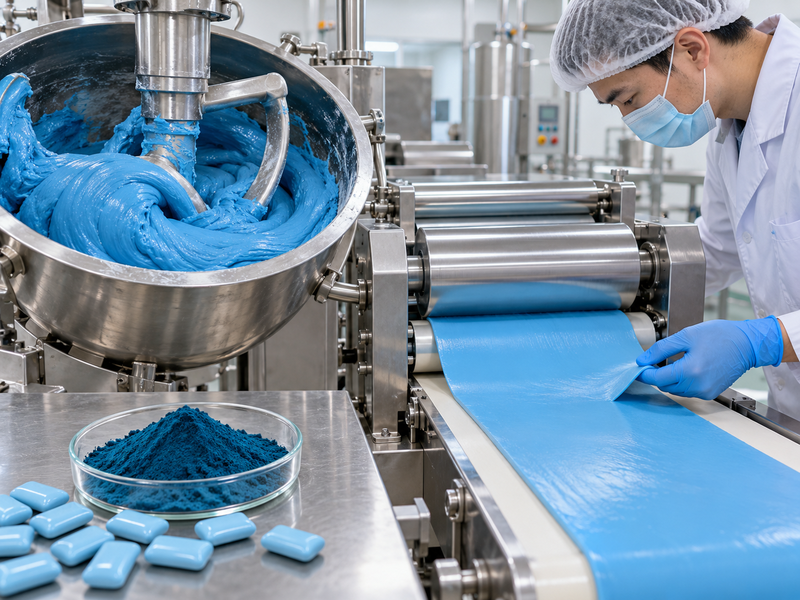
The listing describes filtered aqueous extract from dried Arthrospira platensis biomass with phycocyanins as the principal coloring components. “Blue spirulina” may name a dry or liquid formulation, with different carriers, pigment strength and handling. Whole green spirulina powder is not an equivalent substitute for a bright blue extract. Request exact identity, source, color-value method, full composition, lot certificate, microbiological and contaminant criteria, packaging and storage instructions. A sample without those records cannot anchor a commercial gum specification.
Ask how it behaves: a dry grade may need premixing to prevent blue flecks; a liquid may add water to a gum mass or coating syrup. Record carrier effects on texture, moisture and label text. The SpirulinaCN blue spirulina range describes grade selection and composition questions, but the chosen gum trial must use a traceable grade available at production scale. Keep a retained sample of the accepted lot for color and handling comparison.
| SKU property | Gum-mass concern | Coating concern |
|---|---|---|
| Powder dispersibility | Blue specks | Syrup residue |
| Liquid water | Dough texture | Drying load |
| Carrier composition | Label and flavor | Shell texture |
3. Should color enter gum mass or coating?
Compare two routes in the same product
Color in gum mass must disperse through a viscous, often warm system. It may create a consistent cross-section, but a colored interior can be hidden under a white or opaque coat. A shell or surface application puts color where a buyer sees it and may avoid some mass-processing exposure, yet coating adds syrup, drying and panning variables. The right route depends on the piece design, line equipment, desired bite and required shade. Trial both where commercially feasible rather than assuming one route is always gentler.
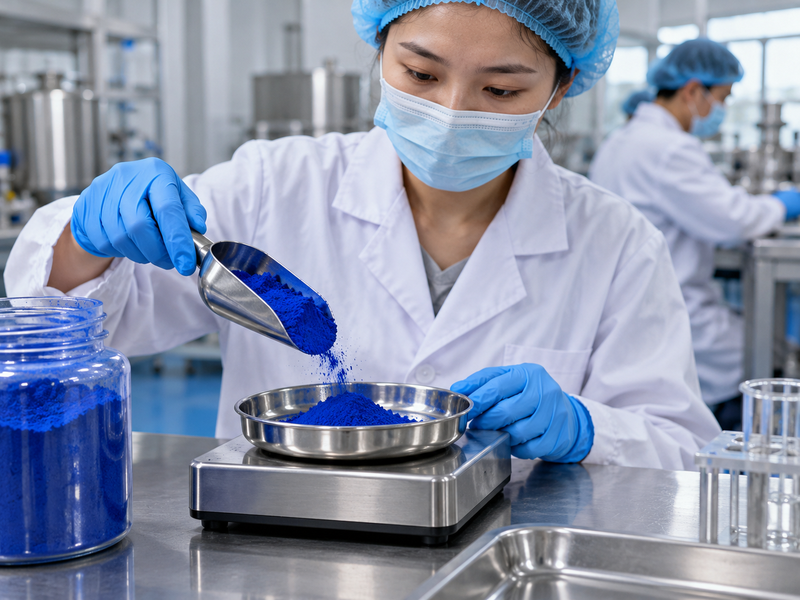
A useful split batch: use the same gum base, flavor and target finished appearance. Color half the mass through a validated mixing route and color the other half through the proposed coating. Photograph whole and cut pieces under fixed light. Record dose per finished kilogram, coating weight gain, process time and any surface defects. A confectionery color patent discusses investigated phycocyanin compositions and cites gum examples; it is not proof that a method is free to use or will work on your line.
Seek appropriate intellectual-property advice if a patented process is contemplated.
4. How should temperature exposure be controlled?
Record pigment temperature, not room setting
Gum processing can expose the color to warm mixers, syrup preparation, coating pans and drying air. Measure actual product temperature and residence time from the point of pigment addition through packing. Avoid treating a nominal mixer jacket setting as the pigment’s full thermal history. In a coating trial, record syrup temperature when the color enters it, the pan air conditions and cumulative drying time. Test the planned production extremes, including a realistic long hold or slow start-up.
Check the sequence: compare safe, feasible addition points that change heat exposure without altering food-safety controls. Collect color after the warmest step and again after equilibration. Phycocyanin is sensitive to heat under some conditions, yet a specific gum matrix or protected formulation may respond differently. Use actual gum and shell compositions. If a cooler addition point improves shade, verify that the line can still distribute color evenly and maintain quality. A temperature workaround that causes specks or extra cleaning may not be commercially useful.
| Stage | Record | Possible result |
|---|---|---|
| Mixing | Mass temperature and hold | Fading or streaks |
| Coating syrup | Addition temperature | Color loss |
| Panning and drying | Air and product temperature | Surface variation |
5. What causes spots and uneven shade?
Trace wetting and distribution
Blue spots may come from poorly wetted powder, a concentrated liquid added too late, agglomerates or an inconsistent carrier. Color can also appear patchy when gum mass folds without enough mixing, or when a coating syrup deposits unevenly. Inspect the pigment premix before charging the main batch. Run a dose ladder with fixed mixing time and energy. Examine cut surfaces, exterior pieces from several machine positions and units from the start and end of the run.
A simple diagnostic: sieve or disperse the candidate as the supplier recommends, then compare with direct addition while keeping total formula inputs equal. Record any extra water or syrup solids in the premix. If spots remain, examine ingredient particle size and local moisture conditions rather than raising the dose blindly. A higher dose can darken good areas while leaving specks untouched. Write the successful addition order, premix strength, mixing time and in-process check into the batch instruction.
Inspect pieces under consistent light immediately after mixing and after a conditioning period. Some wet blue concentrations spread during warm handling, while dry clusters remain visible. Separate those defects in the record; they point toward different corrections. Where practical, sample from more than one position in the mixer or extrusion stream. A single attractive piece cannot represent a full batch.
6. How can coating trials be made comparable?
Measure the shell, not only the syrup
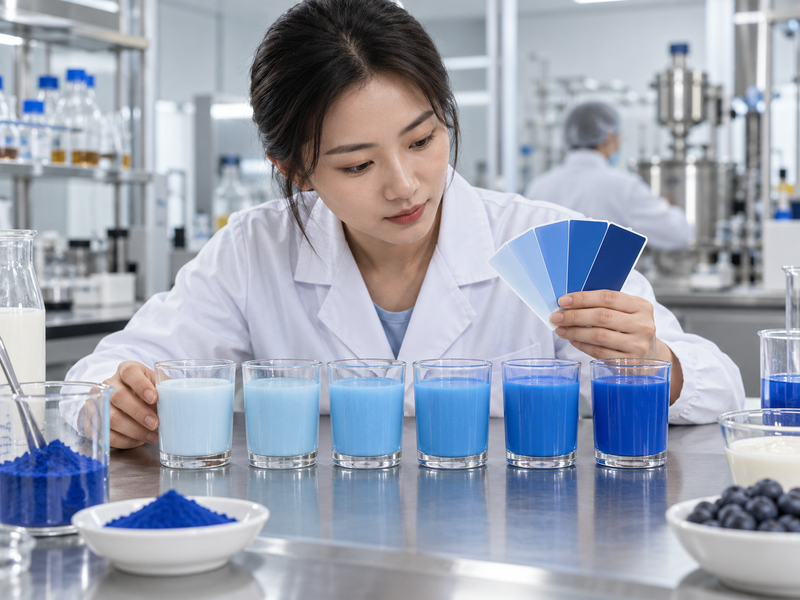
In panned gum, syrup concentration, layer count, piece temperature, air flow and drying time can all change blue appearance. Prepare candidate colors at a matched starting shade in the same coating formulation. Use the same piece count, target weight gain and cycle settings. Measure color after selected layers, at final dry weight and after conditioning. Check whether a white underlayer shifts the blue toward pastel or a yellow substrate makes it greener. Record surface gloss, mottling, cracks and rub-off.
Don’t judge a wet pan: the finished dried shell may appear lighter or less uniform than the syrup. Sample from different locations in the batch because pan loading and spray pattern can create gradients. Test handling and packaging abrasion, then check whether color transfers to hands or neighboring pieces. If a supplier recommends a protective glaze, include it in the full formula and label review. Comparing pigments in different shell recipes cannot isolate the color’s performance or cost.
| Coating variable | Hold constant | Inspect |
|---|---|---|
| Syrup solids | Same recipe | Viscosity and shade |
| Layer count | Same weight gain | Mottling |
| Drying cycle | Same product temperature | Cracks and rub-off |
7. How should flavor and base color be checked?
Test the complete eating experience
Gum bases, sweeteners and flavors have their own color. A yellowish core may turn a thin blue coating green, while an opaque white shell can soften a vivid blue. Some flavors or acidulants can also change the pigment environment. Build shade targets in the exact finished piece and compare under retail and daylight conditions. Slice pieces so color penetration or a mismatched core is visible. Keep an uncolored control from the same base lot to identify background variation.
One more check: conduct coded sensory and texture review after conditioning, not just while pieces are fresh. A carrier or coating change can affect initial bite, flavor release, sweetness or surface feel. Record chewing quality alongside color acceptance. If the blue dose required for a target shade brings a noticeable flavor or alters shell thickness, test a different grade or route. Color should support the product promise without quietly changing the gum experience consumers expect.
8. What shelf-life tests matter for gum?
Evaluate moisture, light and handling
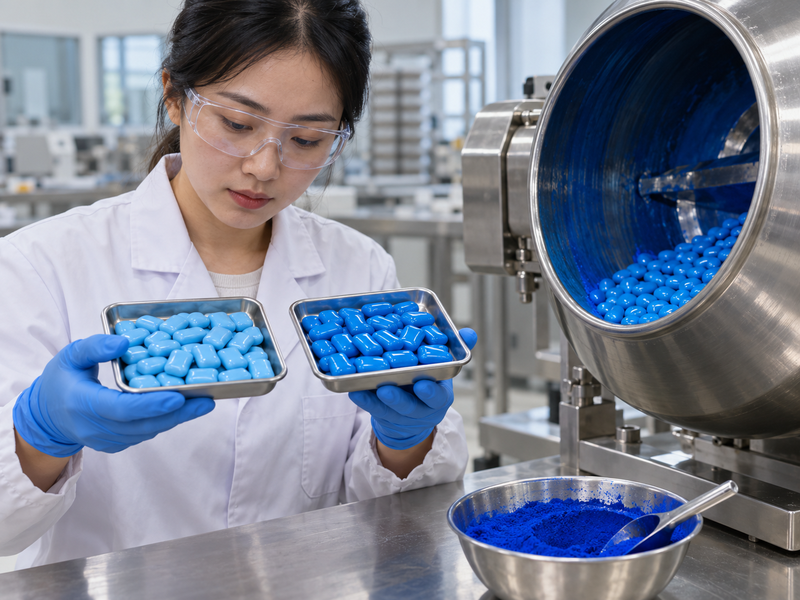
Package pieces in the intended pouch, bottle or blister. Store at specified normal and justified excursion conditions while tracking color, surface defects, moisture or texture, flavor and package staining. Include light and dark arms if retail exposure is relevant. For coated pieces, inspect abrasion and color transfer after transport simulation. For mass-colored gum, inspect cut pieces as well as exterior shade. Use enough packs to open at planned dates without repeatedly disturbing the same sample.
The end point matters: set an acceptable color difference, speck limit and surface-quality rule before the study. A pigment that looks stable as dry powder may change once trapped in a moist shell or warm gum. Compare against an uncolored control and a retained approved reference. If packaging barrier or coating glaze changes, repeat the relevant tests. A supplier’s shelf-life claim for the ingredient cannot establish the finished gum’s saleable life.
Open separate packs at each time point, then assess pieces before and after normal handling. Repeatedly opening one pouch changes its moisture exposure and can create an artificial defect. Include samples from the start and end of a pilot run so shelf results reflect realistic dose variation. If one pack shows unexpected spots, trace its lot and process position before averaging it away.
| Storage concern | Gum-mass check | Coating check |
|---|---|---|
| Light | Cross-section shade | Surface fading |
| Moisture | Texture and spots | Cracks or tack |
| Transport | Piece breakage | Rub-off and transfer |
9. Which supplier documents support approval?
Connect the pilot to routine shipments
Request a current specification, full composition, color-value method, lot certificate, microbiological and contaminant limits, storage instructions and package details. Ask for evidence that the commercial grade can be supplied consistently, along with notice requirements for carrier, source or process changes. If the supplier has gum application data, request the exact matrix and conditions behind it. Marketing images and patent examples cannot replace this dossier. A process claim should state the tested heat, shade and storage conditions.
Build a repeat check: retain an approved lot and compare new lots at a standard dose in a small gum or coating trial. Record color under the same instrument and visual conditions. The SpirulinaCN factory overview points to batch and quality questions, while the purchase decision should use the actual quoted SKU records. Confirm minimum order quantity, lead time and shelf life before pilot approval so a successful formulation can move into supply without a forced substitute.

10. When is the blue gum ready for scale-up?
Lock a route and measurable criteria
Choose mass incorporation or coating only after both regulatory and technical review. The selected route should meet finished shade, speck, rub-off, texture and end-of-life requirements using the real line and pack. Document color dose per kilogram, premix method, addition point, actual product temperature and in-process sampling. Set limits that operators can measure and an escalation path for off-shade pieces. Confirm the supplier grade, lot controls and label composition before placing a full order.
Ready to source? send your gum format, coating or mass route, peak temperatures and target shade with a request for a traceable sample. Contact SpirulinaCN for an application-specific grade discussion and ask for its composition and color method. Requalify when gum base, flavor acid, coating syrup, color grade or package changes. A repeatable blue piece is the real milestone; an attractive tray from a single bench trial is only a beginning.
| Release gate | Evidence | Hold if |
|---|---|---|
| Regulatory | Listed identity and gum use checked | SKU composition unclear |
| Process | Full-line shade and defect data | Only bench mixing tested |
| Shelf | Finished pack passes | Fading or rub-off occurs |
Conclusion
US rules permit spirulina extract in chewing gum, but manufacturing still determines whether the blue looks clean and stays clean. Compare gum-mass and coating routes, record real heat exposure, and test distribution and shelf conditions in the final pack. Approve a traceable supplier grade with measurable color and defect limits. That work gives production a recipe it can repeat and buyers a blue gum worth keeping on shelf.
FAQ
Q1: Is spirulina extract listed for US chewing gum? Yes, under current 21 CFR 73.530, subject to its conditions.
Q2: Should blue go inside gum or on its shell? Test both feasible routes against the same finished shade and process criteria.
Q3: Can a patent example prove commercial performance? No. It describes investigated methods, not your grade or production line.
Q4: What usually causes blue flecks? Poor wetting, concentrated addition or uneven mixing are candidates to investigate.
Q5: What should be tested at shelf life? Shade, spots, texture, coating defects, rub-off and package staining in the final pack.