
Phycocyanin supplement sourcing starts with a deceptively simple question: what is in the jar? A bright blue sample may be a concentrated spirulina extract, a blend with a carrier, or a finished consumer formula. Those products need different specifications. This guide gives supplement teams a practical way to compare identity, batch evidence, formulation behavior, and claims before approving a supplier. It treats published research as background, while leaving product promises to the evidence for the actual finished product.
1. What are you buying when a supplier says “phycocyanin supplement”?
Define the material before comparing prices
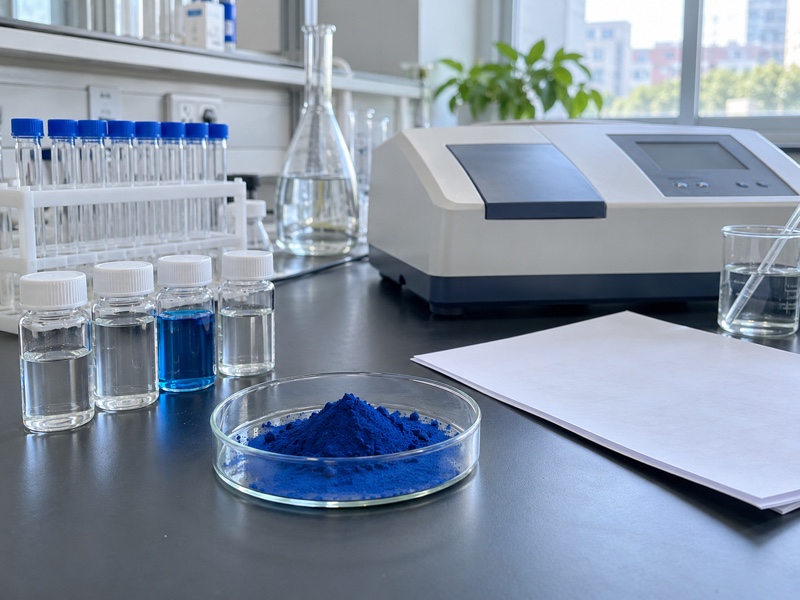
Phycocyanin is a blue, water-soluble pigment protein found in spirulina and other photosynthetic organisms. In a supplement brief, the word can refer to the pigment itself, an extract enriched in it, or a capsule containing whole green spirulina. A buyer should ask the supplier to identify the physical form, source organism, full ingredient composition, and intended use. That request prevents a comparison between products that happen to share a marketing name but deliver different material.
A useful specification names the source and processing route, then states the test method behind any declared phycocyanin result. The blue powder range in the current product catalog contains E3, E6, E18, E25, E35, and E40. Those are product codes; their names alone do not establish purity, percentage, or regulatory status. Ask for the technical sheet and a batch certificate of analysis before assigning meaning to any code. A sample that looks darker is also not proof of a higher assay result. Dissolve measured amounts under the same conditions and compare both the laboratory result and the intended formula.
2. Which physical form fits the supplement brief?
Match the form to manufacturing steps
Capsules, tablets, stick packs, and drink powders place different demands on an ingredient. A capsule line cares about flow and fill-weight consistency. A tablet line adds compression and disintegration. A drink powder must disperse without persistent lumps and keep its intended color after mixing. Ask whether the quoted material is a neat extract or a blend with maltodextrin or another carrier, because the added material affects the label and delivered dose.
Start trials with the actual packaging and process. A powder that pours neatly from a small sample vial may bridge in a production hopper. A blue solution that looks attractive immediately after mixing may change during a shelf-life test. Record dose, batch, moisture exposure, and mixing order so a supplier can reproduce a failure. Formulation teams should also compare the extract with whole spirulina only when both fit the brief. They are separate products with different sensory and color behavior.
| Format | First production question | Sample test |
|---|---|---|
| Capsule | Will it fill consistently? | Flow and fill-weight run |
| Tablet | Does compression change performance? | Pilot press and disintegration |
| Drink powder | Does it disperse and retain shade? | Reconstitution and shelf-life trial |
| Stick pack | Will the dose remain uniform? | Blend and pack checks |
3. How should identity and phycocyanin content be tested?
Read the method beside the number
A phycocyanin value is only useful when its basis is clear. A certificate should state whether the result is measured on the delivered powder or on dry matter, which preparation was used, and what units apply. Spectrophotometric methods often work with an extract or reconstituted solution. Sample extraction, dilution, turbidity, and overlapping pigments can change the result. If two suppliers quote different percentages, do not rank them until a laboratory uses a common method or the methods are shown to be comparable.
Ask for an identity profile as well as a single assay. The review of phycobiliproteins describes phycocyanin as one member of a broader family of colored proteins. A color reading alone cannot prove the identity or composition of a commercial powder. For a recurring contract, retain an approved reference sample and define how later lots will be compared. Include an agreed retest procedure for borderline results. This is more useful than a supplier’s unsupported statement that every blue lot is “high purity.”
4. Which safety tests belong in supplier approval?
Test the actual source and lot
The risk review should follow the material through cultivation, extraction, drying, and packing. Request batch records and the controls used for contaminants relevant to the species and process. Typical buyer questions cover heavy metals, microbiology, residual processing aids where applicable, and cyanotoxins. The FDA’s blue-green algae guidance explains why microcystins matter in this category. A certificate with only a pigment assay is therefore incomplete for a supplement decision.
Do not treat an attractive generic certificate as evidence for the delivered lot. Match product name, batch number, sampling date, test laboratory, method, result, limit, and signature. When a result says “pass,” request the numerical result and detection limit where that detail affects your specification. A third-party report is useful when it identifies the exact lot and method. A broad badge on a website, by itself, does not establish that a particular shipment meets your limits.
| Evidence | What to verify | Common gap |
|---|---|---|
| COA | Same lot as shipment | Generic sample document |
| Microbiology | Method and acceptance limits | “Pass” without basis |
| Heavy metals | Individual analytes and units | Unclear dry or as-sold basis |
| Cyanotoxins | Relevant panel and detection limits | No test despite source risk |
5. What happens when phycocyanin enters the formula?
Test compatibility in the full matrix
Phycocyanin behaves like a protein-based pigment, so product pH, heat, light, and neighboring ingredients matter. A development team should test it in the complete formula, including sweeteners, acids, flavors, minerals, and preservatives. Dissolving the powder in water is a useful starting check, but water is rarely the final supplement matrix. A fruit-flavored drink powder, for example, may have a more acidic reconstituted pH and a different color trajectory.
Use a fixed mixing order and record the time between hydration and filling. If a prototype loses color, test one variable at a time: pH, process temperature, light exposure, package, or storage condition. Several studies, including research on protein interactions in acidified conditions, show that formulation context changes stability. A supplier’s claim about stability should therefore specify the test matrix and conditions. Ask for retained samples from the same lot so your team and the supplier can investigate a disagreement without relying on memory or photographs.
6. How should shelf life be established?
Track color and assay separately
Set up a real-time stability plan in the intended package and, if useful, an accelerated comparison that helps rank prototypes. Keep a time-zero sample. Record temperature, light, oxygen exposure, humidity, and package material. At each pull, assess visible shade, instrument color, appearance, odor, moisture, and any relevant phycocyanin measure. A powder can pass its initial identity test yet fail the consumer experience after storage.
Do not convert a few hot-room weeks into a guaranteed commercial expiry without checking the mechanism of change. The review on phycocyanin degradation discusses the influence of pH, temperature, and light. Those variables should shape the test plan, but your finished formula and package determine the actual claim. Agree whether the acceptance criterion is an assay threshold, visual color window, or both. A buyer should also ask how the supplier packs and stores bulk powder before it reaches the finished-product factory.
| Study point | Record | Why it helps |
|---|---|---|
| Time zero | Assay and color reference | Baseline for comparisons |
| Processed sample | Color after manufacture | Finds immediate losses |
| Real-time pulls | Stored-pack results | Supports the proposed shelf life |
| Retained bulk lot | Supplier-side comparison | Separates ingredient from formula issues |
7. What can the research support in consumer copy?
Separate experimental findings from authorized claims
Published papers discuss antioxidant and other biological activities of phycocyanin. The phycobiliprotein review describes those research directions. It does not establish that every commercial capsule produces a clinical benefit in people. Cell tests, animal work, and studies on a different material cannot be silently turned into a claim for the finished supplement. Ask which exact ingredient, dose, route, population, and endpoint a paper studied.
Give the regulatory and scientific review team the full proposed label, landing page, and supplier evidence before approving copy. In particular, avoid implying disease treatment from mechanistic or preliminary studies. If a supplier offers a ready-made claim sheet, verify its jurisdiction and evidence independently. Claims can also drift when sales teams shorten careful wording into an absolute promise. Keep an approved wording register linked to the underlying evidence. The commercial value of a supplement depends on trust built by accurate materials, not a dramatic line that cannot survive a substantiation review.
8. How do market rules affect a supplement project?
Check the destination and the intended use
The same material may be evaluated differently depending on whether it is used as a supplement ingredient, a food color, or a cosmetic ingredient. In the United States, the FDA has a specific listing for spirulina extract as a color additive, with use conditions that must be read in the regulation. That listing does not automatically approve every phycocyanin material for every purpose or support a health claim. Other markets require their own ingredient, additive, and labeling assessment.
Ask the supplier for product identity, process description, specifications, safety documents, and the markets in which that exact product has been reviewed. Have a qualified local specialist check the proposed use, dose, and label. If the project will be sold in several regions, maintain a separate decision record for each. A product name or a prior export shipment is not a substitute for the destination-market review. The supplier should make the documents available; the brand remains responsible for the finished-product decision.
| Decision | Evidence to collect | Owner |
|---|---|---|
| Ingredient status | Identity, composition, process | Regulatory team |
| Additive use | Applicable local listing and limits | Regulatory team |
| Claims | Finished-product substantiation | Scientific and legal review |
| Label | Ingredient declaration and warnings | Brand team |
9. How do you compare two suppliers fairly?
Build one common scorecard
Send both suppliers the same application brief, target dose, format, delivery market, and requested documentation. Compare not only quoted price per kilogram but cost per acceptable finished unit. A cheaper powder can require a higher dose, cause color loss, or create rejected packs. For each sample, record total solids, carrier composition, color at the intended dose, processing loss, and measured lot-to-lot variation. Use the same independent laboratory where method differences could change the ranking.
Supplier support matters during scale-up. Ask who answers technical questions, whether representative samples come from commercial production, how changes in source or process are notified, and what happens when a batch fails. Keep commercial terms separate from technical approval so a low quote cannot override a missing safety result. A scorecard also makes rejection specific: “no lot-linked cyanotoxin report” can be resolved; “we did not like the supplier” cannot. Review a supplier’s exact documents and your own pilot data before signing a long supply agreement.
10. What is a sensible approval sequence?
Release the ingredient only after the pilot and paperwork agree
Start with a written brief and document screen. Reject unclear identity, missing composition, or untraceable safety results before spending time on a full formulation trial. Then run a controlled bench comparison with an approved reference material. If it passes, take it through pilot manufacturing and packaged stability. Put acceptance criteria in writing before results arrive. This avoids moving a target after a favorite sample performs badly.
Keep an approved supplier file with specifications, signed change-control terms, lot COAs, test methods, sample retention rules, and the final trial report. For a multi-grade portfolio, approve each grade for its stated application. E3, E6, E18, E25, E35, and E40 should not inherit one another’s test results by name. The last gate is a commercial lot that matches the approved sample and the agreed specification. That is the point at which purchasing can repeat the order with fewer surprises.
| Gate | Pass condition | Record |
|---|---|---|
| Document screen | Clear identity and safety package | Approved supplier file |
| Bench trial | Required color and handling | Formulation sheet |
| Pilot run | Stable process performance | Batch report |
| Shelf-life review | Meets agreed end-of-life limits | Stability report |
| First commercial lot | Matches approved specification | Lot release record |
A separate blue spirulina supplement sourcing guide compares whole-biomass and extract options for consumer formats.
FAQ
Q1: Is phycocyanin the same as whole spirulina? No. Phycocyanin is a pigment protein associated with spirulina; whole spirulina powder contains a broader range of biomass components. Ask for the exact material identity.
Q2: Does a blue color prove high phycocyanin content? No. Compare measured results from the same validated method and the same preparation basis.
Q3: Can a supplier COA replace finished-product stability testing? No. It describes a lot at a defined point. The formula, process, package, and storage conditions still need testing.
Q4: Can an ingredient study justify a supplement health claim? Not automatically. The finished claim needs evidence and a jurisdiction-specific review of the actual product and dose.
Q5: What should a buyer request first? Start with identity, full composition, current specification, lot-linked COA, contaminant tests, and a representative commercial sample.