
Phycocyanin function means two distinct things in discussions about products. In an organism, it helps capture light for photosynthesis. In a commercial ingredient, its blue color and optical behavior can help create a food, cosmetic, or laboratory product. Research also examines biological activities, but those findings do not automatically support consumer health claims. Buyers need to say which function they mean, then choose tests that prove it for the material and use at hand.
1. What does phycocyanin do in algae?
Capture light as part of an antenna system
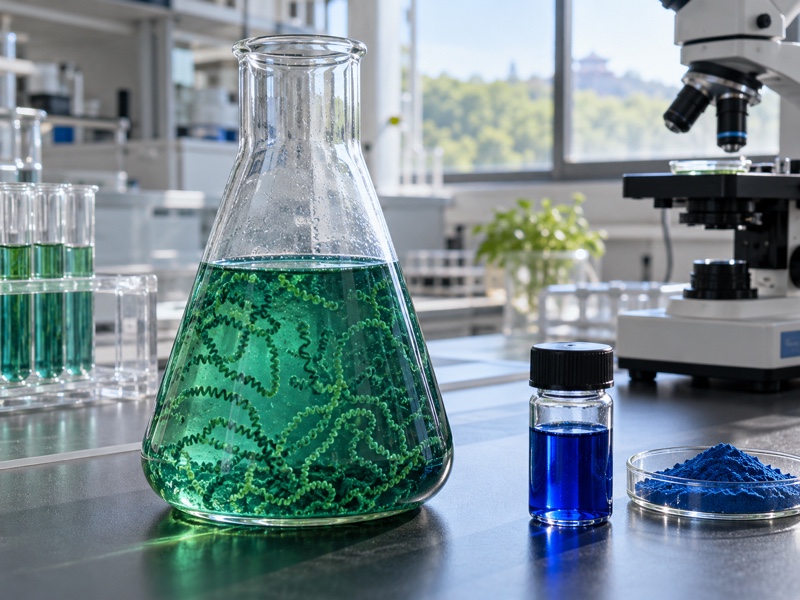
Phycocyanin is a phycobiliprotein. In cyanobacteria such as cultivated Limnospira, its protein-bound chromophores absorb light and transfer energy within a photosynthetic light-harvesting system. Related pigments can broaden the range of light the organism uses. This biological role explains why the material has distinctive optical properties, but it does not describe its function in a bottle of yogurt.
The phycobiliprotein review explains the protein family and photosynthetic context. For sourcing, confirm that a proposed “phycocyanin” powder comes from the stated organism and process. A whole spirulina biomass contains the pigment along with many other components; a blue extract concentrates a selected fraction. Those two materials can behave differently in a formula. A buyer should describe the commercial material before using biological facts in sales copy.
| Context | Function being discussed | Evidence |
|---|---|---|
| Living organism | Light harvesting | Biological research |
| Food | Color and formulation | Finished-product trial |
| Laboratory | Optical marker | Validated method |
| Health claim | Biological effect in people | Relevant human evidence |
2. Why is its blue color useful in food?
Make a shade a product team can specify
Food makers can use a suitable phycocyanin-rich preparation to create a blue shade or combine it with other permitted colors for a different hue. The main commercial function is visible color. A supplier’s powder may look bright blue in water, yet the finished product can become pale, greenish, or unstable because of pH, heat, light, or interactions with other ingredients. The food-application review discusses these practical constraints.
Set a color target in the actual food and package. Test a dose ladder and measure the shade immediately after production and through shelf life. Note sediment, streaking, flavor, and package effects. A color ingredient’s value is not just its pigment assay; it is the dose that makes acceptable finished units. If the formula cannot retain blue under the required process, the team may need a different color or product design. Do not compensate for poor stability with an untested excess dose.
3. Can phycocyanin act as a nutritional ingredient?
Check the amount actually delivered
Phycocyanin is a protein complex, but a color-use level may contribute little to a product’s declared nutrition. A carrier-containing powder can also have a different composition from purified protein. If a team wants a nutrition-focused product, request a full composition analysis and calculate the contribution at the proposed serving size. Whole spirulina powder may serve a different nutritional concept than a blue extract.
Do not use the phrase “rich in protein” because the word phycocyanin includes “protein.” The finished serving must meet the relevant market’s nutrient-claim criteria if such a claim is made. Analytical methods and units matter: an absorbance ratio cannot simply be converted into grams of protein per serving. Have regulatory specialists review nutrient declarations and claims for each market. The supplier should provide current lot data and explain the assay basis, while the brand verifies the finished product.
| Nutrition question | Required record |
|---|---|
| Grams per serving | Formula and tested composition |
| Protein claim | Finished-product analysis and rules |
| Carrier contribution | Full ingredient breakdown |
| Label name | Market-specific review |
4. What biological activities have researchers studied?
Keep experimental findings in their setting
Researchers have investigated phycocyanin in antioxidant, inflammation, and other biological models. The result depends on whether the test used a chemical assay, cells, animals, or people; on the preparation; and on exposure. A response in a test tube does not establish that a drink with a small color dose improves human health. Review articles are valuable maps of research but can group heterogeneous studies under one ingredient name.
For each proposed claim, make an evidence table with study type, material identity, dose, population, outcome, and limitations. Ask whether the commercial grade matches the studied preparation and whether consumers would receive a comparable amount. If the evidence stops at preclinical work, describe it as research rather than a proven benefit. Avoid suggesting the pigment treats a disease. Qualified medical and regulatory reviewers should decide whether any consumer statement is supportable in the destination market.
5. Is antioxidant activity a useful purchase specification?
Measure the job the ingredient must do
Antioxidant assays can be useful in research or product development, but different assays produce different numbers and may react with other constituents of an extract. A high in-vitro reading does not establish shelf-life protection in food or a health effect in a person. If the ingredient is bought for blue color, finished-product shade, stability, safety, and supply consistency are more direct release criteria.
If the team wants an antioxidant function in a product, it should define an outcome and test it in the relevant matrix under realistic conditions. Determine whether the effect comes from phycocyanin, whole biomass, another extract component, or the base formula. Document the method and controls. Do not add an “antioxidant score” to procurement simply because a brochure prints one. The review of phycobiliproteins can help identify research questions; it cannot replace application testing.
6. What role can fluorescence play?
Use a defined optical method
Phycocyanin can fluoresce after suitable excitation. Laboratories may use that behavior for characterization or as a signal in specific assays. The reading changes with concentration, pH, protein state, and instrument settings. It should not be presented as a universal “strength” score for food powders. A fluorescence peak can support identity under a validated method but cannot prove the product is safe or legally usable.
Ask the lab to state excitation and emission settings, preparation, standard, units, and working range. Compare commercial samples under the same method. When the commercial job is visible blue, measure visible color in the final product too. A high fluorescence signal in buffer may coexist with poor shade retention after heat. For environmental water monitoring, phycocyanin fluorescence has another meaning entirely: a proxy signal linked to cyanobacteria, not a finished ingredient certificate.
| Optical readout | Commercial use |
|---|---|
| Absorbance | Defined pigment assay |
| Fluorescence | Identity or research signal |
| Colorimetry | Finished-product shade |
| Visual panel | Specks, hue and acceptability |
7. How does processing change function?
Follow the pigment through the plant
Protein structure and color can respond to pH, heat, light, and time. The review of physicochemical degradation discusses those influences. A blue extract that performs in a cold dessert may fail a hot-filled acidic drink. Processing can also affect dispersibility, flavor, and microbial quality. Suppliers’ generic stability claims should be tied to actual conditions and methods.
Make pilot batches using the proposed mixing order, thermal step, filling, package, and storage. Sample at each stage to identify where failure occurs. A post-heat addition might protect color but introduce a new food-safety question. A package change may improve retention but alter cost and shelf appearance. Record those trade-offs before calling the ingredient “functional.” The function that matters commercially is the one maintained in saleable units at expiry.
8. Which specification fits the intended function?
Write different gates for different jobs
For food color, specify source, composition, assay method, color reference, dispersion, safety panel, and packaged stability. For a laboratory reagent, purity, spectral profile, and method compatibility may dominate. For a whole-spirulina supplement, broader biomass composition and serving size matter. A cosmetic color or active concept needs its own formulation and regulatory file. One specification cannot cover all these jobs.
The current supplier portfolio includes several E-coded blue grades. Ask for each code’s written definition, carrier, test method, and representative lot. Do not infer a percentage from the code. Tie the approved grade to a particular product and market. Request a current COA for every production lot and a change-notification agreement. If the supplier changes source, extraction, or carrier, reevaluate the function in the finished product rather than relying on the unchanged trade name.
| Intended job | Leading acceptance gate |
|---|---|
| Blue food color | Shade at expiry |
| Nutrition positioning | Measured serving contribution |
| Lab marker | Method-specific signal |
| Cosmetic use | Formula stability and local rules |
9. What safety and legal checks are separate from function?
Do not let performance stand in for approval
A sample can produce excellent blue and still lack a suitable contaminant panel, traceability, or market permission. The FDA’s microcystin information for blue-green algae products points to one source-related safety concern. Review relevant cyanotoxins, heavy metals, microbiology, and other hazards according to the source and use. Obtain lot-level results with methods and limits.
For a US color use, check the FDA’s spirulina extract listing against the actual ingredient and application. Other jurisdictions require separate review. “Natural” and “food grade” do not themselves establish permitted use. If marketing proposes a health function, claim rules and evidence are additional gates. Put these reviews in the product file before launch, not in a post-launch corrective-action list.
10. How should a team decide which function to buy?
Write one sentence about the product’s job
State the intended function first: for example, “produce a specified blue in a refrigerated yogurt through its shelf life.” Then set measurable acceptance criteria, obtain commercial samples, and test under realistic conditions. Document source, grade, dose, process, safety, legal status, and landed cost. A broad promise such as “phycocyanin for wellness and color” makes it hard to know which supplier evidence matters.
Approve the lot and supplier that meet the defined job with repeatable records. If the product is later marketed for a new function or country, reopen the review. The biological story can be accurate and interesting, but the purchase decision should rest on a tested commercial material in a named application.
Give each internal team a specific responsibility. R&D owns the formula and performance protocol; quality owns lot criteria and investigations; regulatory staff review permitted use and claims; procurement manages price, supply, and change notices. Marketing receives only statements that the evidence file supports. This division matters when an ingredient has several appealing stories. Without it, a purchase approved for blue color can quietly become the basis for an unreviewed wellness promise. A one-page decision memo with sign-off and version date lets the teams see which function was actually approved and what new evidence would be needed for another one.
| Decision record | Example field |
|---|---|
| Function | Blue color in yogurt |
| Acceptance | Shade and stability limits |
| Material | Source and grade |
| Quality | Lot COA and safety panel |
| Market | Legal and label review |
The pigment buyer guide develops the color-function purchase checks.
FAQ
Q1: What is phycocyanin’s main function in spirulina? It helps capture light for photosynthesis.
Q2: What does it do in food? A suitable preparation can supply blue color, subject to formula and market checks.
Q3: Does a color dose provide a health benefit? That cannot be inferred from color use; claims need relevant evidence and dose review.
Q4: Is fluorescence the same as visible color? No. They are related optical properties measured for different purposes.
Q5: Which function should a buyer specify? The function the finished product must deliver, with a measurable acceptance test.