
Blue spirulina light stability packaging trials should compare packs under the light they will actually face. A vivid blue drink can pass a bench test and look dull after weeks in a lit display case. That failure may come from the ingredient, the formula, the bottle or the exposure history. A protective package can help, but a buyer cannot choose it from a generic statement that phycocyanin is light sensitive. The comparison has to use the finished product and the light conditions it will meet.
The Spirulina CN Blue Spirulina page asks buyers to test light exposure and packaging with the selected grade. This guide sets out a practical trial for beverage and food brands. It focuses on color retention and saleable appearance. It does not assign a universal shelf life or claim that one bottle material protects every phycocyanin formulation.
Contents
- Why does packaging belong in a color trial?
- What should the control pack represent?
- Which light exposures should be tested?
- How should clear and protective packs be compared?
- What color measurements are useful?
- How can formula changes be kept separate?
- What should transport and storage add to the trial?
- How should a brand weigh appearance against pack cost?
- What evidence belongs in supplier approval?
- When is a pack ready for commercial release?
1. Why does packaging belong in a color trial?
The pack changes the exposure
The customer sees the color through or after opening its commercial package. A clear bottle, an opaque bottle and a carton can expose the same formula to different amounts and kinds of light. Research on phycocyanin solutions has measured color loss under controlled light conditions, including an experimental study of light and temperature exposure and a beverage-oriented high-pressure-processing study that followed light stability. Their findings justify a packaging trial; they do not predict a particular product’s retail life.
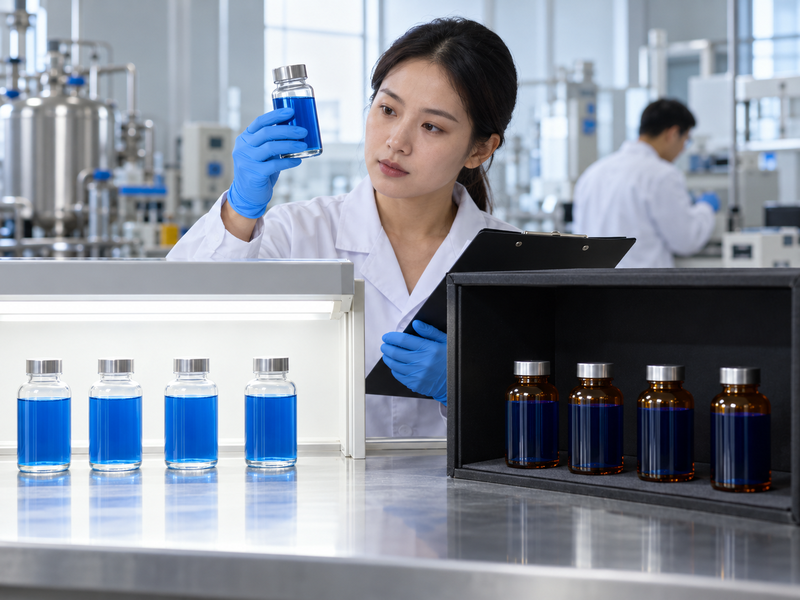
Start with the chosen phycocyanin SKU, complete formula and proposed filling process. Test the pack that marketing wants to sell, not only an ideal laboratory container. Include an exposure-protected control so the team can separate light-associated fading from color changes caused by pH, oxygen, processing or time. Record both appearance and any measured color change. If the drink is already unstable in the dark, a darker bottle alone will not solve the underlying formulation problem.
| Pack in trial | Purpose | What to hold constant |
|---|---|---|
| Intended clear pack | Tests commercial concept | Formula and fill lot |
| Protective pack | Tests reduced exposure | Shape and fill volume where possible |
| Dark control | Shows change without display light | Temperature and storage time |
| Empty pack | Measures pack transmission | Material and wall thickness |
2. What should the control pack represent?
Choose a meaningful baseline
A dark control should contain the same finished product, from the same manufacturing batch, sealed at the same time. Store it at the same temperature as the illuminated samples. This isolates light as the main planned difference. An empty package can help a packaging laboratory characterize transmitted light, but it cannot show how the food itself absorbs or scatters light. Both controls answer different questions, so label them clearly.
Add a formula blank without the blue ingredient when the base has its own color or browning tendency. If a fruit base turns yellow during storage, the final shade may shift even while some phycocyanin remains. The blank reveals that contribution. Keep identical headspace, closure, fill level and oxygen-control procedure across samples. Otherwise a clear bottle could appear worse because it was filled differently. Use at least multiple independently filled units per condition, with the number chosen by the quality team’s test plan. A single attractive bottle is not a reliable release basis.
| Control | Main question answered |
|---|---|
| Same product in darkness | How much change occurs without light? |
| Base formula without blue | Does the food base change color itself? |
| Empty package | How much light reaches the product? |
| Time-zero retained sample | What was the starting shade? |
3. Which light exposures should be tested?
Match the route to the customer
Map the product’s likely exposure from factory to use: warehouse, transport, retail shelf, refrigerated display and home storage. A beverage sold in a closed carton has a different profile from a clear bottle under store lighting. Define the test lamp or real display, illuminance, distance, daily exposure hours and temperature. A broad phrase such as “ambient light” is too vague to repeat. Include the proposed shelf orientation because front-facing and rear-facing bottles may receive different exposure.
Light and temperature should be measured together. An illuminated shelf may also be warmer, which could confound the result. The experimental phycocyanin study tested separate light and temperature conditions, showing why a trial should record both. Do not copy its color-retention percentages into a product promise. Its preparation and exposure were not the brand’s formula or pack. Select time points that reflect the intended distribution period and leave enough units unopened for later measurements.

4. How should clear and protective packs be compared?
Change one major packaging variable at a time
Run the same lot of product into candidate packs during one controlled fill. Compare the pack the brand prefers with a more protective option, such as an opaque container or a sleeve. If a sleeve is tested, include its production position and coverage, because a clear window or seam may leave a large exposed area. Record polymer, color, wall thickness, label coverage and closure. “Blue bottle” does not specify its transmission profile.
Sample at the same time points and under the same light and temperature conditions. Measure the product in a standard vessel as well as through the package if the pack itself changes perceived color. Through-pack viewing answers the retail appearance question; a common vessel helps reveal actual product change. Do not assume a protective pack is better if it hides fading that still occurs after opening. The choice should meet the brand’s expected appearance both on shelf and at use.
| Comparison feature | Record for each candidate |
|---|---|
| Material | Polymer, glass or multilayer construction |
| Optical coverage | Opaque area, sleeve, label and window |
| Fill conditions | Product lot, headspace, closure and date |
| Exposure | Light, temperature, duration and orientation |
| Outcome | Through-pack and decanted color |
5. What color measurements are useful?
Use a fixed visual method and an instrument
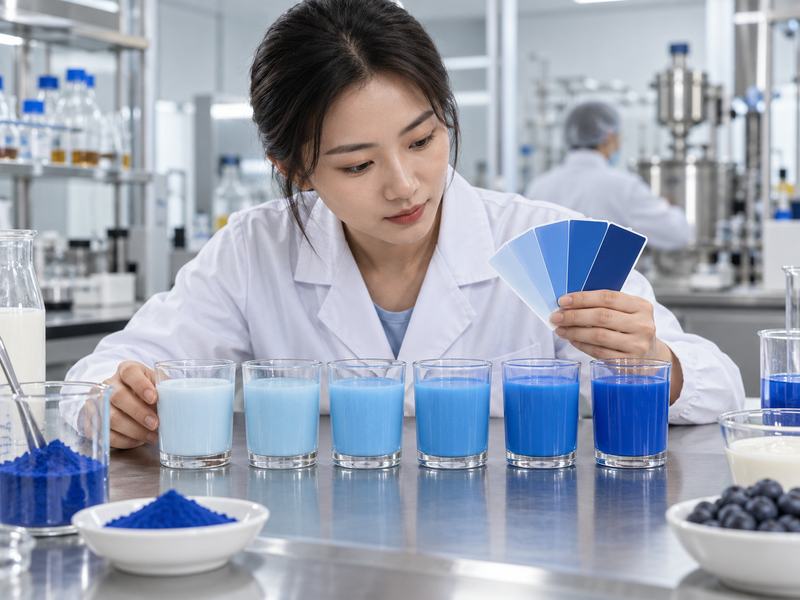
Visual review is useful because customers judge appearance, but it needs controlled lighting, background and viewing distance. Ask reviewers to compare blinded, coded samples against the approved reference. Instrumental measurements can help separate lightness, hue and overall difference. The CIE color-difference standard describes methods for reporting color difference; the brand still must set a product-specific acceptance limit. A numerical difference has little meaning if the sample vessel, illumination or instrument geometry changes between days.
Measure immediately after filling and at planned intervals. Note sediment, haze or separation as well as color, because a cloudy beverage can look less blue without a simple loss of pigment. Photograph each sample using fixed settings for the investigation record, not as the sole measurement. Use the same optical method on every package group. A time plot of color coordinates and visual verdicts is more informative than a pair of uncontrolled “before and after” photographs.
6. How can formula changes be kept separate?
Hold the product constant during pack screening
Do not alter sweetener, acid, protein, stabilizer and package at once. If the blue fades less in the second trial, no one will know which change helped. First screen packages with one approved formula and one confirmed pigment lot. If the product fails even in the protected pack, investigate the formulation or process in a separate trial. An original beverage study reported interactions among phycocyanin, protein or carrageenan preparations and processing conditions; it supports controlled variables, not a universal fix.
Track pH, dissolved oxygen if relevant, process temperature and order of addition. A pack may influence oxygen ingress, but light should remain the planned variable during an initial comparison. After a promising package is selected, repeat the test using normal production variability and more than one ingredient lot. Document any formulation adjustment as a new product version. Packaging qualification applies to the formula tested, not every future blue drink the brand might make.
| Variable | Initial screen | Later challenge test |
|---|---|---|
| Formula | One frozen version | Normal manufacturing range |
| Color lot | One confirmed lot | Additional commercial lots |
| Process | Fixed fill run | Production variability |
| Package | Candidate materials | Final supplier and artwork |
7. What should transport and storage add to the trial?
Include the journey beyond the shelf
Retail display is only one part of the exposure history. A clear bottle may spend days in a lit staging area before it reaches the store. Transport can change temperature, and pallet wrapping can reduce or increase light exposure depending on the material. Define the conditions the product will realistically face, then add justified stress conditions as a separate challenge. Keep the stress result distinct from the claimed shelf-life basis.
Retain sealed units from each packaging group for the full intended storage interval. Inspect leaks, closure integrity and label or sleeve movement as well as color. A protective sleeve that slips during freight may not protect the region it was meant to cover. The Spirulina CN product page asks buyers to evaluate actual packaging and storage; a supplier’s powder shelf life cannot be assigned to a finished beverage. Quality and logistics should agree on a handling plan before launch, then sample actual distribution units to verify the assumptions.
8. How should a brand weigh appearance against pack cost?
Compare cost per saleable unit
A more protective package may cost more per bottle, add material or complicate recycling and filling. The useful comparison is the total cost of packs that meet the approved appearance at the end of the intended route. Include material price, label or sleeve application, line speed, reject rate, freight weight and the risk of faded product. Do not invent a universal savings figure for opaque packaging. Use quotes and pilot results from the actual project.
Marketing should review whether a visible blue product is essential at purchase or whether a protective outer carton can still communicate the product. A clear pack may remain viable if the formula and route meet the color target under measured exposure. Conversely, a cheap clear bottle is expensive if quality rejects finished units or stores return faded stock. Keep the decision tied to documented color acceptance and commercial volumes. If the ranking changes under small assumption shifts, schedule a larger pilot before ordering printed packaging.
| Cost item | Source of evidence |
|---|---|
| Pack and decoration | Supplier quotation |
| Filling performance | Pilot line report |
| Storage space and freight | Logistics estimate |
| Unsaleable units | Trial and quality records |
| Display value | Brand’s tested retail objective |
9. What evidence belongs in supplier approval?
Link ingredient, formula and package
The approval file should contain the phycocyanin SKU and lot, its current specification and COA, the finished-product formula, process record and packaging drawings. Add measured package transmission if it was tested, exposure logs, time-point results, photographs taken under fixed settings and the acceptance decision. A new color grade or carrier system may require a repeat trial because the old light result may not apply. The site lists grade options but says final specification and performance are product dependent; retain that qualification in the purchasing record.
Record who owns ongoing checks. R&D may define shade, quality may retain and inspect samples, packaging may manage supplier changes, and procurement may ensure the ordered bottle matches the approved drawing. The CIE color-difference framework can help standardize numeric comparison, but an acceptance decision should also consider whether the product still looks right to the intended customer. A signed cross-functional record prevents a package substitution from becoming an unreviewed color change.

10. When is a pack ready for commercial release?
Release the tested combination
The pack is ready when the exact formula, pigment grade, process and final package have met the company’s color and quality criteria through the planned storage and display conditions. The record should state the accepted viewing method and instrument method, who approved them, and how future lots will be monitored. A protected-pack result cannot be used to justify a clear-pack launch. A lab solution result cannot replace the filled retail unit.
Set change triggers before production: new pack supplier, altered bottle resin or wall, different sleeve coverage, new color SKU, revised acid level or changed fill process. Quality can then decide whether a targeted recheck or a full stability repeat is required. The Spirulina CN Blue Spirulina page offers product-selection and sample support, but it does not assign a guaranteed shelf life to a buyer’s package. Ask for the exact ingredient documents, then use the company’s own filled-pack evidence to release the commercial design.
Frequently asked questions
Q1. Is an opaque bottle always required? No. Compare the proposed formula and packs under documented exposure, then choose the option that meets the color target.
Q2. Can a clear bottle be judged by a short bench test? It can be screened that way, but launch needs a filled-pack study covering the intended route and duration.
Q3. Does a powder’s shelf life predict drink color life? No. The finished formula and package need their own evaluation.
Q4. Should color be measured through the bottle? Check retail appearance through the bottle and product color in a common vessel; the questions differ.
Q5. What is the minimum useful control? A same-lot filled unit held in darkness at the same temperature as the exposed units.
Request a packaging trial sample
Share the formula type, target shade, proposed package and display route with Spirulina CN through its Blue Spirulina page. Request a matching grade sample and current batch documents, then run the pack comparison on filled units before approving artwork or shelf-life claims.