
Blue spirulina acidic beverage stability is easy to misjudge when a promising bench color becomes a shelf-life promise. A blue drink can look right at the bench and turn dull, greenish or cloudy after acidification, processing or weeks in a bottle. The buyer needs evidence from the finished beverage, using the proposed grade, package and process.
Blue spirulina acidic beverage stability is a testing problem with several moving parts. Phycocyanin is sensitive to pH, temperature and light; a peer-reviewed degradation review reports that its stability changes across those conditions. The published observations explain why to test, but they are not a shelf-life promise for every commercial powder. This guide helps R&D, quality and procurement create a product-specific trial and make a documented purchasing decision.
Contents
- What counts as an acidic beverage test?
- How should a pH screen be designed?
- Which color changes should be measured?
- Does the acid system matter?
- When should color enter the process?
- Should stabilizers be tested?
- How do packaging and storage enter the trial?
- What is separate from color stability?
- How do you confirm a bench result at pilot scale?
- What should be agreed with the supplier?
1. What counts as an acidic beverage test?
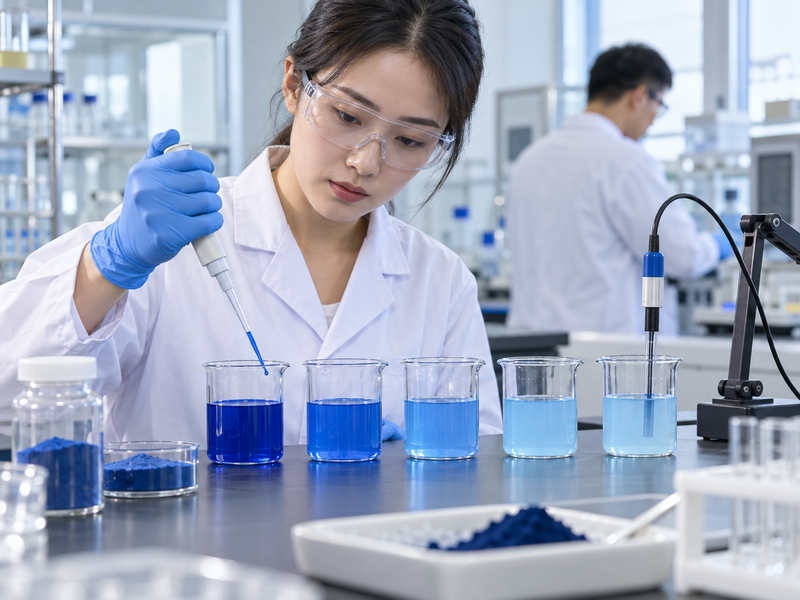
Use the finished formula as the main sample
The beverage’s measured pH is only one part of its environment. Acid type, sugar, minerals, protein, preservatives, oxygen, base color and package all affect what the buyer sees. A quick solution of blue powder in acidified water can expose a risk, but it cannot approve a juice drink or sparkling beverage with a different formula. Write down the intended product category, current formula version, processing route and storage condition before comparing samples.
Keep an uncolored base and an approved color reference in the trial. The base may already be yellow, cloudy or prone to sediment. If it changes on its own, do not attribute every later observation to phycocyanin. A useful result tells the team which grade worked, at what dose, in which formula and at what checkpoint. For commercial use, define success as an acceptable finished-pack shade and physical appearance through the proposed life.
| Trial item | Record before mixing | Why it matters |
|---|---|---|
| Formula version | Full internal code | Prevents mismatched trials |
| pH target | Measured finished range | Defines the acid condition |
| Grade and lot | Exact supplier SKU | Links to the purchase |
| Process | Addition and heat path | Identifies exposure |
| Package | Material and light barrier | Defines shelf appearance |
2. How should a pH screen be designed?
Cover the range the plant can make
Build a controlled set of formula samples across the expected finished-product pH range, including production tolerance and realistic drift during storage. Adjust the formula by a documented method, then measure pH after equilibration rather than relying on the acid added by weight. Keep pigment dose, base batch, mixing and package constant. If the plant has seasonal raw materials that shift acidity, include a representative high and low case where practical. The purpose is to find a working window for this formula, not to announce a universal limit for phycocyanin.
Check color and physical condition soon after mixing, after processing and at storage checkpoints. The stability review discusses pH-dependent changes to phycocyanin and the limits of generalizing across conditions. Report your own result with the measured pH, temperature and elapsed time. If a grade fails near the edge of the intended range, the buyer can tighten product control, reformulate or test a different grade before approving bulk supply.
| pH-screen field | Fixed or varied? | Example of record |
|---|---|---|
| Formula base | Fixed | One prepared batch |
| Pigment dose | Fixed | Mass per finished mass |
| Measured pH | Varied deliberately | Value after equilibration |
| Storage condition | Fixed per series | Pack and temperature |
| Inspection time | Scheduled | Dated result |
3. Which color changes should be measured?
Track shade and defects separately
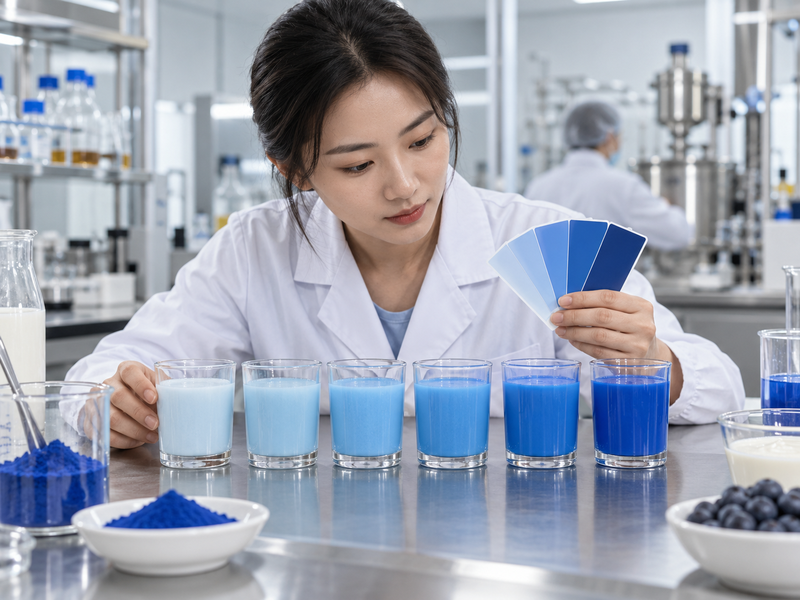
Measure or photograph the initial beverage under fixed light, fill level and background. Record instrumental color coordinates if the company has a validated method, and inspect the sealed pack for haze, floating particles, ring formation and settled material. A drink can keep much of its blue color while becoming too cloudy for a clear-bottle concept. It can also retain clarity while losing the target hue.
Compare every checkpoint with the time-zero pack and an approved reference. Use separate sealed packs for each destructive reading. Include notes on whether a visible change reverses after a defined gentle inversion; do not shake a failing sample until it looks acceptable. Published research on phycocyanin in non-alcoholic carbonated beverages underscores the need to evaluate the actual beverage rather than color powder alone. The team’s own accepted shade and defect limits should be written before the final storage results arrive.
4. Does the acid system matter?
Change one formulation factor at a time
Two drinks with the same measured pH can contain different acids, buffers, minerals, sweeteners and preservatives. Those ingredients may change protein interactions, base color and sensory quality. When a blue sample fails, vary one planned formulation factor while holding the others steady. That approach helps identify whether the color is responding to acidity alone or to the broader formulation. It also prevents a supplier from recommending a dose change that hides a separate physical defect.
Ask R&D to record acid identity, concentration, order of addition and final pH. If the process uses a concentrated acid stream, note whether the pigment contacts it locally before the tank is mixed. A brief local exposure can differ from the equilibrated final pH. Test a revised sequence in a pilot vessel that matches production mixing. The trial record should say which team reviewed each change and which version remains the commercial target.
| Variable | Keep constant during test | Watch for |
|---|---|---|
| Acid type | Target finished pH | Shade and haze |
| Mineral system | Acid and pigment dose | Flocculation |
| Sweetener/base | Process path | Background color |
| Addition order | Ingredient quantities | Local concentration effects |
5. When should color enter the process?
Trial realistic addition points
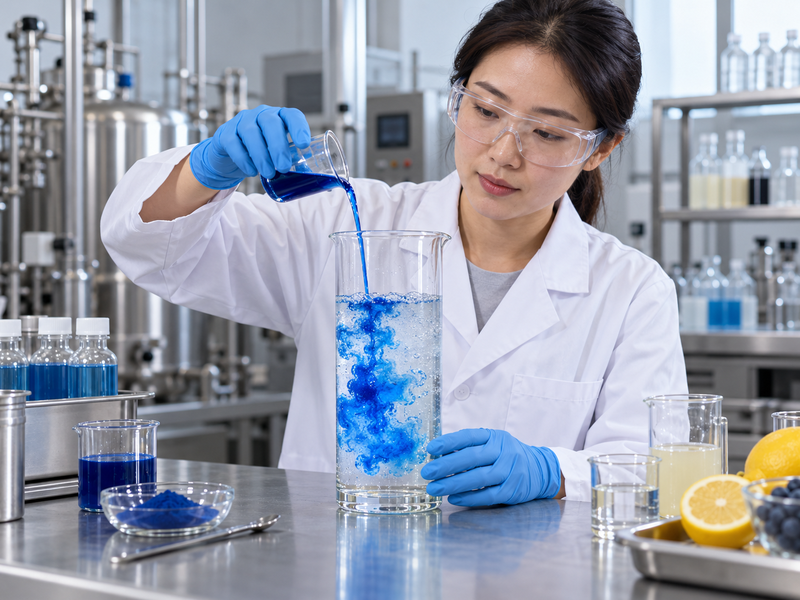
Color may be added before acidification, after acidification, before a heat step or after cooling, depending on the product and the validated process. Test only sequences the plant can run safely and consistently. Record the actual product temperature, hold time and mixing at the color addition point. A bench drop added to a cool finished drink does not establish performance in a line where the pigment enters a hot tank or meets concentrated acid.
Take samples before and after each critical stage. If color changes during a hot hold, investigate the time-temperature history separately from the final pH. The degradation review documents temperature and pH effects, but a commercial line’s exact sequence controls the exposure. A late addition may preserve shade yet create hygiene, mixing or filling challenges; quality and process engineers must review those consequences. Put the approved stage and method into a written manufacturing instruction so the good laboratory result can be repeated on another shift.
6. Should stabilizers be tested?
Treat them as formulation changes
Published work explores ways to improve phycocyanin stability, including encapsulation and interactions with other food components. A review of physical-stability strategies summarizes several approaches, but a named stabilizer is not a guaranteed rescue for every drink. It can alter texture, clarity, flavor, ingredient declaration or process behavior. Decide first whether the current grade and formula can meet the target without a new ingredient.
If R&D tests a stabilizer, run it against a matched unstabilized control. Record its grade, dose, supplier and addition stage. Inspect color, haze and sediment through the full storage plan, not only at mixing. Check whether it changes the acid system or heat response. Regulatory staff must review intended-market permission and label text before adoption.
| Candidate change | Potential benefit to test | Separate risk to check |
|---|---|---|
| Different blue grade | Better finished color | Cost and carrier |
| Revised addition stage | Less process exposure | Hygiene and mixing |
| Stabilizing ingredient | Less fading or haze | Label and texture |
| Protective package | Lower light exposure | Commercial pack fit |
7. How do packaging and storage enter the trial?
Store the packed drink, not only a cup
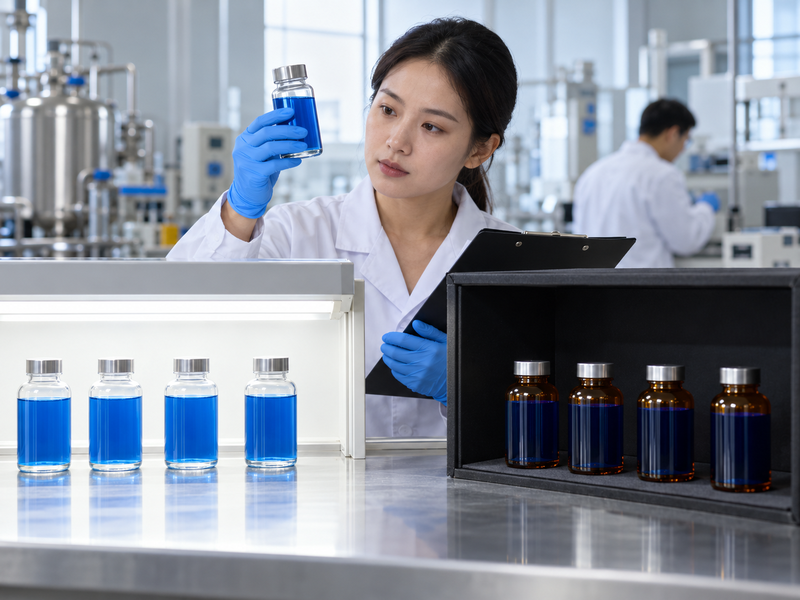
Fill the intended bottle or carton and record closure, headspace and fill condition. Compare protective and clear packaging only if both are realistic commercial options. Keep matched samples under the expected distribution condition and a documented challenge condition where the team uses one. Record actual temperature and light exposure. Phycocyanin can be affected by light as well as acidity, so a fading clear bottle should not be diagnosed from pH alone.
Inspect sealed packs on scheduled dates for color, clarity, sediment, ring formation and package changes. Do not repeatedly open one bottle for every checkpoint; use separate packs. If a refrigerated product may sit at room temperature during service, add a realistic in-use observation without turning it into a label-life claim. Store photographs with lot and formula codes. The agreed commercial package is part of the ingredient approval decision.
8. What is separate from color stability?
Keep food safety and legal use in their own gates
An attractive blue sample does not demonstrate microbiological safety, and a stable color does not validate pasteurization or preservatives. The food safety team must establish the required controls for the product and process. Likewise, a failed color trial does not mean the ingredient is unsafe; it means it did not meet this product’s visual target under the tested conditions. Keeping these decisions separate prevents a cosmetic shade adjustment from changing a validated safety process without review.
Regulatory staff should check the destination market and exact food category before commercial use. In the United States, 21 CFR 73.530 sets conditions for spirulina extract as a color additive. It should not be read as blanket approval for every acidic drink. Confirm the current rule and any effective-date changes rather than assuming that a later expansion is in force. Document label wording, carrier ingredients and supplier identity alongside the formula trial so a technical success can move into a lawful commercial product.
| Gate | Owner | Evidence |
|---|---|---|
| Color and appearance | R&D | Formula trial and stored packs |
| Microbiological control | Food safety | Validated process |
| Ingredient quality | Quality | Specification and lot COA |
| Market permission | Regulatory | Current destination rules |
| Supply | Procurement | Exact SKU and quote |
9. How do you confirm a bench result at pilot scale?
Compare the real process path
Transfer the promising formula to a pilot batch that uses production-like mixing, residence time, heating, cooling and filling. Record actual measurements at each stage. A lab beaker can cool quickly and receive much more mixing per unit of liquid than a plant vessel. That difference may hide clumps or heat damage. Prepare an uncolored control and, where possible, a second commercial pigment lot in the pilot. Keep the same starting formula and dose so the scale comparison is interpretable.
Take samples from the tank, after process equipment and from finished packs. Measure pH and appearance at each point, then follow the storage plan. If the pilot fails, identify the stage of divergence before changing several ingredients. An adjustment to grade, dose or process should become a new documented trial, not an undocumented rescue. When the product finally meets its visual and physical targets, lock the formula and process version in the approval packet. Production then knows the tested limits and what change requires another review.
10. What should be agreed with the supplier?
Buy the tested material
Request the exact grade, as-sold carrier declaration, current specification, lot COA, color-value method and commercial-lot sample. Explain the target formula pH, acid system, process and package without asking the supplier to guarantee an untested shelf life. Ask whether the sample represents routine production and how changes to carrier, extraction, drying or grade will be communicated. These details help prevent the bulk delivery from differing from the ingredient that passed the trial.
Put the approved SKU and composition on the purchase description. Quality can then check incoming lots against a signed specification and an application retain sample. If a new lot meets the supplier’s optical specification but fails in the acidic drink, both parties have a method and sample history to investigate. Keep the supplier’s generic stability guidance as background; the buyer’s formula, process and pack data should decide acceptance. A practical sourcing discussion ends with documents, a repeatable test and a named owner for changes.
Frequently asked questions
Q1. Is there one safe pH cutoff for every blue spirulina drink? No. Published stability findings depend on preparation and conditions; test the actual grade and formula.
Q2. Can we approve a supplier from a water-and-acid demonstration? Use it to screen candidates, then trial the full beverage and package.
Q3. Does more pigment solve fading? It may darken the starting product, but it may not fix the mechanism or an unacceptable flavor and cost.
Q4. Should we test clear and opaque packaging? Test each realistic commercial option under documented light and temperature exposure.
Q5. Who approves a late color addition? R&D, production, food safety and regulatory staff should review the changed process together.
Request an acidic-beverage trial sample
Send Spirulina CN the measured pH range, acid system, process sequence, package and target shade. Ask for a named commercial grade, full composition and lot COA. Compare it with the current reference through pilot processing and packaged storage before committing to bulk supply.