
Phycocyanin frozen dessert formulation must account for the shift from liquid mix to aerated frozen product. A frozen dessert can look blue in a liquid mix and pale after air is whipped into it. A sorbet may show the color differently from dairy ice cream, while a fruit bar may bring enough acid to change it again. Freezing can also expose streaks, specks or separation that were hard to see in a warm bench sample. A commercial team should approve the finished frozen unit, not the color of a mixing bowl.
The Spirulina CN Blue Spirulina page lists frozen desserts as a possible application and advises testing the actual formulation and process. Research on phycocyanin in ice cream demonstrates that product-specific color studies are possible, but those studies do not set the site’s dose or shelf life. This guide turns the formulation variables into a pilot plan for ice cream, non-dairy frozen dessert and related products.
Contents
- Which frozen dessert is being developed?
- What should be confirmed about the color ingredient?
- How should the liquid base be screened?
- Where should phycocyanin enter the process?
- How does overrun change the visible blue?
- What can freezing reveal about dispersion?
- How should flavor and melt behavior be assessed?
- What belongs in a frozen-storage study?
- How should a pilot lot become a purchase spec?
- When is a frozen dessert ready for launch?
1. Which frozen dessert is being developed?
Name the matrix before choosing a grade
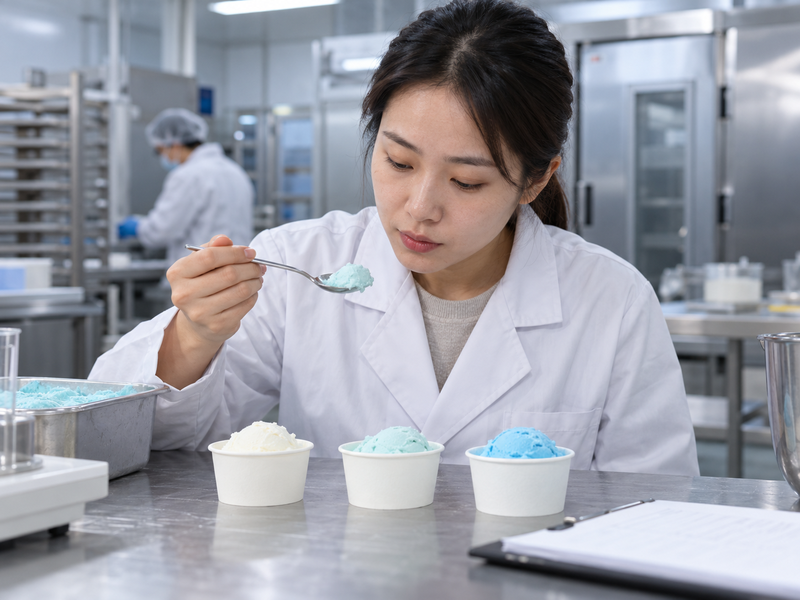
Ice cream, non-dairy frozen dessert, sorbet and frozen bar do not provide the same background for a blue color. Their fat, protein, sugar, fruit and water content change opacity and processing. A shade that looks saturated in a clear syrup may appear pastel in aerated ice cream. A fruit sorbet can introduce acidity and its own yellow or red tint. The first brief should identify the exact product, target appearance, pack and distribution route. A generic request for “blue spirulina for ice cream” leaves too many variables unresolved.
An original study of C-phycocyanin added to milk-based ice cream measured color over storage for its specific formulation. A later original frozen-dessert study examined C-phycocyanin in a different formulated ice cream. Their differing recipes reinforce the need to test the buyer’s own base. Start with an uncolored control and an approved blue reference in the form customers will buy, whether tub, stick or scoop.
| Product format | Main color challenge |
|---|---|
| Dairy ice cream | Fat/protein opacity and overrun |
| Non-dairy dessert | Base color and emulsion behavior |
| Sorbet | Acid and fruit background |
| Frozen bar | Layering and surface exposure |
| Soft serve | Holding and repeated aeration |
2. What should be confirmed about the color ingredient?
Choose the exact SKU and carrier
Ask for the proposed phycocyanin preparation’s full ingredient statement, color-value method, current specification, sample lot and COA. The site’s product page describes several commercial grade directions and says the final carrier and performance need confirmation by product. A carrier can affect premix behavior, total solids or label language. Two powders with the same E label should not be treated as interchangeable without a matched trial.
Quality should review contaminant and microbiological evidence separately from color testing. Regulatory staff should check the destination’s permitted use and ingredient declaration. In the United States, current 21 CFR 73.530 lists ice cream and frozen desserts, including non-dairy frozen dessert, among spirulina extract coloring uses under stated conditions. That does not establish compliance for a supplier lot or authorize every marketing claim. Keep the ingredient lot and spec revision linked to each prototype so procurement can later buy the tested material.
| Ingredient field | Buyer check |
|---|---|
| Exact SKU | Does the quote match the sample? |
| Carrier | Does it fit formula and label? |
| Color method | Can the grade be compared? |
| Lot COA | Does the sample meet limits? |
| Storage instruction | Can the plant handle it as tested? |
3. How should the liquid base be screened?
Use the final mix, not a water dilution
Prepare a dose ladder in the complete liquid base. Hold fat, sugar, protein, stabilizer and flavor constant while comparing color grades. Measure shade, pH, visible particles and flavor before freezing. Check whether the ingredient wets uniformly or leaves blue specks that could become more obvious in the frozen product. Include an uncolored base control. If the base is already yellow, the target blue may require a different dose or a reformulated base rather than simply a higher E grade.
Record the color’s as-sold powder dose per kilogram of mix. Let the mixture undergo the same aging or holding step planned for the factory. A warm cup right after mixing may not reveal later settling or streaks. Research on C-phycocyanin-added ice cream evaluated the color in a finished milk-based product, not a water-only pigment solution. Use that principle while setting your own target and acceptance range. A successful liquid base is only the first gate; the next gate is the frozen unit after air incorporation.

4. Where should phycocyanin enter the process?
Test a feasible, controlled addition stage
Potential stages include a cooled mix after heat treatment, a preblend before freezing or a separately dosed swirl. Each stage changes temperature exposure, mixing time and sanitation requirements. Do not add color after a validated preservation step without approval from food-safety and process teams. A color-preserving idea must also be manufacturable and hygienic. Record product temperature, hold time, mixing speed, premix concentration and maximum time before freezing for every candidate stage.
Compare color before and after the main process steps. A pilot-scale study of phycocyanin samples found stability varied with pH and heat in its test conditions. It does not dictate one safe addition temperature for a commercial ice cream. The product’s fat, sugar, proteins and carrier may change performance. Use a small trial to narrow feasible points, then validate on equipment that represents the real line. The final instruction should say how the color is dispersed and when operators may reject a streaked premix.
| Addition point | Questions to resolve |
|---|---|
| Before heat | Color retention through actual profile |
| After heat | Hygienic control and mixing completeness |
| Before freezer | Hold time and dispersion |
| Swirl or layer | Migration and visual uniformity |
5. How does overrun change the visible blue?
Air changes light scattering and unit economics
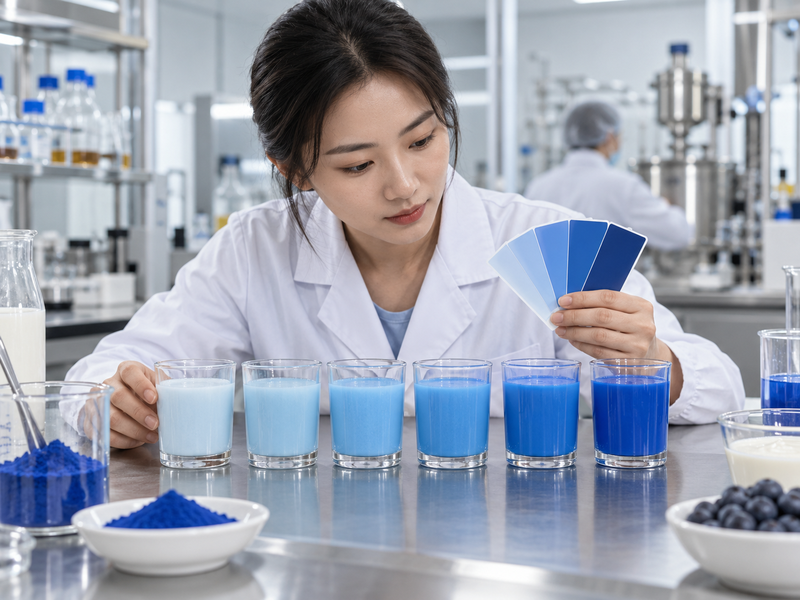
Overrun increases volume by incorporating air. It can make a color appear lighter even if the pigment mass in the original mix has not changed. Record overrun for each pilot batch and compare samples at the same serving size and temperature. A frozen-storage study of premium ice cream measured air cell and ice crystal characteristics alongside quality outcomes, showing why frozen structure belongs in a color trial. It does not specify the overrun for a phycocyanin product.
Do not compare a dense hand-churned sample with a high-overrun commercial sample and conclude that the ingredient failed. Run the color dose ladder through the same freezer settings. Measure pigment cost per saleable tub or bar using actual yield, not simply grams per liter of liquid mix. If changing the color dose affects viscosity or whipping, record that too. A bright low-overrun sample may be commercially unsuitable if the target product depends on a lighter texture. Select shade and overrun together in the pilot acceptance rule.
6. What can freezing reveal about dispersion?
Inspect cross-sections and the first melt
Freezing can make uneven premixing visible as streaks, specks or color bands. Cut representative finished units and inspect the cross-section under fixed lighting. Look at the first melt as well as the frozen surface; a color that follows separated serum or fruit syrup may create a different appearance when the product softens. Record the time and temperature at which each observation is made. Otherwise one sample may look paler simply because it warmed longer before the photograph.
Check first, middle and last units from the pilot run. A color premix may settle in its dosing tank, creating a shade gradient across production. If that occurs, investigate mixing and hold time before increasing the overall pigment dose. The Spirulina CN product guidance calls for testing freezing process, overrun and storage conditions; those are separate controls. A passing E grade or attractive day-zero scoop does not establish line uniformity. Keep a retained unit from each sampling point for the storage trial.
| Frozen-unit inspection | What it can reveal |
|---|---|
| Surface shade | Retail appearance |
| Cross-section | Streaks or uneven distribution |
| First melt | Color migration or serum separation |
| Start-to-end comparison | Premix settling or dosing drift |
7. How should flavor and melt behavior be assessed?
Color is only one part of an acceptable dessert
Taste the full product at its intended serving temperature. A stronger blue dose may change flavor or aroma, and a carrier may alter mouthfeel even when the powder is technically food grade. Use blinded samples and an uncolored base control where possible. Record appearance, flavor, texture and aftertaste separately. A color that meets an instrument target but makes the dessert less appealing is not a successful formulation.
Measure melt behavior using a fixed sample size and temperature. Some experimental work has explored phycocyanin extracts as ingredients affecting frozen-dessert texture, including an original ice-cream formulation study. That result belongs to its extract and recipe; a supplier’s commercial color preparation should not be sold as an emulsifier or stabilizer without its own evidence. If the finished product melts differently, investigate total solids, carrier and process. Do not attribute the difference to pigment alone. Keep flavor and melt criteria in the same pilot decision as color.
8. What belongs in a frozen-storage study?
Track color and product quality together
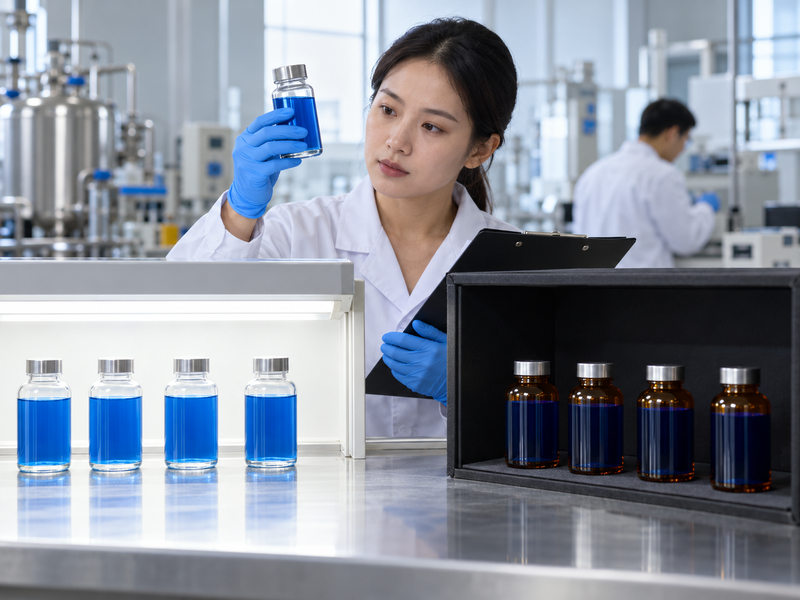
Pack the product in its final container and store it under the planned distribution conditions. Include a realistic temperature-excursion challenge if quality considers it necessary, but label that result separately from normal shelf-life evidence. At defined points, check color, ice crystal perception, package condition, flavor and the appearance after opening. Use unopened units at each point. A milk-based C-phycocyanin ice-cream study followed color over its own storage interval; it cannot supply a shelf life for a different formulation.
If the pack has a transparent window or the product is displayed unpackaged, include light exposure in the design. Record storage temperature rather than writing only “frozen.” Compare the colored product with an uncolored control and a time-zero reference. Color may remain stable while texture declines, or texture may remain good while the shade shifts. Both outcomes matter to a commercial claim. Decide acceptance criteria before the study begins and retain the report with the exact formula and ingredient lot.
| Storage record | Purpose |
|---|---|
| Continuous temperature log | Explains exposure history |
| Color measurements | Tracks shade retention |
| Texture and ice crystals | Protects eating quality |
| Pack inspection | Finds light or seal problems |
| Sensory review | Confirms customer experience |
9. How should a pilot lot become a purchase spec?
Convert the trial into checkable limits
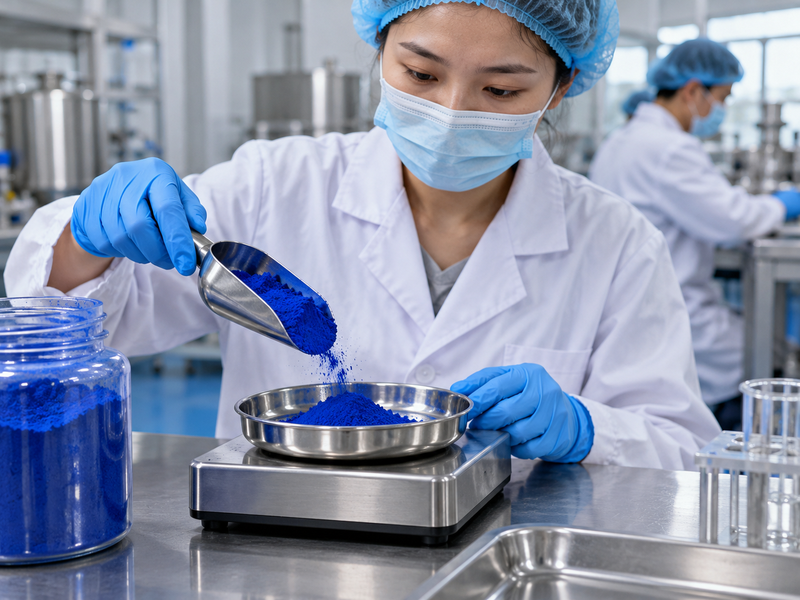
The ingredient specification should name the exact SKU, full composition, carrier, color-value method, acceptable range, packaging and lot documentation. The internal finished-product specification should name the dose range, target color, overrun, process and storage acceptance. Keep the two documents linked but distinct. An incoming powder COA cannot tell the plant how a filled tub will look after six weeks; a finished-product photo cannot prove the powder met contaminant or microbiological limits.
Retain an ingredient sample and finished-unit reference from the approved pilot. Test a second commercial lot when the launch risk justifies it, using the same formula and process first. Require notice if the supplier changes carrier, production site or method. The site’s Blue Spirulina page says grade selection and batch documents can be coordinated, but the actual current records should be obtained for the SKU purchased. Procurement should order the tested material rather than a generic “blue spirulina powder” replacement.
10. When is a frozen dessert ready for launch?
Release the exact formula and frozen process
The product is ready when the selected ingredient and dose produce an acceptable blue, flavor and texture at the target overrun and through the proposed frozen-storage route. Record the base formula, color addition point, freezer settings, package, serving condition and acceptance methods. Food safety and regulatory approvals must also be complete. In the US, current 21 CFR 73.530 is a starting point for the coloring use of spirulina extract in ice cream and frozen desserts, with its stated restrictions.
Set triggers for re-evaluation: a new color carrier, changed dairy or plant base, new fruit preparation, different overrun, revised package or distribution temperature. Production should have a written rule for holding a lot with streaks or off-shade units and for adjusting the dose within an approved range. A successful recipe cup is valuable for concept work; the commercial decision rests on a traceable pilot, filled-unit storage evidence and a purchase specification the supplier can meet repeatedly.
Frequently asked questions
Q1. Can a water sample predict frozen-dessert color? No. Test the complete base after freezing and aeration.
Q2. Does high E value guarantee a darker scoop? No. Dose, base opacity and overrun affect the visible result.
Q3. Can the color be added after heating? It may be a candidate stage, but food-safety and process teams must approve the method.
Q4. Does a published ice-cream study set our shelf life? No. It reports its own formulation and conditions; run a product-specific study.
Q5. What is the first supplier request? Ask for the exact SKU, composition, color method, current specification and matching lot COA.
Request frozen-dessert application samples
Send Spirulina CN the dessert base, target shade, processing route, overrun target, package and market through its Blue Spirulina page. Request candidate-grade documents and samples. Run a pilot from liquid mix through filled frozen units before setting a commercial inclusion rate.