
Blue spirulina gummies manufacturing can lose color between depositing and the end of shelf life. A supplier’s powder photo cannot show how its phycocyanin grade will behave in a cooked, acidified gel. For a manufacturer, the decision is whether a named commercial lot keeps an acceptable color through the exact gummy process and package.
This guide treats blue spirulina gummies manufacturing as a sequence of controlled trials. It covers the gel system, addition stage, deposit, finish and packed life. Research on pectin-phycocyanin interactions shows that the matrix can affect physical stability, while a broader phycocyanin stability review explains why pH and heat deserve attention. Neither source gives one recipe that works for every commercial grade.
Contents
- Which gummy system is being colored?
- Where does heat enter the color trial?
- How should acid and gel set be controlled?
- How do you choose a useful blue dose?
- What is the best way to add the powder?
- What should be checked at the depositor?
- How can curing and finishing change color?
- What belongs in the packaged-storage study?
- How should lots and pilot runs be compared?
- What should the supplier specification cover?
1. Which gummy system is being colored?
Fix the product before comparing pigments
Record whether the product uses pectin, gelatin or another gelling system, plus its acid, sweetener, water and flavor composition. A blue grade that works in one gummy base may look different in another because opacity, base color and gel structure change the appearance. Compare candidates in one fixed formula version before changing the gel. If a supplier shows a striking transparent gummy, ask for the formula and process context rather than treating the photograph as evidence for your opaque vitamin gummy.
Set a target shade in the finished, packed piece, not only in a warm kettle sample. Decide whether a blue color is the main visual feature or a tint blended with other colors. Include an uncolored base and a current approved color reference. Quality should confirm the ingredient’s identity and lot documents before anyone tastes trial material. Define the food category and intended market for regulatory review; color approval does not establish legal use. The initial decision sheet should connect the visual target to the proposed commercial SKU.
| Formula field | Why record it | Comparison rule |
|---|---|---|
| Gelling system | Changes texture and appearance | Hold constant during grade screen |
| Acid system | Changes pH and process | Measure in finished gel |
| Sweetener solids | Affects background and drying | Use one base batch |
| Flavor/color base | Can shift apparent blue | Keep fixed |
| Product shape | Changes viewing thickness | Compare like pieces |
2. Where does heat enter the color trial?
Map the exposure before choosing addition stage
Write the actual product temperature and time through cooking, transfer, holding and depositing. The heater setpoint is not the temperature history of a blue pigment added downstream. If phycocyanin goes in before the cook, the full path matters. If it is added late, the kettle may protect color but create a new mixing or hygiene challenge. Only trial addition points the plant could run under its validated process.
Take coded samples just before color addition, after mixing, at deposit and after cooling. Compare them under the same viewing conditions. A review of phycocyanin degradation reports temperature sensitivity under studied conditions, but it cannot define a universal deposit temperature for all gummy recipes. The buyer should test a named grade in the actual gel. Record any hold after color addition, since a short deposit trial can miss the exposure of a production stoppage. Ask process and food safety staff to review changes before a color experiment becomes a production instruction.
| Process point | Sample | Question |
|---|---|---|
| Before color | Uncolored mass | What is the base shade? |
| After addition | Mixed mass | Did color disperse? |
| Depositor outlet | Fresh piece | Did the line shift color? |
| After set | Cooled piece | Did gel formation change hue? |
| After finishing | Packed piece | What reaches the buyer? |
3. How should acid and gel set be controlled?
Measure the finished piece’s environment
An acid addition can change both gel formation and the blue pigment’s appearance. Record acid identity, concentration, addition point and measured pH after the mass has equilibrated. Run a controlled trial across the production tolerance instead of finding one attractive laboratory point and assuming all commercial batches will match it.
Pectin systems deserve matrix-specific testing. A published study of pectin-phycocyanin complexes examines physical interactions under controlled conditions; it should prompt a gummy trial, not become a promise of stability. Watch for color shift, haze or particles alongside gel texture and set time. If a pH adjustment protects blue but produces a weak gel or sour flavor, it has not solved the product problem. Keep acid, gel and color results on the same sheet so R&D can see which change caused an improvement or tradeoff.

4. How do you choose a useful blue dose?
Match finished color before comparing price
Build a small dose ladder using measured powder mass and a fixed gummy base. Inspect pieces after set and after the planned finishing step, since a warm liquid can appear more intense than a cooled piece with different light scattering. Use pieces of the same size and shape for color review. Record the dose as mass per finished batch and, where useful, per piece.
Check flavor and texture at each plausible dose. A darker blue may need more powder or carrier than the formula can accept. Procurement should calculate cost from the dose that meets the finished target, not from catalog price per kilogram alone. If the dose changes the gel’s solids balance, rerun the texture and shelf test rather than treating color as an isolated addition. Keep the candidate supplier lot and method in the trial record. A later bulk lot should be compared against the approved retain at the same dose.
| Dose-ladder result | Decision it informs | Do not infer |
|---|---|---|
| Fresh piece shade | Starting visual fit | End-of-life color |
| Set piece shade | Gel effect | Pack performance |
| Flavor and texture | Practical dose ceiling | Safety approval |
| Powder per piece | Cost calculation | Equivalent grades |
| Stored piece shade | Commercial color life | Other formulas |
5. What is the best way to add the powder?
Test mixing at the real line speed
Compare direct addition with a measured premix only if both are production options. Record premix liquid, temperature, mixing method, hold time and transfer loss. A small beaker stirred for several minutes may hide clumps that survive the plant’s short addition window. If powder floats or deposits on kettle walls, photograph the defect before increasing shear. More mixing can affect air, viscosity and deposit behavior, so it needs process review.
The as-sold carrier may change wetting and label text. Request the exact ingredient declaration and sample lot, then check whether the grade used in the demonstration matches the quoted grade. Add color at a consistent point relative to acid and gel formation. A late-addition instruction that cannot deliver uniform color across the kettle is a poor commercial solution. Take pieces from the beginning, middle and end of a deposit run to see whether the blue remains evenly distributed. Keep the method written tightly enough for another operator to repeat.
6. What should be checked at the depositor?
Look for drift across the run
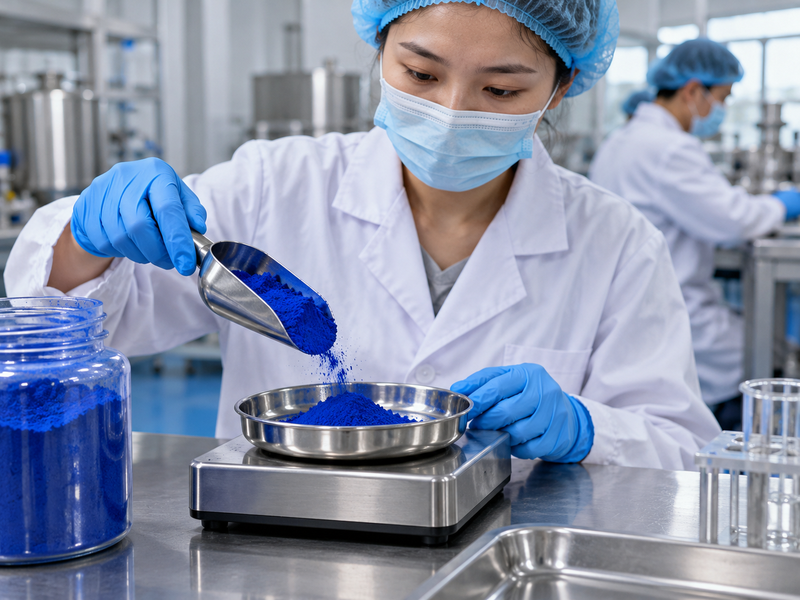
Record product temperature, line speed, hold time, nozzle condition and start/stop events. Inspect pieces from multiple points in the run for color, size, bubbles, streaks and settled pigment. A blue mass that looks uniform in the kettle can show variation if material separates during a hold or if the depositor does not mix evenly. Sample labels should identify run position, not merely “pilot batch.”
Use a fixed visual setup and a defined instrumental method if one is available. Compare the beginning and end pieces after they have set, not while one is warm and the other cool. If the line stops, retain pieces made before and after the hold; they reveal whether extra warm exposure changes shade. Record the physical evidence before blaming the pigment. Production and R&D should agree on a practical sampling frequency for the first commercial run.
| Run sample | What to inspect | Possible next check |
|---|---|---|
| Start | Initial shade and fill | Premix uniformity |
| Middle | Stable-run color | Kettle consistency |
| After stop | Heat and hold effect | Residence time |
| End | Final shade | Settling or concentration |
7. How can curing and finishing change color?
Follow the gummy after it leaves the mold
The finished piece may face drying, curing, sanding, oiling or another surface treatment. Each step changes what the eye sees. A coating can make blue look muted; a moisture change can alter transparency; exposure to warm air or light can shift shade. Record the chosen conditions and inspect at each stage. Do not approve the blue from a fresh uncoated piece if the retail item has a sugar or oil finish.
Water activity and moisture controls belong to the product’s safety and texture plan, not to a color recipe copied from another brand. Quality should measure them with the company’s approved method and confirm that a color-driven process change does not weaken those controls. Keep coated and uncoated reference pieces where possible. Photograph under fixed light and note whether surface color differs from the cut interior. Archive pieces from a commercial-lot pigment trial for later comparison.
8. What belongs in the packaged-storage study?
Keep the intended retail pack in the test
Pack trial gummies in the proposed pouch, bottle or blister. Record material, headspace, closure and light exposure. Inspect sealed packs at scheduled intervals for shade, surface change, sticking, moisture movement and texture. Use separate packs for destructive checks.
Compare a packed colored sample with an uncolored base and approved reference. Store them under the intended distribution condition and any documented challenge condition used by the company. Do not turn an accelerated observation into an unqualified shelf-life claim. Phycocyanin can respond to light, heat and pH, as the stability review discusses, so record actual exposure. The final color criterion should describe the packed piece at the end of its proposed life.
| Storage check | Observe | Record with it |
|---|---|---|
| Shade | Hue and intensity | Reference and lighting |
| Surface | Bloom, streaks or sticking | Finish and pack |
| Texture | Firmness change | Moisture/water activity |
| Package | Seal and transparency | Exposure condition |
9. How should lots and pilot runs be compared?
Confirm commercial repeatability
Run a second commercial pigment lot through the approved pilot recipe when possible. Compare its specification and COA with the first lot, then measure finished gummy color at the same dose and process points. A supplier’s E value may remain within its range while the finished piece appears different, especially if the carrier or base composition changes. Hold the gummy formula fixed during the comparison so the pigment lot is the main planned variable.
Retain sealed powder and finished pieces from both runs under documented conditions. If the second lot misses the visual target, check dose, mixing, acid addition, thermal history and pack before assigning a root cause. Do not quietly raise the color dose to force a pass; that changes cost, flavor and solids. Write an escalation rule for a borderline lot and a supplier notification rule for changes to extraction, drying or carrier. The first commercial batch should be checked against the pilot retain before routine release.
10. What should the supplier specification cover?
Buy the tested grade and composition
The purchase file should identify supplier, SKU, E or other color-value method, full carrier declaration, lot COA and physical pack. Add the application trial that names gummy formula, dose, addition point, process path, package and acceptance result. The supplier should notify the buyer before changing a component or process that may affect dispersion or color. A generic “blue spirulina powder” order line can allow a grade substitution the trial never tested.
Regulatory staff should check the current rules for the intended market and food category. In the United States, 21 CFR 73.530 sets conditions for spirulina extract as a color additive; it should be checked against the actual gummy use. The food safety plan for cooking, drying and packaging needs separate approval. Once quality, R&D, production and procurement sign the packet, receiving can compare each commercial lot with the same written requirements and retained finished-product target.
Frequently asked questions
Q1. Can a blue drink trial approve a gummy grade? No. The gel, acid, heat and finishing steps need their own trial.
Q2. Is late addition always better? It can reduce some exposure but may create mixing or hygiene problems. Test only a feasible process.
Q3. Should color be judged at deposit? Record it there, then approve the set, finished and packed piece.
Q4. Does an E grade guarantee the same shade across suppliers? No. Compare named commercial lots in the same gummy formula.
Q5. What sample should procurement request? Ask for the exact commercial SKU, full composition, current specification, lot COA and matching powder sample.
Request a gummy-grade trial sample
Send Spirulina CN the gummy system, acid range, process path, addition point, package and target shade. Request a named commercial-lot sample with carrier declaration and COA. Run the same pilot and storage plan for every shortlisted grade before agreeing to bulk supply.