
Phycocyanin in acidified whey protein drinks is a protein-interaction problem as well as a blue-color decision. An acidified whey drink may have a low pH and high protein concentration that promote haze or aggregates even if an aqueous pigment test looks promising. Original studies on whey protein–phycocyanin colloids and color during light storage support a focused pilot.
They do not establish that every native, denatured or hydrolyzed whey recipe will remain clear or blue through its proposed commercial life.
Contents
- Which acidified whey product is under review?
- What protein state must the brief identify?
- Which extract grade should enter the trial?
- How should protein and pigment be mixed?
- How can pH and haze be mapped?
- Which heat and light challenges are relevant?
- Which outcomes should be measured in sealed packs?
- Does the US color rule allow this use?
- Which details belong in the supplier RFQ?
- When is evidence enough to approve a lot?
1. Which acidified whey product is under review?
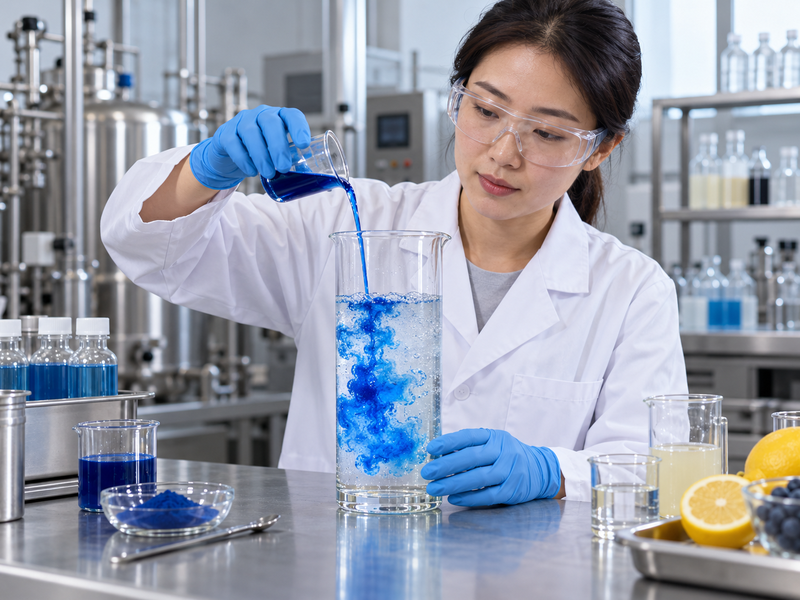
Define the product in terms a supplier and pilot team can reproduce: whey source and protein concentration, beverage pH, acid type, sugar or sweetener system, flavor, stabilizer, processing route, package and distribution temperature. State whether consumers expect a transparent blue protein water or an opaque, milk-like shake. A haze defect in the first may be irrelevant in the second, while gritty sediment is a failure in either.
Specify the required protein and color declarations for the destination market rather than assuming a generic “protein drink” category covers them.
Write the target use case before asking for samples. Will the drink be hot filled, pasteurized before pigment addition, aseptically filled, or cold processed? Is the commercial pack a clear bottle exposed to retail light? These choices control the relevant experiment. Compare every colorant candidate to an otherwise identical no-color control to distinguish whey haze from pigment-related haze. Acceptance criteria should include immediate appearance and end-of-life appearance, because a smooth blue tank sample can change after a week of protein interaction or light exposure.
| Product brief | Information to lock | Practical gate |
|---|---|---|
| Protein | Type, concentration, treatment | Haze and sediment baseline |
| Acid | Species and target pH | Pigment environment |
| Process | Heat, filtration, fill order | Color and food-safety compatibility |
| Package | Clear or opaque; storage | Light challenge |
2. What protein state must the brief identify?
“Whey protein” is not a single physical state. Record whether the drink uses whey protein isolate or concentrate, the previous heat history, degree of hydrolysis where applicable, and any pre-acidification or stabilizing treatment. Native, heat-denatured and hydrolyzed systems can interact differently with a protein pigment. Do not presume that a positive observation with one whey ingredient validates another supplier’s protein.
The colloidal-interaction paper investigated whey protein’s effect under acidic conditions; it is a mechanism lead for formulation work, not a recipe specification for a high-protein RTD.
Ask the whey supplier for the parameters that affect reproducibility, such as protein content, solubility profile and processing description. Keep the whey lot constant while comparing phycocyanin grades; then check the preferred colorant against normal whey-lot variation. If an existing beverage already meets texture and shelf-life targets, record its unchanged baseline before adding pigment. Otherwise, it will be impossible to know whether a blue precipitate comes from phycocyanin, the whey protein or an unstable base recipe.
| Whey state | Trial question | Evidence to collect |
|---|---|---|
| Native or minimally heated | Does acidification cause haze? | Turbidity before and after color |
| Heat-treated | Are aggregates already present? | Particle and sediment baseline |
| Hydrolyzed | Does color remain dispersed? | Flavor and clarity comparison |
3. Which extract grade should enter the trial?
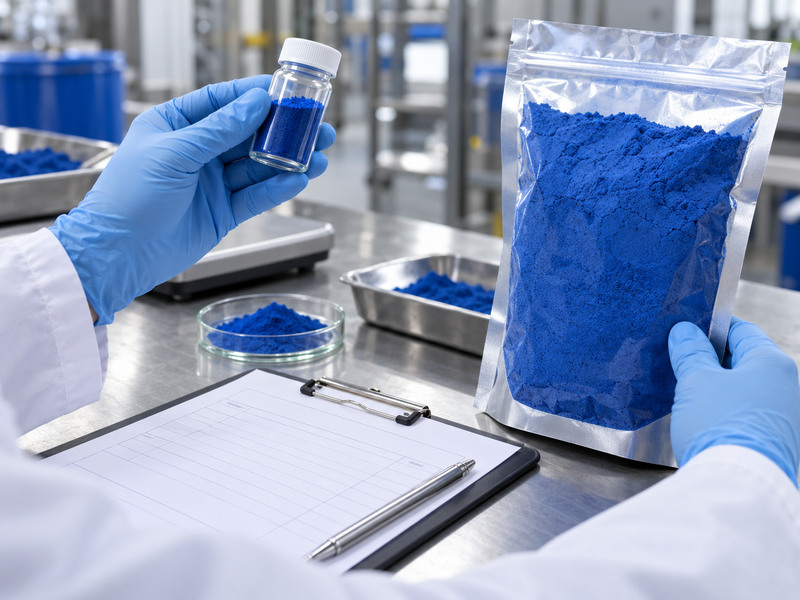
Request a food-color grade of blue spirulina extract with its identity, color-strength method, ingredients and carriers, pH handling guidance, technical sheet and current lot COA. Do not substitute whole green spirulina biomass for a blue extract: the pigment and suspended solids differ. Ask for a lot-matched sample large enough to make a bench ladder and a short pilot run. If the offered material includes carriers or stabilizers, include them in the whey formula and allergen/label review.
A strong aqueous blue is useful only if it survives the protein matrix.
Compare candidates at a matched initial color target as well as at a matched ingredient dose. The first comparison shows how much material is needed to meet the brand shade; the second helps reveal relative processing loss. State the measurement method and sample path length. If the supplier’s E-value uses a different method from the plant’s, do not compare numbers directly. Record colorant lot, storage history and time from opening to use.
New lots can be screened against an approved reference before they enter the production specification.
4. How should protein and pigment be mixed?
Test the real line’s order of operations and a small number of feasible alternatives. One route may disperse pigment in water before protein hydration; another may add pigment to a completed protein base after acidification. Mixing order can change local pH exposure, protein hydration and contact time. Build each arm with the same final recipe, shear energy and temperature. Log addition time, local dilution, mixing duration and any visible flocculation.
Do not call a beaker procedure scalable until it has survived pilot-tank geometry and hold times.
Take samples after protein hydration, after acidification, after pigment addition and at fill. A sharp haze increase at one step provides a better corrective lead than a single endpoint measurement. Check whether filtration removes pigment or aggregates and changes dose economics. If an alternate order adds pigment after a validated lethality step, food-safety staff must validate that route before production. The aim is not to force a favorable laboratory interaction but to identify an addition sequence the plant can execute repeatably without sacrificing microbiological control.
| Addition arm | Main diagnostic | Limit to watch |
|---|---|---|
| Pigment before protein | Hydration interaction | Early aggregates |
| Pigment before acid | Acidification response | Local pH shock |
| Pigment after acid | Finished-base compatibility | Mix uniformity and safety |
5. How can pH and haze be mapped?
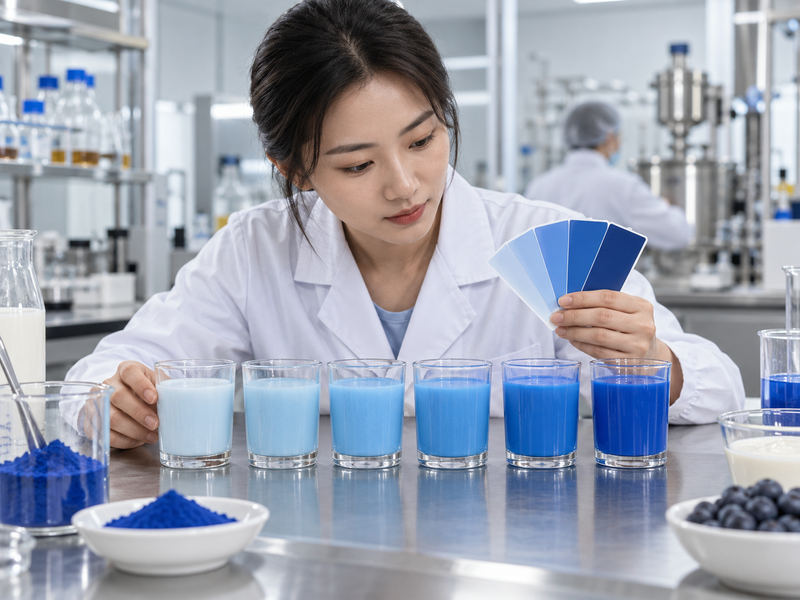
Choose a narrow pH range around the sensory-approved target and test the same pigment dose and whey lot at each point. Measure pH after mixing and during storage, since protein and acid can buffer or drift. Record turbidity, particle-size distribution if available, sediment height and the visible blue shade. A stable blue absorbance reading does not guarantee a transparent drink when whey-pigment aggregates scatter light. Conversely, a small haze may be acceptable in an opaque protein beverage if it does not settle or affect mouthfeel.
The whey–phycocyanin research reported improved colloidal behavior in its acidified experimental system; the effect depends on concentrations and preparation. Build a control with whey but no color, and another with pigment in the acidified base without whey where practical. These controls make a protein-specific interaction visible. Use a standard visual background and consistent sample temperature.
If a candidate crosses a turbidity limit only after storage, document when it begins and whether shear can resuspend it; resuspension is not a remedy if the consumer must shake a supposedly clear drink.
| Measurement | What it answers | Acceptance basis |
|---|---|---|
| Turbidity | Is the drink still clear? | Product style |
| Particle size | Are aggregates developing? | Control comparison |
| Sediment | Is material settling? | Pack-endpoint limit |
| Color | Has blue shifted or faded? | Brand reference |
6. Which heat and light challenges are relevant?
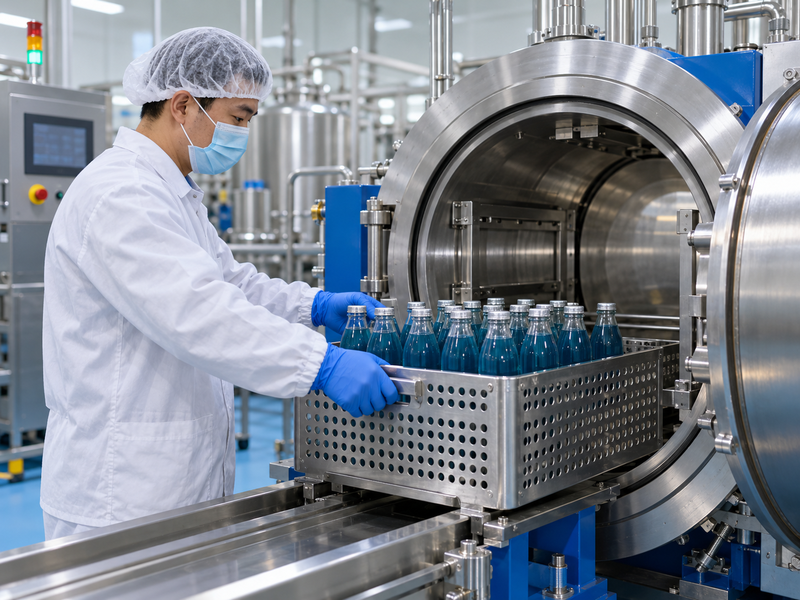
Challenge the mixture with the thermal and light history of the actual commercial route. If whey is heated before pigment enters, test color in the post-heat addition step and investigate whether that route can be made safely. If the complete drink is pasteurized after coloring, use the real time-temperature profile rather than extrapolating from a short heat assay. Measure before and after each step. Proteins may denature or associate during heating, altering haze independently of pigment damage. Keep a matching uncolored control.
The light-storage study showed that whey protein can affect phycocyanin color in acidic experimental systems under light; it does not establish an expiry date for a retail bottle. Test the intended clear or opaque pack under defined light and temperature conditions. Record the spectrum or calibrated color and visually inspect the drink after a consumer-style pour.
If a clear pack fails while an opaque pack passes, treat packaging as a new product design choice and repeat the needed shelf-life and labeling review rather than merely changing the artwork.
7. Which outcomes should be measured in sealed packs?
Fill and close production-equivalent packages and allocate separate unopened units to each time point. Measure initial color, pH, turbidity, sediment, viscosity if relevant, taste and package integrity; repeat through the proposed shelf life. Include the planned cold chain and a justified abuse condition. For clear packs, compare light and dark storage at the same temperature. Distinguish pigment loss from protein precipitation: take a whole-drink color reading, then, if methodologically valid, assess the supernatant and sediment separately.
Set release limits before the pilot. A batch can have a visually pleasing hue but fail for sediment or acidic aftertaste. Finished-product microbial safety and nutritional label claims require their own validation. Do not describe a laboratory protein complex as a commercial stabilizer unless the exact drink and process have been tested. Record all formula and ingredient lot numbers so the next trial is comparable.
If failure appears only late in storage, a short accelerated test may help investigate a mechanism but should not replace intended-condition storage for assigning a retail date.
| Pack pull | Color | Physical | Other |
|---|---|---|---|
| At fill | Instrument and visual | Haze, particles | pH and taste |
| Midlife | Same method | Sediment trend | Package observation |
| Proposed end | Final standard | Resuspension and mouthfeel | Safety checks |
8. Does the US color rule allow this use?
For a US-bound drink, verify that the offered extract meets the identity and specifications of spirulina extract under 21 CFR 73.530. The effective list includes non-alcoholic beverages, with use at levels consistent with good manufacturing practice, and restricts foods subject to standards of identity unless the standard permits the added color. The exact finished drink, ingredient declaration and any protein-content claim require separate regulatory review.
The words “blue spirulina” on a sample bag do not prove the legal identity or the lot’s conformity.
FDA’s broad foods-generally expansion announced in February 2026 was delayed indefinitely. It should not be cited as an operative blanket permission. Confirm rules in every destination market before ordering commercial volume. The protein interaction study is a formulation source, not a legal source. Maintain separate signoffs for colorant eligibility, whey and allergen labeling, microbiological process, and the measured life of the packaged drink.
9. Which details belong in the supplier RFQ?
Give potential suppliers a concise application brief with whey form and level, target pH, acid system, heat and filling route, expected color, package, storage temperature, destination and trial/forecast quantity. Request an offered extract grade, lot-matched sample, technical sheet, full composition including carriers, current COA, color-strength method, storage guidance and application-specific quotation. Ask whether the proposed grade has handling limits that would affect your mixing route. The supplier can offer technical information, while the manufacturer must validate it in its own whey system.
Evaluate cost per finished bottle that meets the endpoint, not just cost per kilogram. A high-color-strength grade may need less dose but could still fail through haze or fade. Keep records for the sampled lot and the commercial lot you plan to buy. If a source changes its carrier or process, require notification and requalification. Do not infer a certificate, capacity, lead time or guaranteed stable shelf life from a catalog page; ask for current documentation and a quotation for the named destination and volume.
| RFQ field | Buyer input | Requested response |
|---|---|---|
| Matrix | Whey form, level, pH | Compatible candidate grade |
| Process | Heat and addition point | Handling instructions |
| Quality | Clarity and color target | Lot COA and assay method |
| Supply | Volume and destination | Pack, MOQ, price, lead time |

10. When is evidence enough to approve a lot?
Approve only after the named grade performs in the selected formula and line process, with controlled pH, acceptable haze, no disqualifying sediment, target color through intended storage, acceptable flavor and completed regulatory and food-safety review. File the baseline whey lot, pigment lot, formula version, addition order, process temperatures, package and storage profile. If the result depends on a laboratory handling step the plant cannot reproduce, it is still a research lead rather than a purchase approval.
Create change triggers for whey source or state, protein concentration, hydrolysis, acidulant, colorant carrier, process temperature and package. A new protein lot can alter haze even if the blue extract is unchanged. Use incoming checks and periodic pilot confirmation to protect the approved specification. If the formulation team accepts a cloudy style instead of a clear one, rewrite the appearance criterion explicitly; do not silently lower the standard. The buyer’s decision is a documented fit among whey, blue extract and actual manufacturing conditions.
FAQ
Q1. Does whey protein always stabilize phycocyanin? No. Published effects come from defined concentrations and acidified systems; the finished drink needs its own trial.
Q2. Should native and hydrolyzed whey be treated alike? No. Record and test the specific protein state and processing history.
Q3. Is a clear drink at filling sufficient? No. Observe haze, sediment and color in sealed packs through the proposed life.
Q4. Can pigment be added after pasteurization? That is a process-design question requiring the plant’s validated food-safety controls.
Q5. Does the US rule cover this drink automatically? The rule lists non-alcoholic beverages for qualifying spirulina extract; verify the exact product and its restrictions.
Conclusion: Specify the whey matrix before buying
An acidified whey drink needs protein-state, mixing-order and finished-pack evidence before a blue-color purchase. Contact SpirulinaCN with the application, whey form and concentration, target specification and pH, process, anticipated quantity, package and destination. Request a lot-matched sample, technical sheet, current COA and application-specific quotation, then qualify the proposed extract in the actual drink.