
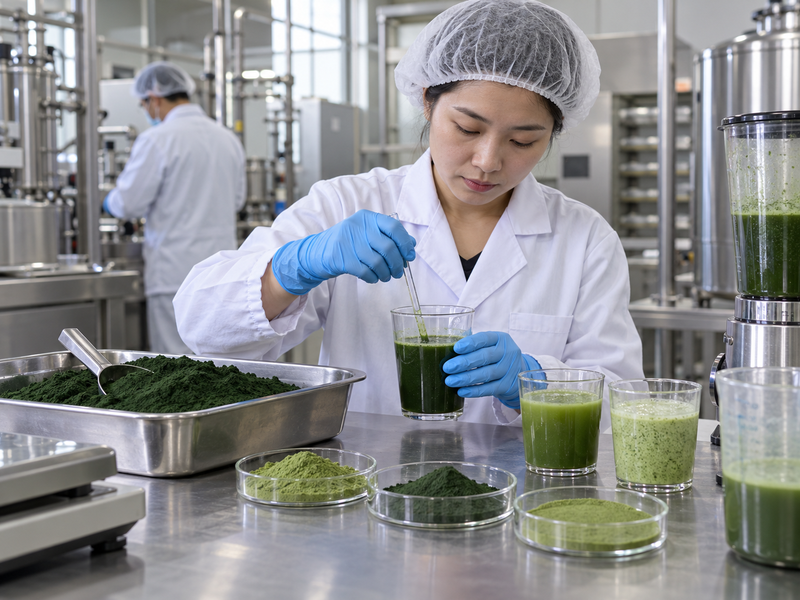
The search for natural green food coloring spirulina chlorella matcha often begins with three green powders on a lab bench. Yet “green” hides different materials: whole spirulina biomass, whole chlorella biomass and finely milled tea leaves. They differ in pigment profile, flavor, particle load and what a brand can truthfully declare. A separate spirulina extract is blue, and may be blended with a permitted yellow color to build green, but it is not interchangeable with whole green spirulina.
This guide organizes the choice around a finished food, not a powder photograph. The FDA’s color-additive overview explains why intended coloring use and market-specific permissions must be checked before commercial use.
Contents
- Which materials are being compared?
- What green shade does the product need?
- How much flavor can the food carry?
- What does heat do to the color?
- How do acid and light change the trial?
- Which label and legal questions come first?
- How should powder handling be compared?
- What is a fair matched-shade trial?
- How should cost per accepted shade be modeled?
- When is a combined color system justified?
1. Which materials are being compared?
Name the exact commercial grade
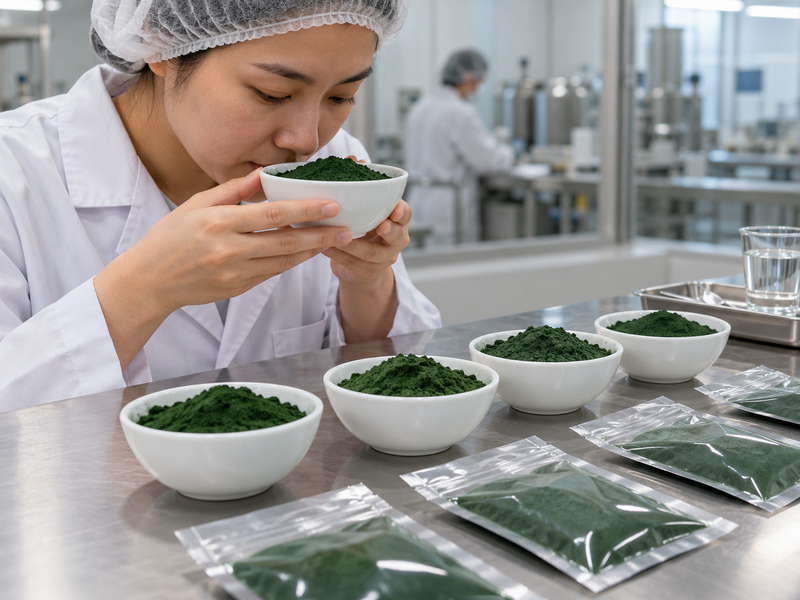
Whole spirulina is dried Arthrospira biomass with green and blue-green components. Chlorella is a different whole microalgal biomass, usually a deeper opaque green. Matcha is powdered tea leaf from Camellia sinensis and carries its own tea flavor and constituents. A supplier may also offer juice powders, extracts, carriers or formulated color systems under familiar category names. Ask for an ingredient statement, species or botanical identity, production process, carrier percentage, particle size and intended use. A comparison cannot be meaningful until the materials are specified.
If the brand wants a named superfood ingredient, whole biomass or tea may suit the concept. If it needs color with minimal solids, a purpose-made permitted color may be a better option. Do not call blue spirulina extract “green spirulina powder”; the extraction and composition differ. The spirulina and chlorella ranges provide application candidates, but the grade offered in a quote must be verified separately.
Record a sample ID and certificate for each option before anyone votes on a preferred swatch.
2. What green shade does the product need?
Define color numerically and visually
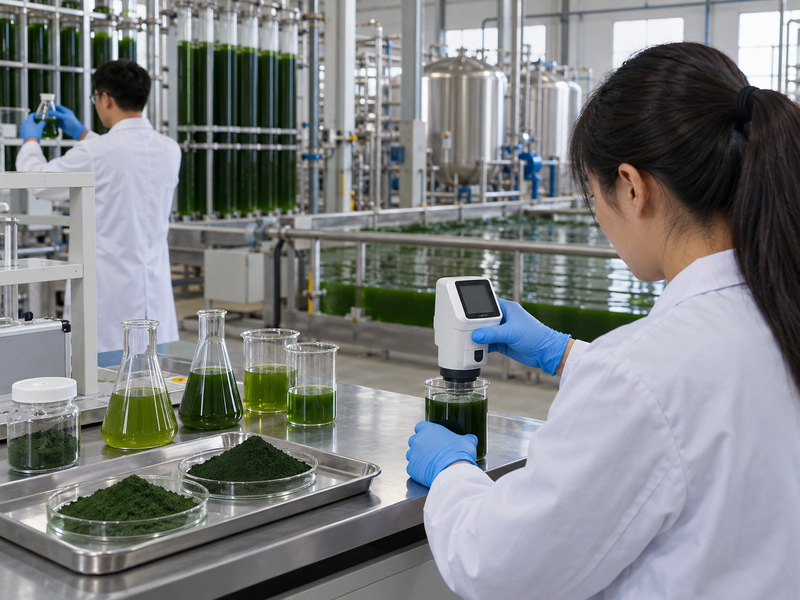
The target might be bright lime, opaque forest green, soft pistachio or blue-green. These are not minor differences: they affect which ingredient and dose can succeed. Prepare a control and candidate samples at several inclusion levels in the intended food. Measure Lab* color under a consistent method and keep a physical reference under standardized lighting. In transparent drinks, assess hue against both white and dark backgrounds. In bakery, compare surface and cut interior because browning and moisture affect each differently.
Matcha’s chlorophyll and other tea components influence its green appearance. An original matcha beverage study measured a relationship between chlorophyll content and green color in its tested samples, illustrating why ingredient color should be measured rather than inferred from a name. Chlorella and spirulina lots also vary, so set an acceptable range and ask suppliers for normal-lot data. A powder that looks brightest before mixing may become dull in the finished matrix.
Decide on the consumer-visible shelf-life endpoint before selecting the cheapest day-one shade.
| Shade target | Candidate starting point | Watch for |
|---|---|---|
| Deep opaque green | Chlorella biomass | Sediment and flavor |
| Blue-green | Spirulina biomass | Matrix-dependent hue |
| Tea green | Matcha | Tea flavor and color drift |
| Precise bright green | Approved color system | Regulatory fit |
3. How much flavor can the food carry?
Treat flavor as part of the color cost
Spirulina can have savory or algal notes, chlorella can be vegetal or earthy, and matcha contributes recognizable tea, bitterness and astringency. These are screening descriptors; individual grades differ. A dark cocoa bar might accommodate a dose that tastes obvious in clear water. A matcha latte may welcome tea flavor, while a tropical fruit drink may not. Blind-test candidates at the dose needed for the desired shade, not only at equal gram weights. A low-dose powder can look less objectionable simply because it delivers less color.
Rate aroma, first taste, bitterness, aftertaste and mouthfeel. Ask whether added sweetener or flavor would be needed and include those materials in the final label and cost model. Matcha also brings caffeine; quantify it when the product or audience makes that relevant. An original study on matcha storage and catechins tracked quality changes over time, reminding buyers that flavor and color decisions should be revisited in aged product.
Consumer preferences should be tested with an appropriate audience before claiming one option “tastes best.” Internal panels can screen candidates but do not establish universal acceptance.
4. What does heat do to the color?
Use the actual process profile
Heat can change pigments, proteins and the surrounding food. A cold bench mix cannot predict an oven, hot-fill line or retort. Run each candidate through the real temperature-time profile and measure color before and after. Whole powders may also participate in browning or alter dough behavior. In a baked item, the surface can reach different conditions from the interior. In a beverage, a short heating step followed by cooling may be materially different from a long hot hold.
Record the profile rather than summarizing it as “heat stable.”
Spirulina’s blue phycocyanin is sensitive to processing conditions in some systems; original thermal and pH research shows measurable stability differences for extracted pigment. Whole spirulina and other green ingredients still need application trials. Matcha’s tea pigments and chlorella’s chlorophyll-containing biomass also may shift. If the required shade fails after heat, consider changing the process, point of addition or color strategy. More powder may worsen flavor or texture without solving loss.
The best colorant is the one that meets its specification after manufacturing and shelf life, not the one with the strongest dry swatch.
| Process | Minimum comparison | Decision point |
|---|---|---|
| Cold mixing | Immediate and aged shade | Dose and dispersion |
| Pasteurization | Before and after heat | Color retention |
| Baking | Surface and crumb | Browning interaction |
| Hot fill | Fill and cooled bottle | Shade recovery |
5. How do acid and light change the trial?
Test the actual package environment
An acidic beverage, neutral frosting and dry snack impose different conditions on green materials. Set the target pH and water activity in the product brief, then measure them in every trial. Acids can shift color or destabilize a protein-based blue component, and light can accelerate fading in transparent packs. Use matched clear and opaque packages if packaging is still negotiable. Compare samples at launch and across the proposed shelf life, including realistic storage temperature and display lighting.
Avoid applying one published stability number to all grades. The phycocyanin stability study used defined extracted material and laboratory conditions; a commercial green formula adds other ingredients and a different package. Keep an uncolored control to detect changes in the base itself. Photograph under fixed lighting, then rely on calibrated instrumental data for small shifts.
If the product is acidic and transparent, define an acceptance threshold early; otherwise R&D may keep moving it to accommodate a favored ingredient. Document sediment and haze as well as hue, since a drink can retain green color yet become commercially unattractive.
6. Which label and legal questions come first?
Distinguish food ingredients from added colors
The intended use matters. A whole food ingredient that also colors a product and a concentrated material sold to impart color can face different regulatory analyses. In the United States, color additives must be approved for their intended use and follow applicable limits and declarations. The FDA’s current color-additive information is the starting point; regulatory staff should read the specific listing for any proposed color preparation. “Natural” is not a legal pass that covers every extract or food category.
For spirulina extract, 21 CFR 73.530 lists specific US food uses. FDA announced a broader 2026 amendment but delayed its effective date pending objections, so a team should verify current status before relying on a broader category. Matcha and whole biomass require their own ingredient and label review; do not simply apply extract permissions to them. The market and product category belong on the regulatory approval form.
Export formulas need a separate country-by-country check, especially when colors and their naming rules differ.
| Question | Evidence | Owner |
|---|---|---|
| Exact identity | Composition and process | Quality |
| Intended use | Formula purpose and dose | Product development |
| Color legality | Market and category listing | Regulatory |
| Declaration | Final ingredient list | Regulatory |
7. How should powder handling be compared?
Include texture and plant operations
Whole spirulina, chlorella and matcha add particles as well as color. They may differ in flow, dusting, wetting, clumping and sediment. Request particle-size distribution, bulk density, moisture and packaging details. Test how operators weigh and feed each powder, whether the mixer creates lumps, and whether the product sediments during a normal hold. In a clear beverage, particle management may make a whole powder unsuitable even if its hue is attractive. In a dry bar or pasta, texture may be acceptable or even desired.
Run a standardized dispersion protocol using the intended liquid temperature, dose and mixing energy. Record floating clumps immediately, particles after a defined rest and redispersion after storage. Matcha can suspend rather than dissolve; “instant matcha” may include carriers or processing that need separate declaration. Whole algae are not the same as filtered color extracts. Check dust control and cleanout at the line, especially if several green powders are handled.
A supplier’s application statement is helpful for choosing samples, but a pilot on the actual equipment must establish operational fit. Keep process photos and operator observations with the trial report.
8. What is a fair matched-shade trial?
Compare equivalent consumer-visible results
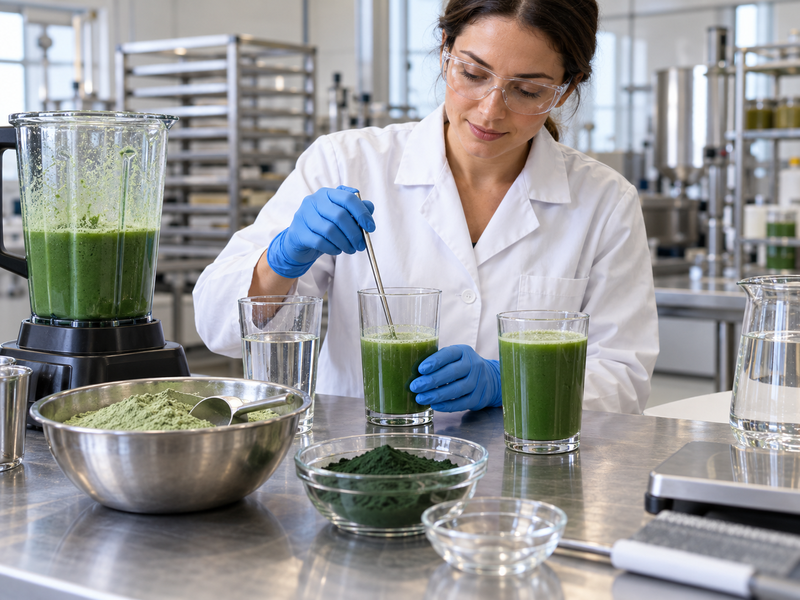
Prepare each candidate in one standardized base and adjust dose until all approach the same target shade after processing. Then compare flavor, texture, sediment, ingredient declaration and cost at those doses. Equal-gram testing can be an initial screen, but it does not answer which material most efficiently gives the approved appearance. Include at least two lots of promising candidates and an uncolored control. Fix lighting, container, camera settings and measurement timing.
A buyer can then tell whether a lot difference is greater than the difference between ingredient types.
Set hard gates before ranking. Regulatory suitability and safety specification must pass; a beautiful illegal or out-of-specification color cannot win. Next apply shade, sensory and shelf-life limits. Finally calculate cost per saleable unit. Review the trial with product development, quality, operations and regulatory staff together. If the product’s identity requires matcha flavor, that criterion should be explicit rather than hidden inside a color score. Write a concise decision memo naming the chosen grade, dose window, process, pack and reference sample.
That memo should be repeatable by the plant when the first commercial shipment arrives.
| Trial gate | Pass criterion example | Record |
|---|---|---|
| Regulatory | Permitted exact use | Sign-off |
| Shade | Within approved color range | Instrument data |
| Sensory | Below agreed off-note ceiling | Blind panel |
| Shelf life | Meets end-date appearance | Aged samples |
9. How should cost per accepted shade be modeled?
Price the formula that actually passes
Start with dose needed for the same finished shade, not supplier price per kilogram. Add flavor adjustments, stabilizers, packaging changes, mixing time, process loss, quality testing and reject risk. A high-priced concentrated color can be economical at a tiny dose; a cheaper whole powder can be more valuable if the product also wants its identity and nutrients. The reverse may apply in a transparent drink where extra solids create sediment. Record assumptions and quotes rather than asserting an ingredient is always cheapest.
Include supply realities: minimum order quantity, lot size, backup source and lead time. A finished-color target that can only be met with one unusually vivid lot is not a stable commercial plan. Ask suppliers for normal-lot color data and reserve samples from the pilot. Calculate landed cost for imported materials and the cost of any label change if a backup ingredient is needed.
A formula that meets shade at day one but fades before shelf life has no accepted cost per serving; it has a reformulation problem. The economic comparison should be made only after the hard performance and legal gates pass.
10. When is a combined color system justified?
Add components to solve a defined gap
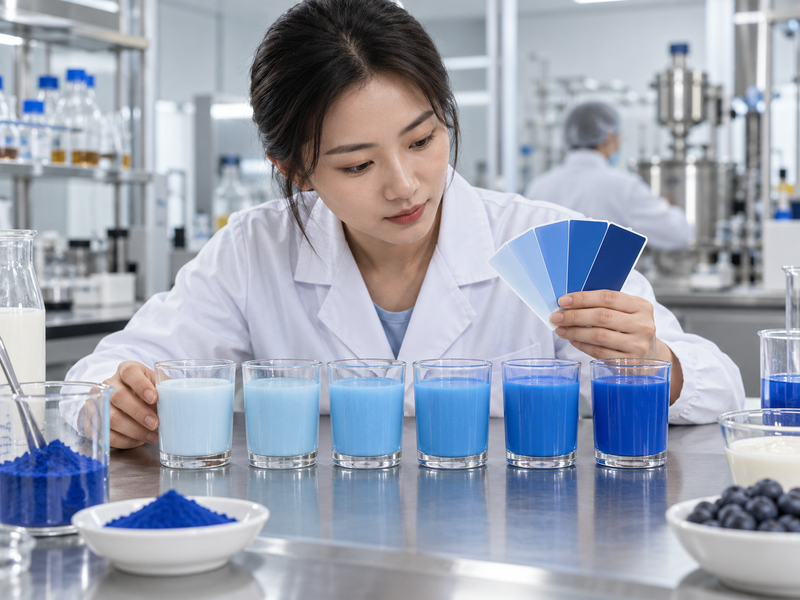
A blend can tune hue: a blue component and an appropriate yellow component may produce green, while whole biomass can deepen a shade. Such combinations add regulatory, sourcing and stability work. The two color components may fade at different rates, shifting green toward blue or yellow during storage. Test the combined system at the exact ratios, process and package intended for sale. Do not assume a mixture of individually acceptable ingredients will remain visually stable together.
Document each component’s legal status, declaration and lot release standard. For a whole-biomass ingredient, preserve its identity if it is part of the brand story; for a color additive, use the required naming. A combination is justified when it solves a measured hue or process problem without breaking flavor, texture, cost or claim rules. If it merely makes a sample photo look brighter, the extra complexity may not pay. Keep a reference finished product and test both incoming components against it.
The final specification should state allowable ratio adjustments and who may approve them, so production cannot improvise a new color formula on the line.
| Formula route | Reason to use | Key risk |
|---|---|---|
| One whole powder | Ingredient identity and color | Flavor or solids |
| One approved color | Efficient hue | Market-specific use |
| Color blend | Precise target green | Differential fading |
| Reformulation | No route meets brief | Reset target honestly |
Frequently asked questions
Is blue spirulina the same as green spirulina powder? No. Blue spirulina usually refers to an extracted phycocyanin-rich color; green powder is whole biomass.
Does matcha provide caffeine? It is powdered tea leaf and can contribute caffeine. Measure or obtain suitable data for the actual grade and serving.
Which powder has the best green color? There is no universal winner. Shade depends on grade, dose, matrix, processing and shelf life.
Can a natural green ingredient go into any US food? Do not assume that. Concentrated colors need a specific approved use, and all ingredients need accurate labeling.
Should cost be compared per kilogram? Use cost at the accepted finished shade, including flavor, process and packaging changes.
Conclusion
For natural green food coloring spirulina chlorella matcha, begin with exact material identity and the shade consumers must see at end of shelf life. Compare candidates at matched finished color, then assess flavor, solids, processing, legality and cost. A controlled trial beats a generic “natural green” ranking.