
How to take spirulina powder depends on flavor, food format, and the amount in one serving. Spirulina powder is easy to add to a meal, but it is not a flavorless green dye. Its intense color, fine particles and distinctive aroma work better in some foods than others. A practical routine starts with the product label, a measured amount and an ordinary meal you already enjoy. Brands can use the same principles to design products consumers will actually finish.
Contents
- What should you check before opening the packet?
- How can you measure a repeatable amount?
- What is the easiest drink to start with?
- Can you stir powder into plain water?
- Which foods hide the flavor best?
- Should spirulina be added before or after cooking?
- How should you use it in yogurt or oats?
- What storage habits protect an opened bag?
- Can you prepare servings ahead of time?
- How do you decide whether a routine works?
1. What should you check before opening the packet?
Read identity, ingredients and directions
Confirm that the product is whole green spirulina powder, not blue extract or a mixed greens blend. Read the serving directions and ingredient list, including any carriers, sweeteners or flavors. Check the seal, best-before date, lot code and storage instructions. If you have a medical condition, take medicines, are pregnant or have an upcoming procedure, the NIH supplement guide recommends discussing supplements with your health care provider. There is no universal therapeutic amount that can replace individualized advice.
The point of the first check is to know exactly what you have before putting it in food.
A useful next step
Save a photo of the package and lot code. Use the maker’s directions for that item and ask the company for clarification if amount or identity is unclear. Do not infer directions from another brand’s scoop.
2. How can you measure a repeatable amount?
Prefer grams over an uncertain spoonful
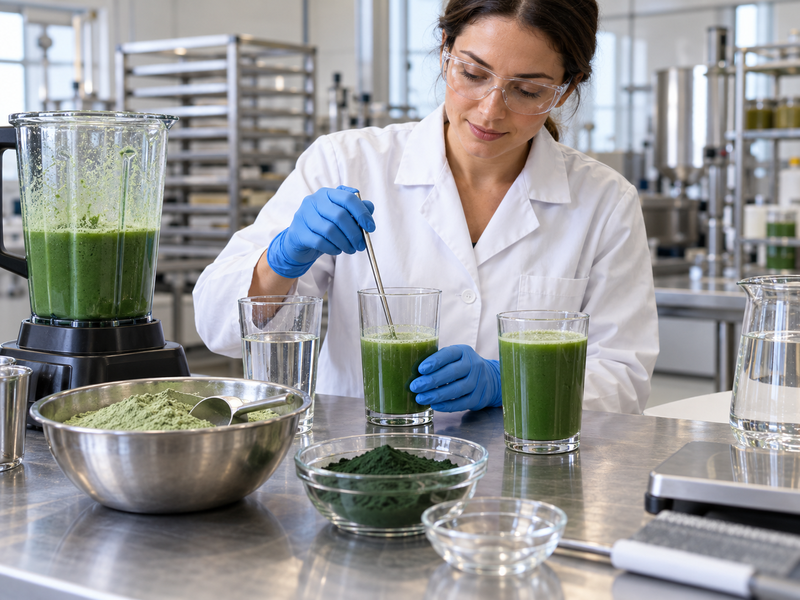
A level spoon can be convenient, but powder density and spoon shape vary. A small kitchen scale gives a repeatable mass when precision matters. If a package supplies a scoop, check whether the stated grams assume a level or heaped scoop. Manufacturers should validate scoop fills across users and lots before printing a conversion. The right everyday amount is the amount specified by the chosen product and appropriate for the person’s circumstances; research doses should not be repackaged as general use advice.
Measuring consistently also helps you assess flavor and tolerance without changing several variables at once.
A useful next step
Measure into a dry cup first, then add to food. Record the grams you actually use rather than a visual estimate. For a packaged drink mix, follow the complete product directions, since it may contain more than spirulina.
| Tool | Advantage | Caution |
|---|---|---|
| Small scale | Repeatable grams | Tare container |
| Product scoop | Convenient | Check level-fill instruction |
| Household spoon | Widely available | Volume is variable |
| Single pack | Preportioned | Read total ingredients |
3. What is the easiest drink to start with?
Use a flavorful, cool base
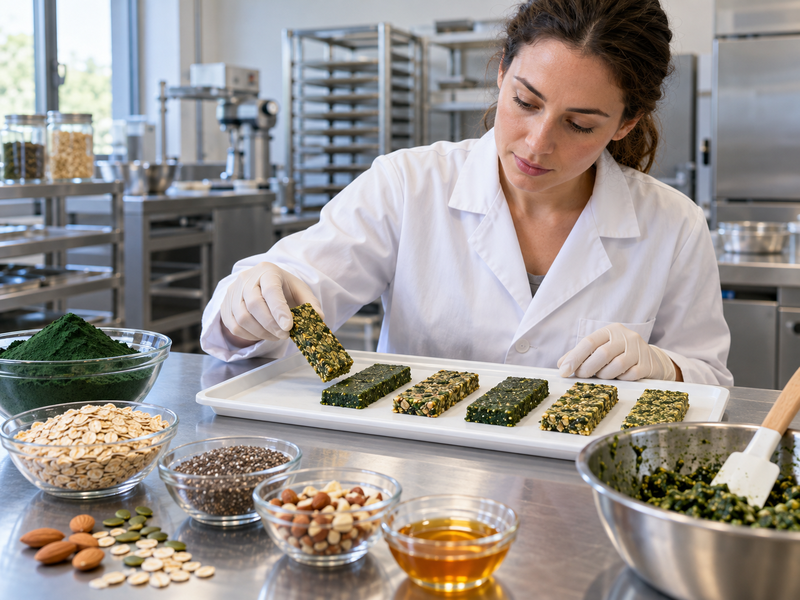
A cold smoothie with fruit, yogurt or a plant beverage can soften the powder’s earthy and marine notes. Blend the liquid and other ingredients first, then add the measured powder and blend briefly to break clumps. A strong citrus note may make the drink taste brighter, but a very acidic formula can also affect pigment appearance over storage; evaluate the result in the actual recipe. Serve promptly and handle it like any other perishable drink.
The goal is a balanced food you like, not a vehicle for increasingly large scoops. If texture matters, compare brands for fineness and dispersion.
A useful next step
Try the same measured amount in two familiar bases and note color, aroma and sediment after a few minutes. Keep the better recipe. A product team should repeat the comparison after refrigerated storage.
4. Can you stir powder into plain water?
Expect suspension rather than perfect dissolution
Whole spirulina biomass has particles that can disperse in liquid; it does not behave like a fully soluble clear dye. A whisk, shaker bottle or brief blender pulse can reduce floating clusters. Starting with a small amount of liquid to make a slurry may help, followed by the rest of the drink. Taste is more exposed in plain water, so this format is useful for evaluating raw ingredient quality but may not be the most enjoyable routine.
If an online video shows a clear blue drink, it may use phycocyanin extract rather than whole green powder. Those are different materials.
A useful next step
Observe immediately after mixing and again after standing. A little settling may be expected; large hard lumps indicate a mixing or powder issue. Clean the bottle well after use and do not leave a prepared perishable drink unrefrigerated.
| Mixing method | What it solves | What to watch |
|---|---|---|
| Slurry first | Dry clumps | Total liquid |
| Shaker | Quick dispersion | Foam |
| Blender | More even texture | Heat and cleanup |
| Stirring | No equipment | Settling |
5. Which foods hide the flavor best?
Pair intensity with intensity
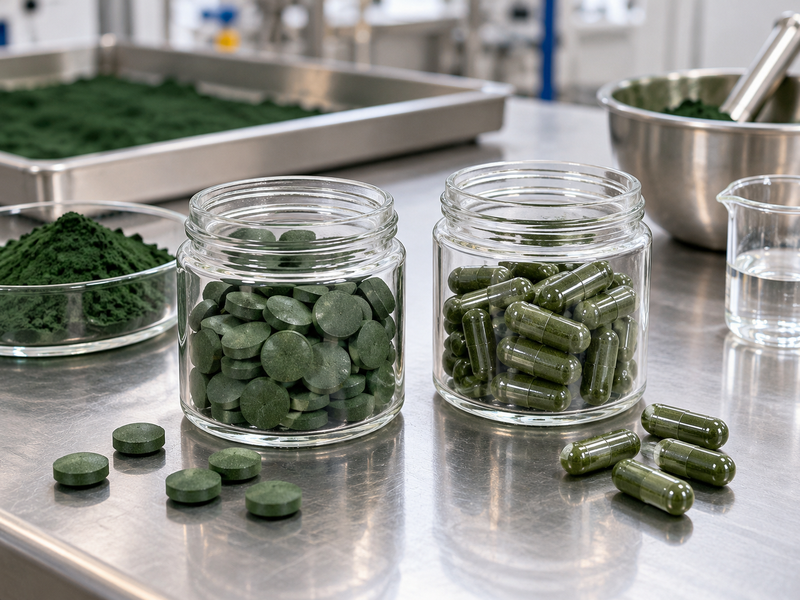
Dark berries, cocoa, nut butter, citrus zest and savory herbs can balance or contextualize spirulina’s flavor. The powder’s green hue will also change the appearance of pale foods, which can be appealing in dips but surprising in vanilla yogurt. Begin with a small tested addition consistent with label directions and judge the whole dish. In a spread, preblend the powder with oil, yogurt or another wet ingredient to avoid streaks. In a dry sprinkle, use a fine sieve for even distribution.
Food should remain pleasant and nutritionally balanced without relying on exaggerated health promises.
A useful next step
Use a simple sensory score for aroma, taste, color and texture. Compare the food with and without the powder under the same conditions. For a brand, include people unfamiliar with spirulina in the trial.
6. Should spirulina be added before or after cooking?
Treat heat as a formulation variable
Whole green biomass can be used in cooked products, but heat may shift its shade and flavor. The blue phycocyanin pigment is more heat sensitive; an original stability study found greater color deterioration for phycobiliproteins at high temperatures under its test conditions. That finding does not prescribe a universal temperature for every food. At home, stirring powder into a finished warm dish may preserve a fresher appearance than long boiling.
For a manufacturer, a bench test must reflect the full process, holding time, pH and packaging. Do not assume post-cook addition is safe without considering the finished food’s hygiene controls.
A useful next step
Prepare two small batches, one with powder before heating and one after, then compare taste and shade. Record the actual process. Keep safe cooking and storage practices for the base food.
| Process | Possible change | Trial measure |
|---|---|---|
| Long heating | Duller color | Before and after shade |
| High acid | Hue shift | pH and storage |
| Late addition | Fresher color | Hygiene control |
| Freezing | Texture change | Thaw comparison |
7. How should you use it in yogurt or oats?
Keep the base food’s storage rules
Stir spirulina into a portion of yogurt, overnight oats or a similar prepared food until no dry pockets remain. A spoonful of yogurt mixed with the powder first can create a smoother paste, then be folded into the rest. Color may deepen over time, so decide whether the visual result is part of the appeal. If the dish contains dairy or other perishables, follow their chilling rules.
The FDA safe food handling advice applies to the finished dish regardless of the powder’s shelf stability. The powder does not preserve the yogurt.
A useful next step
Make one portion first and assess it after the time you expect to store it. Keep the package closed between uses. A product team should evaluate both first taste and end-of-shelf-life flavor.
8. What storage habits protect an opened bag?
Keep moisture and odors out
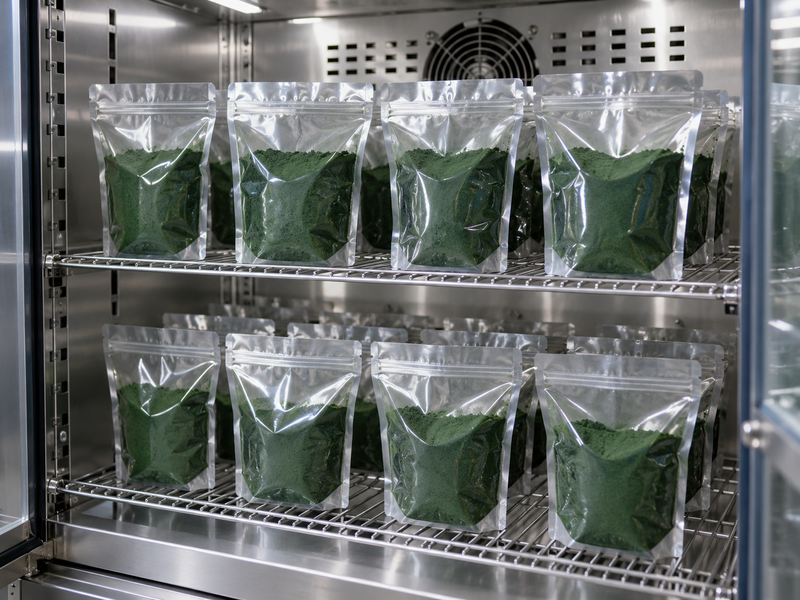
Follow the package directions, close the container tightly, use clean dry utensils and keep it away from steam. A pantry near a kettle or stove may expose powder to humidity even when the room seems dry. Do not pour unused powder from a food bowl back into the original pack; it may carry moisture or other ingredients. If the seal is damaged, the powder becomes damp or odor changes sharply, contact the seller or discard it as appropriate. Color alone is an unreliable safety test.
A manufacturer should select packaging with suitable barrier properties and define an opened-pack handling rule for production.
A useful next step
Mark the opening date and keep the original lot code. Decant only into a clean dry food-safe container that protects the powder and retains identity. Follow any stated after-opening period.
| Storage risk | Home action | Production analogue |
|---|---|---|
| Moisture | Dry spoon and tight lid | Controlled transfer |
| Heat | Cool location | Warehouse condition |
| Odor pickup | Closed container | Barrier pack |
| Lost identity | Keep lot label | Traceability |
9. Can you prepare servings ahead of time?
Separate dry preportioning from prepared food
A measured dry portion can be packed in a clean, dry, well-closed food-safe container for convenience, provided the original label and lot remain traceable. Once it is mixed into a smoothie, yogurt or dip, the base food determines refrigeration and shelf-life needs. Do not apply the dry powder’s best-before date to a prepared drink. For single-serve retail formats, seal integrity, moisture barrier, fill accuracy and clear directions all matter. A “daily pack” is a convenience format, not evidence of a clinically effective dose.
Consumers should plan around routine meals rather than treating missed servings as a medical issue.
A useful next step
Prepare only what you can store safely. If making a drink ahead, chill promptly and follow the most perishable ingredient’s instructions. Brands should run stability work on the finished format.
10. How do you decide whether a routine works?
Judge usefulness without chasing a sensation
A successful routine is easy to repeat, fits the label, tastes acceptable and does not cause a concerning reaction. It need not produce an immediate feeling. Spirulina is a food ingredient, and its ordinary nutrient contribution depends on the serving actually eaten. If a product page promises disease treatment or a dramatic physical change, treat that as a reason to ask for stronger evidence. Compare cost per usable portion rather than jar size alone.
For a brand, repeat purchase depends on flavor, texture and convenience as much as attractive color. A routine that requires forcing down an unpleasant drink is unlikely to last.
A useful next step
After several uses, review the same four observations: measured amount, enjoyment, preparation time and any symptoms. Change the recipe or product for practical reasons; seek medical advice for health questions.
| Success test | Consumer question | Brand test |
|---|---|---|
| Convenience | Can I repeat it? | Preparation trial |
| Flavor | Do I like it? | Blind sensory panel |
| Clarity | Do I understand the label? | Usability review |
| Quality | Can I identify the lot? | Traceability check |
Frequently asked questions
Can I take spirulina powder straight?
The powder is a food ingredient, but dry swallowing may be unpleasant. Follow the product directions and consider mixing it into food or drink.
Does it need hot water?
No. It can disperse in cool foods. Heating changes color and flavor, so test the recipe you intend to eat.
Is blue spirulina interchangeable?
No. Blue extract and whole green powder differ in composition and behavior. Use the directions and specification for the exact item.
Can I mix it with coffee?
You can test flavor and appearance in a small portion, but hot processing may change pigment shade. Do not infer a health effect.
How much should I use each day?
Use the labeled directions for the specific product and seek individualized advice when your health circumstances call for it.
Conclusion
Taking spirulina powder works best as a measured addition to an ordinary food you enjoy. Read the exact label, mix it in a suitable base, handle prepared food safely and keep the powder dry. For brands, test the final recipe and use level rather than assuming raw powder performance predicts consumer experience.
For ingredient documentation, compare the whole spirulina range, the spirulina ingredient range and the microbiological specification guide. These product pages can start a supplier discussion; final nutrition and safety statements still require the chosen lot and finished-product evidence.