
Blue spirulina powder for frosting gives bakeries and dessert brands a vivid blue option without a synthetic blue dye. Its color comes from phycocyanin extract, and the final shade depends on the exact powder, frosting base, dose, light, and storage. A bowl that looks perfect on the test bench may shift after a day in the display case. This guide covers ingredient selection, mixing, color trials, and the records a commercial bakery needs before launch.
Contents: 1 · 2 · 3 · 4 · 5 · 6 · 7 · 8 · 9 · 10
1. What does blue spirulina powder add to frosting?
Blue spirulina powder contributes blue color to a frosting formula. It is usually an extract rich in phycocyanin rather than ground whole green spirulina. That difference matters: whole spirulina can push a frosting toward green and may bring a stronger marine note. The extract is selected when a bakery wants a clean blue shade, but “blue spirulina” on a bag does not guarantee a specific pigment strength or carrier composition. Ask for the exact ingredient declaration and test the offered grade.
Which frosting bases work best in an initial trial?
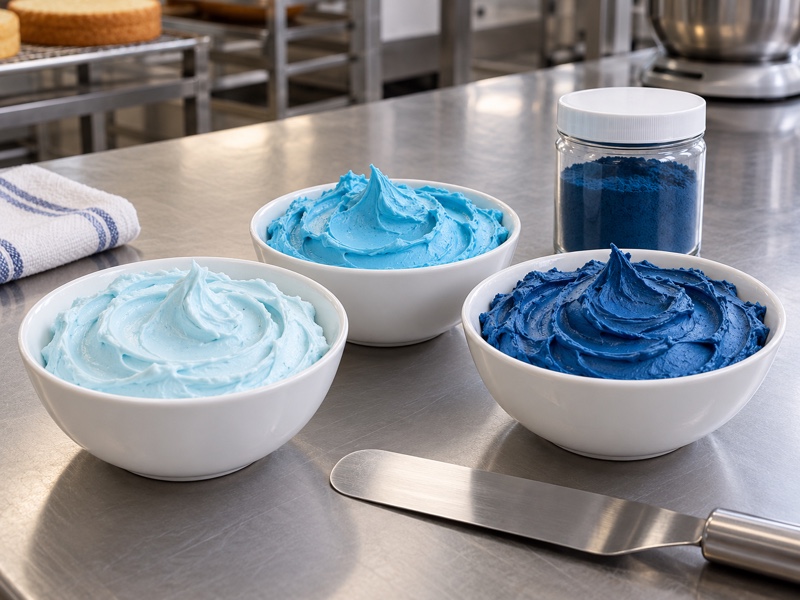
Begin with a pale base so the blue color can be assessed without interference. White buttercream, cream-cheese frosting, whipped topping, and dairy-free frosting each have different fat, water, and acid content. A dose that produces sky blue in one base may look muted or gray in another. Mix a small batch at normal production temperature, then record the dose as grams per kilogram of frosting. If the base has vanilla or other yellow ingredients, expect the apparent shade to change. Keep one uncolored control sample beside the trial.
| Base | First thing to check |
|---|---|
| Buttercream | Even color through fat-rich matrix |
| Cream cheese | Acidity and refrigerated shade |
| Whipped topping | Color after aeration |
| Plant-based frosting | Fat and stabilizer interactions |
The base is part of the color system. Test the finished frosting, not a blue powder in water.
2. How do you choose the right extract grade?
Choose a food-grade spirulina extract supplied for the target market and application. Request a specification, full composition, pigment-strength method, carrier declaration, storage guidance, and representative COA. A carrier can help turn liquid extract into a workable powder, but it may affect the ingredient list or how the powder disperses. Two grades sold as “blue spirulina” can require different use levels for the same shade. Ask the supplier for a sample tied to a grade code that will appear on the eventual order.
What does a useful side-by-side test look like?
Prepare equal-weight frosting samples and add candidate powders at several measured levels. Photograph them under the same light, then blind-label the samples for the bakery team. Judge hue, intensity, specks, aftertaste, and how easily the powder blends. Repeat the comparison after refrigeration and at the end of the intended display period. Do not choose solely on the brightest freshly mixed bowl; a slightly softer shade that remains stable may be easier to sell.
The FDA's spirulina extract listing is a useful starting point for US food color status. Check the current detailed rule and each destination market before making a label decision.
3. How much powder should a bakery test?
There is no universal blue spirulina dose for frosting. Pigment strength varies by grade, while the desired color varies by brand and product. Build a dose ladder rather than copying a spoon measure from a home recipe. Use a scale that can measure small amounts accurately and record the dose against a known frosting weight. Start low, increase in steps, and stop when the target shade is reached without an unwanted taste or texture change.
How should the formula record be written?
Write the dose in grams per kilogram of finished frosting, not “a few pinches.” Include the powder lot, frosting batch, mixing time, temperature, base recipe, and visual result. If the dessert will be topped with fruit, chocolate, or sprinkles, view the frosting in the final presentation. Background colors can change how blue appears to the customer. Keep the selected sample as a photographic reference under fixed lighting.
| Trial level | Record |
|---|---|
| Low | Shade, flavor, visible specks |
| Target | Approved appearance and cost |
| High | Maximum acceptable dose |
| Control | Base color without extract |
A dose ladder also makes price comparison fair. Cost per tub of frosting is more useful than price per bag of powder.
4. How do you prevent blue specks and streaks?
Powder can create dots if it is poured directly into a dense frosting and mixed too briefly. Use the supplier's handling instructions, then test a small pre-dispersion in a compatible liquid or a portion of the frosting before combining it with the full batch. Screen or break up clumps if the powder absorbs moisture in storage. Add the color at a stage where mixing can distribute it without destroying the desired frosting texture.
What if the frosting turns grainy?
Check the extract grade, carrier, powder moisture, addition method, and mixing time. A particle that looks fine in a clear drink may still show in a smooth white icing. Overmixing can also change a whipped product's volume and texture, so do not solve every color streak by running the mixer longer. A small preblend may work better. In a commercial trial, record the sequence that succeeded, including mixer type and batch size. Scaling from a one-kilogram bowl to a production mixer can change shear and dispersion.
The result should look even on both the exposed surface and a cut cross-section of the decorated product. A photograph of the top alone can hide streaks inside a piping bag.
5. What happens when frosting is acidic or warm?
Phycocyanin can lose color under some combinations of acid, heat, light, and time. Frosting bases differ widely: cream cheese and citrus fillings are more acidic than many buttercreams, while bakery handling may involve warm mixing or display lights. Do not translate a stability statement for pure pigment solution directly into a frosting shelf-life claim. Test the actual recipe and package. A published study found that pH and temperature affected phycocyanin stability in solution.
What should a storage trial include?
Check the fresh product, refrigerated product, and any product held under the planned display conditions. Use the same lighting and camera settings for photos. Note whether the shade fades, shifts green, or separates into streaks. If the cake base or fruit filling touches the frosting, test that interface too. A color that looks stable in an isolated cup may bleed or change at the contact point. Set an acceptable color range before the trial rather than after it disappoints.
| Stress | Test condition |
|---|---|
| Acidic base | Actual frosting pH |
| Warm mixing | Production mixing temperature |
| Display light | Intended case lighting |
| Refrigeration | Planned shelf-life period |
If a formula fails, adjust the process or grade and rerun the relevant test.
6. Can blue spirulina frosting be used in baked desserts?
Yes, if the frosting is added after baking or the finished product passes an application trial. Putting the colored frosting on a cooled cake is different from baking the pigment into a batter. High heat can reduce the blue color, so a bakery should not assume a post-bake frosting result predicts the result in a cupcake crumb. Keep the use case clear when asking the supplier for technical guidance.
How should a decorated cake be tested?
Prepare the complete product: baked base, filling, frosting, decoration, package, and planned distribution route. Observe it after assembly, after transport vibration, and at shelf end. Check whether condensation forms when the product moves from cold storage to a warmer display. Moisture can affect surface gloss and make color appear uneven. If the product is frozen, test freeze-thaw handling as well. A good frosting color cannot compensate for a package that smears the surface.
The blue spirulina cake guide discusses the broader dessert application. For this ingredient decision, focus on the specific frosting and the conditions it will face.
7. What should the label and sales copy say?
Describe the ingredient accurately and use the naming required in the market where the dessert is sold. A bakery may say it uses a naturally derived blue color, but the precise ingredient declaration and any claims need review against the actual formula. Ask the supplier for the full composition, including carriers. Do not claim the frosting adds meaningful protein or health benefits because a small amount of blue extract gives it color.
What evidence supports a “no artificial colors” message?
Review every color in the finished product, not just the blue portion. The sprinkles, filling, decorations, and packaged cake base may contain other colors. Check the relevant jurisdiction's definitions and any retailer policy. Keep approved label copy with the ingredient specification and final formula. If the supplier later changes the grade or carrier, reopen that review. Consumer-facing copy should promise the shade and ingredient story the product can consistently deliver.
| Copy item | Evidence |
|---|---|
| Ingredient name | Supplier declaration |
| Color claim | Full finished formula |
| Nutrition claim | Finished serving analysis |
| Shelf-life image | Approved production product |
The label needs the same discipline as the production formula.
8. How should a bakery compare supplier quotes?
Compare suppliers at the dose that reaches the approved finished shade. A lower price per kilogram may require more powder or produce a less stable color. Include shipping, minimum order, remaining shelf life on arrival, and the work needed to change the formula. Request at least one representative production lot, not only a hand-selected sample. Ask how color strength is controlled between lots and whether the supplier will notify the bakery before changing a carrier.
Which question reveals the most risk?
Ask what happens if a repeat lot falls outside the agreed color range. A serious answer names the acceptance method, investigation process, replacement route, and response time. A vague assurance that every lot is “premium” does not help a bakery with a scheduled launch. Also ask for storage conditions in the bakery and whether opened packs need special handling. Small commercial operations can lose a large portion of an expensive powder through moisture pickup and poor resealing.
Choose the supplier that can reproduce the approved outcome and support a complaint. Price matters after that baseline is met.
9. Which pilot mistakes are easy to avoid?
Using an unmeasured spoonful, testing in a different frosting base, taking photos under changing light, and approving the color before storage are common mistakes. So is treating blue spirulina powder as a nutrient supplement when it is being used mainly as a color. A bakery can avoid most of these with a short worksheet. The worksheet should name the powder lot, recipe version, dose, mixing method, shade, taste, and stability result.
What should production staff receive?
Give staff the exact addition point, preblend method, mixing time range, and visual acceptance reference. Include a troubleshooting note: if streaks appear, stop and check the powder and preblend rather than doubling the dose. Set a process for rejected batches and a rule for switching lots. Train the team with real production equipment, because a beautiful bench sample can still fail in a large mixer or piping bag.
The pilot is complete when another operator can reproduce the same frosting without the original developer standing nearby.
10. What is the next step before a commercial launch?
Choose one target shade and one frosting base. Request two or three candidate grades with full documentation, run a measured dose ladder, and select the lowest dose that delivers the approved shade and flavor. Then test the complete decorated product under distribution and display conditions. Record the ingredient declaration and gain label approval before printing packaging. This sequence turns a creative color idea into a repeatable bakery formula.
What should the first supplier email include?
State the frosting type, batch size, desired shade, planned storage and display period, destination market, annual volume, and documents required by the bakery's quality system. Attach a color reference under known lighting if possible. Ask for the grade code, composition, specification, sample, COA example, and realistic lead time. If the bakery has an acid or heat step, mention it before the supplier selects a grade. A clear brief prevents a powder suitable for a cold smoothie from being sold as a universal solution.
The final approval belongs to the frosting in the package, not the loose blue powder.
| Bakery check | Evidence |
|---|---|
| Mixing | No blue flecks |
| Piping | Shade after handling |
| Display | Color at service |
FAQ
Q1: Is blue spirulina powder the same as whole green spirulina?
No. The blue color usually comes from a phycocyanin-rich extract rather than whole green biomass.
Q2: Will blue spirulina make frosting taste fishy?
Taste depends on grade and dose. Check the exact powder in the finished frosting rather than assuming it is flavorless.
Q3: Can it color cream-cheese frosting?
It may, but acidity and storage can change the shade. Run a trial in the actual cream-cheese formula.
Q4: Can a bakery bake with the same blue powder?
Test the baked application separately. A post-bake frosting result does not establish heat stability in batter.
Q5: What should a supplier send?
Request the exact grade specification, full composition, representative sample, lot COA, storage guidance, and change-control terms.