
Blue spirulina matcha combines green tea powder with a blue phycocyanin-rich spirulina extract. The pairing can make a layered drink, a cool teal blend, or a striking menu photograph, but the two ingredients behave differently. Matcha carries tea flavor and caffeine; blue spirulina extract is usually chosen for color and needs its own stability check. This guide helps café groups and beverage brands select grades, build a repeatable formula, and describe the drink accurately.
Contents: 1 · 2 · 3 · 4 · 5 · 6 · 7 · 8 · 9 · 10
1. What goes into a blue spirulina matcha drink?
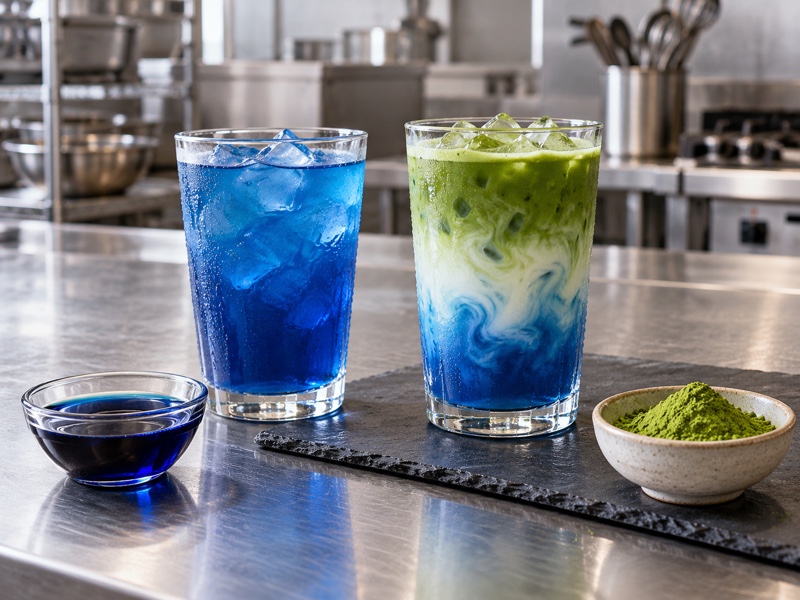
The simplest version contains prepared matcha, blue spirulina extract, a liquid base, and any sweetener the menu requires. A layered drink keeps the green and blue components separate long enough to show contrast. A fully mixed drink often becomes teal, sometimes darker or duller than a product photograph suggests. Ingredient order, density, ice, and cup shape all affect the appearance. Decide whether the product is sold for a stable teal color or for a temporary visual layer.
How should the ingredients be named?
Use “matcha” for the tea powder and identify the blue ingredient as spirulina extract or phycocyanin-rich blue spirulina according to the supplier's documentation and market rules. Phycocyanin is the blue pigment component; the commercial ingredient can contain carriers and other constituents. Ask for the complete composition before menu printing or retail label work. If the drink uses matcha, do not describe it as caffeine-free without testing and an appropriate basis.
| Component | Main role |
|---|---|
| Matcha | Tea flavor and green color |
| Blue spirulina extract | Blue color |
| Milk or water | Texture and dilution |
| Sweetener | Flavor balance and layering density |
The recipe should state each component by weight. A scoop is too variable for multi-store execution.
2. What should a café decide before choosing a recipe?
Decide the drink's job on the menu. Is it a premium iced latte, a seasonal visual feature, a lower-sugar blended drink, or a ready-to-drink product? Those formats create different technical problems. A café can serve a layered drink immediately; a bottled beverage must hold color and flavor through distribution. A powder mix must disperse reliably when staff use different equipment. The intended format should guide ingredient grade and pilot design.
What questions belong in the brief?
Specify cup size, liquid base, target sweetness, color target, serving temperature, expected hold time, and whether customers will stir before drinking. Include matcha grade and target tea flavor. A vivid blue layer can hide an under-extracted matcha base in a photograph, but the first sip will expose poor balance. If a drink is meant to be bright teal, blend the ingredients fully during testing instead of selecting two separate colors and assuming they will add up attractively.
The blue spirulina latte guide covers one related drink format. A matcha version must also account for matcha flavor, particles, caffeine, and green pigment.
3. Which matcha and blue extract grades fit together?
Choose matcha for the intended flavor and service method, then choose blue extract for color, dispersion, composition, and supply reliability. A bitter culinary matcha may overwhelm a delicate blue layer unless the formula has enough milk or sweetener. A premium matcha might justify a higher price but can be wasted in an over-sweetened novelty drink. The blue extract should not bring visible clumps or an off-note at the dose needed for color.
How can a buyer compare candidates fairly?
Test each matcha at the same tea dose and each blue extract at a measured dose ladder. Keep the milk, ice, sweetener, cup, and mixing method constant. Judge taste before revealing the ingredient prices. Compare the finished drink after preparation and after the intended service hold. A grade that is beautiful for ten minutes may not suit a refrigerated grab-and-go cabinet.
| Ingredient trial | Accept if |
|---|---|
| Matcha | Flavor holds through milk and sweetener |
| Blue extract | No specks or unwanted flavor |
| Mixed teal | Shade meets reference |
| Layered version | Separation lasts long enough to serve |
The best pairing is a balanced drink that staff can make, not the two most expensive powders.
4. How do you make a clean layered drink?
Layering depends on density and pouring technique, not just color. A concentrated sweetened base may sit below a lighter milk or matcha layer; ice can slow mixing and help create a temporary boundary. Build a measured recipe and train staff to pour slowly in a defined order. Test with the exact cup, straw, lid, and ice used in service. A layer that vanishes as soon as the lid is placed on the cup may not justify extra preparation steps.
What should staff instructions include?
State the preparation sequence, mixing vessel, powder pre-dispersion method, ice weight, liquid weights, and pour speed. Include a realistic service photo taken at the point the customer receives the drink. Decide whether the menu invites stirring. If so, check the mixed flavor and color; a drink should remain pleasant after its visual effect ends. Do not solve a weak blue layer by simply doubling extract. That changes cost and may affect taste without fixing density.
A café pilot should run during normal service with regular staff. A barista who developed the drink can often make it look better than a new operator using a one-page recipe.
5. What happens when the powders are mixed?
Matcha's suspended particles and green color combine with the blue extract to produce a range of teal shades. The final color depends on dose, milk opacity, and ingredient quality. A pale oat milk may produce a different shade from water or dairy milk. Matcha also settles over time, so a bottled or held drink may show separation even if the blue pigment remains. Test the intended shelf or service interval, then decide whether the product needs shaking instructions or reformulation.
How can the team measure the result?
Use a fixed lighting setup and a color reference for photos. Record doses, pH, temperature, and appearance immediately, after the normal hold, and after any planned chilling. A phycocyanin stability study found sensitivity to pH and heat in solution. That does not give a shelf life for this recipe, but it supports testing the exact drink. Assess flavor at the same checkpoints because matcha bitterness and milk notes can shift as ice melts.
| Observation | What it tells you |
|---|---|
| Immediate shade | Launch visual |
| Settling | Need for mixing or shaking |
| Melted-ice flavor | End-of-service quality |
| Chilled shade | Grab-and-go fit |
Do not approve the recipe from a freshly poured photograph alone.
6. Can a ready-to-drink version use the same formula?
A ready-to-drink product needs separate development. It may face pasteurization, acidification, homogenization, oxygen, packaging light, and long storage. Those steps can change both matcha and phycocyanin. A café recipe mixed and served cold is a useful flavor concept, not a validated bottled formula. Beverage teams should establish microbial safety and color retention with their process authority and testing program.
Which variables should a pilot hold constant?
Fix the matcha and blue extract grades, then vary one process condition at a time. Record heat exposure, pH, fill temperature, package material, headspace, and storage conditions. Compare transparent and light-protective packages if appearance allows. Observe sediment as well as color loss. A blue extract that remains vivid in water may fail in an acidic or heat-treated milk drink, so the supplier should be told the process conditions before promising a grade.
The commercial decision should rest on the packed product at shelf end. A brand should not print a bright blue hero image when its actual bottle turns gray-green halfway through distribution.
7. How should sugar, caffeine, and nutrition be presented?
The drink's sugar and calories usually come from milk, syrup, and toppings rather than the small amount of blue extract. Matcha contributes caffeine, and the amount depends on the tea dose and product. Calculate the complete finished serving for menus and labels. Do not borrow whole-spirulina protein figures for a phycocyanin-rich extract or describe a mixed matcha drink as a medical product.
What should marketing avoid claiming?
Avoid claims that the blue pigment “detoxifies,” that the drink improves immunity, or that a particular shade proves a nutrient level. If a brand wants a nutrition or functional claim, review the formula, dose, evidence, and legal rules for the market. A simpler product story can be strong: measured matcha flavor, a naturally derived blue component, and a drink that looks and tastes the same across stores.
| Claim topic | Needed check |
|---|---|
| Caffeine | Tea dose and finished serving |
| Sugar | Full recipe calculation |
| Protein | Finished-product data |
| Color origin | Ingredient declaration |
Accurate menu language helps customers choose the drink they expect.
8. What does a multi-store operating test reveal?
A central test kitchen can control water temperature, gram weights, and lighting. Stores may use different ice, milk, mixers, and staff habits. Run a pilot in at least the kinds of stores that will sell the drink. Watch whether powders disperse, whether preparation slows service, and whether the final shade remains in range. Record the ingredient waste from measuring and cleaning, because a dramatic two-layer drink can carry an unexpected labor cost.
What should the store recipe card show?
Use gram weights, step order, acceptable appearance photos, and a short troubleshooting note. Define a maximum hold time for a pre-mixed component if the café plans to batch ahead. If staff improvise with a scoop or add blue powder straight to cold milk, expect clumps and color variation. Pre-portioned ingredients may help, but test their packaging and moisture protection. Train staff to reject a wrong-colored batch rather than cover it with extra syrup.
The final recipe should survive a busy shift. If only the developer can make it correctly, the product is not ready for a chain.
9. How should B2B buyers compare suppliers?
Compare the blue extract at the dose needed in the approved drink and the matcha at the flavor level the menu requires. Request the exact grade, composition, COA, storage conditions, shelf life, lead time, and change-control terms. Calculate cost per served cup after normal waste. A cheaper powder that needs more color or produces more remake cups can be the expensive choice.
Which documents belong in the launch file?
Keep the supplier specification and lot COA for both ingredients, the formula version, service trial results, sensory notes, photography reference, and approved copy. If a supplier changes the carrier in the blue powder, reassess the label and dispersion. If matcha changes, retest flavor and final teal shade. The two materials interact visually even when they remain separate ingredients in the purchase system.
The blue spirulina wholesale article provides a wider procurement checklist. For this drink, the cup result and staff execution deserve equal weight.
10. What should the first launch trial prove?
It should prove that the drink reaches the target shade and flavor at a repeatable cost during ordinary service. Prepare it with the real cup, ice, milk, equipment, and staff instructions. Taste it fresh and after the expected hold. If the plan is a bottled drink, run a separate validated process and shelf-life program. Decide the menu claim and ingredient names from the actual grades used, then approve photography that matches production.
What should the supplier brief contain?
State whether the use is café service, powder mix, or ready-to-drink; provide the recipe base, pH if known, heat step, package, market, forecast, and desired color. Ask suppliers for representative samples and full technical documents. A supplier who sees the process can recommend a suitable grade or explain why a proposed format is difficult. Keep the conversation specific: “blue spirulina matcha in a chilled oat-milk latte held for four hours” is much more actionable than “a bright blue wellness drink.”
| Trial sample | Compare |
|---|---|
| Matcha alone | Green baseline |
| Blue alone | Pigment shade |
| Combined drink | Final hue and taste |
FAQ
Q1: Is blue spirulina matcha caffeine-free?
No if it contains matcha. Matcha contributes caffeine, so assess the finished serving.
Q2: Will mixing the two powders make a blue drink?
Usually the green and blue combine into a teal shade. Test the actual base and doses.
Q3: Can the ingredients be layered?
Yes, but the effect depends on density, ice, pouring order, and service time.
Q4: Can a café formula be bottled unchanged?
Do not assume so. Processing and storage need separate safety and stability work.
Q5: What should a B2B buyer request?
Ask for exact grades, full composition, samples, COAs, storage guidance, and change-control terms.