
Blue spirulina bread is bread developed with a blue phycocyanin-rich spirulina extract for a visible color effect. Bread presents a difficult test: dough ferments, bakes, browns, cools, and may be toasted again by the customer. A vivid raw-dough sample can become a gray slice. Bakeries need a trial that protects bread quality and measures color after the whole route. The questions below turn a decorative concept into a controlled product-development brief.
Contents: 1 · 2 · 3 · 4 · 5 · 6 · 7 · 8 · 9 · 10.
1. What ingredient does “blue spirulina bread” mean?
Identify the blue extract
The term should refer to a blue spirulina extract containing phycocyanin, not simply whole green spirulina powder. Whole biomass can change flavor, dough color, and nutritional composition differently. Check the bag: ask for the ingredient name, carrier statement, specification, and batch certificate before estimating a dose. The E3, E6, E18, E25, E35, and E40 powders in our confirmed supply range are grade codes, not universal pigment percentages or promises of bakery suitability.
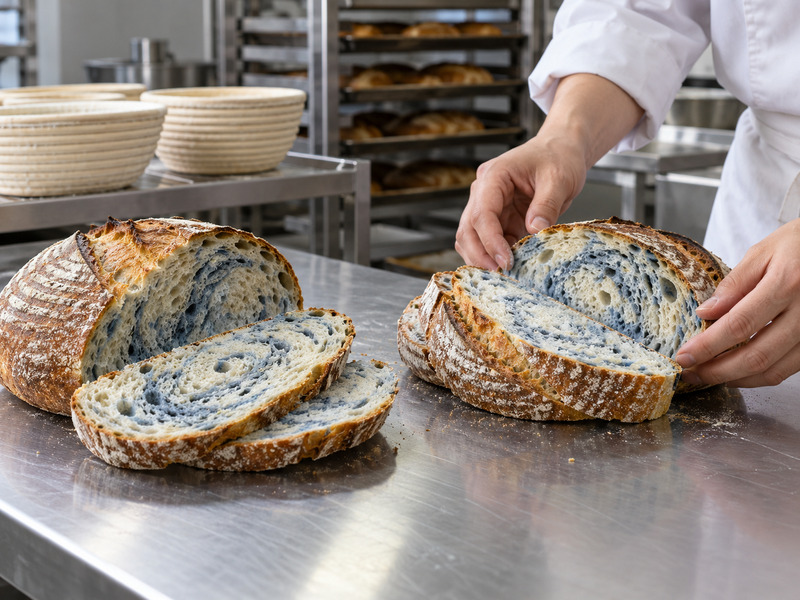
A Blue Marbled Sourdough recipe shows one genuine blue spirulina application. It also uses butterfly pea powder, so its photographed color cannot be attributed to phycocyanin alone. A commercial bakery that wants to claim an effect from blue spirulina should run a blue-extract-only control beside any mixed-color design. Define whether the goal is a blue crumb, a marbled crumb, a topping, or a post-bake decoration. The route matters because the loaf interior and outer crust see very different heat and browning conditions.
| Intended effect | Color placement | Main technical question |
|---|---|---|
| Uniform blue crumb | Entire dough | Will color survive bake without changing dough? |
| Marbled crumb | Selected dough portion | Can layers remain distinct through shaping? |
| Blue glaze | After baking | Will coating stay attractive and safe? |
| Blue inclusion | Separate component | Will color migrate into surrounding crumb? |
2. Where in the bread process should color be added?
Select a repeatable addition point
An extract may be added to mixing water, blended with dry ingredients, or worked into a portion of dough after an initial mix. Each changes distribution and the labor required. Pick a feasible point: the pilot addition step should resemble the production line, not a hand-painted laboratory slice. Mixing water may help a water-soluble pigment disperse but could expose it longer to fermentation. Dry addition can create blue flecks if powder wets slowly. Adding color to one dough portion creates a deliberate swirl yet adds dividing and handling time.
Make the same base dough for a blank control and at least one colored version. Hold flour lot, water temperature, mixing energy, and rest schedule steady. Record dough temperature at the end of mixing. If a starter or preferment is used, keep its maturity consistent. Judge the color only after the loaf is fully cooled and cut at a standard thickness. An attractive blue line on the outer dough may disappear after oven spring. Bakers should photograph each step so a change in shade can be assigned to mixing, fermentation, baking, or storage.
3. Can phycocyanin change dough handling?
Observe the dough system
The added powder brings solids, possible carriers, and sometimes different wetting behavior. A small color dose may have little effect, but that is a result to measure rather than assume. Watch your hands and mixer: compare dough pickup, stickiness, extensibility, proof height, and shaping tolerance with the blank control. If hydration is adjusted, record the exact change. Otherwise a baker may blame a weak loaf on blue spirulina when the cause is a different water balance.
For a marbled loaf, keep the colored and plain portions at similar handling temperatures. An overworked blue portion can resist stretching or tear during lamination. The recipe example uses a separate colored portion, but production equipment and batch size will change the result. Compare a small pilot batch with a representative mixer fill; a spiral mixer may distribute powder differently from a bowl mixer. Note powder dust during addition and any blue carryover into the next dough batch. A new color cannot quietly compromise a bakery’s normal allergen and sanitation schedule.
| Dough check | Control comparison | Why it matters |
|---|---|---|
| Final dough temperature | Same target range | Separates heat effects from pigment effects |
| Mixing endpoint | Same development criterion | Protects crumb structure |
| Proof height | Same vessel or reference | Detects process drift |
| Shaping loss | Weight of rejected pieces | Exposes scale-up cost |
4. What happens during fermentation?
Check proofed color and shape
Dough pH changes during fermentation, especially in sourdough. Phycocyanin appearance may respond to acidity, so a shade that looks clean at mixing can dull before loading. Sample at the clock points: take small dough portions after mixing, after bulk fermentation, and at final proof. Record pH if the bakery already uses it as a process measure. Do not change a mature sourdough formula solely to protect blue color without reassessing flavor, fermentation, and food safety.
If the marbled design combines blue and plain portions, their fermentation rates should stay close. One portion that is warmer or handled more can expand differently and blur the swirl. In a production trial, mark portions clearly and check dough age at assembly. A bakery may choose to color a small layer rather than the entire loaf, but that changes the visual promise and may affect labor. Customer testing should use the finished slice rather than a photo of dough. A pale natural blue in crumb can be an acceptable result if the product brief calls for it.
5. How should the baking trial handle heat and browning?
Assess baked crumb and crust
Bread baking exposes the crumb to heat and the crust to much stronger browning. The blue extract can fade while normal Maillard browning masks color. Test the finished slice: compare crumb and crust separately. A lower bake may retain more blue but leave bread underbaked; product safety and structure come before color. Record oven profile, loaf size, pan or stone, bake time, and cooling time. Run normal high-side and low-side process variation if the line permits.
A marbled crumb can work even when the crust stays brown. The bakery should avoid promising an entirely blue loaf from an internal swirl. If color is applied after baking, examine whether the topping changes texture, microbial risk, or pack compatibility. The blue sourdough example is a visual reference, not proof that its ingredient doses will translate to a commercial oven. Recheck shade after slicing, because blade smearing can make a clean swirl appear muddy.
| Bake observation | What it may indicate | Next trial |
|---|---|---|
| Gray crumb | Heat or pH effect, base color | Compare process profile and control crumb |
| Brown outer layer | Normal crust reaction | Set crumb-based visual standard |
| Faded swirl | Too much mixing or bake effect | Change layer placement or dose systematically |
| Weak structure | Hydration or fermentation drift | Recheck dough parameters first |
6. How can a bakery design a repeatable marble?
Standardize the marble pattern
Marbling depends on portion weights, layer order, and shaping method. A hand-folded sample may look dramatic but consume too much labor. Write down the fold: specify the weight of plain and blue portions, the order of layering, number of folds, and final shaping steps. Compare several loaves from the same pilot run. The goal is a recognizable pattern across saleable pieces, not a photograph of the best slice.
Use an acceptance range rather than requiring identical swirls. A loaf is cut at different points, so a slice near the end can look unlike one from the center. Package photography should represent typical pieces. If the product is sold sliced, take samples from beginning, middle, and end of loaves. If it is sold whole, decide whether customers can see the blue before purchase; an ordinary brown crust may need a window, label description, or exposed cut edge to explain the product. Any visual cue should survive handling and avoid misleading customers about ingredients.
7. What should shelf-life testing cover?
Store the finished loaf
Bread shelf life includes microbiological safety, staling, moisture redistribution, pack condensation, and visual change. The ingredient’s own shelf life does not set the loaf’s date. Use the real pack: place blank and blue loaves in the proposed packaging, then evaluate along the normal distribution route. Compare crumb shade under fixed light, mold growth under the plant’s program, texture, aroma, and any blue transfer to the bag or slicing equipment.
If customers toast the bread, include a toast test in consumer research. Toasting may brown the blue crumb and change what the final serving looks like. A bakery should also examine whether a blue post-bake glaze becomes sticky in humidity. For a chilled sandwich bread, test the chilled route; for an ambient artisanal loaf, use its actual display condition. Document lot numbers of flour, starter, blue powder, and packaging. A controlled trial can identify whether a change belongs to the extract or ordinary variation in bakery inputs.
| Study point | Color check | Bread-quality check |
|---|---|---|
| After cooling | Crumb and crust shade | Slice integrity |
| After slicing | Smear and swirl visibility | Crumb tearing |
| Mid shelf life | Shade drift | Staling and condensation |
| End of proposed life | Saleable appearance | Safety and sensory criteria |
8. Does the blue change the cost of a loaf?
Count saleable loaves
Ingredient price is only one line of the cost calculation. A marble may require extra dough division, manual folds, line cleaning, more rejects, or different packaging. Count saleable loaves: record yield by the same standard used for ordinary bread. Compare the number of pieces that meet color, weight, and structure criteria. If the blue color survives only at a high dose, calculate cost per finished loaf using the actual trial dose.
Ask procurement for quotations tied to an exact grade and quantity, not a generic “blue spirulina” price. Plan for normal lot-to-lot control and how dose adjustments would be approved. A supplier’s E-series label does not tell the bakery which grade will look best after fermentation and baking. Rework should be governed by the plant’s existing safety program. If rejected blue dough cannot be blended into a regular product without changing its label or appearance, the scrap cost rises. A smaller consistent color accent may be commercially better than a full blue loaf.
9. Which sales-market claims require review?
Review destination-market language
The right to use a color ingredient depends on the food category and destination market. FDA color-additives guidance reports that the effective date of a 2026 expansion for spirulina extract was delayed. Stop at the rule: US regulatory staff should check the current 21 CFR text and the product’s identity standard before a colored bread is offered for sale. A social-media sourdough recipe is evidence of a culinary idea, not a commercial authorization.
List the supplied ingredient and its carriers accurately. Confirm whether the front-of-pack language “blue spirulina” describes the ingredient in a way permitted locally. Avoid claims that the loaf gains a nutritional or health effect from a color-level addition unless the finished product has suitable substantiation. A bakery can describe a visually distinctive crumb without calling it detoxifying or immune-supporting. Check claims separately for each sales market; imported food may need a different declaration even when the same dough is used.
| Review item | Evidence needed | Owner |
|---|---|---|
| Color use | Current destination-market rule | Regulatory |
| Product identity | Applicable bread standard | Regulatory and R&D |
| Ingredient statement | Formula and supplier documents | Label team |
| Claims | Finished-loaf substantiation | Marketing and regulatory |
10. What should a bread buyer put in a supplier brief?
Document the requested grade
Describe the bread type, flour system, fermentation method, intended color placement, oven profile, sales market, packaging, and distribution route. Include a photograph of the target slice. Make the request specific: ask for a grade-specific specification, batch certificate, ingredient declaration, sample, and any handling information for dough applications. Ask whether the supplier has evidence at temperatures and pH relevant to the planned process. Do not accept an E-series code as a substitute for test conditions.
Before negotiating bulk volume, agree on a pilot scorecard: dough handling, proof performance, loaf volume, crumb texture, color range, yield, and shelf-life appearance. Keep at least one blank control and preserve samples across the intended storage period. If the blue extract cannot survive the normal bake, move it to a compatible post-bake component or drop the color concept. That is a sound development decision. The buyer should pay for repeatable saleable bread, not the promise of a blue mixer bowl.
FAQ
Q1: Is blue spirulina the same as green spirulina bread powder? No. Blue extract and whole biomass are different ingredients; review the exact specification.
Q2: Can phycocyanin survive a bread oven? Results depend on the formula, addition point, and heat history. Judge cooled finished slices in a controlled trial.
Q3: Does a blue crust follow from a blue crumb? No. Crust browning can mask blue even when the interior remains visibly colored.
Q4: Can one recipe predict commercial yield? No. Line equipment, batch size, and shaping determine repeatability and cost.
Q5: Which powder grade should a bakery use? Compare the grade-specific documents and pilot results; the E-series name alone cannot decide.
Final thoughts
Begin with a clear crumb or marble target and make a matched plain loaf. Record color through mixing, fermentation, baking, slicing, and packaged storage. If the regular line can repeat the approved slice without damaging bread quality, then a bulk quote has a useful technical basis.