
Blue spirulina macarons use a phycocyanin-rich blue extract in a delicate sandwich cookie. The color looks appealing in a pastry case, yet a small change in meringue moisture, shell heat, or filling contact can leave a bakery with gray shells and short shelf life. This guide gives product developers a practical route from color brief to line trial. It treats an attractive recipe as a starting point and asks the harder questions a commercial bakery must answer.
Contents: 1 · 2 · 3 · 4 · 5 · 6 · 7 · 8 · 9 · 10.
1. What makes a blue spirulina macaron different?
Define shell and filling targets
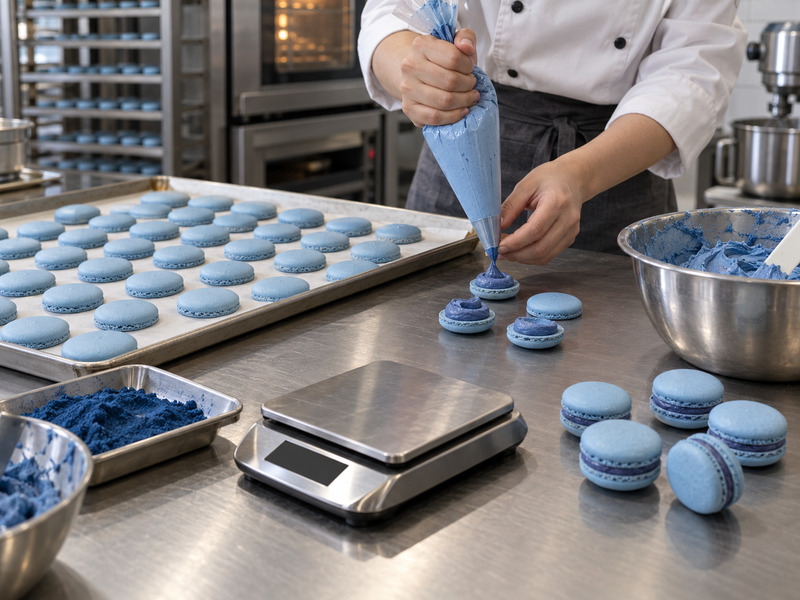
A macaron contains an aerated shell and a filling. The shell is baked, thin, and sensitive to mixing. The filling can be water-rich, fat-rich, acidic, or nearly neutral. Those parts do not ask the same things of a blue pigment. Blue spirulina usually means a blue extract from spirulina, rich in phycocyanin, rather than ground whole green biomass. Name the target: decide whether the shell, filling, or both must be blue before anyone orders a powder sample.
The Aqua Blue Spirulina Macarons recipe demonstrates the concept in a real food. Its kitchen method does not certify a commercial grade, processing window, or shelf life. A bakery needs its own evidence. A pale blue shell may make a white filling look brighter, while a blue filling can create a strong cut-section even if shell color is restrained. A buyer should describe the planned visual outcome in photographs and an agreed reference swatch. That prevents a trial from drifting toward a stronger dose merely because a powder looks vivid in water.
| Colored component | Main exposure | Pilot question |
|---|---|---|
| Shell | Mixing and oven heat | Does blue remain visible after baking? |
| Buttercream filling | Fat plus any water phase | Does color distribute evenly? |
| Fruit filling | Acidity and moisture | Does shade shift or bleed? |
| Both components | Contact during storage | Does one phase stain the other? |
2. Should color go into the shell or the filling?
Choose the visible component
Start with two small runs: a colored shell with plain filling, and a plain shell with colored filling. This isolates oven behavior from filling behavior. A third run can color both after each has passed its own trial. Here is the tradeoff: coloring the shell creates a strong shelf cue but exposes the extract to baking; coloring the filling can avoid the oven but introduces migration and moisture questions. The chosen route should also fit the bakery’s decorating and assembly capacity.
For a macaron sold through a café, the customer may see the whole shell before purchase. For an individually wrapped retail unit, the cut-section may matter more after the first bite. A very dark filling can visually overpower a soft shell. Ask the sales team which view matters in the channel and provide the pilot team with that answer. If the design includes a pale natural blue, a small dose in a light filling may be adequate. If the design needs a highly saturated electric blue, check technical and regulatory feasibility before promising it to a buyer. Do not equate an online photograph with a reproducible production shade.
3. How can a powder affect meringue and shell texture?
Protect meringue structure
Macaron shells depend on a controlled relationship among egg white, sugar, almond material, and mixing. Adding any powder changes dry solids and may alter flow. A blue extract can also contain carrier ingredients that affect how it wets. Watch the batter: record the number of folds, ribbon behavior, spread after piping, skin formation, and foot development. Compare a blank control with a colored batch made from the same base ingredients on the same day.
Avoid a test that changes color, almond flour, egg age, and oven position at once. If shells crack, the team needs to know whether the blue ingredient caused the failure or whether normal oven variation did. Sample from the beginning and end of the piping run; a powder that slowly hydrates can change batter behavior during a long hold. Our confirmed blue spirulina range comprises powders E3, E6, E18, E25, E35, and E40. The code does not state particle size, pigment percentage, or macaron suitability. Request the specification and batch certificate of the exact sample used.
| Observation | Possible cause to test | Controlled comparison |
|---|---|---|
| Spreading shells | Batter flow changed | Same base, fixed fold endpoint |
| Blue flecks | Poor powder wetting | Sift or premix trial |
| Weak feet | Drying or oven variation | Same tray position and rest |
| Uneven shade | Mixing distribution | Beginning versus end of piping |
4. What should the oven trial measure?
Measure baked shells
Measure finished color, not raw-batter color. Heat can change phycocyanin appearance, and browning can cover blue even if some pigment survives. Pipe a fixed shell size, use the intended tray and liner, and record the oven’s actual temperature profile. Keep a reference beside it: photograph unbaked batter, baked shells, and filled macarons under one lighting setup. A warm shell may look different after cooling; judge saleable pieces after they reach the planned packing temperature.
Test at least the normal oven setting and reasonable high-side and low-side production variation. Do not raise the pigment dose to compensate for a dark bake until the bakery has checked browning, shell texture, and food safety. A lower-temperature bake that keeps a brighter hue might produce a weak structure or unstable moisture. The commercial choice has to pass both appearance and eating quality. If the shell cannot hold the intended shade, move color to the filling or redesign the visual rather than claiming the powder is inherently unsuitable for every pastry.
5. How should a filling be screened for shade and migration?
Check filling migration
The filling determines how the blue looks after assembly. A pale buttercream, neutral cream, or white-chocolate ganache can display blue differently because the pigment meets different water and fat phases. Fruit preparations can introduce acid. Test the actual contact: pipe the candidate filling between finished shells, then cut samples after the planned equilibration period and at later storage points. Look for halos, wet patches, cracking, and color movement toward the shell.
Macarons are often held so moisture from the filling changes shell texture. The blue trial must fit that established process. A filling that looks perfect at assembly could migrate during the normal maturation hold. Record pH and water activity when they are relevant to safety and texture. Do not use a high-water filling solely because it dissolves the powder easily; that shortcut may reduce shelf life. A blue layer in a multi-component filling can work if it remains separate, but assembly complexity and dose variability belong in the cost study.
| Filling base | Color question | Storage question |
|---|---|---|
| Pale cream | Does blue stay uniform? | Does moisture soften shells too far? |
| Buttercream | Are there streaks or specks? | Does fat separation expose particles? |
| Fruit preparation | Does acid shift shade? | Does color bleed at the seam? |
| White-chocolate ganache | Which phase carries pigment? | Does texture remain smooth? |
6. How do humidity and display conditions change the result?
Recreate bakery display
A bakery can make flawless shells in a dry development room and struggle on a humid packing day. Macarons take up moisture, while colored shells can show surface marks more clearly than plain ones. Follow the route: sample from cooling, filling, packing, shipping, and display. Record humidity and the time spent at each step. A café display, chilled case, and ambient gift box create different exposures and may need different product designs.
Use the real sales pack in the trial. A transparent window helps show color but may expose the macarons to more light. A sealed tray can protect shape but trap moisture if the product is packed warm. Shipping vibration can chip shells and turn a blue surface into a speckled one. Assess color alongside breakage, stickiness, and eating texture. If the project targets multiple climates, choose representative storage routes rather than assuming one city trial covers every market. A practical acceptance sheet should state the maximum broken units and the acceptable visual range.
7. Which shelf-life checks belong in the bakery plan?
Validate the assembled macaron
Shelf life is the period in which a finished macaron remains safe and meets the agreed sensory and visual standard. It cannot be borrowed from an ingredient’s best-before date. Use dated samples: keep control and blue pieces from the same batch in the intended package, then evaluate at preset points. Inspect shell moisture, filling texture, color drift, visible migration, and off-notes. Follow the plant’s microbiological program for the specific filling and storage temperature.
Photographs should use a color card and stable light. A color measurement can help if the surface is large enough and the instrument is repeatable. Ask a small panel whether the shade still matches the product reference; numbers alone do not describe an unattractive halo. Record lot codes for almond flour, filling ingredients, packaging, and blue powder. If the blue version fails sooner than the plain control, identify whether the issue came from pigment addition, a changed filling recipe, or altered process time before choosing another supplier.
| Checkpoint | What to examine | Why keep a control? |
|---|---|---|
| After baking | Shell shade and feet | Separates oven effects |
| After filling | Seam and cut-section | Shows immediate migration |
| Mid-life | Texture and color | Detects gradual change |
| End of proposed life | Safety and saleability | Supports the pack claim |
8. How can a bakery control dose during scale-up?
Control batching across scale
A baker can weigh a few grams precisely for a small bowl. A commercial line needs a repeatable addition method across larger batches. Move one step at a time: establish a target dose by finished-batter or filling mass, then translate it into a batch sheet with weighing tolerance and mixing order. Test that the process works at a representative mixer fill level. A fixed mixing time from a tabletop bowl may be wrong in a planetary mixer.
Collect samples across the batch and compare their shade. Blue pigment collecting at a bowl wall or transfer hose can make early and late shells different. If the powder is preblended with sugar or another ingredient, verify that the preblend does not segregate during storage. A visual target should be paired with a documented acceptable range, not an instruction to “add until blue.” Cost per saleable macaron should include powder, rework, cracked shells, extra labor, and any packaging changes. An ingredient quote alone cannot predict the finished cost.
9. What labeling and regulatory questions must be cleared?
Review category and label
Regulatory approval is specific to the color additive, market, and food category. The FDA color-additives page says the effective date of a 2026 expansion for spirulina extract was delayed while objections are evaluated. Check the live rule: a US bakery should have regulatory staff review the current 21 CFR entry and the exact finished product before approving a label. Other markets need their own review. A recipe page does not grant permission to commercialize a colored shell.
The ingredient statement must reflect the actual supplied powder and any carriers. Ask quality for an allergen assessment and current batch documents. Avoid claims that a macaron becomes nutritious, detoxifying, or immune-supporting simply because it contains blue spirulina. The amount used for color and the finished food’s nutrient profile are separate matters. Marketing can explain the natural visual concept without inventing a health effect. If the product is sold through multiple markets, confirm each market’s terms and restrictions rather than copying one label across them.
| Approval item | Document to check | Owner |
|---|---|---|
| Permitted color use | Current country rule and food category | Regulatory |
| Ingredient name | Supplier statement and formula | Label team |
| Allergen and cross-contact | Plant and supplier records | Quality |
| Marketing copy | Claim substantiation | Regulatory plus brand |
10. What belongs in a supplier brief for a macaron trial?
Specify the pilot inputs
Tell the supplier which component will be blue, the egg-white and sugar system, the filling type, oven conditions, sales market, package, and proposed shelf life. State the target shade with a physical or photographic reference. Ask for workable evidence: request the specification, batch certificate, ingredient declaration, recommended handling guidance, and samples from the exact grade available for commercial orders. If several grades are offered, ask what differs in documented properties rather than decoding the E-series names yourself.
Agree on pass criteria before sampling: acceptable shell spread, baked shade, filling uniformity, migration, texture, and cost per saleable piece. A successful blue spirulina macaron is one the bakery can make on the normal line and sell through its planned channel, not a single perfect tray from a kitchen. Run a representative pilot, save the reference pieces, and approve the final package only after the product survives its intended route.
FAQ
Q1: Is blue spirulina the same as green spirulina powder? No. The blue extract and whole biomass are different ingredient types; check the specification before using either.
Q2: Can the blue go into a macaron shell? It can be trialed, but oven heat, browning, and batter behavior decide whether the finished shell meets the target.
Q3: Is coloring the filling easier? It avoids shell baking but adds phase compatibility, moisture, and migration questions.
Q4: Does an online recipe prove commercial shelf life? No. Validate the bakery’s actual filling, process, package, and distribution route.
Q5: Which powder grade should we order? Share the formulation and process brief, then compare grade-specific documents and pilot samples.
Final thoughts
Choose the colored component, make a blank control, and test blue in the complete macaron through baking, filling, packing, and storage. Keep the shade that the normal line can repeat without sacrificing shell quality. Send that evidence with the supplier brief when the bakery is ready to discuss bulk supply.