
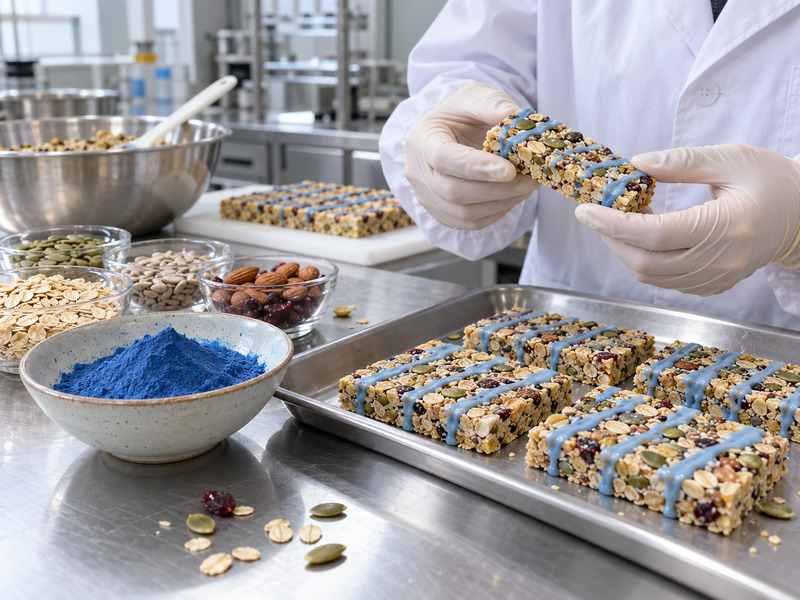
Blue spirulina bars are portioned snacks that use a blue phycocyanin-rich spirulina extract for a visible layer, center, or decorative pattern. A color that looks clean in a kitchen coconut bar may streak during mixing, bleed into a filling, or fade behind a retail wrapper. Snack manufacturers need to decide where the color belongs and whether their existing forming line can keep it there. This guide focuses on cold-formed and low-heat bars rather than molded chocolate or baked bread.
Contents: 1 · 2 · 3 · 4 · 5 · 6 · 7 · 8 · 9 · 10.
1. What counts as a blue spirulina bar?
Define the visible cross-section
The phrase can describe an oat bar with a blue stripe, a coconut center inside a conventional coating, or a layered refrigerated snack. It should not imply that every part of the bar is colored. Define the cross-section: draw where blue appears and identify the matrix touching it. Blue spirulina here means a phycocyanin-rich extract rather than whole green spirulina biomass. The difference matters for color, flavor, ingredient declaration, and supplier documentation.
The Blue Spirulina Bounty Bars recipe is a real example of a blue coconut center in a chocolate-style bar. It supports the existence of the application, not a commercial shelf-life claim or a universal dose. An oat-and-seed bar has a different water and fat balance from coconut. A manufacturer should make a blank bar and one colored bar from the same base mix, then compare cut-section, bite, surface appearance, and packaging fit. A photographic color reference helps align product development, sales, and procurement before expensive pilot runs.
| Bar format | Blue location | Early technical risk |
|---|---|---|
| Coconut center | Interior layer | Moisture and color migration |
| Oat-and-seed bar | Binder or stripe | Uneven distribution |
| Filled bar | Cream center | Water activity and separation |
| Coated bar | Visible coating | Phase compatibility and cracking |
2. Why begin with the bar’s matrix rather than the powder?
Identify the color-carrying phase
A phycocyanin powder is water soluble, while many bar systems contain oil, nut butter, and low available moisture. The same ingredient can look different in a syrup binder, a coconut paste, and a fat-rich coating. Look at the binder: identify what holds the solids together and which phase can carry the color. In a syrup-bound bar, a premix in the aqueous binder may distribute blue evenly. In an oil-bound bar, dry powder might leave colored dots or demand a different product architecture.
Do not redesign a safe, stable bar solely to dissolve a pigment. Added water can change microbial risk, texture, and shelf life. If the base is intentionally low moisture, a visible blue layer with an appropriate carrier may be more practical than coloring all of it. Ask the supplier for the exact ingredient statement, including carriers. Our confirmed blue spirulina supply consists of E3, E6, E18, E25, E35, and E40 powders. Those code names do not describe moisture tolerance or finished-bar dose. Test the grade and lot intended for purchase.
3. How should color be introduced on a forming line?
Track the forming route
Choose an addition point the plant can reproduce. Powder can enter a binder premix, a dry blend, or a separate layer just before forming. Follow the material: examine the mixer wall, transfer belt, rollers, extrusion die, and cutting blade for color accumulation. A uniform bowl sample can become a streaked sheet if blue material clings to a contact surface. Production staff should record the order of addition and the mixing endpoint, then collect bars from the start, middle, and end of a run.
Keep a blank control under the same processing conditions. If the colored mass becomes softer, confirm whether the cause is added liquid, altered binder, or the powder itself. Weigh individual bars and inspect their cut faces. Powder loss as dust and blue carryover into the following uncolored run belong on the trial sheet. For a layered product, test whether the blue layer tears or smears when compressed. The production method should not require hand-correcting every bar to achieve an attractive photograph.
| Line point | Sample to collect | Question to answer |
|---|---|---|
| After premix | Binder sample | Is the color fully dispersed? |
| After mixing | Mass from several locations | Are there concentrated blue pockets? |
| After forming | Start and end bars | Did the pattern survive pressure? |
| After cutting | Cut-face images | Does the blade smear the blue? |
4. Which textures should be measured during the pilot?
Assess bite and handling
Bars are bought for texture as much as appearance. A coconut bar may need a soft bite; a cereal bar may need chew without crumbling. Bite before judging blue: compare colored and plain pieces after the same storage period. Measure hardness or fracture only if the plant has a repeatable method. Record stickiness, oil release, crumbling, and coating adhesion using criteria tied to the intended channel.
A small powder addition can still change texture if it changes the binder’s solids balance. Conversely, a bar may feel different because the team added extra syrup to distribute color. Keep those variables separate in the experiment. If the concept uses blue stripes on top, inspect whether the decoration flakes off in a wrapper. If blue is confined to a coconut center, check the boundary with any chocolate coating after cutting and storage. A bakery-style handmade bar and an extruded retail bar may need different color placements, even when they use the same ingredient lot.
5. What do moisture and water activity tell the team?
Measure the complete bar
Moisture content and water activity are related but different measures. A bar can contain moisture that is strongly bound and still behave differently from a wetter cream filling. Test the finished unit: measure water activity where the plant’s food safety plan requires it, including the blue layer and adjacent layer if they differ. Do not assume a no-bake product is automatically safe or shelf stable. A newly hydrated color premix can move the product out of its established control range.
For a layered bar, inspect moisture movement through the interface during storage. The blue layer may harden while a neighboring crisp element softens. If fruit paste is involved, its acidity and color can shift the apparent hue. A low-moisture mix may show blue specks because powder has not dispersed, while a wetter mix may look smooth but demand more stringent microbiological control. The right choice comes from the complete bar, its intended storage temperature, and the plant’s validated safety system.
| Condition | Visual symptom | Quality check |
|---|---|---|
| Dry binder | Blue specks | Wetting and mixing method |
| Wet filling | Color halo | Water activity and migration |
| Fruit layer | Changed hue | pH and interface stability |
| Oil-rich mass | Streaks | Phase compatibility |
6. How can a brand separate a bar from a chocolate product?
Keep product architectures distinct
The development brief should state what customers are buying. A snack bar may be defined by grains, coconut, nuts, fruit, or a protein system. Chocolate can serve as a coating, but the bar’s main design problem is structure, portability, and nutrition-label accuracy. Keep the jobs separate: a chocolate-coating trial asks whether a blue pigment can disperse in fat; a bar trial asks whether a blue layer survives forming, cutting, packaging, and consumption.
This distinction prevents two products from inheriting one untested process recommendation. A blue coconut center can work with an ordinary dark coating, while a white-blue chocolate shell introduces a separate color-in-fat challenge. If the brand wants both, use two workstreams and a combined validation once each component passes. Assess taste without leading panelists to expect a “superfood” benefit. A bar’s ingredient list and finished nutrient values should be based on its actual formula, not on generalized claims about spirulina.
7. How should packaging and shelf life be assessed?
Test the commercial wrapper
A bar spends most of its commercial life inside a wrapper. Oxygen, light, temperature changes, and compression can change the blue layer or the bar’s texture. Pack the pilot run: use the proposed film, seal conditions, carton, and storage route. Inspect appearance at preset points with the same lighting and a reference swatch. Check whether the blue transfers to wrapper film or whether the cut ends dry out. Compare a plain control and a colored bar from the same run.
Microbiological and chemical shelf-life controls depend on the complete recipe. Fat oxidation, moisture migration, and coating bloom may matter as much as pigment fading. Do not claim a shelf life from an ingredient certificate. Record individual lot codes and the date of manufacture. If the final pack has a clear window, include a light-exposed test; a hidden center can be judged after cutting. Customer complaints often begin with a broken or greasy bar rather than a laboratory color measurement, so the acceptance sheet should include both visual and eating quality.
| Test point | Appearance check | Product check |
|---|---|---|
| Day of packing | Shade, seams, wrapper transfer | Weight and seal |
| Distribution simulation | Cracking and crumbs | Bar integrity |
| Mid shelf life | Color drift | Texture and odor |
| Proposed end date | Saleable cross-section | Safety and sensory limits |
8. How should cost per saleable bar be calculated?
Count saleable units
Ingredient price per kilogram omits the losses a line may experience. Use the run sheet: multiply actual blue-powder dose by purchase price, then add binder changes, extra labor, scrap, cleaning, packaging, and any shorter shelf life. Divide by saleable units, not gross output. A small bar with a concentrated blue stripe may use less pigment than a bar colored throughout, but stripe application can add equipment or labor cost.
Compare at least two technically acceptable designs rather than the cheapest powder alone. If one powder takes longer to disperse, that delay may dominate its purchase-price advantage. Define how shade adjustments across supplier lots will be authorized. The E-series powder name cannot replace a lot-specific certificate, color trial, or quotation. A buyer should ask whether the supplier can support the pilot dose and future volume, while keeping claims about minimum order and lead time tied to a current quote.
9. What regulatory and labeling gates apply?
Clear market and label gates
The finished bar’s market and food category determine color permissions. The FDA’s color-additives page notes that a 2026 expansion of spirulina-extract uses had its effective date delayed. Check the category now: regulatory staff should review the current rule, product identity, and exact ingredient before US labels are approved. A recipe for a coconut bar does not authorize every bar format. Other countries require separate checks.
List any carriers and all allergens from the supplied ingredient and the bar formula. Do not suggest that a bright blue bar has a measurable health benefit unless the finished product and claim have proper support. “Blue spirulina” may be useful consumer language, but the legal ingredient declaration may require different wording. Have regulatory and marketing review it together. If the bar contains chocolate, nuts, dairy, or other major allergens, their ordinary controls remain in force. Color novelty never relaxes food safety responsibilities.
| Gate | Owner | Evidence |
|---|---|---|
| Color use | Regulatory | Current destination-market permission |
| Ingredient statement | Label team | Full formula and supplier statement |
| Allergen control | Quality | Plant and supplier assessment |
| Claims | Regulatory plus brand | Finished-product substantiation |
10. What should an ingredient supplier receive before quoting?
Send a specific trial brief
Send a cross-section drawing, the bar matrix, intended addition method, process temperature, target shade, sales market, pack, and shelf-life goal. Ask for the exact grade’s specification, batch certificate, ingredient statement, and trial quantity. State the pass line: no visible clumps, acceptable texture, a stable blue layer, compliant labeling, and a cost per saleable bar that works for the channel. Those are more useful than a generic request for a “high quality blue powder.”
Run a pilot on the actual forming and cutting equipment or a representative line. Keep a blank control and samples across the proposed storage period. If a colored center works but direct color in the fat coating fails, retain the center design instead of forcing one ingredient into every phase. A supplier can provide the powder and documents; the manufacturer must validate the complete bar. That division of work makes the bulk purchase decision reviewable.
FAQ
Q1: Is blue spirulina bar powder the same as whole spirulina? No. The blue extract and whole biomass are different ingredients with different composition and appearance.
Q2: Does a no-bake bar avoid stability testing? No. Moisture, texture, color, packaging, and microbiological controls still need finished-product validation.
Q3: Can blue powder color an oil-rich bar evenly? It may not. Test dispersion in the actual binder and consider a separate compatible layer.
Q4: Can a recipe set a commercial dose? No. Dose follows the specific ingredient lot, matrix, line, shade target, and market rules.
Q5: How do we compare supplier quotes? Compare cost per saleable bar, including dose, yield, labor, cleaning, packaging, and shelf-life performance.
Final thoughts
Choose a blue placement that fits the existing bar line. Keep the plain control and measure texture, cut-section, color, and pack performance before requesting annual pricing. The best bulk powder is the one whose documented grade can be used repeatedly in a saleable, compliant bar.