
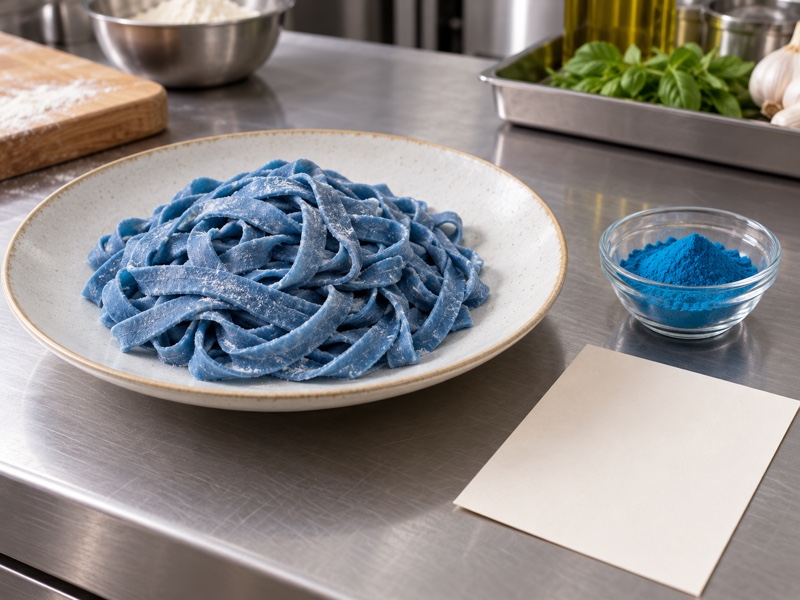
Blue spirulina pasta uses phycocyanin-rich extract to give noodles a blue shade. The result depends on the flour or starch base, mixing water, process temperature, cooking method, and storage. A bright raw dough can lose much of its color in boiling water, so commercial buyers should evaluate the cooked product before printing a menu or package. This guide walks through ingredient choice, pilot design, color retention, and the documents needed for a repeatable launch.
Contents: 1 · 2 · 3 · 4 · 5 · 6 · 7 · 8 · 9 · 10
1. What makes pasta blue?
The blue color usually comes from phycocyanin, a pigment extracted from cultivated spirulina. It is different from adding whole green spirulina powder, which can produce a green or olive noodle and a different flavor. Suppliers may offer blue extract as a powder, liquid, or formulated color preparation. Each form can behave differently in dough. A pasta producer should identify the exact grade and all carrier ingredients before estimating use level or writing a label.
Which pasta types are worth testing first?
Start with a simple, pale base that makes color changes easy to see. Fresh wheat pasta, rice noodles, gluten-free starch noodles, and filled pasta have different water contents and cooking requirements. Colored dough also appears different when it is rolled thin or extruded thick. Keep the baseline recipe constant while changing only the pigment dose. Cook the trial under the same conditions customers will use, because the selling product is the cooked pasta, not the striking blue dough on a bench.
| Pasta base | Main color question |
|---|---|
| Fresh wheat | Does cooking wash out blue? |
| Rice noodle | Does starch opacity mute shade? |
| Gluten-free noodle | Does the binder change dispersion? |
| Filled pasta | Does the filling or sauce affect appearance? |
An attractive raw sheet is a starting point, not a launch decision.
2. How do you choose a blue spirulina ingredient?
Ask for a food-grade spirulina extract appropriate for the destination market, along with its full composition, specification, COA, and storage instructions. A strong pigment grade may need a lower dose, but it may also be harder to distribute evenly in a stiff dough. A formulated grade with a carrier can be easier to handle, though the carrier must fit the recipe and label. Ask the supplier to tie every sample to the grade code offered for commercial supply.
What should a supplier sample comparison include?
Make small batches using the same flour, water, salt, and mixing process. Record dose as grams of ingredient per kilogram of dough. Compare color in the powder, mixed dough, extruded or rolled pasta, and cooked serving. Note visible spots, odor, flavor, and whether the dough texture changes. If a blue ingredient seems to require a very high dose, calculate cost and ask whether a different grade could reach the shade more efficiently. Do not compare two suppliers by powder color alone.
The blue extract article explains why extract form and grade matter. Pasta needs its own application trial because processing and cooking add heat and water exposure.
3. How should a dose ladder be designed?
Build at least a low, target, and high dose around a plain control batch. Use a scale precise enough for the batch size and write the actual weight into the formula. Change one variable at a time. If the first trial also changes flour, hydration, and cooking time, no one can tell why a color failed. Photograph each batch under fixed lighting before cooking and after draining. Taste samples without announcing the dose so testers can separate color expectations from flavor.
Which measurements are useful beyond color?
Record dough hydration, mixing time, temperature, sheet or extrusion thickness, drying conditions, cooking time, and final yield. These values make a successful trial reproducible in production. In a fresh pasta, monitor whether blue tint transfers to packaging or tray liners. In a dried product, compare color after storage as well as after rehydration. Ask testers to describe the finished shade in plain terms rather than forcing one person to decide whether it is “ocean blue.”
| Trial sample | Ingredient dose | Record at minimum |
|---|---|---|
| Control | None | Base color and texture |
| Low | Measured | Cooked shade |
| Target | Measured | Shade, taste, cost |
| High | Measured | Upper flavor and texture limit |
The selected dose should work in the cooked serving and stay within the product's cost target.
4. Why can the blue fade during cooking?
Phycocyanin is sensitive to certain combinations of heat, pH, light, and exposure time. Pasta cooking places the color in hot water, where pigment may fade or move out of the noodle. The outcome depends on the exact extract and dough matrix, so a laboratory stability number cannot predict every pasta formula. A study of phycocyanin solutions found that temperature and pH changed pigment retention. Treat that finding as a reason to test, not as a promised shelf life for noodles.
What can a producer change?
Compare the normal cooking method with realistic alternatives, such as shorter cooking or a different noodle thickness, only if the product remains safe and appealing. Test whether adding the ingredient at another stage improves distribution or retention. A cold sauce added after cooking may carry blue color more easily than coloring the entire dough, but it becomes a different product. If the noodle itself must be blue, specify an acceptable cooked shade and work backward from that result.
Customers may overcook pasta at home. A retail brand should test a reasonable cooking range rather than only the ideal minute used in its pilot kitchen.
5. How do flour, starch, and pH affect appearance?
Opaque flour and starch scatter light and can turn a vivid blue solution into a paler noodle. Egg, turmeric, or yellow flour tones can shift the result toward green. Acidic sauces may change the visible shade at the surface, especially when the noodle sits after plating. Test the whole eating experience: noodle, sauce, filling, garnish, and serving temperature. The product photo must represent a meal that customers can repeat without specialized lighting.
What should the formulation team hold constant?
Use a fixed base recipe for screening. If a gluten-free version is planned, run it as a separate program because starch choice and binder levels alter color and texture. Record the water source and pH when they vary significantly between sites. Compare the pigment added as dry powder with a pre-dispersed version, if the supplier recommends both. A change that solves streaking may alter hydration, so assess dough handling and cooked bite together.
| Formula element | Possible effect |
|---|---|
| Yellow ingredient | Greenish appearance |
| Opaque starch | Softer blue |
| Acidic sauce | Surface color shift |
| High water exposure | Pigment loss |
Color and eating quality have to pass together. A bright but gummy noodle is not an improvement.
6. Does blue spirulina change pasta nutrition?
A small amount of blue extract used for color should not be assumed to make pasta a significant source of protein or other nutrients. Whole spirulina nutrition tables describe a different material and often a much larger amount than a colored noodle contains. If a brand wants to make a nutrition claim, calculate the finished serving and test it as required for the target market. Keep the color story distinct from the nutritional story.
What should packaging copy avoid?
Avoid implying that blue color proves a health benefit. State the ingredient accurately, explain that the color is derived from spirulina extract when that statement fits the product, and keep cooking instructions honest about the final shade. If a carrier is present in the color preparation, include it in the ingredient review. A “natural color” statement also needs market-specific legal review. The FDA's ingredient listing establishes US context, but a producer must check current detailed rules and the laws of every destination.
A clear label protects the product's strongest appeal: it looks distinctive and can be made consistently.
| Proposed pack statement | Check before approval |
|---|---|
| Blue color from spirulina extract | Verify the exact color preparation and full ingredient declaration. |
| Protein claim | Test the finished pasta serving; do not infer protein from its color. |
| Natural color claim | Review the current rules for every market where the pasta will be sold. |
| Cooked blue appearance | Compare production lots after the stated cooking method and shelf life. |
7. What shelf-life tests should a pasta brand run?
The test plan depends on whether the product is fresh, chilled, frozen, or dried. Fresh pasta may face short refrigerated storage and condensation; dried pasta may sit under shelf lighting for months. Frozen products need freeze-thaw assessment and a cooking check after storage. Use the final packaging material and fill format. Assess both the unopened product and the cooked serving at the end of the intended life.
How can the team make color checks fair?
Photograph samples under the same lights with a reference card and fixed camera settings. Keep a retained lot of the approved ingredient and a control pasta batch when possible. Record package oxygen and light exposure if those variables are being studied. Taste and texture should be checked alongside shade. If the color changes in storage, decide whether the shift crosses the agreed acceptance range rather than whether someone remembers the first batch as “more blue.”
| Product format | Shelf-life checkpoint |
|---|---|
| Fresh | Refrigerated appearance and cook |
| Frozen | Color after thaw and cook |
| Dried | Light exposure and rehydration |
| Foodservice | Holding time after cooking |
The useful number is the last day when the product still meets its approved description.
8. How do foodservice and retail needs differ?
A restaurant may cook pasta minutes before serving and can control plating, sauce, and lighting. A retail brand must design for transport, storage, and a range of customer cooking habits. Foodservice buyers may value a striking plate for a seasonal menu; retail buyers need a repeatable product photo, easy instructions, and a label that survives several market reviews. The supplier grade should be chosen with the harder use case in mind if the same product will serve both channels.
What should a menu trial include?
Ask the kitchen team to cook a normal service batch and hold a portion during the busiest interval. Check color in the actual bowl and sauce, then taste after holding. For retail, give samples to cooks who did not develop the recipe and observe whether they can reproduce the result with printed instructions. If the blue requires an unrealistic cooking method, simplify the promise or change the product format.
Do not copy a restaurant's dramatic plate into a retail pack unless the home instructions make that plate plausible.
9. How should the ingredient be sourced at scale?
Compare the cost per kilogram of finished pasta at the dose that passes the cooked test. Ask for the approved grade, lot-to-lot color method, COA, lead time, minimum order, package size, and change-notice procedure. A cheaper extract may create more waste if its color varies or if the production line needs extra mixing. Keep the pilot sample code in the purchase specification so procurement does not accidentally order a similar-looking grade.
What should incoming inspection verify?
Check the label, lot number, seals, COA, remaining shelf life, and visible condition of the powder or liquid. Store it as specified and record when each container is opened. If the material has changed in color or odor, hold it for quality review. Make a small application check before a large first production run. That check can catch a mismatch faster than a full pallet of noodles can be recalled.
The blue spirulina wholesale guide covers broader purchasing controls. Pasta adds a cooked-color requirement that belongs in the specification.
10. What should the first commercial pilot prove?
The pilot should prove that a second operator can make the same blue pasta using commercial equipment, the approved ingredient lot, and a written formula. It should also show that the cooked product meets the target shade, texture, flavor, label, and cost under ordinary handling. Run enough material to observe mixing and color distribution across the beginning and end of the batch. Keep records that let the team repeat the result.
What belongs in the launch file?
Include the ingredient specification, lot COA, formula version, process settings, dose ladder, cooked photos, shelf-life data, packaging artwork, and supplier agreement. Name the owner of each approval. If the product will travel to another market, review the ingredient and color rules before selling it there. Ask the supplier to report any change in pigment strength, carrier, or manufacturing site. A successful launch is a stable cooked noodle customers can make, not a single beautiful test photo.
FAQ
Q1: Is blue spirulina pasta made with whole spirulina?
Often it uses a blue phycocyanin-rich extract. Check the exact ingredient declaration.
Q2: Will it stay bright blue after boiling?
That depends on the grade, dough, cooking conditions, and storage. Test the cooked product.
Q3: Can it be made gluten-free?
A gluten-free pasta base is possible, but the full formula and production controls need their own validation.
Q4: Does blue pasta have more protein?
Color alone does not establish a protein claim. Test the finished serving if nutrition claims are planned.
Q5: What should a supplier provide?
Request the exact grade specification, composition, sample, lot COA, storage guidance, and repeat-lot controls.