
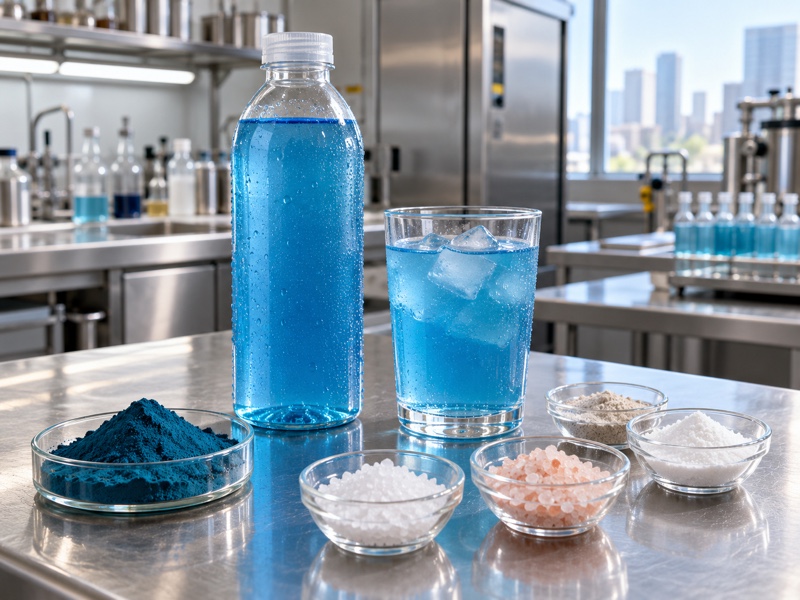
A blue spirulina electrolyte drink combines a blue phycocyanin-rich color ingredient with water and a measured electrolyte formula. The color can set the drink apart, but it does not supply the sodium or other minerals that make an electrolyte product. Brands need to design the mineral profile, flavor, processing, color stability, and claims as separate parts of one finished formula. This guide gives beverage teams a practical development route.
Contents: 1 · 2 · 3 · 4 · 5 · 6 · 7 · 8 · 9 · 10
1. What makes a drink an electrolyte drink?
Electrolytes are minerals that carry an electrical charge in solution. Beverage labels commonly focus on sodium, potassium, and sometimes magnesium or calcium, but the useful amounts depend on the product's purpose, serving size, and target market. Blue spirulina extract gives the beverage a blue shade; it should not be treated as the electrolyte system. If a brand wants to call a product an electrolyte drink, the formula and label should substantiate the mineral content.
What should a development brief specify?
State the intended consumer occasion, serving volume, sweetness target, mineral amounts, flavor, package, and distribution conditions. A drink for a café menu differs from a bottled sports product or a dry sachet. Decide whether the blue color must remain vivid after mixing and during shelf life. If the product is marketed as sugar-free, include the sweetener system in the initial brief because it changes taste and sometimes color perception.
| Formula element | Primary decision |
|---|---|
| Water | Base and processing |
| Electrolytes | Defined mineral amounts |
| Flavor and acid | Taste and pH |
| Blue extract | Color and stability |
| Package | Light and shelf life |
The finished drink must taste and perform as one product; no single ingredient can carry the entire claim.
2. How should blue spirulina extract be selected?
Ask for a food-grade spirulina extract with a full composition statement, color-strength method, COA, and guidance for the intended beverage. Phycocyanin is the blue pigment, but commercial blue spirulina may include carriers or be supplied as liquid. A grade that works in cold water may not suit a low-pH bottled drink. Tell suppliers the planned pH, heat treatment, and package before asking them to recommend a grade.
What belongs in a first comparison?
Make the base drink without color, then test several measured pigment doses. Keep the mineral formula and flavor constant. Observe shade, dispersion, haze, taste, and color after the normal service or storage period. If the drink uses a clear bottle, test light exposure; a paper cup conceals changes that a shelf-facing bottle reveals. Compare cost at the dose that meets the approved color, not at an arbitrary “standard” dose from a supplier recipe.
The blue spirulina drink guide covers the ingredient's beverage use more broadly. Electrolyte products add mineral and claim decisions to that development work.
3. How do minerals affect the sensory profile?
Sodium and other minerals can make a drink taste salty, bitter, or metallic at the wrong balance. Acid and sweetener choices can mask or amplify those notes. Begin with a mineral target based on the product's actual positioning, then develop flavor around it. A beautiful blue color will not rescue an unpleasant mineral aftertaste. Blind taste the uncolored base and the colored version so the team can tell whether the extract changes flavor.
What should the tasting panel record?
Use coded samples at the intended serving temperature. Ask panelists about saltiness, acidity, sweetness, aftertaste, mouthfeel, and appearance. Repeat tasting after the drink has stood with ice or sat in its package. If the product will be diluted from a concentrate or sachet, test a realistic range of consumer water volumes. A small dilution error can change both mineral taste and blue intensity. Record all doses by mass so a later factory trial can reproduce them.
| Sensory item | Why it matters |
|---|---|
| Saltiness | Consumer acceptance |
| Bitterness | Mineral and extract balance |
| Acidity | Flavor and pigment behavior |
| Sweetness | Positioning and aftertaste |
| Appearance | Brand promise |
Taste, color, and mineral content should be approved together, not in separate meetings.
4. What happens at low pH or under heat?
Many bottled drinks use acidity and heat as part of their safety system. Phycocyanin can be sensitive to low pH and temperature, so the color needs a trial in the exact formula and process. A published study found that phycocyanin stability in solution changed with both temperature and pH. Its figures cannot be pasted onto a commercial beverage, but the result makes a full process trial necessary.
Which pilot checkpoints matter?
Measure pH and photograph the drink before processing, immediately after processing, and at planned storage intervals. Compare the intended package under normal and stressed light or temperature conditions. Watch for fading, haze, sediment, or a shift toward green. If the color fails, assess whether a different grade, package, formulation, or processing approach can solve it without weakening food safety. A process change must be reviewed by qualified technical staff. Do not treat the blue color as permission to skip a validated microbial-control step.
The product should meet both safety and color requirements at shelf end.
5. Should the drink be powder, concentrate, or ready-to-drink?
Each format changes the buyer's problem. A powder sachet may avoid shipping water and can be mixed when needed, but minerals and blue extract must disperse together without clumping or segregation. A liquid concentrate can simplify dosing for a café, yet open-container control and dilution accuracy matter. A ready-to-drink bottle offers convenience but needs the most demanding stability and safety program. Choose the format with the intended channel and process in view.
What should be tested in a powder sachet?
Test flow into the sachet, blend uniformity, moisture pickup, and dissolution in both cold and room-temperature water. A blue powder that separates during shipping can create pale and dark servings from the same production lot. Give the sachet to people who did not develop it and watch how they mix it. If vigorous blending is required, the package instructions must say so and the user experience must still be acceptable.
| Format | Main operational risk |
|---|---|
| Powder sachet | Segregation and clumping |
| Liquid concentrate | Dilution and open-pack handling |
| Ready-to-drink | Process and shelf-life color |
The most photogenic format is not always the easiest one to make reliably.
6. How should the package protect the shade?
Package choice can influence light exposure, oxygen, temperature history, and how customers see the drink. A transparent bottle shows the blue color on shelf but also exposes it to store lighting. An opaque pack protects color but hides the visual selling point until opening. Test candidate packages with the same formula and fill conditions. Evaluate color against an agreed reference at shelf end, not only on the day the first samples are bottled.
What should a shelf-life study include?
Use commercial or representative packaging and the actual distribution temperatures. Check microbiological safety with the appropriate validated program, then assess pH, color, sediment, taste, and package integrity at planned intervals. Include a realistic abuse condition only as a diagnostic tool, not as a substitute for the labeled shelf life. If the drink is sold cold, test what happens during routine transport and store handling. An attractive launch sample is useless if ordinary distribution leaves a washed-out product.
Keep dated photos under fixed lighting. Memory is a poor colorimeter.
7. What can the label say about hydration?
Hydration language should match the product's mineral and serving profile and the rules of its destination market. Blue spirulina is a color ingredient in this context; it does not make the drink an electrolyte product by itself. Avoid clinical or performance claims unless the finished formulation and evidence support them. The FDA's spirulina extract listing provides US color-additive context, while the complete beverage label needs separate regulatory review.
What else should be declared accurately?
List the actual mineral sources, sweeteners, flavors, and any carriers in the color preparation as required. Calculate nutrition from the finished recipe and confirm values when necessary. If the brand says “no artificial colors,” review every color and topping, not only the blue extract. A “zero sugar” or “low sugar” claim must be checked against the whole formula. Photography should show the shade consumers will see after ordinary storage.
| Claim | Evidence base |
|---|---|
| Electrolytes | Finished mineral content |
| Sugar level | Finished nutrition calculation |
| Natural color | Full ingredient review |
| Shelf-life shade | Packaged-product trial |
Clear claims make the product easier for retailers and consumers to trust.
8. How can a buyer compare blue extract suppliers?
Request the exact grade, full composition, specification, representative COA, storage guidance, lead time, and change-control policy. Compare the use level needed to achieve the approved shade in the real beverage. A supplier that can provide application advice for low pH or heat is more useful than one that only quotes a pigment percentage. Ask for the proposed grade in both lab and commercial quantities so the pilot does not rely on a special sample that cannot be bought later.
Which commercial terms affect the formula?
Minimum order, package size, shelf life on arrival, and freight conditions can determine whether a liquid or powder grade is practical. Calculate cost per bottle or sachet, including process loss and rejected batches. Ask whether the supplier will notify the buyer if pigment assay, carrier, or manufacturing site changes. A small color shift can affect a product whose brand is built around a particular blue.
The contract should describe the approved ingredient and acceptance method, not simply “blue spirulina.”
9. What pilot mistakes are common?
Treating the color as the electrolyte, approving a beaker sample before process testing, using an unmeasured spoonful, and copying a whole-spirulina nutrition claim are avoidable errors. Another mistake is changing several variables at once: mineral salt, acid, sweetener, and blue extract. When a trial turns gray, no one knows which change caused it. Use a simple experiment plan and preserve control samples.
What should the trial worksheet contain?
Record formula version, ingredient lots, mineral sources, blue extract dose, pH, mixing sequence, process, package, and photos. Include sensory notes and the cost per finished unit. Set pass criteria before testing. If a trial fails, alter one variable or a planned small set and rerun it. A few disciplined bench rounds can prevent a much larger manufacturing mistake.
The best outcome may be a softer shade that survives the product's shelf life. A dramatic blue that vanishes after bottling is not a commercial win.
10. What is the next step for a beverage team?
Write a one-page product brief with serving size, mineral target, sweetener, flavor, pH range, process, package, market, and shelf-life target. Ask for blue extract samples that fit those conditions. Build a measured dose ladder, pilot the full formula, and run packaged stability before artwork approval. Let quality and regulatory teams review the documents and claims while R&D tests the drink.
What should a supplier receive in the first email?
Send the intended format, process temperature, pH, package material, target shade, expected annual volume, and document checklist. Ask for a named grade and sample tied to a commercial specification. If the supplier cannot explain how its material behaves in your process, treat the claim as unverified and test accordingly. The finished drink should deliver its promised mineral profile and still look like the approved product when a customer opens it.
| Pack check | Reason |
|---|---|
| Clear bottle | Light exposure |
| Closure | Oxygen entry |
| Serving size | Dose accuracy |
FAQ
Q1: Does blue spirulina provide electrolytes?
The blue extract primarily provides color; electrolytes come from the drink's measured mineral ingredients.
Q2: Can blue spirulina be used in a sports drink?
It may be possible, but the exact formula, pH, process, label, and shelf life need validation.
Q3: Will an acidic drink stay blue?
That depends on grade and formula. Test the finished product under real conditions.
Q4: Is a powder sachet easier than a bottle?
It avoids some bottled-shelf-life issues but adds mixing, segregation, and moisture-control work.
Q5: What should a buyer request?
Ask for a named grade, full composition, specification, COA, sample, and process-specific support.