
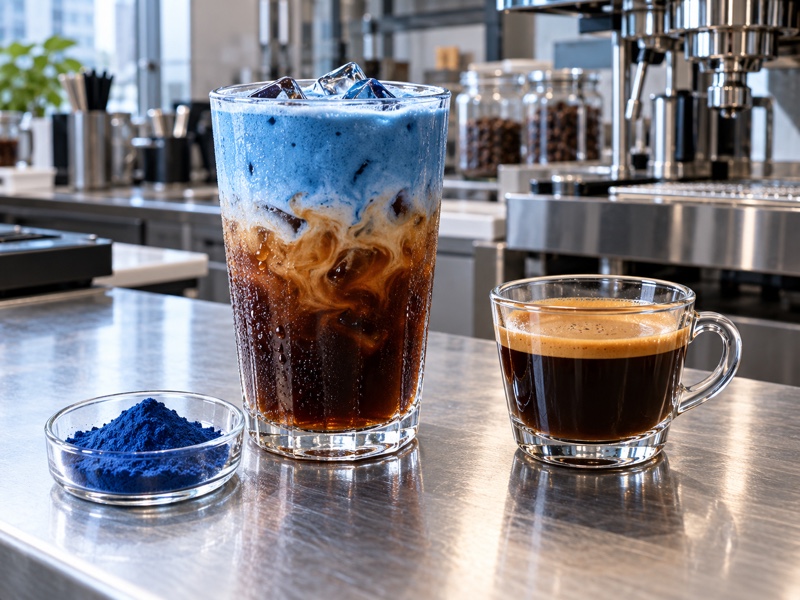
Blue spirulina coffee pairs a coffee beverage with a phycocyanin-rich blue spirulina extract. The combination can produce a blue layer, a teal milk base, or a contrasting iced drink, but coffee's dark color and temperature create practical limits. A café needs a repeatable recipe that tastes good after the visual effect disappears. This guide covers format choices, ingredient trials, service instructions, and claims that match the actual cup.
Contents: 1 · 2 · 3 · 4 · 5 · 6 · 7 · 8 · 9 · 10
1. What can “blue spirulina coffee” mean?
The phrase may describe espresso poured over blue milk, a blue cold foam above coffee, or a beverage in which a blue extract is mixed into the coffee base. These are different products. Dark brewed coffee can overwhelm blue pigment visually, so a layered milk drink is often more practical than trying to turn espresso bright blue. Define the target appearance before choosing ingredients. A cup that looks striking before stirring should still be enjoyable after a customer mixes it.
Which format should a café test first?
Choose one format based on the menu occasion and staff workflow. An iced layered drink offers visible contrast and a short service time if components are prepared well. A blue foam may need a more demanding topping process. A hot drink exposes the extract to heat and may look duller in a dark coffee base. Make a plain coffee control with the same milk and sweetener so testers can judge whether the blue ingredient changes the flavor.
| Format | Main technical question |
|---|---|
| Iced layered milk | How long does contrast last? |
| Blue cold foam | Does foam hold color and texture? |
| Mixed latte | Is the teal shade appealing? |
| Hot coffee | Does heat change the blue? |
Choose the cup people will actually order, not the easiest photograph to make.
2. What is the blue ingredient?
Blue spirulina usually means a phycocyanin-rich extract from spirulina biomass. Phycocyanin is the main blue pigment component, while the commercial ingredient may include carriers or water. It is not the same as whole green spirulina powder. Ask for the exact grade's full composition, specification, color-strength method, storage conditions, and a representative sample. A supplier's product photo may show pigment in water, which says little about its appearance in milk and espresso.
What should a café group compare?
Test powder and liquid grades only if both fit the intended workflow. Record the dose by weight and compare color, clumping, taste, cost, and staff handling. If a powder needs a preblend, specify the temperature and liquid used. If a liquid is stored in an open bottle, define safe handling and use time under the café's food-safety system. Do not let staff substitute whole spirulina because both products share a name.
The blue spirulina latte guide discusses a related drink. Coffee adds a stronger dark color and its own extraction flavor to the formula.
3. How does coffee change the final color?
Coffee ranges from translucent brown to opaque dark espresso. Blue extract mixed directly into it may produce a muddy result rather than a clear blue. A light-colored milk or plant base can carry the blue more visibly. Layering lets the customer see both components before stirring, while a mixed drink prioritizes a consistent cup. Decide which result matches the brand and train staff around that choice.
What should a color trial hold constant?
Fix espresso volume, coffee roast, milk, syrup, ice, cup, and lighting while varying only the extract dose. Photograph the cup immediately, after a normal service delay, and after stirring. Observe whether coffee streams create an attractive pattern or an uneven gray band. Taste at each stage. A drink may look good before stirring and become too sweet after the layers combine. Test several ice-melt conditions if the cup is intended for takeout.
| Observation | Why it matters |
|---|---|
| Fresh contrast | Menu photography |
| Ten-minute appearance | Pickup and delivery |
| Stirred color | Drinking experience |
| Melted-ice taste | End-of-cup quality |
The final mixed cup is part of the product, even if the menu image shows layers.
4. Does coffee temperature affect phycocyanin?
Phycocyanin can be sensitive to heat, especially when combined with other challenging conditions. A published study found temperature and pH affected phycocyanin stability in solution. A café drink is a different matrix, so the study does not provide a safe temperature or hold time for every recipe. Test the actual hot or iced format. A hot espresso poured into a cold blue milk layer may produce a short, intense exposure that needs observation.
What if the hot version fades?
Try a different format, addition sequence, or approved extract grade rather than doubling the pigment immediately. Assess whether the cup can be served at the intended temperature with a stable shade. If not, sell the idea as an iced drink or use a visual element that does not depend on hot blue liquid. Do not cool coffee to an unappealing temperature only to preserve a marketing photo. The drink's taste and service value still come first.
The supplier should be told the highest temperature and expected hold time before recommending a grade.
5. Which milk and sweetener choices work?
Dairy, oat, almond, and coconut bases vary in color, body, sweetness, and foam behavior. A beige oat base may produce teal, while a whiter dairy base may appear more blue. Vanilla and sweeteners can balance coffee bitterness and any extract note, but they also change nutrition and cost. Use a measured recipe and a dose ladder in each base that the menu will actually offer. A single blue dose may not look the same in every milk substitution.
What should a sensory panel check?
Serve coded samples at normal temperature. Ask about coffee character, sweetness, aftertaste, mouthfeel, blue ingredient note, and appearance. Include a plain control. If a drink relies on a sweet syrup for density and layering, taste it after stirring, when all that syrup enters the same sip. For a low-sugar version, redesign the whole formula instead of removing the syrup and expecting the layers to remain unchanged.
| Ingredient | Possible effect |
|---|---|
| Milk base | Opacity and shade |
| Sweetener | Flavor and density |
| Ice | Layering and dilution |
| Coffee roast | Bitterness and darkness |
The recipe has to be balanced as a beverage, not just as a color experiment.
6. How can a multi-store recipe be repeatable?
Write gram weights for the blue component, milk, syrup, coffee, and ice. Specify the mixing order and whether the blue extract is prepared as a measured premix. Use the same cup and lid during trials because a tall clear cup can make a layer look different from a wide opaque one. Train ordinary staff, then check the result during a busy shift. A developer can make a perfect cup slowly; a chain needs a procedure that works repeatedly.
What should the recipe card include?
Show the approved shade, step order, preblend storage time, pour technique, and a short rejection rule for clumps or wrong color. If milk substitutions are offered, include tested versions or explain that shade will vary. Record the exact extract grade so procurement cannot swap in a different blue powder unnoticed. If a store batches the blue base ahead, set a safe hold time and a mixing instruction based on actual testing.
The service test should measure preparation time and waste. A beautiful cup that causes constant remakes can fail commercially.
7. What should a bottled coffee brand test?
A ready-to-drink product needs its own formula and process validation. Coffee, milk, blue pigment, sweetener, heat treatment, and package interact over longer storage than a café cup. Check safety with a qualified process team and assess color, sediment, flavor, and package appearance across the planned shelf life. Do not reuse a café recipe unchanged. The blue layer that looks appealing in a clear glass may separate unattractively in a sealed bottle.
Which package variables matter?
Clear packaging shows the color but exposes it to light. An opaque package can protect shade but reduces visual impact on shelf. Headspace, oxygen control, and storage temperature may also affect the product. Test representative commercial packs. Photograph under consistent lighting at time zero and at shelf-end checkpoints. If a “shake well” instruction is planned, verify that normal shaking restores an acceptable appearance without excessive foam.
| Pilot checkpoint | Decision |
|---|---|
| Post-process | Did heat affect blue? |
| Early storage | Does separation begin? |
| Mid-shelf | Are color and flavor acceptable? |
| Shelf end | Does the customer receive the promise? |
Approve the product that comes out of distribution, not the one mixed on launch day.
8. What can the menu and label say?
The drink contains coffee and therefore caffeine unless the coffee component is decaffeinated and the final statement is properly supported. Blue spirulina color does not cancel caffeine. A small color dose should not be credited with whole-spirulina protein or nutrient benefits. The FDA's spirulina extract listing provides US color-additive context; menu and retail copy still need review for the actual formula and destination market.
Which phrases need evidence?
“Natural blue,” “no artificial colors,” “low sugar,” and any functional claim should be checked against the complete drink. If the extract has a carrier, include it in ingredient review. If the drink is photographed with a different milk or a much higher pigment dose than the sold recipe, the image can mislead customers even when the ingredient statement is correct. Make menu photography from an approved store recipe.
An honest description can still be appealing: coffee, a specific milk base, and a spirulina-derived blue layer.
9. How should ingredient suppliers be compared?
Compare the named blue grade at the use level that gives the approved cup. Ask for full composition, specification, lot COA, storage, lead time, pack size, and change-control terms. A lower price per kilogram may require more powder or create extra labor. Calculate cost per served cup, including preblend waste and remakes. If the drink will be bottled, include process and shelf-life losses.
What should be in the supply agreement?
Record the approved grade, color-strength method, accepted range, carrier, minimum shelf life on arrival, and notice required before changes. Keep a retained sample for incoming inspection. A supplier who can reproduce the approved shade and investigate a discrepancy is worth more than a vendor who offers only an impressive color swatch. The blue spirulina wholesale guide provides wider purchasing context.
The coffee brand owns the final product, but stable ingredient supply makes that ownership manageable.
10. What should the launch pilot prove?
The pilot should show that regular staff can make the drink with the right appearance and taste during normal service, or that a bottled version survives its approved process and shelf life. Start with a clear target format and shade, test measured blue doses, and approve the cup after stirring as well as before. Review caffeine, sugar, color, and nutrition copy from the finished recipe.
What belongs in the launch file?
Keep the extract grade specification, formula, coffee and milk details, store recipe card, sensory notes, color photos, cost, and label approval. For a bottled drink, add process and stability records. If the coffee blend, milk brand, or blue extract changes later, retest the shade and taste. The customer should receive the same drink the team approved, not a rough version of the launch photograph.
| Service check | What to record |
|---|---|
| Brew strength | Base color |
| Milk option | Final shade |
| Handoff delay | Color at pickup |
FAQ
Q1: Does blue spirulina make coffee blue?
Dark coffee can overwhelm the blue. A milk layer or foam often shows the color more clearly.
Q2: Is blue spirulina coffee caffeine-free?
Not if it contains regular coffee. The coffee component contributes caffeine.
Q3: Can it be served hot?
Test the exact recipe and temperature; phycocyanin can lose color under heat.
Q4: Is blue spirulina the same as phycocyanin?
Blue spirulina commonly names a phycocyanin-rich extract; phycocyanin is its blue pigment component.
Q5: What should a café buyer request?
Ask for a named grade, full composition, sample, specification, COA, and handling guidance.