
galdieria blue vs spirulina blue for beverages is a source and formulation choice, not simply a contest between two attractive blue powders. Beverage teams can lose weeks when a promising bench shade fades after acidification, heat treatment or retail light exposure. This guide gives a matched trial and document review that lets buyers compare usable color in their own package. The starting regulatory facts come from current US color additive listings; published pigment experiments help identify risks but cannot certify a finished drink.
Contents
- What exactly are the two blue ingredients?
- Which US beverage uses are listed?
- How should an acid comparison be designed?
- What does heat do to each candidate?
- How should light and storage be tested?
- How can color strength be compared fairly?
- What else in the formula changes the shade?
- Which supplier records matter?
- What should a production pilot measure?
- How does a team make the final choice?
1. What exactly are the two blue ingredients?
Identify the source before comparing claims
Both products obtain their blue from C-phycocyanin, a protein pigment, but their biological sources and US regulatory identities differ. Spirulina extract under 21 CFR 73.530 comes from filtered aqueous extraction of dried Arthrospira platensis biomass. Galdieria extract blue under 21 CFR 73.167 comes from a non-pathogenic, non-toxigenic strain of Galdieria sulphuraria grown by heterotrophic fermentation. The two listings also prescribe different specifications and use categories. A supplier’s trade name or a shared word such as “phycocyanin” cannot make them interchangeable on an ingredient statement or regulatory review.
Start here: request exact ingredient identity, source organism, liquid or powder format, full carrier composition and intended coloring function. Ask whether a sample represents a commercial SKU or a research preparation. The SpirulinaCN blue spirulina range describes spirulina-derived options, but each grade still needs its own current specification. Keep Galdieria and spirulina samples coded during sensory and color review. Knowing the source matters; making a fair comparison matters more.
2. Which US beverage uses are listed?
Separate category permission from performance
The current Galdieria extract blue listing includes non-alcoholic beverages and beverage bases, fruit drinks and juices, smoothies, flavored milks, yogurt drinks and named nutritional beverages. The current spirulina extract listing includes non-alcoholic beverages plus alcoholic beverages below 20% alcohol by volume, among its enumerated categories. Neither list gives blanket permission for every standardized food.
Match the actual product classification to the wording and restrictions before scheduling a commercial run.
The practical gate: a non-alcoholic fruit drink may warrant comparison of both ingredients, while an alcoholic drink cannot infer Galdieria permission from its non-alcoholic beverage entry. FDA’s broader 2026 spirulina order was delayed indefinitely; the existing enumerated uses remain the basis for this review. Have regulatory counsel check formula, color identity, carrier and market-specific label text. Authorization says where a color may be used; it says nothing about how long its blue will survive.
| Finished product question | Spirulina extract | Galdieria extract blue |
|---|---|---|
| Non-alcoholic beverage | Listed | Listed |
| Alcoholic beverage | Listed only below 20% ABV | Not listed in this category |
| Standardized food | Check the applicable standard | Check the applicable standard |
3. How should an acid comparison be designed?
Use the exact beverage base
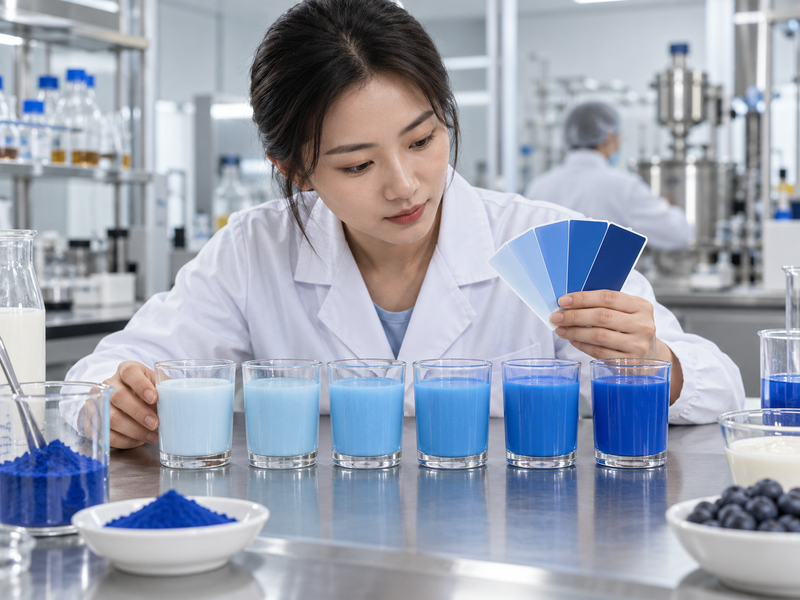
A low-pH bench tube can reveal a weakness but cannot reproduce juice solids, preservatives, minerals and cloud in a commercial beverage. Prepare both colors at a matched starting shade in the actual uncolored formula. Include the intended acid, target pH range and a narrow bracket around likely production drift. Record pH before addition, after addition and after storage. Photograph against a neutral background and collect instrument readings where turbidity permits. Watch for haze, precipitation, ring formation and flavor changes alongside hue.
Here is the catch: an extremophilic source does not confer universal acid stability on every formulated SKU. A published direct pigment comparison found Galdieria-derived C-phycocyanin more stable under its tested conditions, yet the experiment compared particular preparations and conditions. Acid, concentration, stabilizers and other ingredients can shift the result. Test a candidate at the final use level and in the proposed pack, not just as a strong stock solution.
If both pass an overnight test, continue to the planned shelf life before selecting one.
Where the beverage contains fruit pulp or cloud, inspect a poured sample after it stands. A color can remain measurable while pigment-rich particles settle outside the drink’s intended appearance. Note whether agitation restores the shade and whether consumers are expected to shake the package. That observation can guide a sensible accept-or-reject rule rather than a vague comment that one bottle looked dull.
4. What does heat do to each candidate?
Replicate the full thermal path
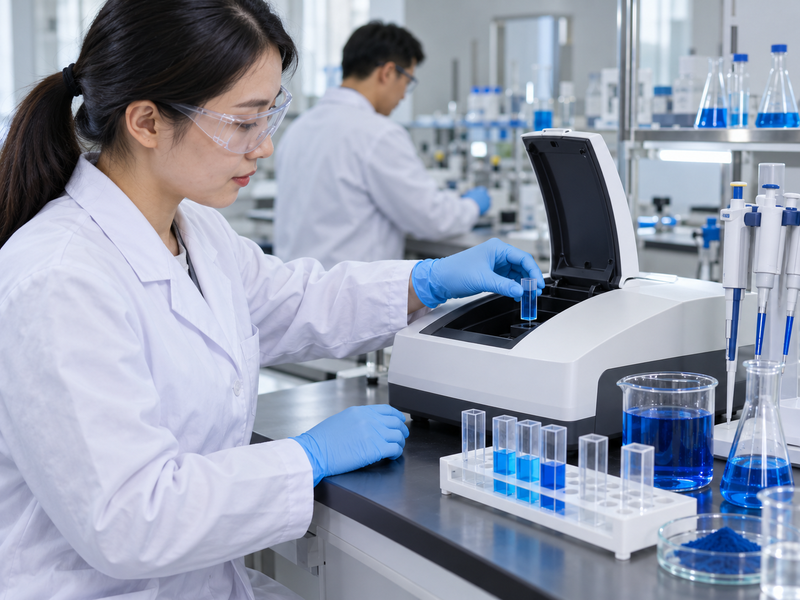
Thermal tolerance is easy to overstate because a quoted temperature omits hold time, starting pH, solids and cooling rate. Map the commercial sequence: blending, warm tank residence, pasteurization or hot fill, capping and cool-down. Dose the color at each realistic addition point to learn whether late addition is possible under a validated food-safety process. Measure color immediately before and after every heat exposure. A loss during a long warm hold can matter more than a brief peak temperature.
A better comparison: use two candidates at the same initial finished shade and compare retained color after the same plant process. In the published comparison, Galdieria material outperformed the tested spirulina material at some heat conditions. It does not establish a transferable temperature guarantee for purchased formulations. In a cloudy beverage, collect visual panels as well as absorbance because scattering can alter instrument results. Retain process records and use a failed sample to identify whether heat, acid or their sequence drove the change.
| Trial stage | Record for both candidates | Reason |
|---|---|---|
| Pre-heat blend | pH, dose, color, solids | Establish equivalent start |
| Peak and hold | Product temperature, duration | Locate exposure |
| Cooled bottle | Color, haze, sediment | Measure saleable appearance |
5. How should light and storage be tested?
Treat the package as part of the formula
Clear glass, transparent PET and opaque cartons expose a blue protein pigment to different light conditions. Fill all candidates in their intended commercial packs, using normal headspace and closure torque. Store a dark control alongside samples under a documented retail-light condition and a realistic distribution temperature. Repeat color measurement at predetermined dates. Rotate shelf positions so one lamp or warm corner does not quietly bias a candidate. Include an uncolored base to identify yellowing from the drink itself.
Look beyond day one: blue intensity, hue and visible particulate can change at different rates. A stronger initial shade is a poor substitute for a stable end-of-life shade. Record package transmission if suppliers offer those data and examine whether oxygen ingress or package contact changes color. Sampling should include opened and unopened observations only if the product will be consumed over multiple occasions. Set acceptance limits before viewing results; otherwise teams often move the standard after a beautiful but unstable sample appears.
6. How can color strength be compared fairly?
Normalize at a matched finished shade
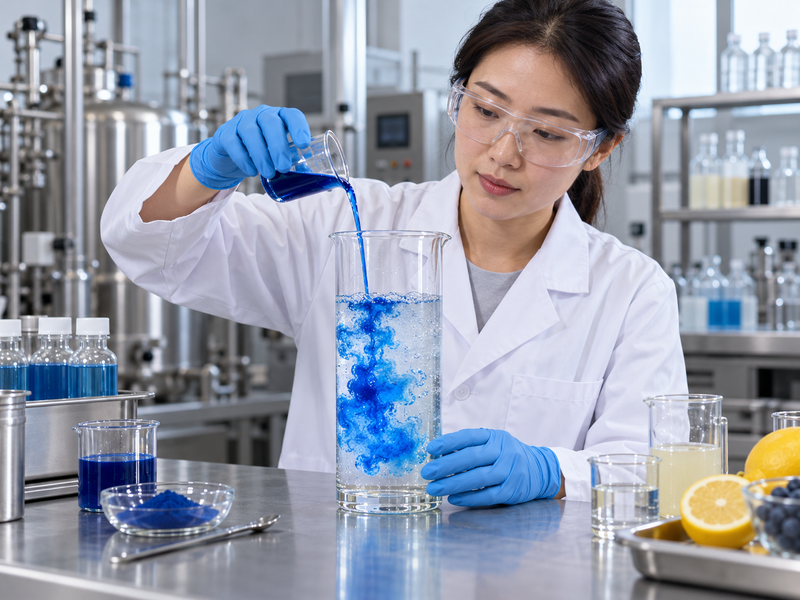
Do not compare powder cost per kilogram or pigment absorbance without establishing a shared measurement basis. Ask each supplier for color value, test method, sample preparation, wavelength, diluent, solids and carrier content. Prepare a dose ladder in the same drink and select each candidate’s dose that matches the approved target after mixing. Then compare delivered ingredient cost, freight, waste and any added process step at that matched shade. Repeat after processing and storage because an apparently cheap dose can become expensive if it fades.
The decision point: use visual panels under controlled lighting together with instrumental color readings. A transparent drink allows clearer optical comparison than an opaque smoothie; for a smoothie, the finished appearance matters more than a solution absorbance claim. Document acceptable hue, brightness and sediment bands for each product rather than borrowing a number from another beverage. Keep the entire calculation traceable to lot and pack size so procurement can repeat it with the next shipment.
| Comparison basis | What to request | What to avoid |
|---|---|---|
| Starting color | Matched finished shade | Same powder mass alone |
| Retention | Packaged end-of-life shade | Day-zero bottle only |
| Economics | Cost per acceptable finished unit | Price per ingredient kilogram |
7. What else in the formula changes the shade?
Screen the whole matrix
Yellow juice or vitamin color can turn a blue addition green. Milk proteins, plant cloud, pulp and stabilizers can mute saturation. Acid and mineral salts may affect protein interactions; sweeteners change solids and sometimes processing behavior. Carbonation and dissolved oxygen add further variables. Make a compact matrix that changes one factor at a time around the target recipe, then check the winning candidate again in the final formula. Avoid treating stabilizer additions as free: they can change flavor, label text, viscosity or cost.
One useful control: compare each blue in water, the beverage base without its natural color component where feasible, and the actual finished beverage. This shows whether disappointing hue comes from the pigment or background. For a product family, do not assume a lemon SKU predicts berry, dairy or tea performance. If a color supplier recommends a helper ingredient, ask for its exact function and concentration. Regulatory and procurement teams should review that helper along with the color itself before the pilot.

8. Which supplier records matter?
Tie every claim to a commercial lot
Request the current specification, full composition, source identity, color-value method, microbiological limits, contaminant limits, certificate of analysis and storage instructions. Also request evidence that the sold grade conforms to its claimed regulatory identity. A research paper comparing purified pigments cannot establish the composition or release quality of a commercial blend. Confirm shelf life for the unopened ingredient and practical handling after opening. If a liquid and powder version are offered, treat them as distinct candidates.
Ask for repeatability: obtain at least two lots for the shortlisted grade when schedule permits. Compare color at the same dose and against the same retained standard. Clarify change notification for carriers, source strain, drying conditions and manufacturing site. A buyer can use the factory quality overview as a document-request starting point, then verify the actual documents attached to the quoted SKU. Keep regulatory approval, technical performance and supply assurance as separate sign-offs.
| Supplier evidence | Buyer question | Approval owner |
|---|---|---|
| Identity and composition | What exactly enters the drink? | Regulatory and R&D |
| Lot certificate | Does this lot meet specifications? | Quality |
| Change control | What changes trigger notice? | Procurement |
9. What should a production pilot measure?
Follow the ingredient from receiving to shelf
The pilot should use the intended mixing vessel, addition order, shear, hold time, sanitation schedule, fill temperature and package. Record whether a powder wets cleanly or a liquid meters consistently. Sample the start, middle and end of the batch to detect dosing drift. Compare color after any filter, heat exchanger or homogenizer because the line can remove aggregates or create them. Retain an uncolored control and all trial lot codes.
Make failure visible: define color difference, visible haze, sediment, flavor and package appearance as release criteria. Evaluate under retail lighting at planned storage points, including a reasonable temperature-abuse condition chosen by the product team. The chosen blue must meet the commercial product’s independent microbial and shelf-life validation as well; color stability is not a safety result. A supplier can offer samples, but the brand owns its finished product and process evidence. Document who approves the regulatory category before the plant books a full launch run.
At pilot close, review photographs without the candidate names before opening the analytical report. This gives sensory and marketing staff a chance to notice a color shift that an instrument average hides. Keep the rejected bottle beside its process record; its failure may reveal an avoidable addition or packaging problem in a later iteration.
10. How does a team make the final choice?
Decide by the limiting requirement
Put each candidate through three gates in order: authorized use in the target market, acceptable finished-product performance, and reliable commercial supply. A non-alcoholic acid drink may warrant a Galdieria trial, particularly when the current spirulina option fails a matched acid or heat condition. A below-20% ABV drink needs a separate regulatory review because the Galdieria listing does not include alcoholic beverages. A spirulina extract with suitable stability and supply may remain the simpler choice in a particular formula. No source wins every beverage.
Ready to decide? ask each supplier for the same dossier, trial both at matched saleable color and score end-of-life samples blind. Reject any candidate that needs an unapproved formula or a process change that lacks safety validation. Record the chosen dose, tolerances, lot reference and requalification trigger in the product specification. If spirulina-derived options belong on the shortlist, request a grade and sample discussion with your pH, process and package details rather than a generic “acid stable” claim.
| Gate | Pass evidence | Hold decision when |
|---|---|---|
| Regulatory | Category and identity confirmed | Listing mismatch remains |
| Technical | Packaged end-of-life shade passes | Only bench stock was tested |
| Supply | Repeat lots and change control accepted | Specification is incomplete |
Conclusion
Galdieria and spirulina blues share a pigment family, yet they carry different US listings and can behave differently in real drinks. Verify the beverage category, compare commercial grades at a matched finished shade and test acid, heat and light in the final package. A well-documented losing trial is useful: it prevents a fragile launch. Bring your actual recipe and process to the supplier conversation, then approve only the grade that survives your product-specific gates.
FAQ
Q1: Is Galdieria blue permitted in every US beverage? No. Its listing names non-alcoholic beverage categories and contains restrictions; verify the specific finished product.
Q2: Does Galdieria always outlast spirulina in acid? No. Published comparisons concern defined preparations and conditions. Test the purchased SKUs in your formula.
Q3: Can one color-value number pick a winner? No. Method, carrier, dose and packaged color retention affect usable strength.
Q4: Should an alcoholic drink use the Galdieria listing? The current US Galdieria listing does not name alcoholic beverages; obtain product-specific regulatory advice.
Q5: What sample should purchasing request? Ask for a traceable commercial lot with composition, specification, certificate of analysis and current use guidance.