
A printed expiry date is easy to copy into a purchase order, yet it may tell little about how a different pack or formula will perform. Chlorella shelf life should be supported by product-specific stability work, realistic storage conditions and a clear remaining-life rule at receipt. This guide shows what to request and how to use it. FDA’s public GRN 986 dossier includes stability data for particular C. sorokiniana powders; those results cannot establish life for every Chlorella species or product.
Contents
- What does shelf life mean for Chlorella?
- Which product details define the claim?
- How do moisture and water activity differ?
- What can happen to color and flavor?
- How does packaging change the result?
- What should a stability study measure?
- How do storage and transport affect life?
- How much life should remain at receipt?
- When does repacking require new evidence?
- How should buyers set an approval rule?
1. What does shelf life mean for Chlorella?
Define the endpoint before accepting a date
Shelf life is the period during which a product, under stated conditions, continues to meet its specified attributes. For Chlorella powder, those may include moisture, microbiology, color, odor, composition and package integrity. For example, a product can remain microbiologically acceptable while its green shade or flavor no longer fits a smoothie. A capsule can also remain chemically stable while its shell becomes brittle. Then, ask which endpoints were used and whether expiry means “do not use after” or a retest point under a documented policy.
There is no universal clock. Species, drying method, particle size, oxygen exposure and pack all influence performance. The FDA GRN 986 dossier reports a particular producer’s stability tests on two C. sorokiniana products. It is an example of evidence design, not permission to print the same duration on another supplier’s drums. Define the decision that matters to you: ingredient acceptance on receipt, use by manufacturing, or consumer-facing finished-product expiry. Each occurs at a different point and may need separate data.
2. Which product details define the claim?
Tie the study to a specific commercial configuration
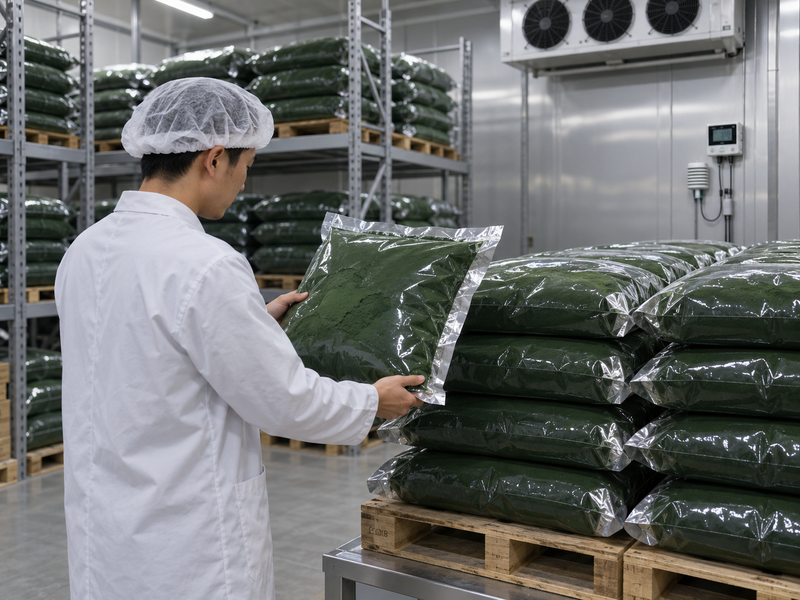
Ask for species, grade, process, formulation, pack material, fill weight, headspace and seal type in the stability protocol. Whole biomass powder may behave differently from fine milled powder, tablets or a beverage blend. For example, a transparent retail pouch and a lined bulk drum impose different light and moisture exposure. However, a study on a prototype bag cannot automatically support a later pack with a changed film. The supplier should explain whether tested lots represent normal commercial variation.
Match the sold SKU. Compare the study description with the current product specification and actual package you will receive. Record any differences, then ask quality to assess whether a bridging study is justified. If the supplier changes drying or cell-wall processing, a fresh stability comparison may be needed even if the Latin name remains unchanged. The 2025 comparison of commercial Chlorella powders demonstrates that products differ in composition and sensory profile. Those differences are a reason to avoid transplanting another brand’s expiry claim into your product file.
| Study detail | Match to purchase file | Why it matters |
|---|---|---|
| Species/grade | Approved specification | Material identity |
| Process | Current route | Pigment and particle changes |
| Pack | Commercial barrier and seal | Moisture and oxygen ingress |
| Storage | Contract condition | Claim boundary |
3. How do moisture and water activity differ?
Measure the right physical risk
Moisture content states how much water is present, usually as a percentage of mass. Water activity reflects how available that water is for physical changes and microbial growth. For instance, powders with the same moisture percentage can have different water activity because of composition and processing. Ask the supplier which measure controls release and which is trended in stability. Also, a method and acceptance limit should accompany any number. As a result, final moisture needs a sampling plan because a bulk lot may not be uniform after a packaging problem.
Watch the seal, not just the test. A dry lot can regain water if a liner opens or storage humidity exceeds the validated condition. At receipt, inspect inner seals and signs of clumping before relying on the COA. A stability test may include periodic moisture and appearance checks, but its relevance ends when the commercial package or storage condition changes. If a partial drum is opened during manufacturing, set an in-use handling rule rather than assuming unopened shelf life still applies. The result should be a practical control: how long a specific pack can be stored and how operators detect damage.

4. What can happen to color and flavor?
Protect the application, not merely the ingredient name
Chlorella contains green pigments, and a customer’s perception can change before a general compositional limit fails. Meanwhile, light, oxygen and temperature exposure can affect shade and odor; the exact response depends on the product and package. Ask the supplier to describe its sensory or instrumental color method and how samples are prepared. However, a color reading from dry powder may not predict appearance in an acidic beverage. For that reason, build an application test into shelf-life approval if visual consistency matters to your brand.
Use a retained benchmark. Make a standard drink or capsule sample from an approved lot and compare later lots under the same lighting and preparation. Track off-notes, sediment and shade shift with a simple scoring sheet. One study of stored freeze-dried C. vulgaris observed changes under different storage conditions, although its investigated application was plant biostimulants. It supports the principle of testing specific conditions, not a food shelf-life number. If a supplier claims “color stable,” ask for the endpoint and sample photos or instrumental data. A stable label claim is only as good as the measured customer experience.
| Attribute | Possible test | Buyer application check |
|---|---|---|
| Dry shade | Instrumental color | Visual reference |
| Beverage shade | Fixed-use dispersion | Shelf-life pilot |
| Odor | Trained panel | Off-note threshold |
| Sediment | Settling observation | Packaging instruction |
5. How does packaging change the result?
Treat the pack as part of the ingredient specification
Barrier material, liner closure, headspace and outer container all affect exposure. For example, a lined drum may protect bulk powder during ocean freight, while a small pouch with a poor seal can shorten useful life after repacking. Ask for pack material and integrity checks, including how damaged units are identified. Also, if the supplier uses an oxygen-control method, record what it is and whether it applies to every size. Do not assume a desiccant or nitrogen flush exists unless the actual pack specification says so.
Run the change scenario. A marketing team may request a transparent window on a retail bag. That design could alter light exposure from the validated pack. A co-packer may switch inner liners to meet lead time. Either change should prompt quality review before printing the original expiry. Request sample packs from production, not only artwork renders, and compare seal performance under intended transport. The site’s Spirulina powder shelf-life article offers an analogous planning framework, though Chlorella needs its own study. Packaging is a controlled material, not a decorative afterthought.

6. What should a stability study measure?
Use real-time evidence with a defensible protocol
A suitable protocol states test lots, pack, conditions, time points, methods, acceptance limits and planned analysis. Include attributes that may limit life: moisture, water activity where relevant, microbiology, pigment or color, odor and selected composition. Then, the supplier should explain why those endpoints were chosen for the intended use. Meanwhile, accelerated studies can help screen a new package, but correlation with real-time storage should be established before they support a commercial expiry. Keep raw or summarized results that allow a reviewer to see the trend, not merely a final “passed” statement.
Ask how failures were handled. A single lot that drifted early may reveal packaging or process variability. Determine whether the study included multiple commercial batches and whether data remain within limits at the proposed date. FDA’s GRN 986 submission lists multiple monitored attributes for a particular Chlorella powder. Borrow the logic of measured endpoints, not its claimed duration. If your finished format includes another ingredient, test the full formula. An ingredient can be stable alone and react differently in a flavored premix.
| Protocol field | Question | Weak answer |
|---|---|---|
| Lots | Commercial and representative? | One lab sample |
| Conditions | Match storage label? | Unstated warehouse |
| Time points | Show trend? | Only start and end |
| Endpoint | Linked to specification? | “Looks fine” |
7. How do storage and transport affect life?
Write conditions that can actually be followed
“Store cool and dry” gives a general direction but may not settle a dispute after a hot transit or humid warehouse stay. Ask the supplier for the validated storage range or a reasoned handling instruction, then compare it with your distribution chain. Also, identify where drums may sit in sunlight, near heat or on a damp floor. As a result, pallet protection and warehouse rotation matter because shelf life starts at manufacture, not at buyer receipt. Specify what temperature or humidity excursion requires a quality review.
Map the longest route. A shipment may spend days in port, then enter an unconditioned local depot before reaching your plant. Ask how damaged or exposed packs are inspected and segregated. Keep transport records when they are part of the agreed control. If the actual chain regularly exceeds the study condition, either change logistics or obtain supporting data. Avoid simply extending the expiry after an uneventful visual inspection. A customer complaint about color or clumping often begins with a handling gap that nobody recorded at the time.
8. How much life should remain at receipt?
Match stock age with your manufacturing plan
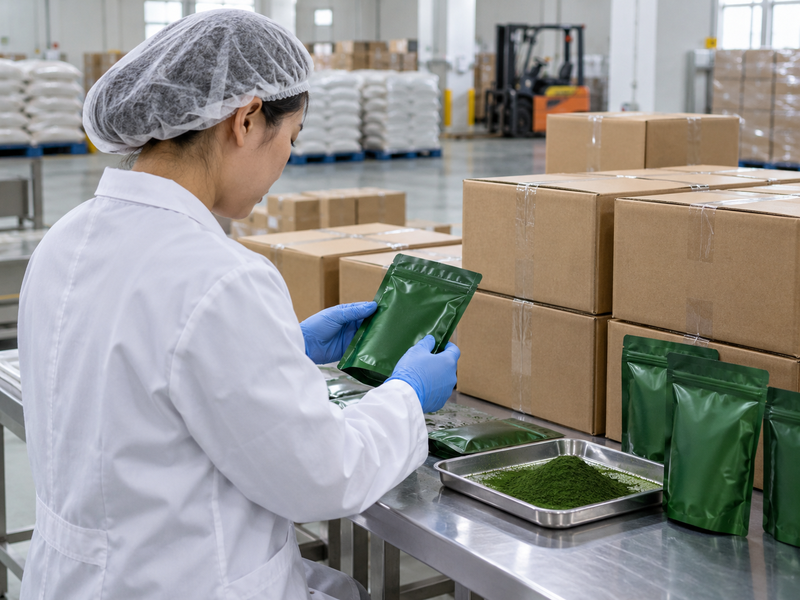
Set a minimum remaining-life rule from the date the buyer receives the ingredient. The number should cover incoming testing, production scheduling, finished-product manufacture and any customer shelf-life promise. For example, a fast-moving beverage plant and a seasonal capsule brand may need different thresholds. Ask for manufacture and expiry or retest dates for the actual lot before shipping. A supplier’s generic “three-year shelf life” claim is not enough when the offered drum is already two years old.
Do the timeline calculation. Suppose a brand needs eight months before production, six months of ingredient buffer and a margin for shipping disruption. It should not accept an aged lot that expires in nine months without an approved plan. Do not set a percentage rule by habit; translate forecast and operations into a usable minimum. If a concession is commercially attractive, have quality and planning approve it before dispatch and record where the lot will be used. The site’s remaining shelf-life procurement guide describes a similar commercial calculation for Spirulina, while Chlorella dates require their own evidence.
| Timeline component | Buyer estimate | Evidence |
|---|---|---|
| Incoming release | Days or weeks | Lab turnaround |
| Inventory buffer | Planned months | Demand forecast |
| Production window | Latest use date | Factory schedule |
| Margin | Disruption allowance | Policy |
9. When does repacking require new evidence?
Reassess a changed exposure path
Repacking opens the validated container and introduces a new package, handling environment and possibly a new lot code. Ask whether the repacker is qualified, how humidity and contamination are controlled and how parent and child lots are linked. Also, a shorter in-use period may apply after opening even if the original sealed drum had a longer expiry. When powder is blended with other ingredients, the new formula needs its own stability rationale. Printing the original manufacturer’s date on a new pack without assessment can mislead a buyer.
Use a controlled bridge. Compare original and new pack barriers, seal performance, fill size and headspace. Retain samples in the new package and monitor selected endpoints under planned storage. Agree who owns the finished expiry decision and who signs label artwork. If repacking occurs in another country, check local regulatory requirements separately. FDA’s supplement CGMP guide describes repackaging and quality release obligations where U.S. Part 111 applies. A seller’s original COA can support incoming quality but cannot alone validate the new retail configuration.

10. How should buyers set an approval rule?
Connect evidence, pack and remaining life
Write a rule that identifies the approved grade, packaging, stated storage condition, expiry basis and minimum remaining life. Ask for the supplier’s stability summary and three recent lot COAs. Then, confirm moisture, microbiology and application-critical color or sensory results. Inspect commercial packs at receipt and quarantine damaged units. Also, define when a packaging, process or site change triggers review. Use a pilot stability check in your own finished formula if appearance or flavor is central to the brand.
Make the rule operational. The warehouse should know what to reject visually; quality should know which study supports the date; procurement should know the minimum date to request in a quote. Review trends and complaints at agreed intervals. If a current lot approaches the minimum, decide before shipment rather than asking operators to work around it later. A clear, pack-specific shelf-life decision protects launch schedules and customer confidence. It also gives a supplier a fair, measurable basis for proposing an alternate grade or package when normal stock cannot meet your needs.
| Approval item | Accept when | Hold when |
|---|---|---|
| Product/study match | Same grade and pack | Material change unassessed |
| Dates | Meets receipt minimum | Insufficient time |
| Condition | Intact and controlled | Exposure or damage |
| COA | Within agreed limits | Missing or failing result |
What to do next. Chlorella shelf life belongs to a specific product in a specific pack under stated conditions. Request the stability protocol and trend, set minimum remaining life and check the actual drums at receipt. That small discipline keeps a printed date connected to the customer experience it is supposed to protect.
Frequently asked buyer questions
FAQ
Q1: Does every Chlorella powder last three years? No. Duration requires evidence for the exact grade and pack.
Q2: Is moisture enough to prove stability? No. Color, flavor, microbiology, water activity and pack condition may also limit use.
Q3: Can a supplier use accelerated testing alone? It may support development, but a commercial claim needs a defensible correlation and real-time evidence.
Q4: Does opening a drum leave its expiry unchanged? An opened pack needs a separate handling and in-use rule.
Q5: What date should an RFQ specify? State minimum remaining life at buyer receipt, based on your production timeline.