
Blue spirulina wholesale transit temperature monitoring records exposure along a defined route so quality can evaluate a lot against evidence for its actual formulation and pack. A hot container reading alone does not prove pigment damage; an unmeasured shipment does not prove safety. Buyers need agreed conditions, a logger plan and a decision tree before dispatch. Published phycocyanin stability research describes sensitivity to heat in studied preparations, while the supplier’s product page directs buyers to confirm a current specification. The useful principle: judge the received SKU, not a temperature number borrowed from a different material.
Contents
- What does blue spirulina wholesale transit temperature monitoring require?
- Which evidence supports a shipping condition?
- Where should a transit logger be placed?
- How should logging be started and checked?
- What does an excursion record need to show?
- How should QA review a temperature excursion?
- Does a refrigerated service solve every risk?
- What should the carrier and supplier agree to do?
- How should receiving preserve the evidence?
- When can the protocol be simplified or changed?
1. What does blue spirulina wholesale transit temperature monitoring require?
Begin with the exact commercial SKU
Request the storage specification for the approved grade. Also ask for shelf-life and distribution data for its actual carrier and primary pack. A study of phycocyanin in solution cannot set a shipping limit for this dry powder. The research review discusses heat, pH and light. However, methods and formulas vary. Ask what was measured after exposure. Check color by the agreed method, plus appearance, moisture or other signed traits.
Do not invent a universal threshold. QA should set an allowable profile from supplier evidence and its own trials. A single peak, a sustained warm interval and a repeated daily cycle can have different effects. Record sensor location. Air near a container roof may differ from conditions inside a sound carton. A protocol may call for review rather than automatic rejection above a chosen point. Approve that point before booking freight. Then place it in the quality or shipping agreement.
For example, a short spike beside the container door might prompt inspection rather than disposal. The decision still depends on pack condition and the SKU’s tested response. Write that review path before cargo moves.

2. Which evidence supports a shipping condition?
Connect exposure tests to measurable quality
Strong evidence covers the commercial formula and pack. It also shows exposure time and quality results before and after shipment. Ask whether the supplier tested finished packs or an open laboratory sample. A sealed barrier bag and exposed powder can behave differently. Also record time since manufacture and remaining shelf life. Transit is only part of the product life. Buyer trials can add evidence under its own distribution and storage conditions.
Look for an actionable answer: what exposure history can QA review without guessing? If the supplier only says “store cool and dry,” ask what that means for transit. A review of physical stability covers formula and water activity. Yet it cannot certify a carrier route. Keep the review scoped to product quality. The result should be a written acceptance rule. Also name the test plan and the person who can release or reject the lot.
| Evidence | Question to ask | Use in protocol |
|---|---|---|
| Current SKU specification | Which pack and carrier? | Baseline conditions |
| Stability study | What time and temperature profile? | Review range |
| Lot COA | What was the starting result? | Compare after transit |
| Buyer trial | Did the ingredient perform in formula? | Application decision |
3. Where should a transit logger be placed?
Record the location with the reading
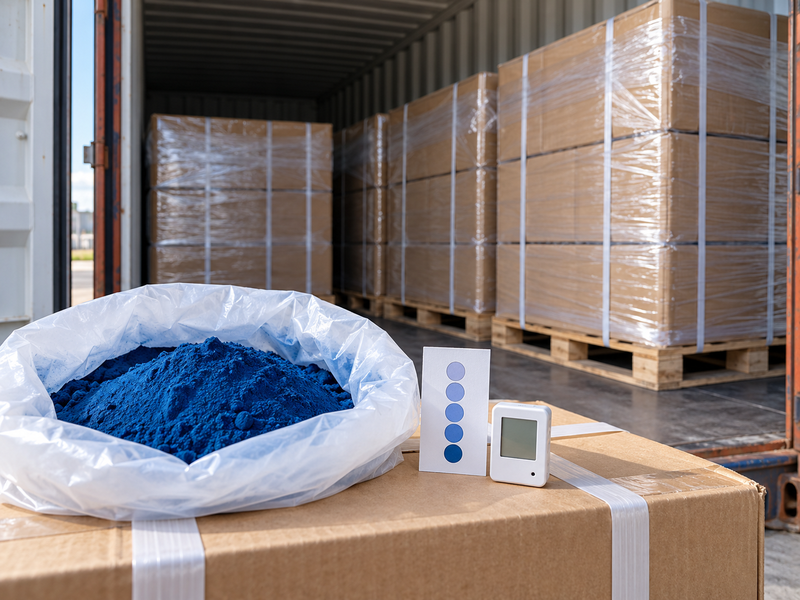
A logger deep in a pallet can miss air peaks. However, an outer logger may record heat that never reaches a sealed inner pack. Select positions for the question being asked. For example, use one outer logger for ambient exposure. A protected logger can show how slowly the pack warms. Place devices where they will not puncture liners or be mistaken for loose cargo. Photograph positions before wrapping and link device IDs to pallet and lot codes.
Sampling should fit the load. A single carton on an aircraft and several pallets in a container need different coverage. Consider door-side and roof-adjacent positions where feasible. Still, a few sensors cannot measure every pack. The protocol should say which positions are representative and how missing data are handled. Ask the carrier whether the device type is allowed on its service. A timestamp alone is weak evidence. Record location, calibration and start time too.
In practice, a placement sketch saves time at both ends. The packer can show where each device sits, while receiving can retrieve it without cutting into the wrong carton.
4. How should logging be started and checked?
Verify the device before loading
Record logger model, serial number, calibration, sampling interval, time zone and battery status. Start it by the approved procedure and check that it stores readings. If the device starts after staging, it misses that exposure. Mark which event begins the review window: packing, carrier handover or container loading. Then use the same definition on repeat orders so records can be compared.
Make retrieval realistic. If a logger sits inside a wrapped pallet, receiving needs a safe way to find it. The search must not damage primary packs. Give the receiver a simple placement diagram. Confirm who downloads data and what format QA can read. Keep raw data as well as a summary graph. A carrier report may help. However, confirm that its sensor represents your pallets. Document gaps, clock drift or device failure instead of filling them with assumptions.
| Setup field | Record before dispatch | Reason |
|---|---|---|
| Device ID | Serial and pallet ID | Chain of custody |
| Calibration | Date and status | Reading confidence |
| Start time | Timestamp and zone | Exposure duration |
| Interval | Minutes between readings | Detect peaks |
| Retrieval owner | Name or role | Prevent lost data |
5. What does an excursion record need to show?
Preserve duration, location and context
An excursion report needs its start, duration and peak reading. Also record logger location and nearby lots. Keep the full trace; a single maximum conceals duration and repeated cycles. Overlay handover events where known. For example, a peak during a brief unloading period may need a different investigation from a long plateau during transport. Neither can be dismissed without the approved product evidence.
Keep facts separate from interpretation. Record liner condition and any wet or crushed cartons. Then test a representative sample for color if the agreed method calls for it. If only one logger failed, do not rewrite that gap as a normal profile. Review adjacent device traces and carrier records, then state the uncertainty. A temperature event can coexist with physical damage. QA should assess both. A modest average reading cannot settle the lot decision.
Also separate logger failure from product failure in the report. One asks whether the record is reliable; the other asks whether the powder still meets its specification. Each needs its own evidence.

6. How should QA review a temperature excursion?
Hold the lot, then apply a defined decision tree
Quarantine affected lots. Then QA checks the logger, exposure time, packs, stability evidence and starting COA. If the profile falls inside a preapproved range, document release. If it falls outside, ask whether targeted testing can answer the quality question. Use the SKU’s approved color test and sampling plan. A quick visual check cannot replace its signed limit. If evidence cannot support release, reject or seek an approved disposition.
A worked example remains illustrative: a hypothetical contract might call for QA review after an agreed exposure period. Testing could follow if the profile exceeds that period. Set the duration from actual data, not this article. Separate carrier claims from the quality release decision. The risk owner under the chosen Incoterms® 2020 rule may need data fast. Meanwhile, QA decides whether production can use the ingredient. Both decisions need preserved evidence.
| Decision stage | Possible result | Required record |
|---|---|---|
| Logger validation | Valid or doubtful | Device check |
| Pack inspection | Intact or affected | Photos and count |
| Stability comparison | Inside or outside envelope | Dossier reference |
| Targeted test | Pass or fail | Method and result |
| Final disposition | Release, hold or reject | QA approval |
7. Does a refrigerated service solve every risk?
Control the exposure that matters
A controlled service may be justified by SKU data or a difficult route. However, it can add cost, limit capacity and create transfer points. Ask whether the service records temperature during pickup, terminal storage and destination delivery. A cooled container with a torn liner still poses a moisture or contamination risk. Pack checks remain necessary. The product’s own specification governs any need for refrigeration.
A more targeted option may work. For example, insulation, route timing and shade during loading may reduce exposure. Each measure still needs validation for the actual route and pack. Compare accepted cost, not just reefer surcharge. Also agree on a fallback if the carrier cannot maintain the booked service. Keep any alternate route within the quality plan or seek QA approval before dispatch. The goal is predictable quality, not merely a low graph line.
If the carrier proposes a transfer, ask where packs will wait and who records that dwell. A booked temperature service has little value if unplanned handoffs fall outside its monitoring plan.

8. What should the carrier and supplier agree to do?
Write instructions that can be followed at handoffs
Give the carrier a product description and pallet count. Also provide handling rules, logger positions and an incident contact. Give the supplier a pack checklist, plus a duty to send device IDs and loading photos. Decide who starts loggers and who retrieves data. If the carrier changes service, require prompt notice. Put these duties in the booking and purchase documents. A vague “keep cool” label is not enough.
Include exception handling. If a vehicle breaks down or a container misses departure, who can authorize a transfer? How will pack IDs and logger data stay linked? FDA sanitary transportation guidance addresses suitable equipment and clean handling where its rule applies. It also notes scope limits. Still, buyers should agree on clean, dry and traceable handling for sealed powder. The ICC delivery rule and quality protocol should point to the same handover record.
| Party | Before handover | During exception |
|---|---|---|
| Supplier | Pack and logger record | Identify affected lots |
| Carrier | Service and handling confirmation | Notify and document deviation |
| Buyer logistics | Route and contacts | Coordinate recovery |
| Buyer QA | Acceptance envelope | Decide disposition |
9. How should receiving preserve the evidence?
Download before the trail goes cold
At the dock, record arrival time, vehicle ID, seal condition, pallet count and visible damage. Next, use the placement diagram to find the logger. Note its condition and download the raw trace. Keep the file name tied to shipment, lot and device ID. If a logger is missing, record that before releasing the pallet. Store photos and receiving notes with the COA. Then QA can review the evidence before stock becomes unrestricted.
Time matters here. Some carrier and insurance claims require prompt notice. Also, a warehouse may discard damaged wrap during cleanup. Assign a receiving owner to preserve it and hold affected packs. If a logger records a concern, sample by the approved plan. Do not tear open every liner. The site’s lot-traceability article explains batch mapping. Exposure data must link to the lot used in production. Without that link, a trace is only a transport anecdote.
Then close the receiving record with a dated QA decision. That makes later trend reviews useful: the team can compare each trace with the lot’s actual test and release outcome.

10. When can the protocol be simplified or changed?
Revise it from actual shipments and stability results
After several comparable deliveries, review traces, test results and damage history. A route may stay inside its validated range across many trips. If so, QA may approve fewer loggers or a lower-cost service. However, a new origin, season, pack or carrier may need more monitoring. Do not combine data from different grades or pack barriers. Track revisions in the quality agreement and tell warehouse staff which plan applies to the next lot.
Keep the decision practical. Monitoring should answer a real release question. If no one knows what follows a reading, the plan needs repair. Ask for SKU-specific stability evidence. Then agree on logger placement and excursion review before a pilot shipment. Inspect its trace after receipt. The result is a sound acceptance path for future freight choices. It does not claim one heat limit for every blue powder.
| Change trigger | Protocol review |
|---|---|
| New carrier or route | Logger coverage and handoffs |
| New primary pack | Barrier and thermal behavior |
| New grade or carrier | SKU stability evidence |
| Repeated excursions | Service and acceptance envelope |
Final purchasing decision
Blue spirulina wholesale transit temperature monitoring works when a logger trace can be compared with evidence for the actual SKU and used in a defined QA decision. Put the condition, device plan and exception contacts in writing before dispatch. Then use each receipt to improve the next shipment’s control.
FAQ
Q1: Is one maximum reading enough for release? No. Duration, location, device validity and SKU evidence also matter.
Q2: Must every powder shipment be refrigerated? No. Use the approved product specification and route assessment.
Q3: Can a solution-study limit be used for dry powder? Not without product-specific validation.
Q4: Who should download the logger? Name a receiving owner before shipment and retain raw data.
Q5: What happens after an unexplained excursion? Hold the lot and let QA apply the agreed investigation and disposition process.