
Blue spirulina wholesale transit humidity control keeps water away from an ingredient whose performance depends on its approved pack and storage conditions. A container’s relative humidity reading describes air, not automatically moisture inside a sealed powder bag. Yet wet cartons, condensation and a broken liner can create a real quality concern. Buyers need a clean, dry load plan, appropriate barrier packaging and a receiving check that distinguishes exposure from ingress. The UNECE CTU Code gives practical packing guidance, while the supplier’s product page calls for pack and specification confirmation. Start at the seal: if water cannot reach powder, the decision differs from a wet inner bag.
Contents
- What does blue spirulina wholesale transit humidity control measure?
- How can a closed container become wet inside?
- Which packaging layers protect the powder?
- What should be checked before loading?
- Do desiccants and liners solve the problem?
- How should ambient RH be monitored?
- What should receiving inspect on arrival?
- How does QA assess suspected moisture ingress?
- Who owns the moisture-control instructions?
- How can repeat shipments improve the plan?
1. What does blue spirulina wholesale transit humidity control measure?
Separate outside air from powder condition
Relative humidity, or RH, measures water vapor in surrounding air. A brief high reading outside a sound barrier bag does not prove that powder absorbed water. Conversely, a dry air trace cannot excuse a bag punctured by a staple. At receipt, ask whether the pack protected its contents. Then check whether the lot meets its signed specification. Request the pack material, closure method and storage instructions for the exact SKU.
Use the right measurements. Inspect seals and test moisture or water activity when the specification calls for it. Also compare caking and dispersibility with agreed limits. A review of phycocyanin physical stability notes effects of water activity and formula. However, it gives no automatic RH limit for this powder. QA should define what counts as an excursion and which tests follow. A logger graph cannot replace an ingredient check.
For example, wet wrap around a sound liner may call for targeted inspection. A punctured liner calls for a stronger hold. The same RH reading cannot decide both cases.
2. How can a closed container become wet inside?
Account for cargo, packaging and temperature cycles
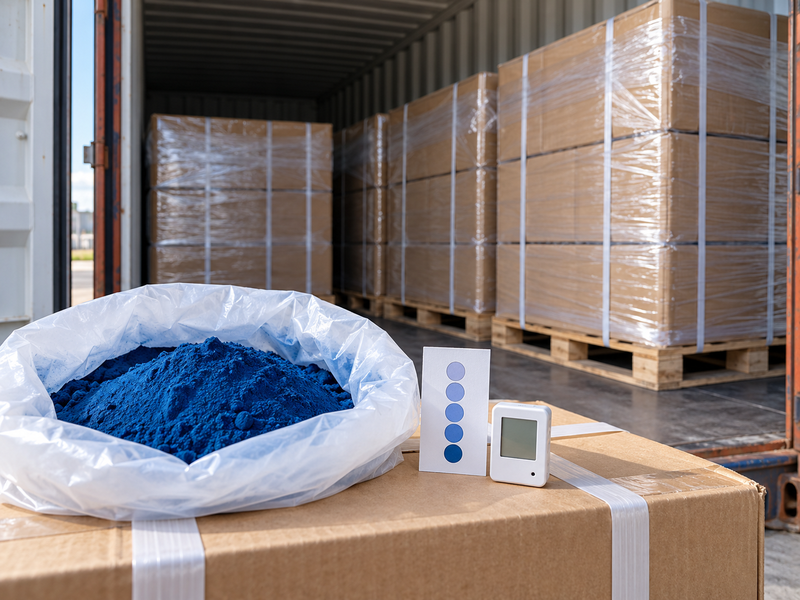
Water can enter with wet cargo or pallets. Rain, container leaks and condensation add other paths. The UNECE discussion of condensation names cargo, timber and porous packaging as sources. A container may look dry when sealed. However, temperature changes can leave water on its roof or walls. It may drip onto a pallet and weaken cartons before the doors open.
Look at the whole loading scene. Were pallets under cover? Did rain reach cartons during transfer? Was dunnage dry? Also check the unit for holes, stains, odor and standing water. Ask the packer for photos before and after loading. This helps on long routes or loads with several transfers. A sound inner liner may protect powder after an outer carton gets damp. Even so, QA should inspect and record the condition rather than assume protection worked.
| Moisture source | Visible clue | Preventive check |
|---|---|---|
| Wet pallet or dunnage | Dark or soft timber | Inspect before loading |
| Rain during transfer | Wet outer cartons | Covered handling |
| Container leak | Stains or standing water | Empty-unit inspection |
| Condensation | Roof or wall droplets | Dry load and pack plan |
3. Which packaging layers protect the powder?
Specify the primary barrier before the outer carton
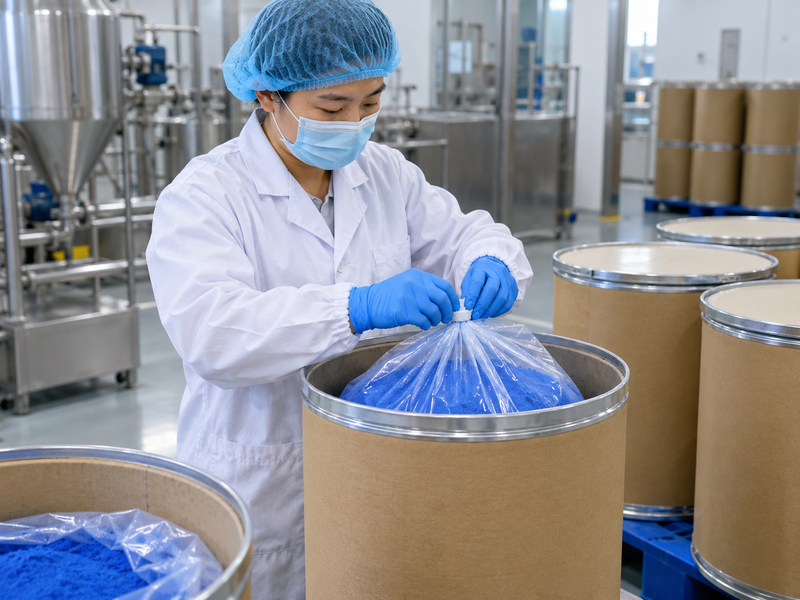
The primary bag or liner keeps water away from dry powder. Ask for its material, barrier rating, closure design and seal check. Also confirm its food-contact suitability for the product. An outer carton or drum guards against puncture and crushing. Stretch wrap and a pallet cover protect the load. However, neither repairs a torn liner. A desiccant outside the bag may lower nearby humidity without changing moisture inside it.
Set a pack acceptance standard. State unit net weight, inner bag, outer container, closure, seal and label position. The site’s bulk-packaging article offers related questions. Still, request the pack proposed for this order; grades may differ. If the supplier changes a liner, ask whether shelf-life and barrier data still apply. The pack is part of the approved ingredient, not just a shipping accessory.
Also ask how the supplier checks the seal before loading. A written test or inspection step gives receiving a basis for comparing the pack at dispatch with its condition at arrival.
4. What should be checked before loading?
Create a short dry-load checklist
Check the vehicle for dirt, odor, holes, water and sharp edges. Then confirm dry pallets and cartons. Keep cases off a damp floor and under cover during transfer. Use blocking so vibration does not rub against bags. The UNECE CTU Code offers voluntary advice on packing cargo units. Adapt the instructions to this mode and load. Take dated photos before and after loading.
Do not hide a wet exception. If rain reaches a pallet, record its ID and inspect the packs before dispatch. Changing an outer carton can hide exposure if no one checks the inner bag. If a container fails inspection, request another unit. A “probably dry” promise gives little evidence. Also put this checklist in supplier and forwarder instructions. That makes the loading record useful if a dispute later reaches the destination.
| Loading check | Pass evidence | Action if failed |
|---|---|---|
| Empty unit dry | Photo and checklist | Replace or repair unit |
| Pallets dry | Visual check | Hold affected pallet |
| Packs intact | Seal and carton check | Repack under control |
| Load secured | Final stow photo | Correct before closure |
5. Do desiccants and liners solve the problem?
Treat them as controls with limits
Container desiccants may reduce condensation in a closed load. A liner or pallet cover may shield cartons from drips and rubbing. However, neither makes a leaking unit, wet pallet or punctured bag acceptable. Choose desiccants for the actual route. Place them away from food packs and record type, quantity and location. Do not quote a universal bag count without checking load and climate.
Ask what failure each measure addresses. A barrier protects powder from vapor. A pallet cover protects cartons from outside water. Meanwhile, a desiccant treats container air. These controls act at different boundaries. If shelf-life tests assume a sealed barrier bag, a desiccant cannot justify weaker packaging. Wet timber may also overwhelm a modest desiccant plan. Use photos and receiving results to check the measures. Revise them only after quality and logistics agree.
In practice, name each control on the loading checklist. Then a wet carton can be traced to the layer that should have blocked water, rather than blamed on humidity in general.

6. How should ambient RH be monitored?
Define what the sensor can prove
An RH logger can reveal damp air or a period when condensation may form. Record position, calibration, sample interval and time zone. One sensor near a door cannot measure every pallet or moisture inside a sealed bag. Pair RH with temperature because both readings change together. If sensor data support acceptance, define the review trigger in advance. Then state how QA will check packs and product data.
Keep thresholds product-specific. A hypothetical plan might flag sustained high RH for inspection. Set the trigger from pack design and route risk, not a copied number. Keep raw traces and mark loading, arrival and door-open times. For example, an RH rise after opening may reflect destination air. If a logger fails, do not treat the load as compliant by default. Instead, inspect packs, review other data and record the gap. The goal is a useful signal, not an attractive chart.
| Sensor record | Why retain it | Limitation |
|---|---|---|
| RH trace | Ambient moisture trend | Not powder moisture |
| Temperature trace | Condensation context | Not inner-pack temperature |
| Location photo | Interprets readings | One point only |
| Door-open time | Separates transit and dock | Needs accurate clock |
7. What should receiving inspect on arrival?
Document condition before unloading destroys clues
Photograph doors and seals. Then check for water, odor, stains and shifted cargo. Record pallet IDs, carton counts and wet areas. A wet top carton may signal roof drips; a crushed bottom carton suggests another cause. Unload under a controlled procedure and inspect inner bags. Separate affected units while preserving lot and pallet IDs. Do not blend or use the lot before QA decides its status.
Capture timing. A cold pallet can collect surface water after entering a warm warehouse. The UNECE condensation discussion notes this risk. So record photo times and whether water appeared inside the container. Log warehouse conditions if they matter to the case. Keep damaged wrap, labels and photos through any claim notice. A clean carrier receipt for visibly wet cargo can weaken a later claim.
Meanwhile, keep the pallet under hold. The receiver should not peel away stained cartons and merge clean-looking units into stock before QA maps the affected area.

8. How does QA assess suspected moisture ingress?
Separate affected packs from unaffected stock
Quarantine packs with wet cartons, damaged seals or caking. Verify identity and lot. Then inspect each affected inner bag without opening unrelated units. Use the approved sampling plan and specified tests. These may cover moisture, water activity, appearance or color. A dry-looking sample cannot alone prove compliance. Also, one carton may not represent every wet pallet position.
Write the reasoning. QA should identify exposed and protected packs. Then link each decision to test data and pack condition. A retained sample or initial COA can provide a baseline. However, results need comparable methods. If water entered a liner, use the formal deviation process; do not dry or repack powder informally. The release record should map every accepted unit to a lot and location. That prevents a quiet partial-use error.
| Condition at receipt | Immediate status | Next evidence |
|---|---|---|
| Dry carton, intact liner | Normal hold | Routine QA checks |
| Wet carton, intact liner | Segregated hold | Seal and targeted inspection |
| Damaged or wet liner | Quarantine | QA investigation and testing |
| Caked powder | Quarantine | Specification-based disposition |
9. Who owns the moisture-control instructions?
Map duties across supplier, carrier and buyer
The supplier defines the approved bag, checks it before dispatch and supplies lot-level data. Next, the packer and carrier use clean, dry equipment and record loading condition. Buyers share receiving appointments and storage needs. QA owns release, while procurement handles commercial remedies for rejected stock. The delivery term marks transport risk handover. However, it does not replace these duties.
Check the actual contract. ICC Incoterms® 2020 helps locate risk transfer. The purchase agreement should also require prompt notice and shared evidence. Decide who pays for inspection, repacking or replacement. In the United States, FDA sanitary transportation guidance covers duties and exclusions. So examine whether it applies to this shipment. Either way, the handling plan needs clean, dry equipment.
For a disputed pallet, these roles prevent a gap. Logistics preserves the carrier record, QA decides product use and procurement seeks the agreed remedy. Each team should reference the same pallet and lot IDs.

10. How can repeat shipments improve the plan?
Trend incidents by route and pack design
Record vehicle, season, route, pack, pallet, RH trace, visible water and accepted kilograms. After several deliveries, compare incidents with loading and handling records. If top cartons keep arriving wet, check roof drips and pallet covers. If inner bags show punctures, review carton design or handling instead. Bring supplier, carrier and QA into the same review. Then the fix can target the actual cause.
Do not overreact to one sensor spike. Review pack condition and any change in quality results. A new route or carrier formulation may change the risk. So reassess before reusing an old threshold. Ask for the current pack specification. Next, agree on a dry-load checklist and receipt photos. Try those controls on the next shipment. The result should be fewer unclear holds and a clear decision for every pack.
| Trend | Likely investigation | Candidate action |
|---|---|---|
| Wet upper cartons | Roof drips or stow | Cover and loading review |
| Wet pallet base | Floor or pallet moisture | Unit and pallet checks |
| Inner-bag tears | Handling or closure | Pack redesign |
| High RH without damage | Sensor context | Validate threshold |
Final purchasing decision
Blue spirulina wholesale transit humidity control begins with a sound primary pack and a dry loading process. Use ambient RH as context, inspect actual packs at receipt and let QA decide any moisture concern against the signed SKU specification. Request packaging and loading evidence before placing a bulk order.
FAQ
Q1: Does high container RH mean powder absorbed water? Not necessarily. Inspect the validated barrier and test affected packs as needed.
Q2: Can desiccant replace an inner liner? No. It acts on container air, not a punctured primary pack.
Q3: Should wet outer cartons be rejected automatically? Quarantine and inspect; disposition depends on liner integrity and QA evidence.
Q4: Can condensation appear after unloading? Yes, particularly when cold cargo meets warm humid air; document timing.
Q5: Which record helps most in a moisture claim? Dated loading and receiving photos linked to pallet and lot IDs.