
In a powdered drink, the customer judges the color after adding water, while the factory sells a dry blend that must stay uniform from the first sachet to the last. A successful blue spirulina dry beverage mix therefore needs two linked tests: how the powder behaves in the pack and how one measured serving looks in the glass.
This guide is for brands and manufacturers selecting a commercial phycocyanin grade for instant drinks. It covers blend order, sampling, pack barrier, serving instructions and reconstitution. A phycocyanin stability review describes sensitivity to conditions such as pH, temperature and light. Those findings explain why storage and the prepared drink matter, but the actual formulation and package determine the purchase decision.
Contents
- What should the prepared serving look like?
- Which powder properties affect blending?
- How should the blue ingredient be added?
- How do you test blend uniformity?
- What causes segregation after filling?
- How should reconstitution be tested?
- What should a caking test cover?
- How does packaging protect the mix?
- How should the serving dose be costed?
- What belongs in the approved specification?
1. What should the prepared serving look like?
Define the glass before designing the pouch
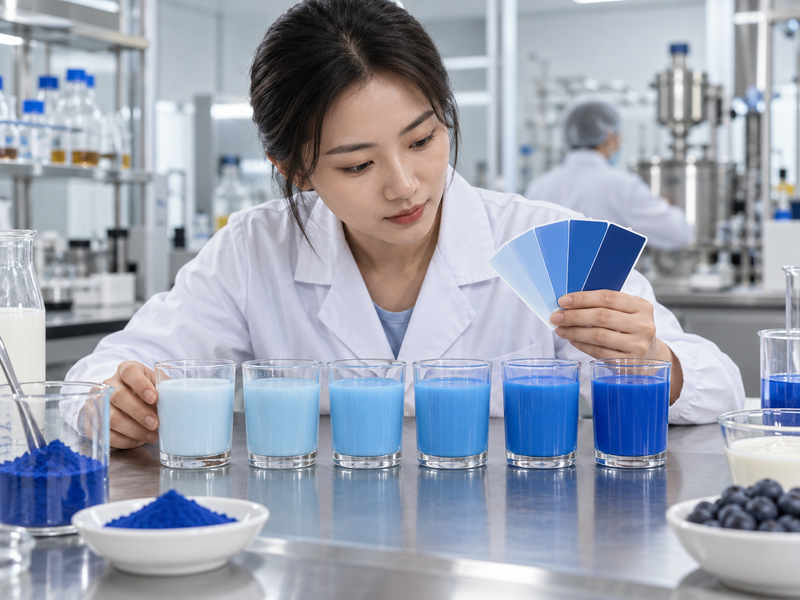
Write the intended serving mass, liquid volume, water temperature and consumer mixing instruction. A powder may look strongly blue in a sachet yet make a pale drink when diluted at the labeled serving. Choose a target shade in the prepared drink, using the same glass, fill level, light and waiting time for every candidate. Include the uncolored formula and a current approved reference. If the drink may be made with milk as well as water, test those separately; they create different backgrounds.
Decide whether the drink should be clear, lightly hazy or opaque. A blue grade that disperses well in a smoothie-style shake may leave unacceptable specks in a clear water mix. Record flavor and mouthfeel at the dose that meets color, since the economic winner may be too strong sensorially. The prepared-serving target should guide the powder dose and the blend test. It also gives procurement a meaningful unit for price comparison: cost per acceptable serving rather than cost per kilogram of blue powder.

| Serving field | Fix before trials | Reason |
|---|---|---|
| Powder mass | Labeled portion | Sets color dose |
| Liquid | Type and volume | Changes shade |
| Temperature | Intended range | Changes wetting |
| Mixing | Spoon, shaker or blender | Sets realistic dispersion |
| Inspection time | After preparation | Captures settling |
2. Which powder properties affect blending?
Check the as-sold material
Ask for the full carrier declaration, moisture limit, color method and physical description of the exact blue SKU. Particle size and density differences between ingredients can affect how they mix and later separate. A fine colored powder may appear evenly distributed in a small hand blend but concentrate in one part of a production hopper. Inspect the delivered ingredient for caking, dust and flow before using a sample. Keep the pack label and lot COA with the trial record.
The blue powder’s carrier can affect the total solids and ingredient label. Request the specification behind claims such as “instant” or “water soluble,” including the test method and conditions. A study of phycocyanin encapsulation with different wall materials illustrates why the surrounding material can influence powder behavior, but it does not validate a seller’s commercial grade. Test the material being quoted. Quality should decide whether a carrier change requires a new blend-uniformity and prepared-drink trial.
| Ingredient field | Supplier evidence | Buyer test |
|---|---|---|
| Carrier | Full ingredient declaration | Label and dispersion review |
| Color value | Method and lot result | Matched serving color |
| Moisture | Limit and COA | Caking observation |
| Particle behavior | Physical specification | Mixing/segregation trial |
3. How should the blue ingredient be added?
Use a documented blending sequence
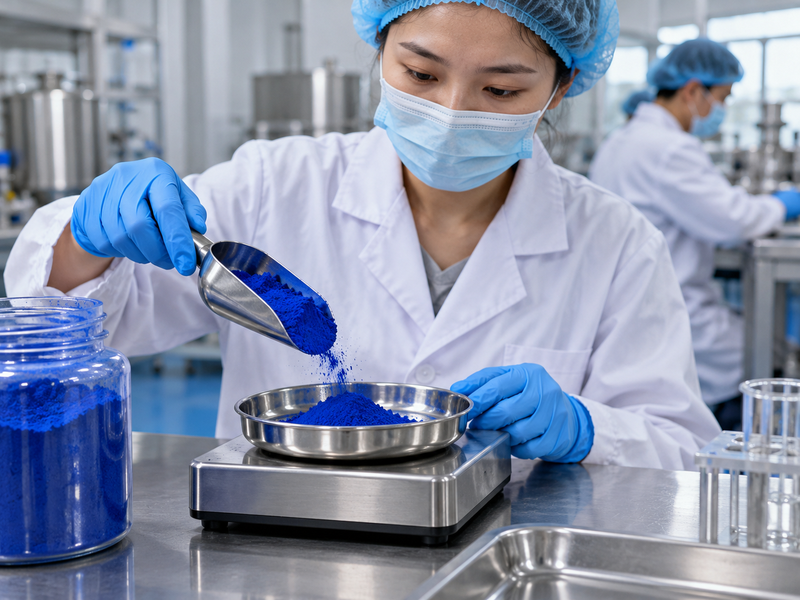
At a low inclusion rate, a blue ingredient can form pockets if it is dumped directly into a large mass of pale powder. Test a premix step with a portion of the base if the production equipment supports it. Record the premix ratio, sequence, equipment, blend time and batch size. Avoid copying a laboratory jar method into a ribbon blender without a pilot run. More time is not automatically better if the blend separates during discharge or is damaged by a process change.
Sample the mix before filling and after normal transfer. A uniform mixer sample can differ from finished sachets if ingredients segregate in the hopper. Watch for blue deposits on equipment and dust loss at transfer points. If a supplier suggests a different carrier to improve flow, treat that as a new SKU and label review. Production should approve a repeatable instruction that works at the planned rate. Keep the formula fixed while comparing candidate blue grades so their behavior, rather than a changed sweetener or protein base, explains the results.
4. How do you test blend uniformity?
Sample where the process could vary
Define a sampling plan across the mixer and filled units before the trial. Pull independent portions from different positions or times, then prepare each at the labeled serving size. Compare finished-glass color using a fixed visual method or an instrument method where available. The test should include the beginning, middle and end of filling and any point after a routine stop.
Use the same water, vessel and mixing instruction for every portion. Record powder mass, lot, fill time and color result. If one unit differs, investigate weighing, mixing, hopper flow and ingredient segregation before changing the nominal dose. A useful acceptance rule includes both the average shade and unit-to-unit spread, because customers buy one sachet at a time. Quality should approve the release method and retain units for later investigation. This test is about manufacturing consistency, not only the ingredient’s certificate color value.
| Sample point | What it tests | Failure clue |
|---|---|---|
| Mixer top/bottom | Initial distribution | Premix or mixing issue |
| Fill start | Transfer and setup | Hopper stratification |
| Fill middle | Steady operation | Process control |
| Fill end | Remaining material | Segregation |
| After stop | Restart behavior | Residence effect |
5. What causes segregation after filling?
Follow the powder through handling
Ingredients with different particle size, shape or density can separate during conveying, vibration or repeated hopper discharge. A blue color makes that variation easy to see, but visual blue streaks are not a calibrated content test. Compare samples after blending, after transfer and from finished packs. If the mix is sold in a large tub, take servings from top, middle and bottom after a realistic handling simulation. A single fresh scoop does not show what the last customer serving will contain.
Record equipment path, drop height, fill method and hold time. If a new carrier or granulated blue grade is proposed, test both color and dose uniformity rather than assuming larger particles solve the problem. A process change may reduce segregation while worsening reconstitution. Keep the accepted prepared-drink shade as the final criterion. The question is whether each commercial serving produces an acceptable drink after normal shipping and use, not whether the dry powder looks attractive in a static jar.

6. How should reconstitution be tested?
Use the directions customers will follow
Prepare the mix with the labeled liquid amount and mixing tool. Test realistic water temperatures and a normal waiting interval. Record wetting time, floating powder, clumps, foam, haze, bottom sediment, color and flavor. If a spoon is expected, the spoon test must pass. Use a consistent vessel so a deep glass does not make one candidate look darker than another.
Inspect immediately and after a short standing period. A drink can look smooth at first and form blue sediment later. If the formula is acidic when reconstituted, measure its actual pH and observe color through the intended consumption window. Published phycocyanin research documents changes with pH and other conditions, but the buyer should not transfer a water-only result into the full formula. Ask consumers or an internal sensory panel about flavor only under an identified test plan. Record the test method with the lot so later shipments can be checked against it.
| Prepared-drink check | Observe | Commercial implication |
|---|---|---|
| Wetting | Floating islands | Mixing instruction |
| Clumps | Visible particles | Customer acceptance |
| Foam | Height and persistence | Fill experience |
| Sediment | Amount and color | Hold-time performance |
| Shade | Target comparison | Dose and cost |
7. What should a caking test cover?
Include the finished blend and opened pack
The blue powder, sweeteners, acids and flavors all contribute to moisture behavior. Test the finished formula in the intended pack, not only the pigment in its supplier drum. Record pack material, seal, storage temperature and humidity exposure under the company’s shelf-life plan. Inspect flow, lumps, color concentration and reconstitution at each checkpoint. If customers will reopen a tub, include a controlled opened-pack scenario with a defined handling period.
A caked blend may produce uneven servings even if phycocyanin itself remains colored. Check whether lumps break under the instructed mixing method and whether blue specks remain in the glass. Do not set a universal opened-pack life from a supplier brochure. Packaging and quality teams should decide whether a desiccant, barrier change or serving format is appropriate, with a label review if anything new is added. Retain sealed reference packs so a future complaint can be compared with an approved batch under known conditions.
8. How does packaging protect the mix?
Test barrier and handling together
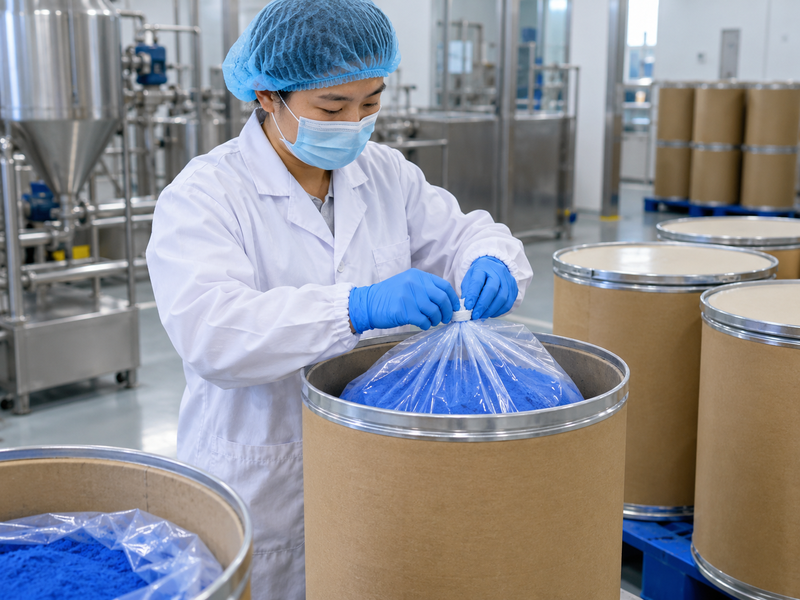
Moisture and light protection matter to both powder flow and blue appearance. Compare only packaging options the brand could sell and the line could seal. Record material, fill weight, headspace, closure and shipping case. Store matched packs under the intended distribution condition, then inspect the dry blend and prepared serving. A good-looking powder in a foil laboratory pouch cannot approve a clear retail tub with repeated opening.
Phycocyanin sensitivity to light and temperature has been reviewed in the scientific literature, but pack performance needs the company’s actual mix and life. Keep the same ingredient lot and formula when comparing packs. If a new barrier reduces caking yet the serving still sediments, packaging solved only one failure. Document seal integrity separately from color. A package change should trigger repeat tests of fill, transport, opened use and prepared-drink appearance before commercial approval.
| Pack question | Evidence to collect | Owner |
|---|---|---|
| Moisture barrier | Caking and flow over storage | Packaging/quality |
| Light exposure | Dry and prepared shade | R&D |
| Seal | Inspection or validated test | Packaging |
| Reopening | Opened-pack serving results | Quality |
| Transport | Units after handling | Operations |
9. How should the serving dose be costed?
Price the drink people make
Start with the mass of blue powder that gives the approved color in one labeled serving. Multiply it by the current landed price for the named grade, then include normal process loss and any pack change required by that grade. A lower powder price per kilogram may not reduce the cost per acceptable drink if it needs a higher dose or causes rejects. Keep measured trial inputs apart from quoted commercial assumptions so procurement can update price without repeating the color trial.
If the blue grade changes flavor or reconstitution at the color-matched dose, it may need a different formula rather than a new cost calculation alone. Test the revised formula as a new version. Record the intended serving size on the pack and verify actual unit fill weights. For a multi-serving tub, check whether scoop variability changes the blue shade enough to disappoint customers. The buyer should approve cost and user experience together, using the finished serving as the common unit.
10. What belongs in the approved specification?
Link ingredient and finished-mix controls
The ingredient specification should name the supplier, SKU, declared carrier, color-value method, pack and lot COA. The finished-mix specification should name the formula, blend method, unit-fill range, sampling plan, prepared-serving method and color acceptance target. Add caking, visible defect and reconstitution rules. A generic claim that the powder is “instant” cannot replace a method another quality analyst can run.
Require supplier notice before carrier, grade, extraction or drying changes that could affect flow or color. Keep a powder retain and filled-unit retain for each approved production lot. Regulatory staff should check intended-market food-color use and label wording; the current US spirulina extract rule should be reviewed for the actual product. Approval is specific to the tested blend, serving instruction and package. A new flavor base or serving size needs another prepared-drink check.
Frequently asked questions
Q1. Is the bluest dry powder the best grade? Judge the drink at the labeled dose after normal mixing and storage.
Q2. Can a mixer sample prove all sachets are uniform? No. Sample filled units across the run.
Q3. Does “water soluble” guarantee an instant drink? No. Test wetting, clumps, foam and sediment in the full formula.
Q4. Should a tub and sachet use the same shelf test? Their opening and moisture exposure differ, so test each commercial pack.
Q5. Which cost basis should procurement use? Cost per acceptable prepared serving, including dose and process loss.
Request a dry-mix grade and lot sample
Send Spirulina CN the serving mass, liquid directions, formula pH, blending equipment and pack format. Request an identified commercial lot, full carrier declaration, current specification and COA. Verify filled-unit uniformity and prepared-drink appearance before ordering bulk powder.