
A phycocyanin protein powder blend can look different once mixed into a protein base and reconstituted. A bright blue powder can turn gray-blue in a vanilla protein shake, leave blue specks in a shaker or introduce a flavor note that becomes obvious at the dose needed for color. Protein type, base opacity and consumer mixing method all shape the result.
This guide addresses the formulation and buyer checks for a named commercial phycocyanin grade in a protein powder. It separates the dry blend from the prepared shake, and it treats flavor and appearance as separate acceptance gates. Studies of phycocyanin physical stability and protein-phycocyanin interactions in acidified systems give reasons to test the actual matrix. They do not establish a universal behavior for every whey, pea or mixed-protein product.
Contents
- Which protein base is the target?
- How might proteins affect the blue ingredient?
- Why does the base color matter?
- How should flavor be tested at the color dose?
- How do you keep the dry blend uniform?
- What should a prepared-shake test include?
- How do foam, clumps and sediment change approval?
- What happens during pack storage?
- How should a pilot compare lots and formulas?
- What belongs in the supplier and product specs?
1. Which protein base is the target?
Define the full formula before selecting blue
Record the protein source, blend ratio, flavor system, sweetener, fat and other active ingredients in the exact formula version. A whey-based vanilla shake and a pea-based shake have different starting colors and sensory profiles. Keep the base fixed while screening candidate blue grades, and make an uncolored control from the same base batch. If the brand plans several flavors, do not use one white-looking flavor to approve a darker chocolate or fruit variant.
Set the target in the prepared shake at the labeled serving, not in the dry blend. Choose the liquid type, volume, temperature and mixing method consumers will use. A color that looks intense in water may look pale in milk because the optical background changes. Decide whether a uniform pastel blue or a deeper saturated shade is expected. The powder can then be judged on whether it reaches that target without unacceptable flavor, clumps or cost.
| Formula factor | Record | Approval implication |
|---|---|---|
| Protein source | Whey, pea or blend | Different base and interactions |
| Flavor | Exact formula version | Color and taste context |
| Serving | Powder and liquid amounts | Real blue dose |
| Mixing | Shaker or blender | Dispersion target |
| Package | Tub or sachet | Storage and handling |
2. How might proteins affect the blue ingredient?
Test the mixture rather than predict it
Phycocyanin is itself a protein pigment. Its behavior can change with pH, ionic conditions and other proteins. A published study examined whey protein-phycocyanin interactions under acidified conditions; the details of that model system should not be copied as a recipe for a commercial powder. Use the research to decide what to observe in the chosen formula: haze, particles, foam, shade and separation after preparation.
Measure the prepared shake’s pH and note whether it is mixed with water, milk or a plant beverage. A multi-ingredient base can contain minerals and hydrocolloids that change the result. Prepare an uncolored control, then add a fixed grade and dose. If the shake develops blue sediment, test whether it comes from pigment-containing material, protein solids or both before asking for a new grade. Keep sample temperature and time after mixing fixed. A good starting color does not establish a smooth, stable drink through a realistic consumption interval.
| Trial comparison | What it isolates | Observation |
|---|---|---|
| Uncolored base | Protein behavior | Native foam or sediment |
| Blue in water | Ingredient behavior | Wetting and shade |
| Blue in full formula | Matrix interaction | Flocs and color |
| Stored prepared shake | Time effect | Separation |
3. Why does the base color matter?
Judge the prepared serving under fixed light
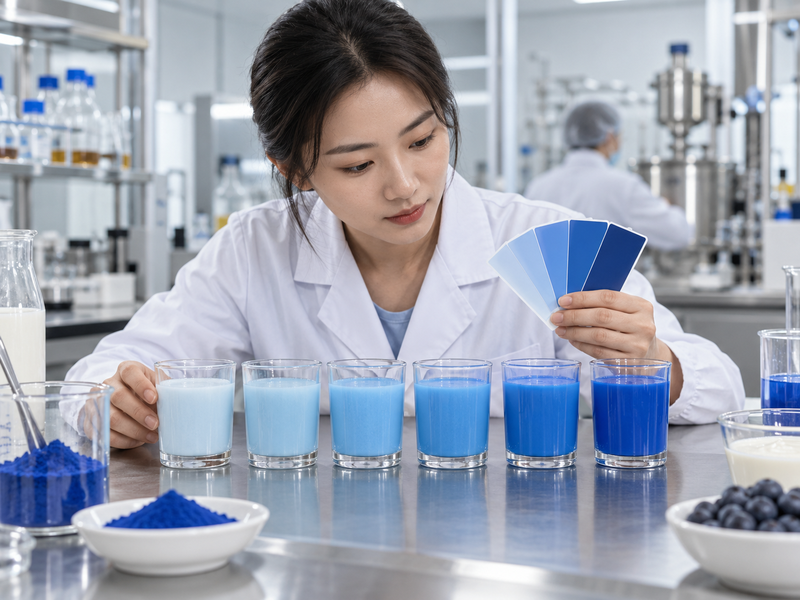
Many protein powders begin beige, yellow or slightly brown. Blue added to that base may look muted or greenish even when the pigment grade is strong. Fat and suspended protein also scatter light, making an opaque shake look softer than a clear liquid at the same dose. Measure or photograph the uncolored base and prepared colored shake under the same lighting, vessel and fill level. The target should be a physical product reference or a defined color method, not a supplier’s bright blue powder photo.
Create a small dose ladder and inspect it after mixing and after a normal standing period. More pigment may deepen the blue but cannot always overcome a dark base without affecting cost or flavor. If the formula contains fruit or cocoa, the desired shade may be unattainable with the current base; record that result rather than calling the ingredient weak. Use an instrumental method where available, but keep a controlled visual check because customers see a foamy, opaque drink, not an analytical cuvette.
4. How should flavor be tested at the color dose?
Taste the matched-shade sample
The dose that gives the target color is the dose that belongs in sensory review. A barely blue sample might taste neutral while the commercially useful blue level brings an off note or changes sweetness balance. Prepare coded samples from the same protein base and use a defined tasting plan with food-safe materials. Ask panelists to describe aroma, bitterness, aftertaste and mouthfeel rather than choose “good” or “bad” without context.
Separate the contribution of the base protein from the blue ingredient with an uncolored control. If a flavor correction is proposed, create a new formula version and repeat the color and physical tests; added flavor can change pH, base color or powder flow. Do not claim that a commercial phycocyanin grade is tasteless without testing the final product at its intended dose. Procurement should include any necessary flavor change in the cost comparison. The selected blue grade must work as part of the complete shake, not only in a sensory-neutral water sample.
| Sensory sample | Purpose | Record |
|---|---|---|
| Uncolored base | Establish baseline | Native flavor notes |
| Low blue dose | Find onset | Color and taste |
| Matched shade dose | Commercial decision | Full panel notes |
| Stored product | Check change | Flavor and color together |
5. How do you keep the dry blend uniform?
Check the low-dose ingredient through filling
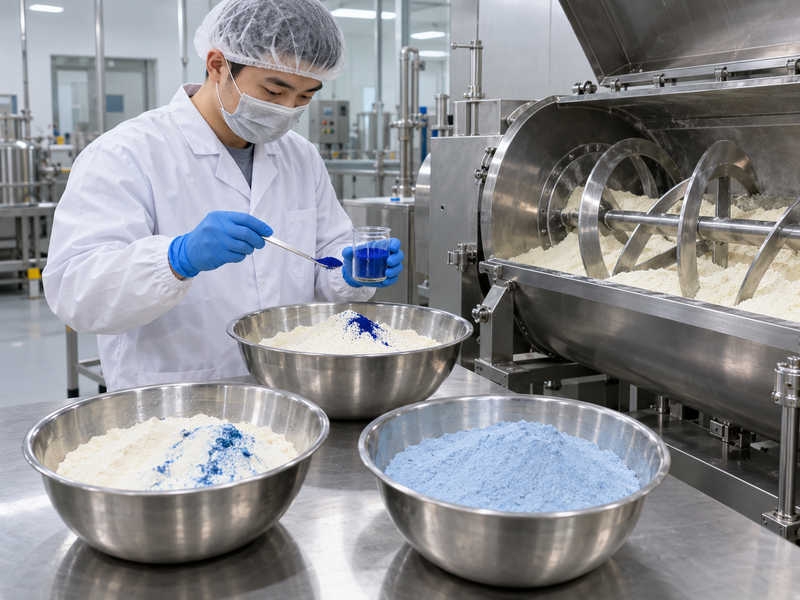
Phycocyanin powder may enter at a small percentage of a protein blend. A measured premix can help distribute it, but the plant must verify uniformity after full blending, transfer and filling. Record the exact carrier, particle behavior, mixing sequence, batch size and line settings. Pull independent units from the beginning, middle and end of the fill. Prepare each at the labeled serving so a color difference reveals a problem the customer would see.
Do not rely on a pooled powder sample or the mixer operator’s visual impression. Blue streaks can be visible in a dry blend while a numerical average appears acceptable. If units vary, investigate premix, ingredient addition, hopper segregation and fill-weight variation before raising the nominal pigment dose. Keep the protein base and flavor fixed during grade comparisons. Treat it as a new SKU with a new trial, not a drop-in substitution.
6. What should a prepared-shake test include?
Use real preparation instructions
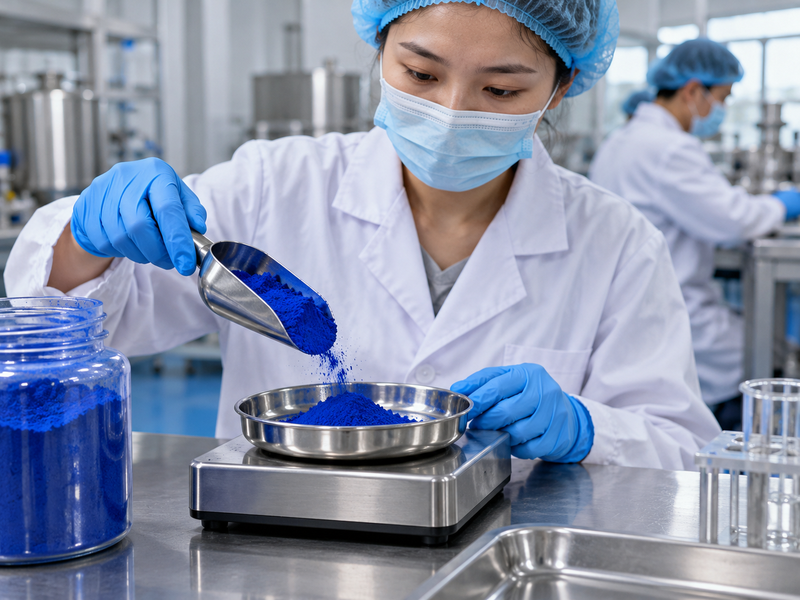
Test the powder with the labeled liquid amount and a normal shaker or blender. If the pack says either water or milk, test both and name which appearance is shown in marketing. Record liquid temperature, mixing time, vessel, resting interval and powder mass. Inspect color, clumps, foam, viscosity, sediment and flavor.
Keep the prepared-serving method fixed across supplier lots. Compare immediately after mixing and after the expected consumption interval. Some separation is common in protein drinks, but the brand must set its own acceptable result and instruction for re-shaking. If the blue settles separately from the protein, record that distinction. A review of phycocyanin physical stability discusses aggregation under some conditions, but the finished shake test decides whether the actual formula meets its target. Do not borrow a universal hold time from a water demonstration.
| Prepared-shake field | Fix or measure | Why |
|---|---|---|
| Liquid | Type and volume | Changes opacity and pH |
| Mixing | Tool and duration | Changes clumps and foam |
| Time | Inspection checkpoints | Shows settling |
| Color | Reference or instrument | Confirms target |
| Texture | Panel or method | Consumer use |
7. How do foam, clumps and sediment change approval?
Keep physical defects out of the color average
A shake can have an acceptable mean blue color and still fail because blue specks cling to the bottle or a sediment line appears before drinking. Describe where and when the defect occurs. Compare the uncolored base so native protein foam is not blamed on the pigment. Use a defined gentle inversion test to see whether separated material resuspends. Do not shake a failing sample until it looks good and record only the final photograph.
If clumps appear, test addition order and powder wetting under consumer conditions. If blue sediment appears later, measure the prepared pH and review ingredients that could interact with the protein pigment. A change in sweetener, mineral or hydrocolloid can alter mouthfeel and label, so formula corrections need R&D and quality review. Keep a physical defect limit alongside the color target. The supplier and buyer can then discuss a specific failure rather than an imprecise “poor solubility” complaint.

8. What happens during pack storage?
Test the finished protein blend
Protein powder, sweeteners, flavors and blue pigment share the same pack. Moisture uptake can cause caking or uneven servings, while light and temperature may affect the color ingredient. Pack the finished blend in the proposed tub or sachet, then store sealed units under the company’s distribution plan. Include a documented opened-tub scenario if customers will scoop from it repeatedly. At each checkpoint, inspect dry flow and prepare a labeled serving for color, flavor and physical review.
Do not infer the powder’s shelf life from a supplier’s pigment pouch. The complete formula and package decide the result. Keep a sealed reference unit and record actual storage conditions. If the dry powder still looks blue but the prepared shake turns gray or sediments, the prepared product reveals the commercial problem. Review pack barrier or formula changes through normal change control. A new desiccant or pack material may solve caking but requires its own practical and label review.
| Pack check | Dry blend result | Prepared shake result |
|---|---|---|
| Early storage | Flow and color | Shade and foam |
| Midpoint | Caking or segregation | Flavor and clumps |
| End of target life | Unit condition | Final acceptability |
| Opened use | Scoop uniformity | Serving variation |
9. How should a pilot compare lots and formulas?
Change one planned factor at a time
Run the chosen blue grade in a representative pilot batch, then check another commercial lot when possible. Compare ingredient specifications and COAs, fill-unit shade and prepared-shake behavior. Keep the protein formula, serving size, mixing instruction and pack fixed during a lot comparison. If a flavor or protein source changes, assign a new formula version; do not combine its results with the first trial and call them one stability series.
Sample from the blend, the fill run and stored packs. Retain blue ingredient, finished powder and prepared-shake photographs under coded IDs. If a second lot misses the target, review fill weight, base protein color, mixing, pH and storage before concluding that the colorant changed. Quality should set a written release or investigation rule. Procurement can then buy a specific SKU with evidence that its lot-to-lot behavior is acceptable in this protein base, rather than a grade chosen from a color chart.

10. What belongs in the supplier and product specs?
Link the lot COA to the shake target
The ingredient specification should list exact supplier SKU, declared carrier, color-value method, physical limits, pack and lot COA requirements. The finished-product specification should name formula version, blend sequence, fill sampling, serving directions, shade reference and physical defect limits. Add an escalation path for lots that meet ingredient color value but make an unacceptable shake. A generic E-grade description does not establish protein-base compatibility.
Regulatory staff should confirm intended-market color use and finished labeling. In the United States, 21 CFR 73.530 must be checked for the actual product category; a protein nutrition claim is a separate review. Ask the supplier to notify the buyer of carrier or process changes before shipping a substitute grade. Once the pilot and shelf test pass, archive an approved ingredient retain and finished powder pack so future lots can be compared against the product that was actually selected.
Frequently asked questions
Q1. Can a blue water test approve a protein powder? No. Protein base, flavor and consumer mixing change appearance and texture.
Q2. Is a stronger E grade automatically cheaper per shake? Compare actual color-matched dose and landed cost.
Q3. Should foam be treated as pigment failure? Compare the uncolored protein base first, then investigate any additional effect.
Q4. Can one blue grade serve every flavor? Test each materially different base or flavor version.
Q5. What should procurement order? The exact commercial SKU and carrier that passed the prepared-shake and dry-blend trial.
Request a protein-blend trial lot
Share the protein base, formula pH after preparation, serving directions, blend process and target shade with Spirulina CN. Request a named commercial grade, current specification, full carrier declaration and lot COA. Approve it from filled-unit and prepared-shake results, not from the dry powder color alone.