
What is chlorella for a bulk ingredient buyer? Chlorella is a genus of single-celled green microalgae sold as dried biomass and processed ingredients. A buying team may see several green powders carrying the same simple name even though species, processing and finished form differ. As a result, that ambiguity can break a formula or confuse incoming release.
Here you can turn a broad category into a grade definition, a trial and a set of supplier records. Published comparisons of microalgal species show why the organism and cultivation conditions must be named. The cultivation-mode study shows that named species and growth conditions affect composition. Use it to frame supplier questions, then qualify the actual grade and lot.
Contents: 1 · 2 · 3 · 4 · 5 · 6 · 7 · 8 · 9 · 10
1. What does chlorella mean on a commercial offer?
Define the material
A buyer asking “what is chlorella?” first needs the genus definition, but a commercial offer must also identify the species, strain, manufacturing route and finished grade. For example, a seller may offer whole dried cells, disrupted biomass, a blend, powder or tablets. Those items can behave differently in a formula despite sharing one familiar label. Ask for the Latin binomial, a strain or culture reference when available and a description of every processing step.
For a receiving team, “chlorella” alone cannot distinguish an intact-cell powder from a disrupted powder or a tablet premix. Have the seller identify what mass the price covers and whether any carrier, binder or standardizing ingredient is present. Compare the same details with the sample pouch and bulk-bag label. A discrepancy discovered before an order is a clarification; discovered after receipt, it becomes a quarantine and scheduling problem.
Start with the offer: Ask the supplier to name the Latin species, grade code, form and processing status on one signed offer. Reject a sample whose label cannot be matched to that offer.

| Buyer check | Evidence to request | Decision it supports |
|---|---|---|
| Identity | Latin binomial and grade code | Create one approved raw-material record |
| Processing status | Intact or disrupted cell declaration | Select matching application trial |
| Sold form | Powder, tablet or extract description | Compare like commercial objects |
2. Which species are buyers likely to encounter?
Name the organism
C. vulgaris and C. sorokiniana both appear in research and commercial discussions, yet they are distinct organisms. Composition and behavior also change with strain and growth conditions. A study comparing cultivation modes in both species observed shifts in protein and pigments, which argues against transferring a published value into a purchase specification. For example, research papers often report one identified strain under one culture regime.
Commercial C. vulgaris and C. sorokiniana may therefore differ both because of species and because of how each is grown. Use a publication to design questions about identity and composition, then examine actual supplier lots. If the offer says only Chlorella spp., ask whether a fixed species or a mix is sold and how that choice is controlled through the production year.
Here is the evidence check: Request the production culture identifier or a documented species-verification method. Put the approved species on the raw-material master record before comparing nutrient figures.
The cultivation comparison measured named species under stated growth modes. Ask suppliers for the same identity and process context when they quote protein or pigment values.
3. How does chlorella differ from Spirulina?
Avoid an algae substitution
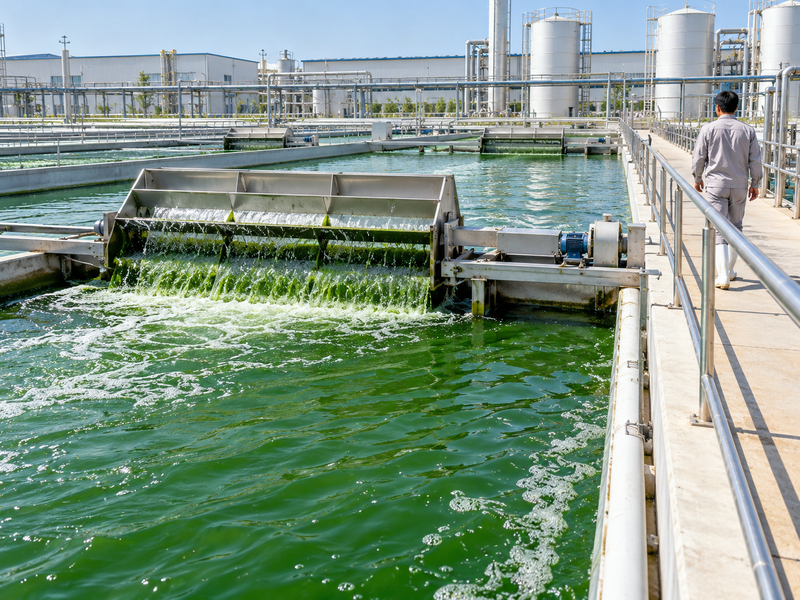
Chlorella belongs to green algae. Material sold as Spirulina generally refers to Arthrospira, a cyanobacterium. Their taxonomic identity, cell structure, pigment profile and customary processing are different. For that reason, a label, formula or purchasing document naming one cannot silently accept the other. Even so, a similar green powder color does not establish equivalence. For example, suppose a smoothie formula was approved with C. vulgaris and a buyer is offered a cheaper Arthrospira powder.
The replacement may alter shade, taste, declared identity and process behavior even if its own COA passes. Instead, create separate stock codes and reference standards. If marketing proposes a substitution because the shades appear similar, run the new ingredient through formulation, label and safety review instead of treating it as a mere supplier change.
Make the comparison fair: Tell the vendor whether the RFQ calls for Chlorella biomass or an Arthrospira ingredient. Ask for a corrected offer if the species line uses the two names interchangeably.
| Buyer check | Evidence to request | Decision it supports |
|---|---|---|
| Organism | Chlorella species versus Arthrospira species | Prevent formula substitution |
| Biology | Green alga versus cyanobacterium | Review pigment and cell-structure assumptions |
| Approval file | Separate identity standard and lot COA | Keep independent release routes |
An original comparison of commercial Chlorella and Spirulina biomass observed variability across products and identified Arthrospira separately from Chlorella.
4. What processing changes the biomass?
Trace the operations
Harvesting, washing, dewatering, disruption, drying, milling and packing can change particle size, sensory character, moisture, microbial exposure and release of intracellular material. The word natural says little about these operations. For that reason, a buyer should request a process flow at the level needed for hazard review and product development without demanding proprietary settings.
A supplier flow diagram should show where cells leave culture, where water is removed, whether cells are disrupted and when the powder enters its final pack. For example, a wet hold can affect hygiene while a dry mill can change particle behavior. However, the diagram needs only enough detail to explain which steps determine the promised grade; exact process settings can remain private. Compare the flow diagram with any claim printed on the COA.
Follow the process trail: Ask for a dated process summary showing harvest, disruption, drying, milling and packing. Flag any unannounced change to those steps for sample requalification.
5. Which commercial forms serve different uses?
Match form with application
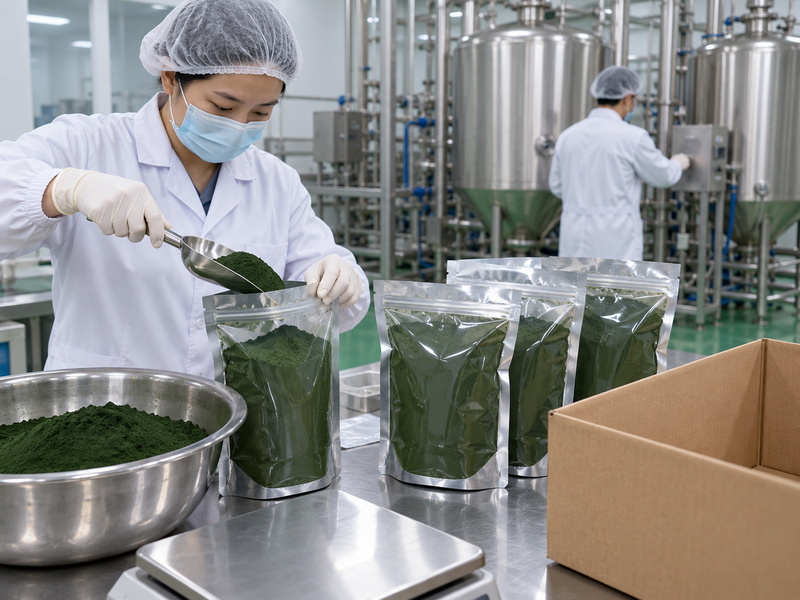
Loose powder gives a formulator dosage and blending freedom. In contrast, tablets provide a countable consumer format but add compression behavior, possible excipients and finished-unit testing. Capsules require flow and fill-volume checks. In contrast, extracts are a separate ingredient class with different composition from whole biomass. Choose a form from the finished-product design rather than a catalog photograph. The intended channel determines what “easy to use” means.
For example, a beverage team may value dispersion and a controlled color; a tablet brand may value unit weight and breakage resistance. For capsules, powder bulk density can determine whether the planned dose fits the shell. Make one small pilot for each intended format and track the ingredient mass that survives conversion. Even then, a form that looks cheaper per kilogram may need more processing or create more scrap.
Try this in a pilot: Trial the offered powder, tablet or capsule grade in the real product format. Record dose, conversion loss and the full ingredient list before approval.
| Buyer check | Evidence to request | Decision it supports |
|---|---|---|
| Powder | Particle, moisture and pack data | Plan blending and dispensing |
| Tablets | Biomass per unit and excipients | Calculate serving and label content |
| Capsules | Bulk density and fill weight | Check shell capacity |
6. What belongs on a useful specification?
Turn claims into limits
Identity, species, declared processing, moisture or water activity, protein method and basis, pigment method where relevant, microbiology, elemental contaminants, particle size and pack details all may matter. The exact limits depend on product and destination market. However, a generic brochure does not substitute for a signed buyer specification. Start a specification with the fields that distinguish this particular grade: species, form, processing, composition, physical performance and safety attributes.
Put methods and units beside numerical limits. If the product is meant for two markets, maintain a market column so a passing lot in one destination is not silently released into another. A buyer specification should also name who may authorize deviations, because a salesperson’s assurance cannot amend a quality limit.
Put it in writing: Send a controlled draft specification with required methods and acceptance ranges. Ask the supplier to mark every exception before quoting production volume.
7. How should a COA be read?
Review the lot
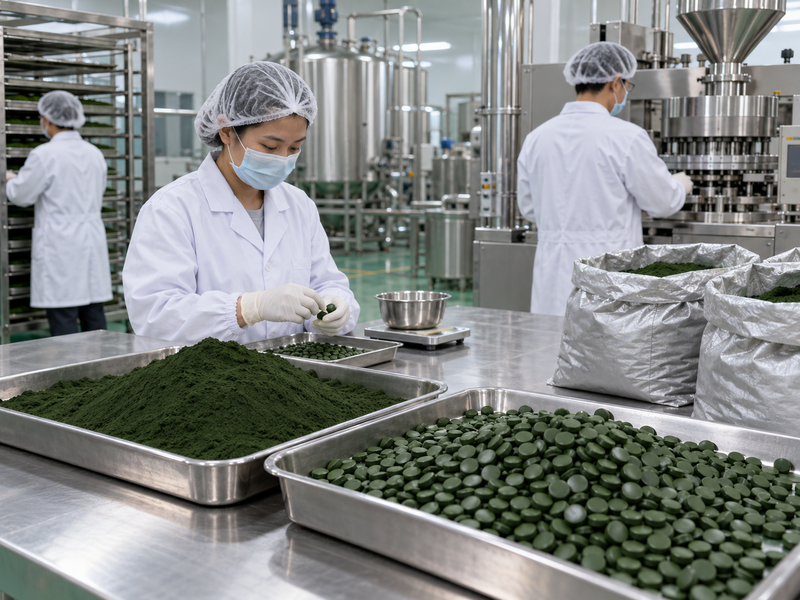
A certificate should identify the lot, sample date, methods, numerical results and acceptance limits. A printed pass statement without an actual value conceals useful variation. Ask who sampled and tested the batch and whether an independent laboratory generated any result. However, a COA gives evidence about its sampled lot, not proof that future deliveries match. Read a COA as a set of lot-level observations.
Compare the supplier’s lot number with every pack, then check whether each required test shows an actual result and a method. If testing occurred before a later processing step, ask how that later step is controlled. Even so, a certificate from another grade or an old sample may be informative but cannot release the shipment at hand. Retain the version reviewed with the receiving decision.
At receiving, check this: Place the shipment on hold until label, lot, method and result match the signed specification. Record any missing test as an open deviation.
| Buyer check | Evidence to request | Decision it supports |
|---|---|---|
| Lot identity | Pack labels match certificate code | Confirm sampled shipment |
| Quantitative tests | Actual values with methods and units | Check signed limits |
| Issue date | Testing after relevant final processing | Decide whether a new test is needed |
For US supplement manufacture, FDA’s CGMP guide describes identity and supplier-COA duties. Ask quality whether the incoming Chlorella lot file satisfies the applicable rule.
8. What safety checks matter most?
Tie hazards to use
Chlorella cultivated in water needs a hazard review covering the cultivation inputs, drying and handling environment. Depending on intended use, buyers may need elemental, microbiological and other tests. However, heavy-metal uptake shown in experimental algae does not establish the content of a commercial lot. Use accredited or otherwise qualified analytical methods suited to the matrix. Build the hazard review around source water, nutrient inputs, wet handling, dryer performance and post-dry packing.
Also, elemental and microbiological analyses answer different questions, so one clean panel cannot replace the other. The planned serving size and destination market shape which limits are appropriate. Ask the supplier to explain where each hazard is controlled and which evidence belongs to the exact production lot, rather than relying on a general factory certificate.
Watch the risk pathway: Require a market-specific test panel and recent lot data for the offered grade. Ask quality to approve sampling and release rules before shipment.
9. How should samples be compared?
Run an application trial
Approve samples against a consistent test protocol: appearance, odor, dispersion, target dose, particle behavior and finished-product stability. Compare at least two lot samples when supply consistency matters. Record the sample identifiers so commercial material can be checked against the same approved grade. However, a successful laboratory spoon test may not predict a production mixer. Use a written sensory and performance protocol instead of comparing scoops from two open jars.
Give each sample a code, prepare it at the same dose and record color, odor, dispersion and sediment after a defined wait. Where a production mixer matters, test at pilot scale. Keep one approved reference sample under appropriate conditions so the next shipment can be checked against a real baseline, not a memory of how green it looked.
Count usable output: Request two identified production lots and run both through the same application trial. Approve the grade only if variability fits the finished product.

| Buyer check | Evidence to request | Decision it supports |
|---|---|---|
| Sample preparation | Same dose, liquid and mixing time | Make color and dispersion comparable |
| Pilot handling | Dust, flow and line recovery | Estimate conversion loss |
| Reference sample | Sealed approved lot with storage record | Check later deliveries |
10. What is the next practical buying step?
Convert learning into an RFQ
Send suppliers one brief naming species or approved alternatives, format, intended market, analytical requirements, packaging, annual demand and target delivery schedule. Request a matching sample, specification, recent lot COA and process overview. Compare missing information as carefully as price. Reserve final acceptance for documented qualification and lot release. An RFQ should make the buyer’s decision reproducible.
List intended product, annual forecast, opening order, packaging, target market and the tests needed at release. Then ask every shortlisted supplier for the same document set and leave a visible blank where evidence is missing. Then score technical fit and supply conditions separately from price. This prevents a low quote from winning merely because its offer omits costly tests or uses a different product form.
The decision point: Send one RFQ template to all candidates. Choose a trial order only after species, sample, specification and COA agree.
FAQ
Is chlorella the same as Spirulina?
No. Chlorella is a green-algal genus while commercial Spirulina usually means Arthrospira. Keep separate identity and approval records.
Does green color prove a sample is chlorella?
No. Color varies with pigments and processing and cannot identify a species. Request a named organism and suitable identity evidence.
Is broken-cell-wall powder always required?
No. Select intact or disrupted biomass according to the application trial and defined process attribute.
Can one COA qualify a supplier permanently?
No. A COA describes its sampled lot. Supplier qualification also needs process, trend and change-control evidence.
What should a buyer request before a trial order?
Ask for species, grade, process summary, specification, recent lot COA and a matching sample for the intended formula.
Practical next step
Turn a generic algae inquiry into a defined Chlorella purchase. Send one RFQ that names species, biomass form, processing status, destination market and the tests needed at lot release. Compare coded samples in your real application, then match the winning sample with a specification and recent COA. For the detailed document itself, use the chlorella powder specification guide. A precise identity and a usable lot record give product and purchasing teams a stable starting point.