
Blue spirulina is a phycocyanin-rich extract from spirulina, and its health benefits remain less certain than its vivid color. If you are asking what is blue spirulina while approving a bright-blue drink, the problem is familiar: a supplier's color sample looks convincing, but the wellness claims and ingredient details are harder to judge. This guide separates the extract from whole spirulina, weighs the research, and gives you a practical way to assess a food-grade powder.
1. What is blue spirulina, exactly?
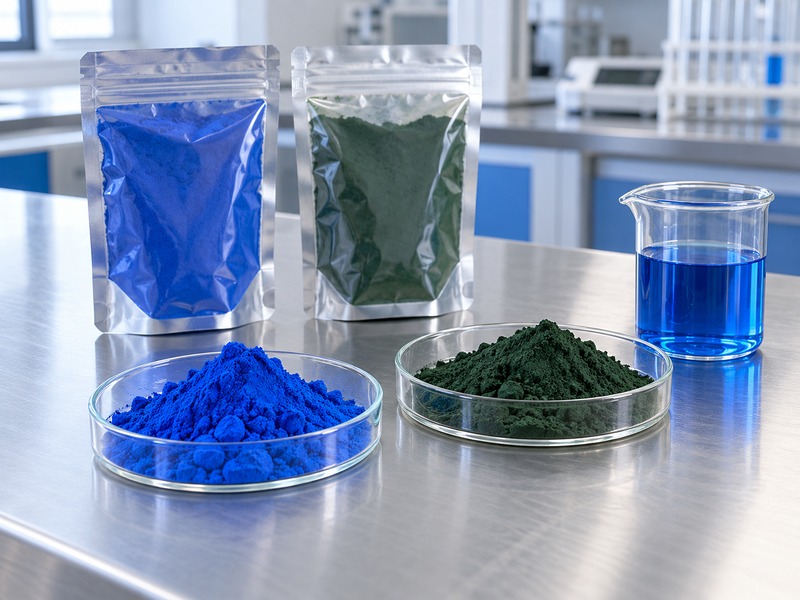
Blue spirulina is usually a water-soluble extract rich in the blue protein pigment phycocyanin, made from cultivated spirulina. A useful answer to what is blue spirulina starts with that distinction: it is not automatically the whole green algae dried into powder. Check the ingredient statement because commercial extracts may also contain carriers or other processing ingredients.
What is blue spirulina made from?
Check the specification before the color swatch: a deep blue sample alone cannot tell you its phycocyanin content or what else is in the powder. Ask for the source organism, the extraction method, the carrier declaration, and a lot-specific certificate of analysis.
- “Blue spirulina” is a market name, not a complete ingredient specification.
- “Phycocyanin” names the blue pigment-protein complex.
- “Spirulina extract” can describe a food color whose principal color components are phycocyanins.
Why does that distinction matter?
The U.S. food color regulation defines spirulina extract by its aqueous extraction from dried Arthrospira platensis. That definition helps buyers distinguish an extract from whole biomass, but the exact permitted use still depends on the market and finished product.
| Term | What to verify |
|---|---|
| Blue spirulina | Extract identity, carrier, and color value |
| Green spirulina | Whole-biomass composition and nutrition profile |
Key Takeaway: The label name begins the conversation; the specification resolves it. If you need blue color, request an extract specification rather than assuming any spirulina powder will work.
2. Can blue spirulina protect your heart?
Blue spirulina has not been shown to prevent heart disease in humans. Search results for “what is blue spirulina” often carry that promise further than the research allows: studies of isolated phycocyanin have mostly used cells or animals. Those experiments can suggest mechanisms, but they cannot establish a clinical benefit from a food or supplement.
What has research measured so far?
The human question remains open: a hamster study reported changes in blood lipids after phycocyanin exposure, while other preclinical work examined oxidative stress and inflammation. Neither result tells you how a typical blue drink affects a person's heart.
- Preclinical outcomes include lipid markers and tissue damage markers.
- Human outcomes would need controlled trials with defined extract doses.
- A finished food may contain far less phycocyanin than a research dose.
What can a brand say responsibly?
Treat cardiovascular language as a claim requiring product-specific evidence and local regulatory review. A formulation brief can discuss color, flavor, and ingredient identity without implying that a serving lowers cholesterol or prevents heart attacks.
| Claim type | Evidence position |
|---|---|
| Natural blue color | A practical product function |
| Heart protection | Not established in humans for blue spirulina |
Key Takeaway: A color claim and a health claim face different evidence tests. Build the product around a verifiable ingredient function, not an unproven heart-health promise.
3. Could blue spirulina support brain health?

Blue spirulina may affect oxidative-stress pathways in laboratory research, but no good human evidence shows that it protects memory or prevents neurological disease. If your research starts with what is blue spirulina, separate studies of purified phycocyanin from studies of whole spirulina. They are different materials, and results from one cannot be assigned to the other.
Where does the brain-health idea come from?
Follow the study material: animal models have reported changes in inflammation or cognitive markers after phycocyanin treatment. Such models help researchers frame a hypothesis, though they do not reproduce the dose, digestion, or long-term outcomes of a human diet.
- Check whether researchers used extract, whole biomass, or an isolated compound.
- Check whether the outcome was a biomarker or a real-world cognitive test.
- Check the dose before comparing a study with a finished drink.
How should you read a brain claim?
Ask for a human trial on the same ingredient and dose. If that evidence is absent, do not translate an antioxidant assay into a claim about dementia, memory, or focus.
| Evidence | What it can tell you |
|---|---|
| Cell or animal findings | A mechanism worth testing |
| Controlled human trial | Whether a defined product changes a human outcome |
Key Takeaway: Mechanism studies are a starting point for trials, not the result of one. Use brain-health claims only when direct human evidence supports your exact ingredient and serving.
4. Can blue spirulina help keep blood sugar steady?
Blue spirulina has not been proven to control blood sugar in people. The phrase “what is blue spirulina” matters here because an extract and whole spirulina should not be treated as interchangeable in clinical claims. Some laboratory and animal findings concern phycocyanin, while human trials often examine the whole algae.
What do the studies actually compare?
Read the ingredient line in the methods: small human trials of whole spirulina have assessed short-term glucose responses, but they do not establish the effect of a blue extract. For a sweetened blue beverage, the full recipe also affects glucose response.
- Identify the tested ingredient and dose.
- Note whether participants had diabetes or were healthy volunteers.
- Compare the product's added sugar with the proposed wellness message.
What does this mean for formulation?
If you sell a drink, assess its total carbohydrate and serving size before discussing metabolic positioning. Avoid suggesting that the pigment offsets sugar in the same bottle.
| Question | Practical check |
|---|---|
| Is the ingredient studied? | Match extract type and dose |
| Is the finished drink suitable? | Review full nutrition panel |
Key Takeaway: The finished formula matters more to a buyer than an isolated lab result. Do not promise blood-sugar control from blue spirulina; test and describe the whole product honestly.
5. Does blue spirulina support immune health?
Blue spirulina shows immune-related activity in early research, but it has not been shown to prevent infections in people. A search for what is blue spirulina may mix antioxidant language with broad immune claims. Those claims require a much higher standard than a cell experiment or a general description of phycocyanin.
Which findings are still preliminary?
Look at the endpoint: reviews describe changes in inflammatory pathways and immune markers, yet controlled human studies of the blue extract remain limited. Even a measurable marker change would not by itself prove fewer colds or better disease outcomes.
- Cell work can show how a compound behaves under controlled conditions.
- Animal work can reveal possible biological effects.
- Human trials must test the claim people will actually read on a label.
How should a buyer handle immune wording?
Request the exact study behind each proposed sentence. If it tests whole spirulina, a different extract, or an unrelated dose, leave the claim out of the copy.
| Marketing phrase | Evidence question |
|---|---|
| “Contains phycocyanin” | Can your lot data verify it? |
| “Prevents illness” | Is there direct human outcome evidence? |
Key Takeaway: The stronger the promise, the closer the evidence must match the product. Describe verified composition without turning preliminary immune research into a disease promise.
6. Can blue spirulina improve exercise recovery?
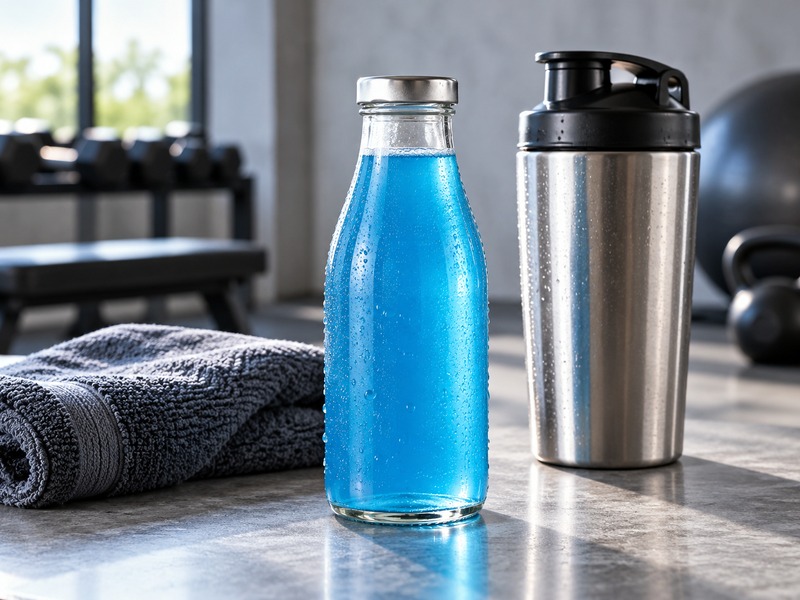
Blue spirulina has not been shown to improve exercise recovery in athletes. In the context of “what is blue spirulina,” the relevant ingredient is phycocyanin-rich extract, and an often-cited 2024 experiment tested that compound in rats. Its results are interesting, but a rat study cannot set a serving size or performance claim for a human product.
What would an athlete study need to show?
The missing step is straightforward: researchers would need controlled human trials using a clearly defined extract and a meaningful recovery measure. A lab change in oxidative-stress markers does not necessarily mean less soreness or faster training adaptation.
- Record the actual phycocyanin amount per serving.
- Define the outcome, such as recovery time or measured performance.
- Compare results with a suitable control group.
Where can the ingredient still fit?
A blue powder may suit a cold hydration drink or smoothie when its sensory profile and color remain stable. If you're developing a sports product, sell the tested beverage experience while clinical evidence catches up.
| Product aim | Current footing |
|---|---|
| Visual identity | Testable in your formula |
| Faster recovery | Unproven for people |
Key Takeaway: Your pilot can verify appearance today; physiology needs a different study. Treat recovery claims as unproven and use pilot tests to assess the ingredient's real product role.
7. Can blue spirulina help with weight management?
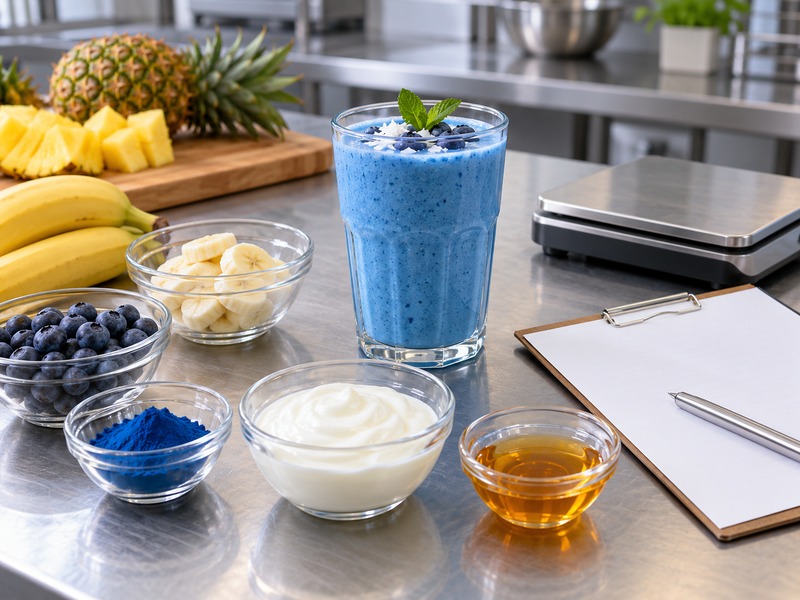
Blue spirulina has not been proven to cause weight loss. For readers asking what is blue spirulina in a weight-management product, it is a blue extract, not a substitute for the diet and activity changes tested in human studies. Preclinical work on fat metabolism gives researchers questions to study, not a basis for a slimming promise.
Why does the whole recipe matter?
Consider the finished serving: a blue smoothie can contain substantial calories from juice, syrup, or sweetened bases. Its appearance says nothing about energy balance or how filling the product will be.
- Measure calories and added sugar in the served recipe.
- Set a realistic serving size and keep it consistent.
- Avoid implying that blue color signals a weight-loss effect.
What is a better product brief?
Write a brief around taste, texture, color, and transparent nutrition. If a weight-related claim is central to the launch, commission evidence on the finished formula and review the law in each sales market.
| Brief element | Test before launch |
|---|---|
| Blue appearance | Color at intended dose and shelf life |
| Nutrition position | Calories, sugar, and serving size |
Key Takeaway: Visual differentiation is measurable; weight-loss efficacy has not been shown. Let the nutrition panel carry the weight-management discussion, not the pigment alone.
8. How does blue spirulina differ from green spirulina?
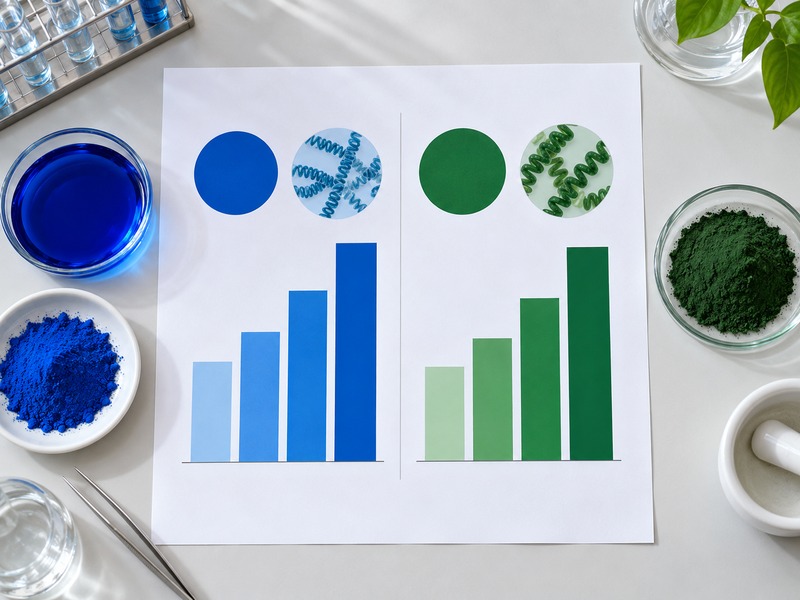
Blue spirulina is mainly chosen for its phycocyanin-rich blue extract, while green spirulina is dried whole biomass with a broader nutrient profile and stronger algae taste. The question “what is blue spirulina” becomes useful when you compare a natural-color brief with a nutrition-powder brief. A matching shade does not mean the ingredients supply the same protein, minerals, or sensory effect.
Which ingredient fits your application?
Start with the job the ingredient must do: the site's whole spirulina range targets nutrition powders, tablets, and foods where the green biomass belongs. A blue extract is a better starting point when a clean blue appearance and cold-water dispersibility drive the specification.
- Choose blue extract for a blue hue with a lighter algae profile.
- Choose whole spirulina when the whole-biomass nutrition profile matters.
- Test either ingredient in the actual recipe before ordering at scale.
What should you compare on a spec sheet?
Request composition, carrier, particle behavior, color value, sensory notes, and lot testing. Those details explain why two powders bearing the spirulina name can behave differently on a production line.
| Feature | Blue extract | Green whole biomass |
|---|---|---|
| Main role | Blue color | Whole-algae ingredient |
| Formulation check | pH and heat stability | Flavor, texture, and dispersibility |
Key Takeaway: The application decides which specification is useful. Match the ingredient to the finished product's job before comparing prices.
9. What is the best way to use blue spirulina in food?
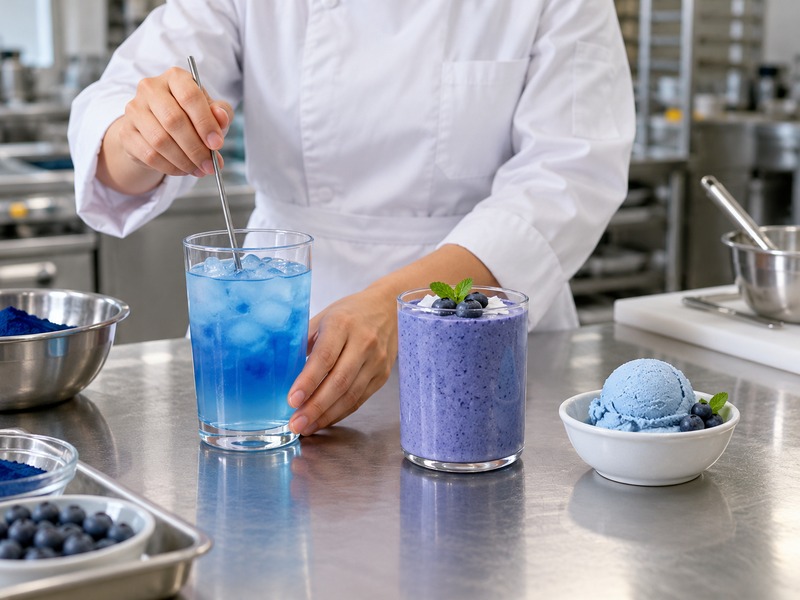
The best use for blue spirulina is a formula that preserves its color through processing and storage. If your team asks what is blue spirulina during product development, start with a cold beverage, smoothie, or frozen dessert pilot, then test your own pH, heat, light, and packaging conditions. There is no single dose that works across every grade and recipe.
Which applications are practical starting points?
Run the small batch before the purchase order: a bench sample can reveal haze, fading, settling, or flavor changes that a dry powder photo cannot. The site's OEM and formulation service describes sample coordination and specification matching for food and beverage projects.
- Try cold drinks and smoothies for an immediate visual read.
- Test frozen desserts for hue after freezing and storage.
- Check heated or acidic recipes separately because color stability may change.
What should a pilot record?
Measure the ingredient dose, initial color, color after processing, appearance at the intended shelf-life points, and cost per serving. Photograph each sample under consistent light so your team compares batches fairly.
| Pilot stage | Record |
|---|---|
| Bench mix | Dose, pH, taste, and hue |
| Storage check | Fading, sediment, and package effect |
Key Takeaway: One controlled pilot reveals more than a catalog photograph. Choose the grade only after it survives your real formulation and storage test.
10. How do you choose a safe blue spirulina powder?
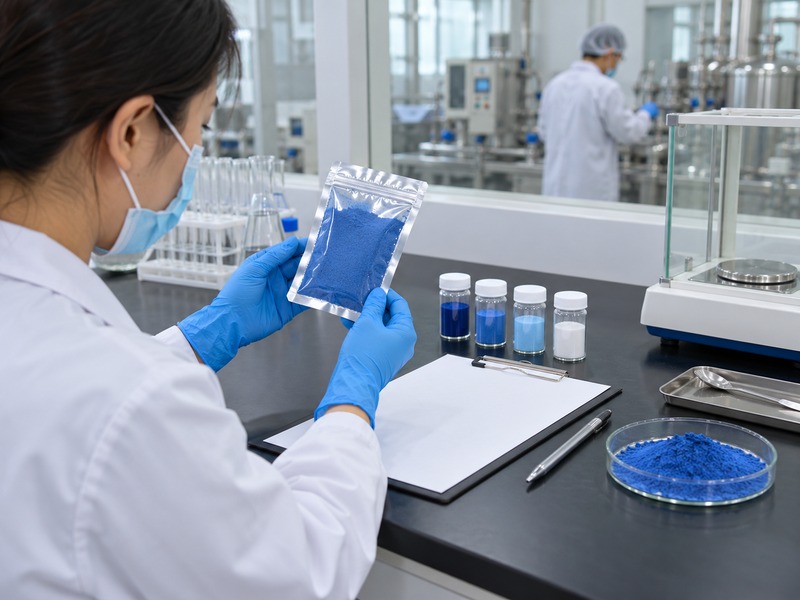
Choose a blue spirulina powder with clear identity, traceable lots, relevant contaminant testing, and documentation for its intended market. Search queries such as “what is blue spirulina” rarely show these checks, yet they matter more to a buyer than color intensity alone. The FDA notes that some blue-green algae products can carry microcystin contamination and that testing helps control the risk.
What should be in a supplier file?
Before approving a lot: obtain the product specification, full ingredient list, lot-specific certificate of analysis, test methods, and any required market documents. The site's factory overview describes batch testing and traceability; confirm the actual documents for the lot you intend to buy.
- Verify identity, phycocyanin or color value, and carrier ingredients.
- Review microbiological, heavy-metal, and relevant toxin results.
- Check lot number, production date, storage guidance, and shelf life.
How do you finish the approval?
Test a retained sample in your recipe and compare it with the certificate and agreed specification. If your product will cross borders, have your regulatory team confirm permitted use, labeling, and claims in each destination.
| Approval gate | Evidence to keep |
|---|---|
| Ingredient identity | Specification and full declaration |
| Batch safety | Lot COA and relevant test methods |
| Application fit | Pilot record and market review |
Key Takeaway: Documentation and a successful trial should travel together. Buy the documented lot that works in your formula, not the bluest sample on a screen.
What to do next
Blue spirulina offers a vivid natural-blue option, while its proposed heart, brain, metabolic, immune, exercise, and weight benefits still need stronger human evidence. You now know how to distinguish the extract from whole spirulina, test it in a real formula, and review a supplier lot. If you need a food-grade sample or batch documents for your next product, contact us today with your target application and processing conditions. Our standard is simple: clear specifications before confident claims.
FAQ
Can I use blue spirulina instead of green spirulina? Yes, if your goal is blue color; no, if you need the nutrition profile of whole green biomass. Compare the ingredients and test both in your formula.
What's the best way to keep its blue color? Start with a small, cold-process trial. Then test your recipe's pH, heat exposure, light, packaging, and storage time because stability depends on the finished product.
How do I know if a health claim is supported? Look for controlled human studies on the same extract at a comparable dose. Cell or animal results alone do not establish a benefit for your customers.
Can I add it to a hot drink? You can test it, but do not assume the shade will survive heat. Run a pilot at your actual temperature and hold time before you make a menu promise.
How do I know if a powder is safe to buy? Ask for a lot-specific certificate of analysis, ingredient declaration, and relevant contaminant tests. Match the documents to the delivered batch and your destination market.