
Powder may blend smoothly while flakes give a visible ingredient cue, yet either can fail when the buyer ignores handling and breakage. Spirulina wholesale powder vs flakes is a practical decision about whole-biomass use, dose control and logistics. This guide helps a purchasing team test both forms against the same finished-product requirement. The FAO review of spirulina production describes processing routes for dried biomass; form alone never guarantees a particular nutritional value or safety result.
Contents: 1 · 2 · 3 · 4 · 5 · 6 · 7 · 8 · 9 · 10
1. What counts as powder or flakes in a quotation?
Define the physical form with a sample
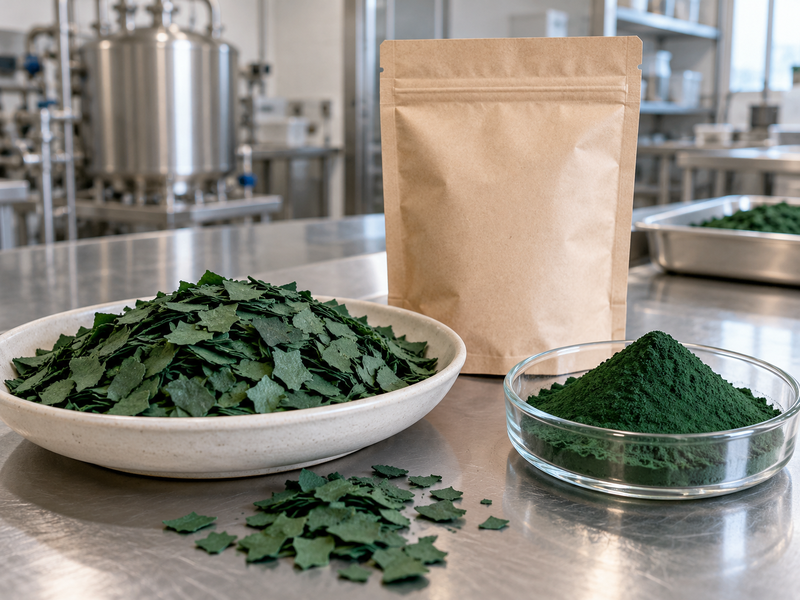
Powder is milled dried biomass with a specified particle profile. Flakes are larger dried fragments or sheets that can vary in shape and thickness. Suppliers may use different words for nearby forms, including granules or chips. Ask for a current specification, sieve or size description where useful, bulk density, photographs and a representative commercial sample. Name whole Arthrospira biomass in the purchase description. A blue phycocyanin extract is a separate ingredient even if both products originate from spirulina.
Avoid a vague grade label: write down acceptable size range, fines allowance and appearance for the intended use. A flake shipment can contain powder formed during transit. A powder may carry coarse agglomerates after moisture exposure. Both need a workable acceptance plan. The pilot should compare received material, not just a display sample. Identity, lot code, composition and contaminant controls still apply regardless of the physical shape.
| Quote field | Powder | Flakes |
|---|---|---|
| Physical description | Particle profile | Size and fines allowance |
| Dose unit | Net mass | Net mass |
| Visible texture | Usually blended | Often visible |
| Transit concern | Clumping or leaks | Fragmentation |
2. How does the finished product guide form choice?
Work backward from how customers encounter it
Powder can suit capsules, sachets, blends, bars and products requiring even dispersion. Flakes may suit toppings or dry mixes where a visible green fragment is desired. That is a design choice, not a nutritional ranking. Ask product development what the consumer should see and feel, how much material each unit contains and whether the ingredient must dissolve, disperse or remain intact. Put those requirements into a trial brief before seeking prices.
A food example: a dry seasoning that needs visual pieces may benefit from flakes, while a uniform tablet blend may require powder. Both need sensory assessment in the final recipe. The same flake can look appealing in a clear pack and break into fines during distribution. A powder may disperse well in one matrix and create dust during filling. Testing the actual product and process prevents a format choice based solely on a supplier photo.
| Product requirement | Likely trial priority | Decision evidence |
|---|---|---|
| Uniform dose | Blend homogeneity | Finished-unit assay |
| Visible pieces | Shape retention | Pack and transit trial |
| Fast filling | Flow behavior | Line speed and stops |
| Clean pack-out | Dust and fines | Yield record |
3. Which form offers tighter dose control?
Measure both by mass and distribution
Both forms can be weighed accurately in bulk, but their behavior in volumetric feeders differs. Powder may pack or bridge, changing how much a scoop or auger delivers. Flakes may settle, align or separate by size. If each finished unit needs a narrow inclusion level, trial the actual feeder at normal speed and measure unit-to-unit variation. A laboratory balance alone will not show line variation. Use gravimetric dosing when your process and economics support it.
Count the complete route: receiving net mass, material issued, loss in the feeder, residue after cleaning and accepted finished units. If flakes are intentionally visible, check their distribution across units rather than merely total batch weight. If powder is used for a label dose, validate mix uniformity with the full recipe. Do not assume a lower quoted price compensates for excessive giveaway. The demand-forecasting guide shows how measured yield changes future purchasing kilograms.
Sampling position matters when pieces vary in size. A top-layer grab may contain more large flakes while smaller fragments settle during vibration. Agree how to mix or draw representative material without creating additional breakage. For powder, assess whether samples taken after a long hopper run still match the starting blend. If dose variation widens over time, a feeder adjustment or different form may be needed. These checks give quality and operations a common basis for saying whether a form can meet the finished-product specification at commercial speed.
4. How do flow, dust and breakage differ?
Observe the actual equipment path
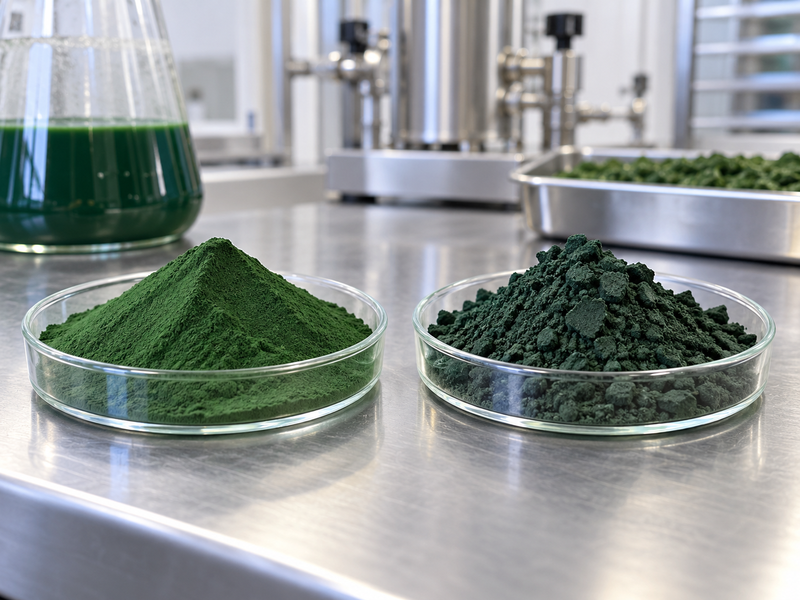
Fine powder can escape during opening and transfer, cling to seals or build up on filters. Flakes may pour with less fine dust at first but fragment under vibration, conveying or mixing. Both forms can change behavior with moisture exposure and pack age. Ask operations to run each commercial sample through the same hopper, conveyor and filling equipment used for saleable production. Record speed, stops, cleaning time, recovered residue and worker observations.
A useful distinction: powder loss appears mainly as dust or retained material; flake loss may appear as fines that change the intended visual quality. Separate safe, conforming fines from rejected material in the trial record. Do not reuse fines unless your procedure and specification allow it. Ask the supplier how size and fines are measured at dispatch, then agree how the buyer will check them at receipt. The powder-flowability guide covers a more detailed handling protocol.
| Process point | Powder check | Flake check |
|---|---|---|
| Pack opening | Airborne dust | Fragile edges |
| Feeding | Bridging or packing | Irregular feed |
| Mixing | Distribution | Fragment retention |
| Cleaning | Residual film | Collected fines |
5. How should buyers compare transport damage?
Test delivered form, not factory form
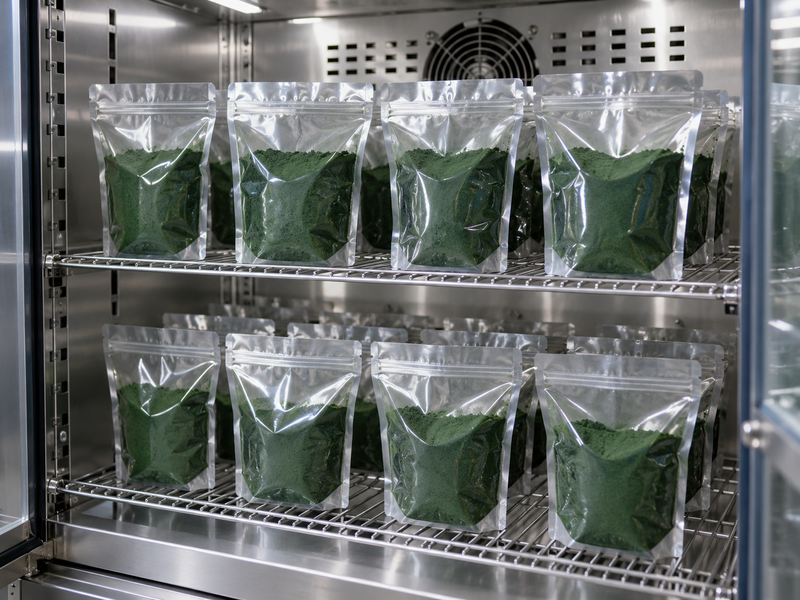
A flake may leave the factory intact and arrive as smaller fragments. Powder can arrive with compacted lumps or compromised liners. Ask for packaging that protects the physical attribute you are buying. For flakes, cushioning, fill level and bag movement may influence breakage. For powder, liner seal and moisture barrier matter. The seller should describe its proposed commercial pack and support any claimed transport performance with route-relevant evidence.
At receipt: photograph packs before opening, weigh contents, sample representative positions and check against agreed appearance and fines criteria. A single top-of-bag scoop may miss settling. Record shipment length and handling events when known. UNECE’s CTU Code offers guidance for packing transport units, but the buyer and seller must qualify the actual package. Put remedy and replacement time in the purchase terms. A very low flake price can vanish when received form no longer meets the finished-product design.
Test a trial shipment in the proposed pallet arrangement rather than a parcel courier box if routine supply will move by pallet. If the flake pack compresses under stacking, ask whether a smaller outer carton or different fill level protects piece size. For powder, check whether high stacking pressure makes caking or bag leakage more likely under the route’s humidity and temperature changes. An altered pack may increase freight volume, so recalculate delivered usable cost after the transport trial. Form and packaging have to be selected together.
6. Do quality and safety checks change with physical form?
Keep core criteria and add form performance
Identity, composition and hazard controls should reflect the same intended use and destination for both whole-biomass forms. Product shape does not remove a need for contaminant or microbiological review. Add format-specific physical criteria: particle or aggregate behavior for powder, piece size and fines for flakes. Moisture and packaging integrity may matter for either. Define methods and sampling before ordering so supplier and buyer can interpret results the same way.
Be precise about testing: the FDA blue-green algae and microcystins page describes a toxin concern and the role of manufacturing controls; its reported AFA cases are not evidence that every cultured Arthrospira lot has the same result. Use a risk-based panel for the actual product. For independent laboratory work, ISO/IEC 17025 establishes competence requirements, but verify the test method and matrix in scope. The shape comparison belongs after baseline quality approval.

| Criterion | Applies to both? | Format addition |
|---|---|---|
| Identity | Yes | Confirm whole biomass |
| Contaminants | Yes | Risk-based panel |
| Moisture/pack | Yes | Form-specific stability |
| Size distribution | Yes | Different acceptance bands |
7. How do pack size and storage affect use?
Check opened-pack practicality
Bulk packs save packing materials but may not match a small production batch. If a 20 kg bag is opened for a 2 kg run, remaining material needs a controlled closure, identification and use-by rule. Powder may pick up moisture or create dust during repeated opening. Flakes may break with each handling cycle. Ask for unopened shelf-life evidence and define your own opened-pack procedure based on trials and risk assessment rather than assuming the label expiry still applies.
Visit the warehouse process: where will packs sit after receipt, and how will they be sampled without exposing all material? A pallet configuration that fits powder bags may compress flake packs. Record the net amount per bag, outer dimensions and stacking instructions in the quote. Compare warehouse labor and waste for each form. The warehouse-humidity guide can help define environmental checks, but the actual shelf-life ceiling requires pack-specific evidence from the supplier.
8. How should cost be normalized?
Compare usable ingredient in saleable product
Invoice price per kilogram is only the starting point. Add freight, packs, testing, storage, line labor, breakage and disposal. Divide by biomass mass incorporated into accepted finished units. For a visual flake product, treat fragments below the accepted size as a loss even if they remain edible; they may no longer deliver the promised appearance. For powder, account for measured dust and equipment residue. Keep all assumed loss rates labeled as trial estimates.
An illustrative comparison: if 100 kg of flakes arrives and 8 kg falls below your agreed visual-size criterion during pack-out, only 92 kg supports that specific product. A powder line that incorporates 96 kg from 100 kg may be more efficient for a blended product, but the two formats may support different selling prices. These numbers are examples, not typical yields. Run your own trial and compare gross margin per saleable finished unit. The landed-cost guide provides the transport side of the model.
Include the cost of holding a reference lot and testing new deliveries when visual consistency drives customer acceptance. A flake product may need more appearance checks than a fully mixed powder product, though powder still needs its own identity and quality controls. If fines can be used in a separate approved product, show that recovery as a distinct, uncertain outlet rather than assuming every rejected fragment has full value. If there is no qualified outlet, treat those fragments as loss. This prevents a spreadsheet from assigning revenue to material that the business cannot actually sell.
| Cost driver | Powder | Flakes |
|---|---|---|
| Invoice | Quote per net kg | Quote per net kg |
| Route loss | Leaks or lumps | Fines and fragments |
| Line loss | Dust and residue | Breakage and sorting |
| End metric | Cost per saleable unit | Cost per saleable unit |
9. Can a buyer substitute powder for flakes mid-contract?
Treat form as a controlled specification change
Switching format may change product appearance, dose distribution, sensory response, line settings and label description. Do not substitute because a supplier has stock in the other form. Ask product development and quality to review the proposed change, then run a bridging trial. If the finished product relies on visible flakes, powder may fail the customer promise even if its composition is otherwise similar. If a powder blend suddenly uses flakes, the line may need different mixing and filling controls.
Write the rule: purchase orders should prohibit unapproved format substitution. If a supplier’s flake line is unavailable, agree a delay, alternate qualified source or revised product plan through documented change control. Compare new lot data to the retained reference. A replacement SKU needs its own commercial pack and shelf-life assessment. This protects both parties from a rushed “equivalent” shipment that cannot be used on arrival.
10. What should the purchasing decision record contain?
Sign off against the intended application
Record product purpose, sample identity, supplier specifications, physical acceptance bands, trial conditions, yield, transport observations, unit cost and remaining life. Include a photograph or retained reference for visual flake applications. Quality should sign identity and safety criteria, operations should sign handling evidence and commercial staff should sign the finished-product requirement. A single comparison sheet prevents a later buyer from treating the choice as an arbitrary preference.
The closing decision: choose powder when its dispersion and process control support the finished product; choose flakes when intact visible pieces create value and survive the route. Some buyers may use both in separate SKUs. Spirulina wholesale powder vs flakes has no permanent winner across applications. Review the choice if production equipment, package or supplier process changes. Before a volume order, run the exact offered form through a paid trial and obtain lot-linked documents.
Keep an approved reference sample under conditions that preserve its usefulness for later comparisons. When a customer says the appearance changed, the team can then check whether the new lot differs from the agreed flake size or whether normal distribution broke the pieces. For powder, compare dispersion and residue under the recorded mixing settings. A complaint record linked to lot, route and finished-product batch lets purchasing distinguish a supplier change from a downstream process change. That distinction determines the right corrective action and protects repeat orders.
The reference should include its sampling date, original lot and pack condition. Replace it under a documented schedule, because a very old sample may no longer represent an acceptable current product.

| Decision field | Evidence | Owner |
|---|---|---|
| Finished appearance | Approved product brief | Development |
| Process yield | Line-trial record | Operations |
| Lot and hazard control | Specification and COA | Quality |
| Saleable economics | Quote and loss model | Purchasing |
Next step: request commercial samples of both whole-biomass forms, run them through the same intended route and choose the one that produces the required saleable result.
FAQ
Q1: Are flakes nutritionally superior to powder? Form alone cannot establish that. Compare actual specifications and lot results.
Q2: Can flakes be dosed by weight? Yes, but test feeder behavior and finished-unit distribution.
Q3: Are fines always unacceptable? Only if they exceed your agreed criterion or harm the intended product.
Q4: Does powder avoid transit damage? No. Liner failure, leaks and compaction still matter.
Q5: Can one supplier offer both forms under one approval? Assess each SKU and process route separately.