
Spirulina recipes work best when the ingredient amount and finished flavor are tested together. A spirulina recipe succeeds when it tastes good, looks intentional and fits ordinary food handling. The powder’s deep green color and savory marine note can be useful design tools, but both need context. These ten questions turn recipe ideas into small tests that a home cook can enjoy and a food brand can scale without making unearned health promises.
The examples here are recipe frameworks rather than medical serving instructions. Choose the spirulina amount from the exact product’s label, then keep that amount constant while changing one recipe variable at a time. This lets a cook identify whether fruit, fat, acid or heat changed the result. For commercial teams, the same discipline produces useful pilot records: product lot, use level, processing sequence, package and the time of sensory evaluation.
Contents
- What makes a spirulina recipe worth repeating?
- How do you build a berry smoothie?
- What works in a citrus green drink?
- How can yogurt become an easy green bowl?
- Can spirulina improve a savory herb dip?
- How can energy bites use spirulina?
- What about pasta, soup or warm dishes?
- Can you make a salad dressing with spirulina?
- How do baked snacks change the equation?
- How can a brand choose the strongest recipe concept?
1. What makes a spirulina recipe worth repeating?
Define the eating experience first
Start with a familiar food and a reason for adding green color or earthy depth. A recipe built only around a promised benefit may disappoint if the flavor is unpleasant. Decide whether the finished item should be refreshing, creamy, savory or chocolate-forward, then select a powder that fits that aim. Use the product’s labeled amount rather than an improvised therapeutic portion. For brands, a repeatable recipe also needs controlled ingredient quality, batch instructions, packaging and shelf-life evidence.
A beautiful first photograph cannot replace tasting after the product has sat as consumers will actually use it.
A useful next step
Make a small control batch without spirulina and a trial batch with a measured, label-consistent amount. Ask tasters about flavor, aroma, color and texture separately. Keep the version that improves the complete food.
2. How do you build a berry smoothie?
Use fruit acidity and body deliberately
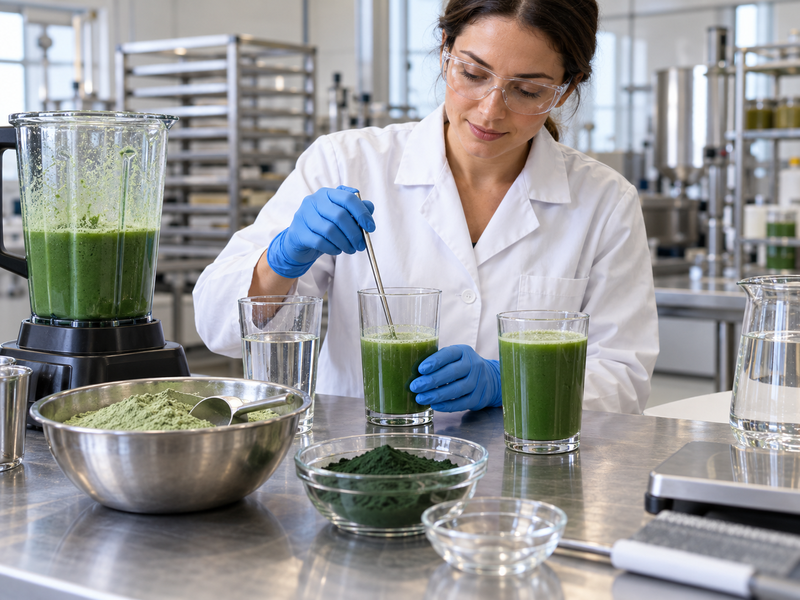
Blend berries with a creamy base such as yogurt or a suitable plant beverage until smooth, then add the measured spirulina powder and blend briefly. Berry flavor can balance the powder’s marine note, while the final color may be olive rather than bright green because red and green pigments mix visually. That can be attractive when anticipated. Serve the drink promptly or chill it according to the most perishable ingredient.
For a bottled concept, test pH, color and sediment after processing and throughout the intended shelf life. A cold kitchen sample does not predict a heat-treated commercial beverage.
For a home version, treat the fruit and base as the core recipe and spirulina as a measured addition. Blend the fruit with the base, taste, add the powder, then blend only enough to disperse it. This sequence lets you identify whether the powder improves or overwhelms a smoothie you already like. A developer can formalize the same test with a blinded control and a short scorecard for aroma, first taste, aftertaste, thickness and visible settling. Keeping the base recipe fixed makes the result interpretable.
A useful next step
Compare strawberry and dark-berry versions under the same use level, and record which one tastes balanced. For a product trial, evaluate both fresh and stored samples in the package consumers will see.
| Variable | Home check | Brand check |
|---|---|---|
| Berry choice | Flavor balance | Color consistency |
| Base | Creaminess | Protein and allergens |
| Mixing | Clumps | Shear and sediment |
| Storage | Prompt chilling | Shelf-life study |
3. What works in a citrus green drink?
Balance acidity with pigment performance
A citrus drink can brighten the sensory profile, but strong acid may shift the appearance of natural pigments. Start with a prepared citrus beverage, add a measured amount of powder, shake or blend, and judge it immediately and after standing. Whole green spirulina may leave particles in suspension; a clear blue drink shown online is likely using an extract rather than whole biomass. Manufacturers should measure pH and compare color after the full process, not assume a kitchen result scales.
Use ordinary beverage safety and do not treat spirulina as a preservative.
A useful next step
Test a small serving, note pH if developing a product, and photograph color under consistent light. If the drink settles, decide whether “shake before use” is acceptable or whether the formulation needs work.
4. How can yogurt become an easy green bowl?
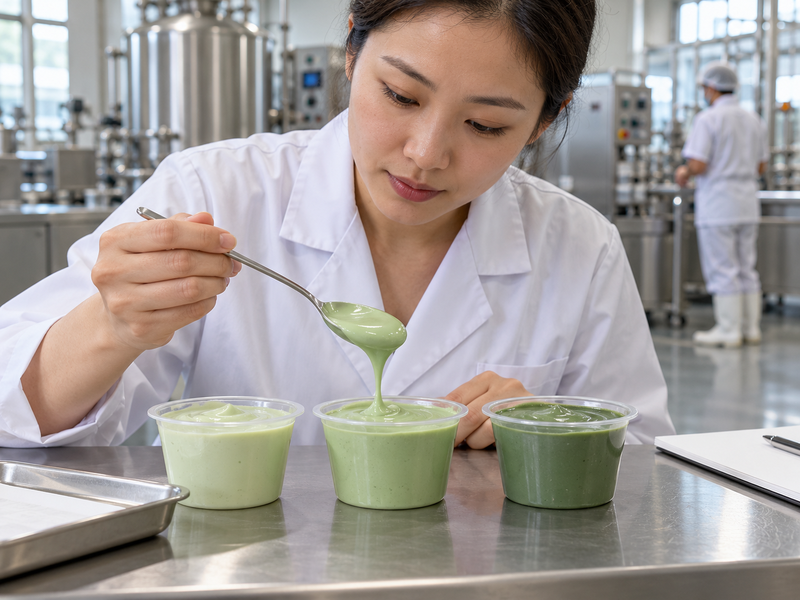
Make a smooth paste before folding
Mix a little yogurt with the powder first to make a streak-free paste, then fold it through the rest. Fruit, granola or nut toppings can provide contrast, but include them in the nutrition and allergen picture for a packaged food. Taste after mixing and again after refrigerated standing because powder hydration can change texture and flavor. The FDA safe food handling guidance applies to yogurt with spirulina just as it does to plain yogurt.
Keep it chilled and follow the dairy or plant-base product’s storage rules.
A useful next step
For home use, make a portion you can keep safely chilled. For commercial use, test texture, microbial controls, color migration and package compatibility over the proposed shelf life.
| Component | Sensory role | Control |
|---|---|---|
| Yogurt base | Creaminess | Cold chain |
| Spirulina | Green color | Measured dose |
| Fruit | Acid and sweetness | Color shift |
| Topping | Crunch | Allergen label |
5. Can spirulina improve a savory herb dip?
Use its green hue where it belongs
A dip based on yogurt, beans or soft cheese can carry green spirulina naturally alongside parsley, dill, garlic and lemon. Premix the powder into a small amount of base, then fold it in evenly. The herbs help contextualize the aroma rather than merely hide it. Taste before increasing any ingredient; excess spirulina can make the dip bitter or visually muddy. Keep the finished dip under the storage conditions required by its base.
For a brand, a savory application may allow lower sweetener use than a beverage, but it still needs ingredient, allergen and stability review.
A useful next step
Compare versions with and without herbs to see whether spirulina adds a wanted note. Record viscosity and appearance after refrigeration. Do not claim the dip treats a condition because it contains a green ingredient.
6. How can energy bites use spirulina?
Pair with cocoa, nuts or seeds
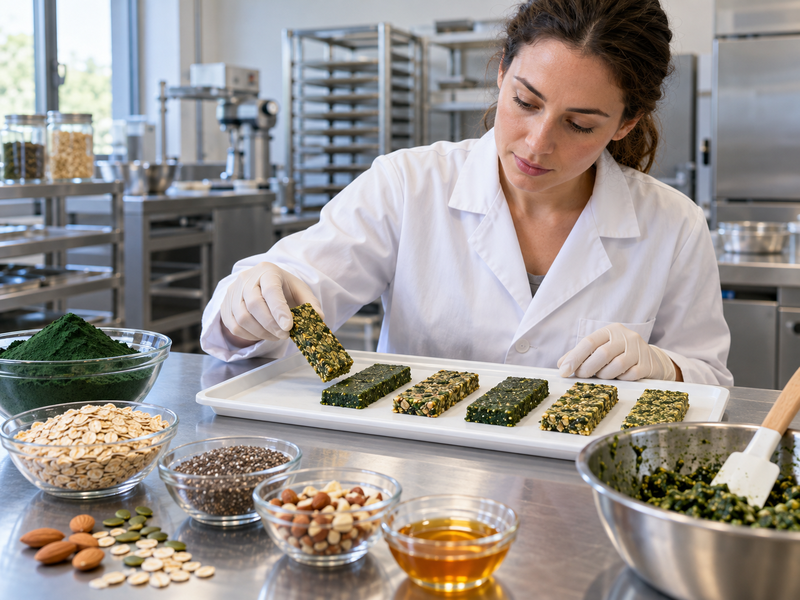
A no-bake bite can combine a sticky base such as date paste with oats, cocoa, nut or seed butter, and measured spirulina powder. Mix dry ingredients evenly before binding so the green powder does not form concentrated pockets. Cocoa gives a darker finish and can soften the marine aroma; a lighter bite may show more green. Portions are easy to overestimate because small pieces vary in weight, so brands should control piece mass before calculating nutrition.
No-bake does not mean shelf-stable: moisture, ingredients and packaging determine safe storage.
A useful next step
Weigh a batch and count pieces to estimate consistency, but use actual finished-product testing for retail claims. Taste immediately and after expected storage. Review nut and seed allergens.
| Design choice | Benefit | Check |
|---|---|---|
| Cocoa | Flavor masking | Color expectation |
| Date paste | Binding | Moisture |
| Oats | Structure | Texture |
| Piece mass | Portion control | Fill variation |
7. What about pasta, soup or warm dishes?
Add with heat in mind
Spirulina can color a pasta dough, savory sauce or finished soup, but heating may dull color and intensify certain flavors. An original study on spirulina pigments observed color deterioration of phycobiliproteins at elevated temperatures under its test conditions. Whole biomass in food is a different matrix, so the right answer comes from side-by-side recipe tests.
A household cook may stir the powder in late for a fresher green result; a commercial cook must also meet food safety and process requirements. The pigment is not a reason to undercook food.
A useful next step
Prepare identical small batches with early and late addition. Compare color, flavor and texture after cooking and during storage. Record the process rather than adopting a universal heat rule from another formula.
8. Can you make a salad dressing with spirulina?
Emulsify and taste the complete meal
Whisk a measured amount of powder into the water or yogurt part of a dressing before adding oil, or use a blender for a smoother emulsion. Lemon, vinegar, herbs and salt all shape the taste and shade. A dressing used over bitter greens may need a different balance than one served with mild vegetables. Do not treat a recipe as clinical evidence merely because a study used a spirulina-fortified dressing in a defined trial.
That research involved a particular formulation, amount and participant group, not every salad dressing at home.
Dressing is also a useful bridge between a home recipe and a retail prototype because it exposes more than taste. Measure how quickly the powder wets, whether an oil layer forms after chilling, and whether the color changes when the dressing meets salad leaves. If a prototype will be bottled, repeat the observation in the intended container and under the planned storage conditions. A fresh whisked sample alone cannot establish shelf life or microbiological safety. Those questions need separate controls and tests before sale.
A useful next step
Evaluate the dressing on the intended salad, not only from a spoon. Watch separation after chilling and shake if the product calls for it. A brand should validate emulsification and microbial safety.
| Trial point | Observe | Possible adjustment |
|---|---|---|
| Powder wetting | Specks | Premix |
| Emulsion | Separation | Mixing process |
| Acidity | Shade and flavor | Balance ingredients |
| Storage | Stability | Package trial |
9. How do baked snacks change the equation?
Color and aroma can shift in an oven
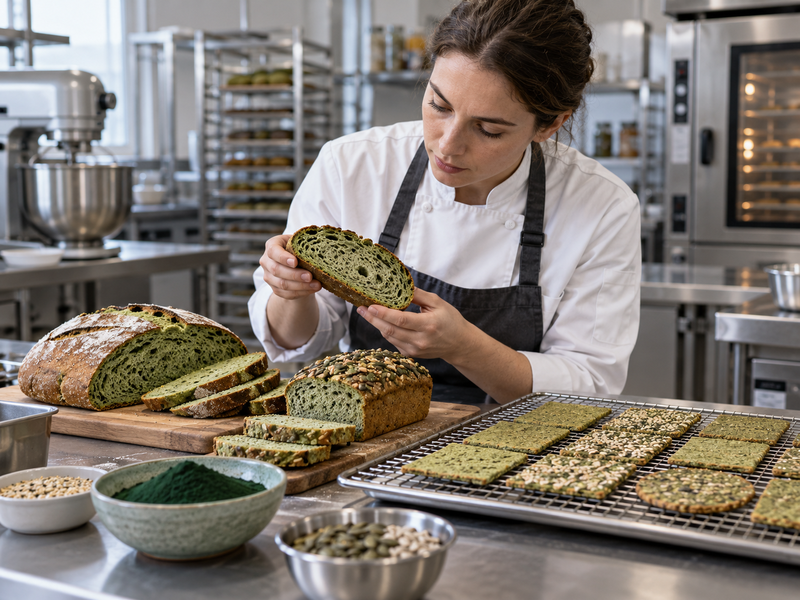
A cracker or muffin can carry spirulina as a visible ingredient, but oven heat and browning reactions may make the green less vivid. Sweet baked goods can also expose earthy notes if the surrounding flavor is delicate. Develop a control recipe first, then test several modest, label-consistent inclusion levels without changing other variables. Compare the center and surface because they receive different heat. For brands, ingredient labels, nutrient claims and final product safety all require review.
A visually green batter is not proof that the finished snack will look or taste the same.
A useful next step
Record batter color, final color and flavor after cooling. Test several production lots if consistent shade matters. Use the complete finished serving for nutrition calculations.
10. How can a brand choose the strongest recipe concept?
Score use, quality and scale together
Choose candidate recipes by consumer occasion, sensory acceptance, processing fit, shelf life and supply cost. A smoothie may photograph beautifully but settle in a bottle; a savory dip may taste excellent but require refrigeration; a dry blend may ship easily but need clear mixing directions. Rank these trade-offs with actual trial results. The FDA structure/function claim page is a reminder that copy about body effects must be reviewed separately from culinary appeal.
A recipe can be marketed for taste, color and convenience without promising medical results.
A useful next step
Run a small panel with target users, document the selected lot and process, and cost the finished serving. Advance only concepts that meet both sensory and safety gates. Keep a retained sample for later comparison.
| Concept | Likely strength | Key test |
|---|---|---|
| Smoothie | Familiar occasion | Sediment |
| Dip | Flavor context | Cold chain |
| Dry mix | Distribution | Consumer preparation |
| Baked snack | Convenience | Color after heat |
Frequently asked questions
Can I use spirulina in hot recipes?
Yes, but test color and flavor after the full cooking process. Keep ordinary food safety requirements.
Why did my smoothie turn brownish?
The visual mix of green spirulina with red fruit or acidic ingredients can dull the shade. Try another base and compare.
Does spirulina preserve a dip?
No. Store the dip according to its perishable ingredients and validated shelf life.
Are blue and green powders interchangeable in recipes?
No. Blue phycocyanin extract and whole green spirulina differ in flavor, color and composition.
How much powder belongs in a recipe?
Follow the exact product’s labeled use and test a measured amount for taste. Do not treat recipe inclusion as a therapeutic dose.
Conclusion
The best spirulina recipes make color and flavor feel deliberate. Begin with a familiar food, measure consistently and test the final dish after the handling it will actually receive. For commercial products, add lot evidence, processing trials and shelf-life controls before turning a kitchen success into a label claim.
For ingredient documentation, compare the whole spirulina range, the whole spirulina product details and the factory ingredient portfolio. These product pages can start a supplier discussion; final nutrition and safety statements still require the chosen lot and finished-product evidence.