
Spirulina powder identity testing dietary supplement manufacturer teams must plan before the first bulk lot arrives. A supplier COA may describe protein, microbes and metals, yet the U.S. supplement manufacturer’s own identity obligation is a separate release gate. Under 21 CFR 111.75(a)(1), before use a manufacturer must conduct at least one appropriate test or examination to verify the identity of a component that is a dietary ingredient, absent an FDA-granted petition exemption.
Identity testing should answer whether the received material is the specified spirulina ingredient, using a qualified method and representative sample. It cannot be replaced by a familiar green color or a favorable nutrient value.
Contents
- Whose obligation is the incoming identity decision?
- What exactly must the specification identify?
- Which evidence can support method selection?
- How should each incoming lot be sampled?
- What makes an identity method fit for purpose?
- How does a supplier COA contribute?
- What should a contract laboratory receive?
- How are failures or uncertain results handled?
- What records should the quality unit approve?
- What should procurement request before an order?
1. Whose obligation is the incoming identity decision?
For a U.S. dietary supplement manufacturing operation, the regulation places the before-use identity test or examination on the manufacturer using a dietary-ingredient component. The FDA small-entity CGMP guide explains the rule in practical terms. The supplier can help with a reference sample and method background, but a supplier’s statement cannot simply substitute for the manufacturer’s required verification.
The narrow petition exemption in the regulation is an FDA decision, not a purchasing shortcut a firm can declare for itself.
Name the accountable receiving site and quality unit in the purchase specification. A contract manufacturer, brand owner, importer and ingredient distributor may all appear in the commercial chain, but the team must establish who receives and uses the component and who releases it for production. This article addresses dietary supplements under 21 CFR Part 111; it should not be applied wholesale to conventional food production or to a color additive used only for a different regulatory purpose.
The buyer’s legal and quality teams should check the exact use and current rule before setting the program.
| Party | Relevant handoff | Release responsibility to clarify |
|---|---|---|
| Ingredient supplier | Reference and lot documents | Accurate material identity claim |
| Receiving site | Sample and quarantine | Correct lot traceability |
| Laboratory | Approved examination | Reliable result and method record |
| Quality unit | Review and disposition | Before-use decision |
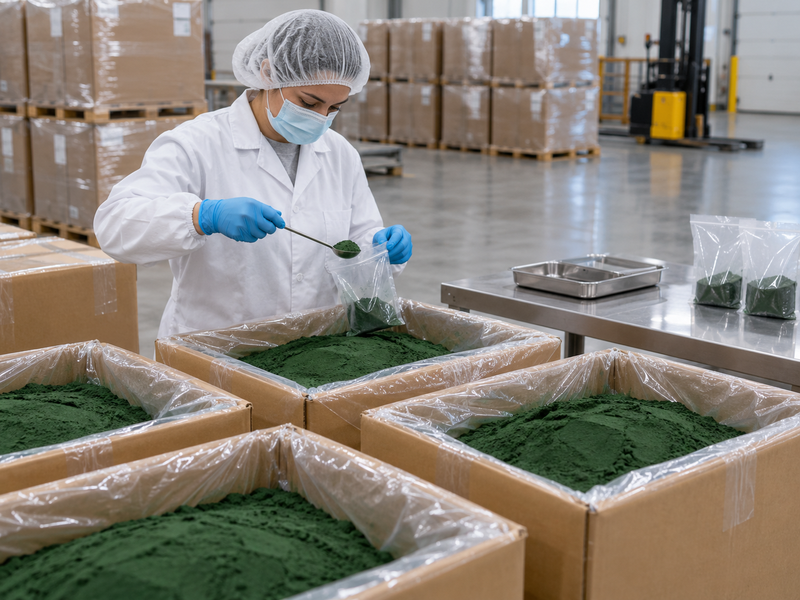
2. What exactly must the specification identify?
Write the scientific designation used for the offered spirulina ingredient, its whole-biomass form, processing description and any permitted synonym on the approved raw-material specification. “Green algae powder” is too loose for a receiving decision. Commercial spirulina names and taxonomic labels can vary, so ask the supplier to connect the label name, organism record and production lot. Also define whether the order is for whole powder, a granule or an extract.
A test that recognizes pigment alone may not distinguish the contracted form.
Separate identity from other attributes. Protein percentage helps characterize a batch but is not, by itself, a reliable proof of species or material authenticity. Likewise, a contaminant panel can show a clean sample of the wrong ingredient. State the acceptance criterion for the chosen identity method or examination and what constitutes an inconclusive result. The quality unit should approve the specification before material arrives; otherwise a late certificate may steer the method toward whatever data are easiest to obtain.
A supplier change in cultivation or processing could require review even if the commercial product name remains unchanged.
| Specification field | Why it belongs | Example question |
|---|---|---|
| Organism designation | Defines intended ingredient | Which name does the lot record support? |
| Product form | Separates biomass from extract | Is this whole dried powder? |
| Reference material | Enables comparison | How was the reference authenticated? |
| Acceptance rule | Makes result actionable | What is pass, fail or inconclusive? |
3. Which evidence can support method selection?
Request a supplier identity dossier before finalizing the laboratory plan. Useful components may include a correctly labeled retained reference sample, source-organism documentation, process description, prior identity results and methods used. These are inputs to method selection, not proof that the next shipment is identical. Review whether each document refers to the offered SKU and actual manufacturing site. A certificate describing a different form, species or producer can misdirect a lab even when the brand name is similar.
The quality team should consider how to distinguish the contracted material from plausible substitutes, blends or heavily processed powders. Depending on the product, an appropriate approach might combine microscopic, chemical, spectroscopic or molecular information; no single technique is universally conclusive for every spirulina matrix. Method suitability depends on the sample’s processing history and the specificity required by the risk assessment. A procurement team need not prescribe a laboratory method in the RFQ, but it should obtain enough product detail for qualified analysts to choose one.
Do not advertise a specific assay as proof of identity without validation for this ingredient and intended decision.

4. How should each incoming lot be sampled?
Build the sampling plan around the manufacturer’s defined lot and the way the goods arrive. Record the supplier production lot, number of bags or cartons, seal condition, receiving date and sampling location. A single scoop from the easiest container may not represent a multi-container delivery or a shipment combining two lots. The plan should say which containers are selected, how tools are cleaned, how samples are protected from cross-contamination and how the analytical sample is linked to its retained counterpart.
The test result is only as useful as that connection.
Keep the ingredient in quarantine until the quality unit can release it. Label samples with an internal ID and maintain a map to supplier lot codes. If material is repacked or staged at a third-party facility before receipt, confirm that original lot identity survives. The FDA CGMP guide discusses component controls and records; the manufacturer should align its own written procedures with the regulation.
Sampling frequency is not a substitute for the rule’s before-use identity verification for a dietary ingredient absent an applicable granted exemption.
| Sampling record | What it prevents | Review point |
|---|---|---|
| Container selection | Unrepresentative scoop | Written plan followed |
| Supplier lot mapping | Result applied to wrong batch | Codes reconcile |
| Seal and receipt status | Unnoticed tampering | Exceptions investigated |
| Retained sample | No material for investigation | Storage documented |
5. What makes an identity method fit for purpose?
An identity test must be capable of answering the specified identity question for the material as received. Ask the analyst what features it measures, which plausible wrong materials it would reject, how the method handles a dried pigmented powder, and how the reference was authenticated. Define system suitability, decision thresholds and handling of borderline results.
A generic visual inspection can help detect gross differences but may fail to distinguish closely related powders or adulteration; a highly specialized method can also fail if the process destroys its target signal. The method choice should follow the risk, not the lab’s shortest menu.
Document qualification or validation appropriate to the method and intended use. Evaluate repeatability, specificity and any interference from carrier or processing aids if the supplier’s grade contains them. If a method is outsourced, the manufacturer still must understand what the report concludes and whether the actual sample fits the lab’s validated scope. A passing identity result does not waive other specifications for purity, strength, composition or contamination. 21 CFR 111.75 distinguishes the dietary-ingredient identity test from other component verification pathways.

6. How does a supplier COA contribute?
A lot COA helps the manufacturer understand what the supplier says it shipped and how it tested the material. Request the exact lot code, method names, acceptance limits, actual results and issue date. Compare those fields with the approved specification and bag labels. A COA with an “identity: pass” line but no method or reference information gives the buyer little basis to assess the result. Ask for an explanation of any changed test method between lots.
The regulatory distinction matters. Section 111.75(a)(1) requires the supplement manufacturer to conduct at least one appropriate identity test or examination on the dietary ingredient, unless FDA grants the specified exemption. The same section separately describes conditions under which supplier COAs may be relied on for certain other component specifications after supplier qualification. Do not blend those pathways into a rule that any supplier COA replaces incoming identity verification.
Use the COA to select complementary tests, compare trends and investigate discrepancies; keep the manufacturer’s identity result and quality disposition explicit.
| COA field | Buyer use | Limitation |
|---|---|---|
| Lot ID | Match received goods | Cannot authenticate species alone |
| Identity method/result | Compare supplier approach | Does not erase manufacturer’s duty |
| Nutrient assays | Check agreed composition | Not a standalone identity test |
| Contaminants | Assess safety specification | Wrong material may still pass |
7. What should a contract laboratory receive?
Send the lab the approved material specification, scientific name, product form, authenticated reference or its provenance, representative sample, lot identity and the exact question to be answered. State whether the ingredient contains any carrier and disclose relevant processing that could alter the analytical signal. Ask the lab to propose a method with a clear acceptance rule and to identify limitations. The report should name the sample, method, reference, result, analyst or reviewer and date.
If testing is subcontracted, preserve that chain as part of the record.
Confirm competence for the relevant technique and matrix, not merely a logo or a broad accreditation statement. Laboratory scope, method verification and sample chain of custody should be reviewed against the manufacturer’s needs. Ask how the lab will report an inconclusive or mixed result and what retest policy it follows. Do not let procurement select the cheapest assay without the quality unit’s approval.
The manufacturer owns the release decision even when an external analyst performs the examination, so the purchase file should make result turnaround and hold time realistic before the ingredient is scheduled into production.
8. How are failures or uncertain results handled?
Keep the lot segregated. Confirm sample identity, lab calculations, method suitability and reference quality before assigning a cause. A mismatch might arise from wrong material, mislabeling, mixed lots, sampling error or an inappropriate method. An inconclusive result is not a pass. Do not release powder because its protein and microbial values are attractive while the identity question remains unresolved. Ask the supplier for a traceable investigation, but preserve the original laboratory result and communications.
The quality unit should decide whether a justified repeat test, different orthogonal examination or rejection is appropriate under written procedures. A repeat cannot be used to discard an unfavorable first result without a documented reason. If the sample was drawn from an unrepresentative container, redesign the sampling investigation and consider the whole delivery. Review potential effects on any lots already staged or used; the receiving record should make those relationships visible.
The decision must be documented before the ingredient is used, consistent with the Part 111 before-use requirement.
| Finding | Immediate status | Required next step |
|---|---|---|
| Clear pass | Remains pending other checks | Quality review |
| Inconclusive | Hold | Resolve method or sample issue |
| Clear mismatch | Hold | Investigate and disposition |
| Lot-code conflict | Hold | Restore traceability |

9. What records should the quality unit approve?
The release packet should connect purchase specification, approved supplier and SKU, receiving record, sampling plan, sample ID, method and reference details, analytical report, COA comparison, deviations and final disposition. Keep dates and signatures or controlled electronic approvals. If the same manufacturer buys several spirulina forms, prevent a reference sample for one grade from being used silently for another. Record method changes and supplier process changes so later reviewers can understand why an identity result was accepted.
Quality control personnel should review the basis for supplier qualification and other COA reliance where applicable under 21 CFR 111.75. The ingredient’s identity decision must remain legible within the broader component release. A spreadsheet cell reading “all tests passed” hides whether the required identity examination was performed before use. Periodic audits should check a real lot’s trail from inbound label to final production batch.
This is a record-ownership discipline, not a claim that a supplier already holds particular certifications or data.
10. What should procurement request before an order?

Ask the supplier for the exact spirulina material name and form, current TDS, available identity-method background, an authenticated reference sample or documented reference pathway, representative pre-order sample, and a lot-specific COA when the commercial lot is identified. State the expected package and lot coding, change-notice requirement and lead time for incoming testing. Send those details to the manufacturer’s quality unit before promising a production date. The commercial quote should account for quarantine and laboratory turnaround.
Approve the purchase only when the quality team has a viable method and sampling plan for this SKU. Do not demand a decorative “identity certificate” while leaving the method undecided. Also do not turn an article about supplement CGMP into an assertion that every buyer of spirulina food powder faces the same test rule. The correct handoff is a source-specific identity dossier, a manufacturer-controlled before-use examination and documented lot release.
FAQ
Q1. Can the supplier’s COA replace the manufacturer’s identity test? For a dietary-ingredient component, 21 CFR 111.75 requires the manufacturer’s appropriate before-use test or examination unless FDA grants the specified exemption.
Q2. Is protein content an identity result? It is a composition measure. It should not be treated alone as proof that the powder is the contracted spirulina ingredient.
Q3. Must every bag be tested? The manufacturer needs an appropriate lot sampling and identity procedure; the article does not prescribe a universal container count.
Q4. What if a result is inconclusive? Hold the material and investigate the sample, method and reference before quality disposition.
Q5. Does this rule apply to conventional food? This article addresses dietary-supplement manufacturing under Part 111; check the applicable framework for other uses.
Next step
For identity testing of a proposed supplement ingredient, contact SpirulinaCN with the application, target specification, anticipated quantity and U.S. destination. Request the precise organism and product-form description, reference-sample information, method background and a lot-specific COA when available so your quality unit can approve its own incoming test and release plan.