
Spirulina powder country of origin marking when repacking is a handoff between the overseas supplier, U.S. importer and domestic packer. The origin statement on a bulk bag may disappear when powder is filled into smaller containers. Under 19 CFR 134.26, an importer of an article subject to the rule that will be repacked must address marking on the new container or give a later repacker written notice, with an importer certification to CBP.
The practical buyer decision is who will preserve the origin information, what the new package will say, and which records connect the imported lot to the repacked units. Blending or further processing can change the analysis, so the importer’s customs adviser must confirm the exact case.
Contents
- What is the marking handoff?
- Which origin facts should the supplier provide?
- What happens to a marked bulk bag?
- What does the importer certify?
- When is written notice to a repacker needed?
- How should the retail label be reviewed?
- What if blending or processing occurs?
- How are multiple lots kept traceable?
- What should the broker and packer agree on?
- What is the pre-release checklist?
1. What is the marking handoff?
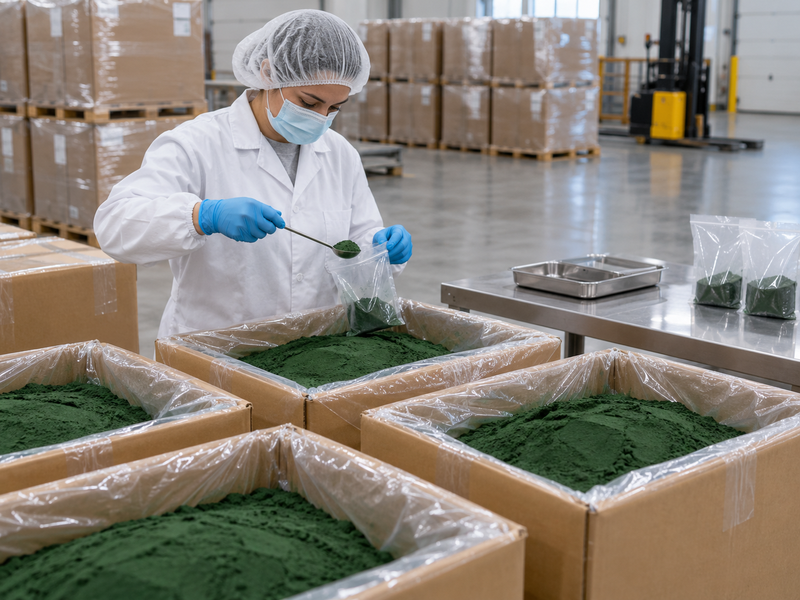
Map the exact supply chain for spirulina powder: manufacturer, exporter, importer of record, U.S. warehouse, repacker, label owner and ultimate retail channel. The central risk is that a correctly marked imported bulk container is opened, and the new retail container no longer tells the ultimate purchaser the applicable country of origin. The importer may do the repacking or sell the goods to another company that does.
The rule treats those routes differently, and the purchase agreement should state which one will happen.
Mark each point where the powder changes containers or ownership. If the buyer merely resells sealed bulk bags, document that path rather than filling out a repacking plan by habit. If the repacker uses a contract facility, name it before entry and ensure it receives the origin instruction. This is a customs marking workflow, not proof that the imported food meets every FDA or label requirement.
The order file should show a single, credible origin narrative from overseas production to the package the U.S. purchaser sees.
| Handoff | Origin information needed | Owner |
|---|---|---|
| Overseas manufacturer | Actual production and origin statement | Supplier |
| U.S. importer | Entry and marking plan | Importer/broker |
| Domestic repacker | Written origin instruction | Importer and packer |
| Retail label owner | Correct new container artwork | Brand regulatory team |
2. Which origin facts should the supplier provide?
Request a signed manufacturer and origin statement for the exact SKU and proposed lot, including the physical manufacturing site, country, any processing done elsewhere and the relationship between producer, exporter and seller. Ask for a mock bulk-bag label showing the country statement and lot code. Compare it with draft invoice, packing list, TDS and COA. An export warehouse address does not by itself establish the origin of the powder, and the country from which goods ship is not automatically the country of origin.
Do not make the supplier certify how U.S. retail packages must be marked if the supplier has not seen the repacking plan. Its role is to supply accurate production facts and labels for the imported article. The importer and customs adviser determine the marking treatment under U.S. rules. If the supplier buys biomass from another producer or performs a later transformation in a different country, obtain a process map before writing a country statement. Keep uncertainty visible in the RFQ.
A bright product image or a “made for” brand line should not displace a documented origin analysis.
| Supplier record | Buyer check | Why |
|---|---|---|
| Manufacturer statement | Legal name and physical site | Identifies production |
| Process-country map | Each material transformation | Supports origin analysis |
| Bulk-bag mockup | Country and lot text | Plans receiving check |
| Commercial documents | Consistent country references | Avoids entry conflict |
3. What happens to a marked bulk bag?
At receiving, photograph the origin statement and lot code on representative unopened bags and record the number of bags accepted. Preserve a link between each inbound lot and the containers later filled. When the bag is opened, the original marking may no longer be visible to the ultimate purchaser. Section 134.26(a)(1) addresses what the importer must certify when it does the repacking: the original marking will not be obscured, or the new container will be marked as required.
The team should not assume that an origin line on a master carton will automatically suffice for units sold individually.
Confirm the exact retail presentation with the broker or counsel. A pouch sold to consumers, a drum sold to another manufacturer and an inner pack inside a display box can present different ultimate-purchaser questions. Work through the actual packaging hierarchy rather than relying on the bag that entered the port. A receiving photo supports traceability but is not a substitute for correct new-container marking where required. Hold mismarked bags or unexplained country conflicts before material is poured into a domestic blending line.

4. What does the importer certify?
The repacking rule requires an importer certification to CBP when an article subject to it is intended for retail repacking after release from Customs custody, or when the Center director has reason to believe it will be repacked. 19 CFR 134.26 sets out the certification text and filing timing. If the importer repacks, it certifies that it will not conceal the origin marking or will mark the new container as required.
If goods are transferred to a later repacker, it certifies that it will give written notice of the marking requirement.
Have the customs broker identify the correct entry and certification process for the actual shipment. The regulation permits the statement on appropriate entry or commercial documents and describes a blanket procedure for a particular product and period; the importer should choose a supported route, not copy a form from an unrelated transaction. Certification is the importer’s legal commitment. A supplier statement about origin informs it, but does not file it.
Keep a copy with the entry number and repacking plan so the purchasing team can demonstrate that a future label order implements the certified path.
| Importer action | Trigger in workflow | Record |
|---|---|---|
| Identify planned repack | Before entry summary | Written packaging plan |
| Certify marking path | As required by 134.26 | Filed statement |
| Notify later repacker | At sale or transfer | Written notice proof |
| Verify new package | Before retail release | Artwork and line check |
5. When is written notice to a repacker needed?
If the importer sells or transfers the article to a subsequent purchaser or repacker, 19 CFR 134.26(a)(2) and (d) require written notice of the origin-marking obligation. Put the notice in the transfer package or contract workflow, addressed to the entity actually repacking. Identify the product, lot, country information and requirement to preserve or apply marking. Retain proof of sending and receipt, especially when a 3PL hands material to a separate packer.
A verbal briefing in a kickoff call is not the written notice contemplated by the rule. Nor should the importer assume that a generic private-label agreement gives the repacker the correct origin for each inbound lot. If the brand owner and physical packer are different, decide who receives the formal notice and how it is carried into the packing instruction. Test the workflow with a sample lot before volume production.
The repacker should know when to stop if a bag arrives with a different country statement than the approved artwork.

6. How should the retail label be reviewed?
Build a mockup of the container the ultimate U.S. purchaser will actually receive. Show the proposed country phrase, placement, type size and permanence for review under applicable customs marking rules. Section 134.26 refers to the country being indicated in a conspicuous, legible, indelible and permanent manner as the container permits. The importer should have its broker or customs counsel check the exact presentation before printing a large label run.
Other food-label information needs its own review; a compliant origin line does not clear the complete dietary supplement or food package.
Check whether “packed in the USA,” a domestic address or a U.S. flag could confuse the purchaser about the powder’s origin. The correct formulation depends on the facts and overall label; avoid inventing a universal phrase. Proofread English country names against the supplier record and entry file. A QR code to a website or origin text hidden only on shipping paperwork may not satisfy a visible package-marking obligation.
Use first-article line approval to confirm the printed label matches the approved art and the inbound lot’s country.
| Label review item | Check | Failure to catch |
|---|---|---|
| Country statement | Matches origin conclusion | Wrong-country print run |
| Placement | Visible on sold unit | Master-carton-only marking |
| Durability | Survives normal handling | Lost or obscured text |
| Lot link | Correct art for each input | Mixed-origin mislabel |
7. What if blending or processing occurs?
Repacking a bulk powder into smaller containers is one scenario; combining it with other ingredients or substantially transforming it is another. Do not assume that adding a flavor, milling further or blending two origins automatically changes the powder’s customs origin. Equally, do not assume the original country will always remain the answer after a substantial manufacturing process. U.S. origin determinations can depend on the exact transformation, product classification, facts and applicable CBP analysis.
Ask the importer’s customs adviser to review the real process before artwork or entry filing.
Prepare a process and material-origin map showing each input, country, percentage or function where relevant, and processing steps in the United States. Keep repacking instructions distinct from formulation instructions. If a product is marketed as “made in USA,” also review the separate rules governing that claim; this article’s customs-marking checklist does not settle it. A ruling about another food or processing sequence is illustrative only.
The purchase file should name the unresolved origin question and hold label approval until the adviser gives a documented conclusion for this scenario.

8. How are multiple lots kept traceable?
Assign an inbound record to each supplier lot, country, bag count and receiving date. When the repacker opens bags, record the production run and output container codes. Do not merge lots with different origin information into one packaging run without an approved origin and labeling analysis. Reconcile input weight, output quantity, scrap and retained samples. This traceability helps the packer print the correct country and lets the importer locate affected finished units if a supplier later corrects its origin statement.
If a shipment includes several production lots from the same country, the origin label may be the same while quality release and recall boundaries differ. Preserve both levels of information. If lots arrive with conflicting country marks, segregate them and resolve the discrepancy before filling. Keep images of inbound marks and copies of written repacker notices with the production records. The marking decision should be executable on the packing floor, not only in a lawyer’s memorandum.
| Traceability link | Record | Decision supported |
|---|---|---|
| Inbound bag to supplier lot | Bag code and count | Identify affected material |
| Supplier lot to country | Origin statement and label | Choose artwork |
| Input to packing run | Consumption log | Assign output codes |
| Packing run to retail unit | Finished lot record | Verify and recall if needed |
9. What should the broker and packer agree on?
Hold a pre-entry review with the importer, broker, label owner and physical packer. The broker confirms what origin and repacking certification the entry requires; the packer explains exactly when and where inbound bags are opened and how labels are controlled. Agree who writes and receives the required notice, who approves artwork, and who checks the first printed units. Give the supplier the final inbound-bag marking specification so it can align the export packaging with the planned handoff.
Use a single issue log for discrepancies. If the invoice says one country and the bag another, stop and obtain corrected source evidence before entry or repack. A repacker that cannot support two label versions on the same line should schedule separate runs. A new supplier or origin calls for a fresh analysis rather than borrowing the prior product’s country statement. A good agreement includes documentary responsibilities and the point at which goods may be released from hold.
The CBP repacking rule makes the written handoff particularly important when the importer is not the entity that fills retail containers.
10. What is the pre-release checklist?
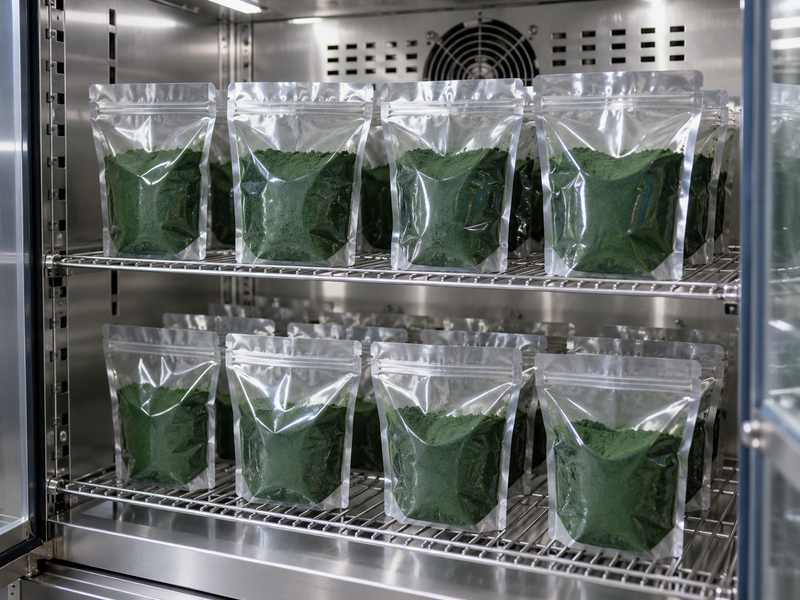
Before confirming an order, obtain the supplier’s manufacturer and origin statement, mock bulk-bag label and process-country map. The broker should confirm the applicable marking and importer certification steps before customs entry. Send any required written notice to the next repacker before transfer. Approve the finished-container art and inspect first-run units against the inbound lot’s country before retail release. Retain the records with entry and batch documents. If processing might change origin, get a case-specific customs analysis before either entry or label assumptions harden.
This sequence turns origin marking into a controlled procurement task. It avoids two common gaps: a supplier’s genuine origin evidence that never reaches the domestic packer, and a domestic label that implies an origin the importer has not verified. The result is not an article-wide origin ruling for every spirulina product; it is a reviewable chain for the buyer’s own material, process and package.
FAQ
Q1. Is the export country always the country of origin? No. Obtain production and processing facts; the broker or customs adviser determines the applicable origin.
Q2. Does a marked bulk bag solve retail marking after repacking? Not necessarily. Review the new container that reaches the ultimate purchaser.
Q3. Is a verbal instruction to a contract packer enough? The repacking rule calls for written notice when goods go to a subsequent purchaser or repacker.
Q4. Does blending automatically make the product U.S. origin? No. The effect of processing needs a case-specific customs analysis.
Q5. Who files the repacking certification? The importer should coordinate the required statement with its customs broker under 19 CFR 134.26.
Next step
For origin marking on a repacked spirulina order, contact SpirulinaCN with the application, target specification, anticipated quantity and U.S. destination. Request the manufacturer’s origin statement, a mock bulk-bag label, process-country details and proposed lot documents; share the planned retail pack and repacker with your broker for the marking and certification review.