
An agar dessert gel colored with phycocyanin raises a specific processing question: agar generally requires a hot dissolution step, while blue phycocyanin must retain an acceptable shade in the finished chilled gel. A 2024 original agar–phycocyanin study examined structural and color behavior of a sugar-containing hydrocolloid system. It supports a controlled bench trial but does not establish a commercial dessert recipe or shelf life.
Before buying a blue spirulina extract grade, test the actual heating, cooling, sugar level, pH, package and display conditions—and verify that the exact finished-food category is permitted in each destination.
Contents
- Which vegan gel is being developed?
- What extract and agar data should be requested?
- How should the agar and pigment sequence work?
- How should sugar and pH be screened?
- What measures show a proper gel set?
- How should syneresis and color be assessed?
- What finished-pack storage study is needed?
- Is this US dessert category authorized?
- What belongs in the supplier RFQ?
- When can the buyer approve a grade?
1. Which vegan gel is being developed?
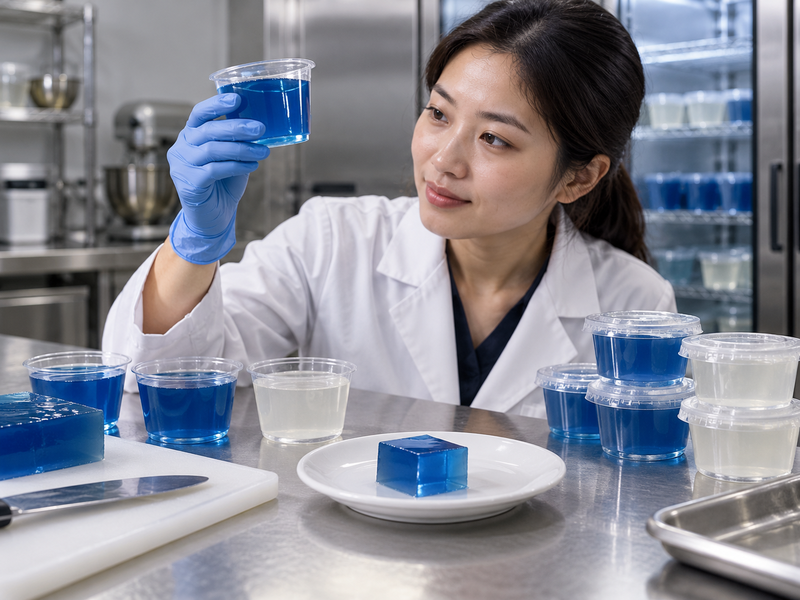
Describe the commercial product rather than using “dessert” as a catchall. Is it a spoonable cup, a firm cut cube, a layered jelly or a topping that must survive transport? State agar source and dose, sugar or sweetener level, acid type and target pH, fruit or dairy-alternative ingredients, serving temperature, pack and proposed chilled life. A clear jewel-like blue cup has a much lower haze tolerance than an opaque fruit dessert. The gel texture also sets whether a small change in agar network is acceptable.
Define the product’s legal identity early. A plant-based agar gel may be marketed under a local category that differs from gelatin, pudding or confectionery. The US color rule names certain categories, but the word “agar” is not itself a permission. Keep category confirmation as a formal procurement gate. Use an uncolored control and an existing color standard if available. Agree on cut shape, spoon texture, water release and shade after display before receiving ingredients.
| Product style | Key texture target | Visual requirement |
|---|---|---|
| Spoonable cup | Smooth break, low weeping | Uniform blue |
| Cut gel | Clean cut and shape hold | No edge fading |
| Layered dessert | Interface integrity | No color bleed |
2. What extract and agar data should be requested?
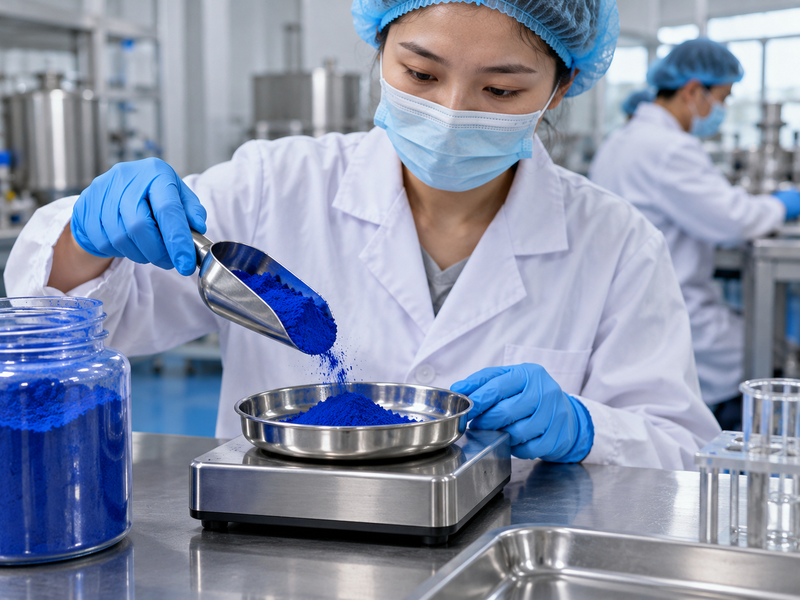
For the colorant, request food-grade extract identity, full composition and carriers, color-strength method, technical sheet, current lot COA, storage guidance and a lot-matched sample. For agar, record gel strength, source, particle size and the supplier’s dissolution and setting guidance for the specific grade. Neither supplier’s individual data predicts how the two will interact in a sweetened acidic gel. If fruit puree or another hydrocolloid is present, include it in every commercial-formula trial.
The 2024 paper studied a C-phycocyanin, sugar and agar hydrocolloid system and reported structural and color observations. Its 40% sucrose laboratory system and subsequent ice-cream application are not a standard dose for a chilled agar cup. Do not claim that the studied material is sold by SpirulinaCN. Compare proposed extract lots at matched initial blue shade and at matched ingredient mass to understand both dose efficiency and processing loss.
Keep the colorant carrier in the ingredient and labeling review, particularly if the brand is reducing sugar or avoiding a specific additive.
| Ingredient detail | Requested evidence | Buyer check |
|---|---|---|
| Blue extract identity | TDS and composition | Legal and formula fit |
| Color strength | Method and lot result | Comparable dose |
| Carrier | Full declaration | Label and gel effect |
| Agar grade | Gel-strength and use data | Set in this recipe |
3. How should the agar and pigment sequence work?
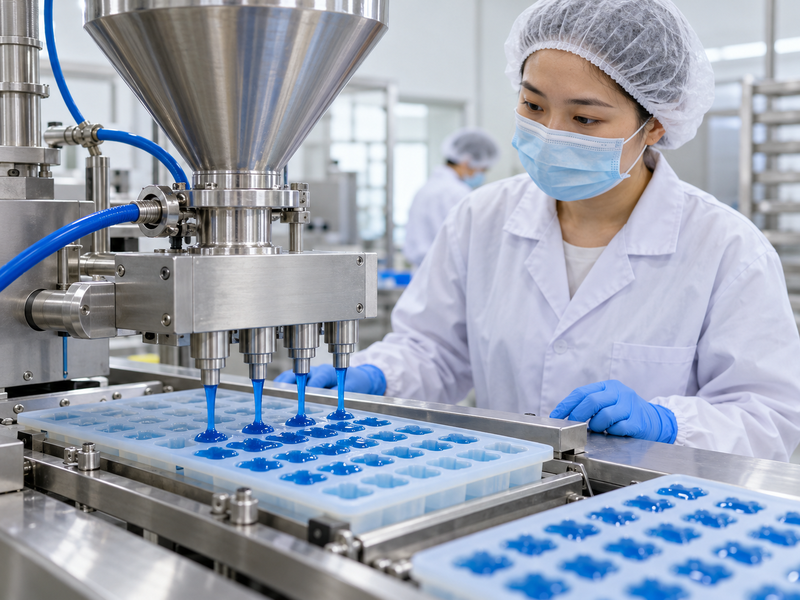
Build the process map around agar dissolution, cooling, pigment addition, filling and setting. Agar typically needs heating to dissolve, while phycocyanin color may change with thermal exposure. Test a feasible post-dissolution addition temperature range after the agar is fully hydrated but while the mix remains fillable. Measure actual temperature at pigment addition, mixing duration, viscosity and color before filling. If the temperature is lowered too far, premature setting may create lumps or uneven cup weights; if it remains too high, color may be lost.
Do not assume a cold-addition step is microbiologically acceptable simply because it protects blue color. Any change after the plant’s validated heat process needs a hygienic design and food-safety review. Compare a pigment-before-heat control with practical post-heat candidates, using the same final formula and pack. Note color streaks, foam or filtration losses. The agar study did not validate this manufacturer’s filling line. A line-scale run is needed after the bench window is identified.
| Addition arm | Diagnostic question | Possible failure |
|---|---|---|
| Before agar heat | How much color survives? | Blue loss |
| After dissolution | Can pigment mix uniformly? | Streaking |
| Near fill point | Is viscosity still manageable? | Premature set |
4. How should sugar and pH be screened?
Use the actual commercial sugar or sweetener level first, then compare a narrow range relevant to the brand brief. Hold agar grade, pigment lot and initial dose constant. Measure pH after heating and after setting; include the acidulant identity and concentration. Sugar can change solids and gel texture as well as perceived color, so a more stable blue reading is only one part of the decision.
The published C-phycocyanin/sucrose/agar experiment used a specific high-sucrose system; its reported protection cannot be generalized to a low-sugar dessert or different sweetener.
If the dessert contains acidic fruit, test the finished fruit formula and a controlled fruit-free base. Fruit pigments and particles can change the blue to green or purple and obscure a simple pigment assay. Keep additions and mixing order recorded. When comparing sugar-reduced variants, distinguish the effect of less sugar from any pH or agar change needed to repair texture. The chosen recipe should meet sweetness, gel set, color and cost together, rather than maximizing a single laboratory stability number.
| Screen arm | Held fixed | Measured output |
|---|---|---|
| Base recipe | All commercial ingredients | Reference set and color |
| Sugar variation | Agar and pigment lot | Texture and shade |
| pH variation | Sugar and agar | Color and syneresis |
| Fruit control | Pigment and agar | Background color effect |
5. What measures show a proper gel set?
Record setting time, temperature at set, gel firmness, spoon or cut behavior and shape retention. A gel can be blue and still be too brittle or too weak for retail handling. Use a consistent texture method, such as a specified penetration or compression test, alongside a sensory assessment at serving temperature. If the product is layered, test interface adhesion and color migration. Compare each colored candidate with an otherwise identical no-color control so changes from the agar system are not misattributed to pigment.
Check the product after filling, complete chilling and realistic pack movement. A bench mold may cool more slowly than a commercial cup; record pack size and geometry. If the formula uses a second hydrocolloid, characterize the combined network. Setting temperature can cause line stoppages, so define minimum and maximum texture limits before the pilot and reject an impractical fill temperature.
| Gel measure | Product question | Trial method |
|---|---|---|
| Set time | Will the line run? | Timed cooling profile |
| Firmness | Does spoon/cut texture fit? | Consistent texture test |
| Shape hold | Does the cup survive handling? | Pack movement challenge |
| Layer behavior | Does blue migrate? | Interface inspection |
6. How should syneresis and color be assessed?
Syneresis is the release of liquid from a gel. Measure visible surface water or separated liquid by a consistent weight or volume method after chilling and at later pulls. Inspect whether the released liquid is blue: pigment migration can leave a pale gel with a colored puddle. Check color at the center and edge of the cup, and after a standard spoon cut. A top-view photograph alone may hide internal fading or concentration at the surface. Use calibrated color readings and a physical visual reference.
Record pH, haze and any grainy texture alongside syneresis. If a gel appears stable only while undisturbed, test transport vibration and a normal consumer opening. A fruit layer may draw water from the agar layer, so assess the complete packed dessert. The original agar-hydrocolloid research evaluated structural properties and color behavior under its experimental conditions; it does not prove that a commercial cup will avoid weeping. Predefine acceptable water release and color shift.
If either fails, investigate agar level, sugar, pH and process rather than adding more pigment blindly.
| Endpoint | Where to inspect | Failure sign |
|---|---|---|
| Syneresis | Surface and pack base | Pooled liquid |
| Color | Center, edge, released liquid | Fading or migration |
| Texture | Spoon or cut face | Brittle or weak set |
7. What finished-pack storage study is needed?
Fill production-equivalent cups and close them using the intended seal and headspace. Store separate unopened units for each time point through the proposed chilled life, plus a justified temperature excursion and retail-light condition if the pack is transparent. Measure color, texture, syneresis, pH, odor and taste at each pull. Check seal integrity and microbiological safety through the plant’s separate validated program. A pigment study in a hydrocolloid cannot assign a commercial shelf life to a dessert with fruit, flavor and packaging.
Include a controlled display challenge. A clear cup in a lit chilled case may behave differently from an opaque sleeve, while condensation can affect how color looks to shoppers. Record lighting, temperature and orientation. If the gel is sold as a layered product, track both layers and their interface. Do not use accelerated warm storage alone to calculate a retail date; it may change the agar structure through a different mechanism.
The approval report should tie life to the exact formula, pack, process and temperature profile tested.
| Storage condition | Purpose | Sample rule |
|---|---|---|
| Intended chilled chain | Main shelf-life decision | Unopened cup each pull |
| Temperature excursion | Transport resilience | Defined exposure |
| Retail light | Color presentation | Matched dark control |
8. Is this US dessert category authorized?
For a US-bound product, verify the exact finished-food identity against the effective 21 CFR 73.530. It lists qualifying spirulina extract for certain named foods, including gelatin, custards, puddings and other specified categories, at levels consistent with good manufacturing practice. “Agar dessert gel” is not itself a named category, and agar is not automatically gelatin for regulatory purposes.
Have the regulatory team determine whether the particular marketed product actually fits a listed category or needs another basis before commercial use.
The February 2026 foods-generally expansion was delayed indefinitely. It cannot be used as broad clearance. The rule also has an identity, impurity specifications and a restriction for foods with standards of identity unless their standard authorizes added color. Confirm the extract and destination-specific requirements, including any vegetarian or vegan claim substantiation. Passing the gel trial does not establish lawful color use, and a supplier’s marketing category does not settle the legal classification.
9. What belongs in the supplier RFQ?
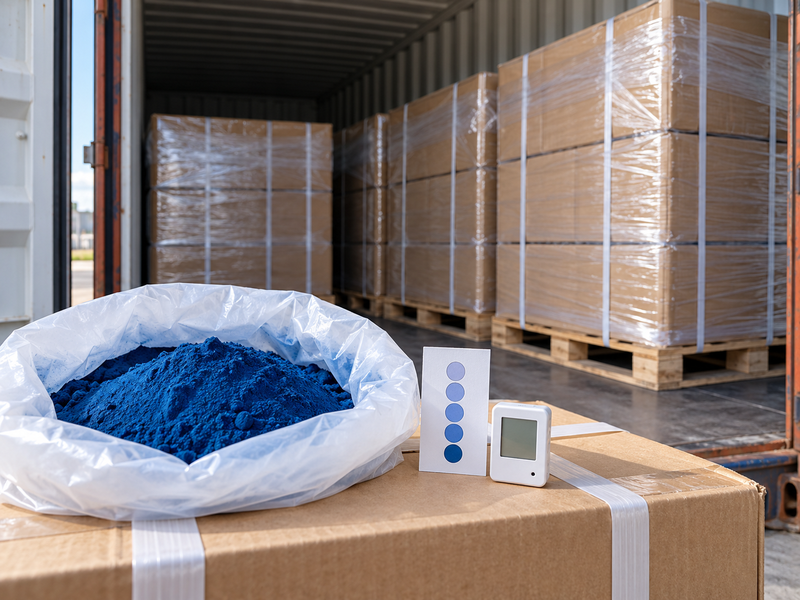
State the intended agar-gel format, target shade, agar dose, sugar level, pH, heating and pigment-addition temperatures, package, chilled storage, destination and anticipated quantity. Ask for a lot-matched extract sample, technical sheet, full carrier declaration, current COA, color-strength method, storage guidance and application-specific quotation. Request enough sample for the full temperature, sugar and storage screen, not just a color chip. Do not imply that SpirulinaCN already has a specific grade or validated dessert data; the RFQ asks it to identify an appropriate offered material.
Compare cost on the dose needed to meet end-of-life color, with rejects from texture or syneresis included. A stronger extract can still be unsuitable if its carrier changes gel set or labels. Keep the exact lot connected to trial records. If a supplier later proposes a different carrier, color-strength method or grade, require a controlled comparison. Procurement should not sign off until regulatory staff resolves the final category and the plant completes process and food-safety validation.
The best RFQ is specific enough to produce comparable responses without inventing a supplier capability.
| RFQ field | Buyer states | Supplier asked to return |
|---|---|---|
| Matrix | Agar, sugar, pH | Candidate grade |
| Process | Heat and addition window | Handling guidance |
| Quality | Color and gel endpoints | Lot COA and method |
| Commercial | Volume and destination | Quote, pack, lead time |

10. When can the buyer approve a grade?
Approve only when a named extract grade and formula meet the agreed color, setting, texture, syneresis, taste, safety and destination-market criteria in production-equivalent cups. File agar and extract lots, recipe version, addition temperature, fill temperature, pack and storage profile. If the pigment was added at a bench temperature the commercial filler cannot maintain, the trial is incomplete. If the legal finished-food category is unresolved, do not use a technically successful pilot as purchase authorization for US sale.
Set change-control triggers for agar grade, sugar or sweetener level, fruit addition, acidulant, extract carrier, addition temperature, cup or lid and display conditions. Retain a reference sample record and repeat focused tests when one of these changes. The buyer should treat an alternative colorant lot as a new candidate until incoming checks establish comparability. The practical outcome is a repeatable specification for one chilled agar product, not a generic statement that agar protects phycocyanin or that all blue gel desserts are legally permitted.
FAQ
Q1. Can phycocyanin be boiled with agar? Test the actual heat profile; a post-dissolution addition may protect color but must remain fillable and safe.
Q2. Does the agar paper establish a shelf life? No. It studied defined hydrocolloid properties, not the buyer’s finished packed dessert.
Q3. Is “agar gel” automatically covered by the US “gelatin” listing? No. Verify the exact product classification under the effective rule.
Q4. Why measure syneresis? Released water can carry blue pigment and leave a paler, less appealing gel.
Q5. Is the bluest fresh sample the best choice? Not if it fails setting, weeps, fades or lacks a lawful destination use.
Conclusion: Qualify the complete gel and its category
The best blue agar dessert gel is one that sets, holds color and passes the exact destination-use review in its commercial pack. Contact SpirulinaCN with the application, target specification and shade, agar and sugar system, addition temperature, anticipated quantity and destination. Request a lot-matched sample, technical sheet, current COA and application-specific quotation for the pilot.