
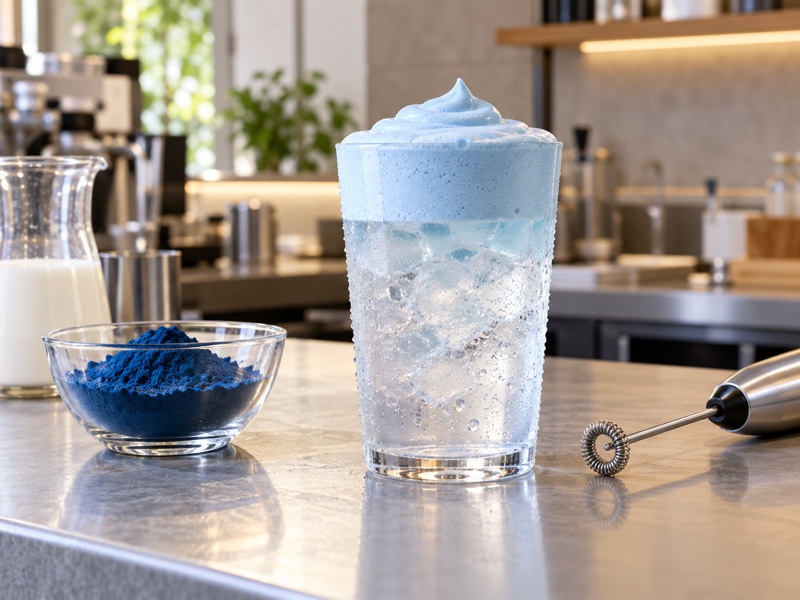
Blue spirulina cold foam can give an iced drink a striking finish, but color is only one part of the job. The foam must form reliably, hold long enough to reach the customer, taste good with the drink below it, and fit the café's food-safety routine. A photo taken immediately after whipping says little about service performance. This guide helps beverage developers test a phycocyanin-rich blue ingredient in a cold-foam system before placing it on a menu.
Contents: 1 · 2 · 3 · 4 · 5 · 6 · 7 · 8 · 9 · 10
1. What is blue spirulina cold foam?
It is a cold, aerated topping colored with a blue spirulina extract. Phycocyanin is the main blue pigment component of the extract. The foam base may be dairy, a plant beverage, or another permitted formulation. Each base has a different protein, fat, sweetness, viscosity, and acidity profile, which changes both foam and color. “Blue spirulina” does not tell a café how a particular grade will behave in a whipper or blender; a product specification and actual service trial are needed.
What should the menu brief state?
Define the drink beneath the foam, target shade, serving size, foam thickness, hold time, sweetness, price, and service equipment. Decide whether the blue layer should remain separate or blend into the drink. A pale blue top may disappear over a light latte but stand out over coffee. A strong turquoise may look wrong if it turns green at the boundary with an acidic fruit drink. Test the completed cup under the lighting used in the store, not only in a studio.
| Brief item | Operational question |
|---|---|
| Drink base | Will it change foam color? |
| Foam base | Will it aerate consistently? |
| Service window | How long must it hold? |
| Equipment | Can staff repeat the method? |
| Target cost | What is the pigment allowance? |
The best reference is an approved drink made on normal equipment during a busy service period.
2. Which blue ingredient works in cold foam?
Request a food-grade ingredient specification, certificate of analysis, complete composition, color-strength method, and storage instructions. A powder can offer compact storage and precise dosing but may leave flecks if it is poorly dispersed. A liquid can be convenient for service, yet its water, carrier, and concentration need review. Compare ingredients in the intended foam base at equal finished shade. The strongest-looking powder in plain water may not be the easiest to use in a fat-containing dairy foam.
How should the first comparison be run?
Make small batches with one foam base and a fixed equipment setting. Trial low, target, and high doses by weight. Record the ingredient lot, foam temperature, whipping time, shade, taste, foam volume, and drainage. Take photos immediately, after the expected wait at the pickup counter, and after the customer is likely to take the first sip. A supplier sample that requires intense shaking or a special mixing step may be unsuitable for a high-volume café.
| Ingredient feature | Why it matters |
|---|---|
| Color strength | Dose and cost |
| Solubility | Specks and shade uniformity |
| Carrier | Label and foam behavior |
| Pack size | Waste after opening |
The ingredient with the lowest cost per kilogram is not necessarily the lowest-cost menu choice.
3. How should powder be dispersed before aeration?
Cold foam is often prepared quickly, which makes an unmixed pigment easy to miss. Blend the blue ingredient into a small, measured portion of base before combining it with the full batch. Follow the supplier's dispersing instructions and use a tool the café can clean and repeat. Avoid free-pouring powder into a service cup; it gives variable dose and can create dark specks. If a commercial operation prepares a blue base in advance, validate its storage and mixing rules.
What should staff be able to reproduce?
Write a recipe in weights or a tested dispensing measure, with a defined order of addition, temperature, mixing time, and whipping setting. Observe several team members making the same drink. Check whether color settles in a refrigerated bottle, how to remix it, and whether the final servings in a batch look like the first. A bright blue streak may be attractive in a promotional photo yet signal poor mixing in a normal menu item. Training should be based on an approved visual reference.
Uniform color begins before air is introduced. Aeration will not correct a poorly dispersed concentrate.
4. How can foam structure be tested?
Pigment addition can change a foam indirectly through its carrier, dose, or mixing method. The base still does most of the foaming work. Compare a plain control with each colored formula using the same equipment and serving temperature. Record initial foam volume, bubble size, liquid drainage, and height at timed intervals. Observe the foam on its intended drink, because the surface, ice, and acidity below can alter how quickly it collapses.
Which performance measures matter at the counter?
Measure the time from whipping to handoff and the time until the colored layer no longer looks intentional. A mobile-order drink may sit longer than a made-to-order one. If the product is delivered, test the actual journey and lid. A texture that holds for a photograph may separate in a sealed cup. Use a simple pass/fail threshold that operations staff can check, such as a visible blue cap of defined depth after the normal pickup delay.
| Measurement | Practical purpose |
|---|---|
| Initial volume | Portion consistency |
| Drainage | Watery layer formation |
| Hold height | Appearance at pickup |
| Bubble texture | Mouthfeel |
A formula is only useful if the team can make it on a normal shift.
5. Will the drink underneath change the blue color?
Yes, the complete cup can look different from a bowl of foam. Coffee can darken the boundary; an acidic fruit drink may shift or weaken the pigment near the interface. Phycocyanin behavior depends on conditions such as pH and temperature. A published stability study demonstrates these effects in solution, though it does not predict every café matrix. Test the exact drink and foam together through the intended service window.
What should the interface test record?
Place the same amount of foam on cold brew, milk, tea, or fruit base as appropriate. Photograph immediately and after set intervals. Note color bleeding, green or gray edges, sinking, and flavor mixing. Stir the completed drink as some customers will and taste it. If the concept relies on a crisp blue layer, specify the serving vessel and pour sequence. A clear cup shows the interface, while an opaque cup may make the top surface the only visible blue element.
The drink beneath the foam is part of the formulation, not just a backdrop.
6. Should dairy and plant-based versions use the same recipe?
Usually they need separate validation. Milk, oat beverage, soy beverage, and coconut-based products differ in fat, protein, stabilizers, sweetness, and natural color. A dose that makes milk bright blue may turn a beige oat base gray. A plant-based version can also foam differently under the same settings. Use one approved ingredient and test each base as a distinct product. A single menu photograph should not be used to promise identical shades across substitutions.
How can a café manage substitutions honestly?
Decide whether the blue topping is offered with every milk option or only with validated bases. Publish a realistic photo for each major version if the colors differ materially. Train staff on the exact scoop or pump for each recipe. Label allergens and cross-contact controls according to the operation's policies. If an alternative base requires more blue extract to reach the target shade, include that cost and sensory change in the menu decision.
| Base issue | Trial check |
|---|---|
| Natural beige color | Final blue shade |
| Fat and protein | Foam volume and hold |
| Stabilizers | Texture and mouthfeel |
| Acidity | Color at drink interface |
Consistency is more valuable than an unrealistic promise that every substitution will look identical.
7. What food-safety and holding rules apply?
Cold foam is a ready-to-serve food. The base, equipment, preparation surface, container, and holding time need the café's normal food-safety controls. A blue ingredient does not make a dairy or plant-based topping shelf-stable. Prebatched foam bases require a documented refrigerated life based on the complete formula and process. Opened blue-ingredient packs also need clear storage, dating, and handling rules from the supplier.
What should the operating procedure specify?
Record the approved base, batch size, sanitation steps, storage temperature, maximum hold time, remixing method, and discard point. Include how to clean a whipper or mixer that retains blue residue. Check whether a bottle of blue base separates overnight and whether shaking restores uniformity. If staff prepare a concentrated color premix, treat it as a separate food item with its own container and date label. Quality and food-safety teams should sign off before a large menu rollout.
The appearance standard and the safety standard both have to be met; a good blue color cannot excuse poor cold-chain handling.
8. How should flavor and sweetness be balanced?
The blue ingredient may be nearly flavorless at a low dose or noticeable at a higher one. Foam can amplify aroma as the customer drinks through it. Compare the plain and colored versions blindly at the planned serving temperature. Test sweetness against the full drink, not just the foam. A sweet topping on a sweet base can be cloying, while an unsweetened blue cap on a tart drink may taste sharp. Keep the product's main flavor clear in the brief.
What should tasters evaluate?
Ask about first sip, aftertaste, texture, perceived sweetness, and whether the blue color creates a flavor expectation the drink does not meet. Test after the usual pickup delay. If a flavoring is added to mask an extract note, run stability again because the new ingredient may change pH or foam structure. Avoid nutrition or wellness claims based solely on the blue color; the amount used for appearance may be small.
| Sensory point | Question |
|---|---|
| First sip | Does it taste like the menu name? |
| Foam alone | Is there an extract note? |
| Mixed drink | Does flavor stay balanced? |
| After hold | Has texture or taste changed? |
The visual effect should support a drink people want to finish.
9. What belongs on the menu and label?
Marketing copy should match the actual ingredient and the finished serving. “Blue spirulina” is commonly used for phycocyanin-rich spirulina extract, but the supplier's exact declaration and each market's rules govern formal ingredient statements. Review any “natural color,” plant-based, vegan, or nutrient claim against the whole drink, including the foam base and carrier. The FDA color additives guidance is useful for US review; permitted uses and labeling must be checked for the actual formula.
How should a chain control menu images?
Photograph the approved production formula in ordinary lighting. Explain in a style guide which blue shade is acceptable, including normal variation from the underlying drink. If a menu item is available in dairy and plant versions, avoid showing one version and assuming the other will match. Provide staff a short ingredient description they can repeat accurately. A color ingredient is not proof that the drink provides a clinically meaningful dose of phycocyanin.
Good menu copy lets the drink stand on taste and appearance without unsupported health promises.
10. How should a café pilot and cost the item?
Run the formula in a real store with normal staff, normal ice, normal queue times, and the actual cups and lids. Record speed of preparation, pigment usage, rejected drinks, appearance at pickup, and customer feedback. Calculate ingredient cost per serving at the approved blue shade, including any premix waste and cleaning time. A stronger concentrate may reduce dose but need extra handling. The final cost is the cost of a saleable drink, not the price of the color powder alone.
What should decide launch readiness?
Require repeatable shade, acceptable flavor, adequate foam hold, food-safety approval, clear menu copy, and a workable supply plan. Keep a dated reference sample and photographs from the pilot. If results differ by store, inspect equipment settings and base ingredients before raising the pigment dose. A limited rollout can reveal variation in staff technique and delivery time. Expand only when the standard operating procedure produces the same result across shifts.
| Launch gate | Evidence |
|---|---|
| Color | Normal-shift cups match reference |
| Foam | Holds through pickup window |
| Flavor | Blind tasting passes |
| Safety | Holding procedure approved |
| Cost | Margin at actual waste rate |
The menu item is ready when it is repeatable without a specialist standing beside the blender.
FAQ
Q1: Is blue spirulina cold foam the same as a blue spirulina latte?
No. Cold foam is an aerated topping; a latte mixes ingredients through the drink. They need separate color, texture, and service tests.
Q2: Can staff add dry blue powder directly to a whipper?
That can produce specks and inconsistent doses. Use a measured premix and an approved mixing method, then validate the result on normal equipment.
Q3: Why does a blue topping look green on fruit tea?
The underlying color and acidity can change what the customer sees, particularly at the boundary. Test the exact tea and foam together before launch.
Q4: Will a blue foam hold overnight?
Do not assume it will. Holding time depends on the complete formula, equipment, temperature, and food-safety plan. Validate any prebatch process.
Q5: Can the café advertise a health benefit from the blue foam?
Only with appropriate evidence and legal review for the finished serving. A color dose alone does not support a nutrition or health claim.