
Chlorella protein content is a measured or calculated composition result, not a fixed number for every species and lot. A high protein number on a sales sheet can reflect a different moisture basis, nitrogen factor or culture process from the offered lot. This guide shows how to compare results and set a workable minimum without promising one universal composition. Original C. vulgaris cultivation research demonstrates that growth conditions can shift measured protein output. The C. vulgaris cultivation study measured different composition under different media. That makes method-matched commercial lot data more useful than a single published percentage.
Contents: 1 · 2 · 3 · 4 · 5 · 6 · 7 · 8 · 9 · 10
1. Why does the percentage vary?
Look beyond the species label
Growth medium, nutrient supply, harvest stage and processing can shift composition. Research on C. vulgaris grown in different media measured different protein outcomes. A production lot should therefore carry its own test result. One website percentage cannot serve as a guarantee across all strains and cultivation systems. Protein content is influenced by cultivation and processing, so the species name alone cannot guarantee a percentage. Compare lots from the same strain and process before judging consistency. A trial may show that two powders with similar crude-protein results behave differently in a beverage or bar because particle and cell-wall properties differ. Ask whether the supplier’s figure is a recent lot result, a typical range or a minimum warranty; those three statements carry different commercial meaning.
Start with the offer: Request a run of same-grade COAs with moisture and method details. Build the buying range from that evidence, not a catalogue headline.
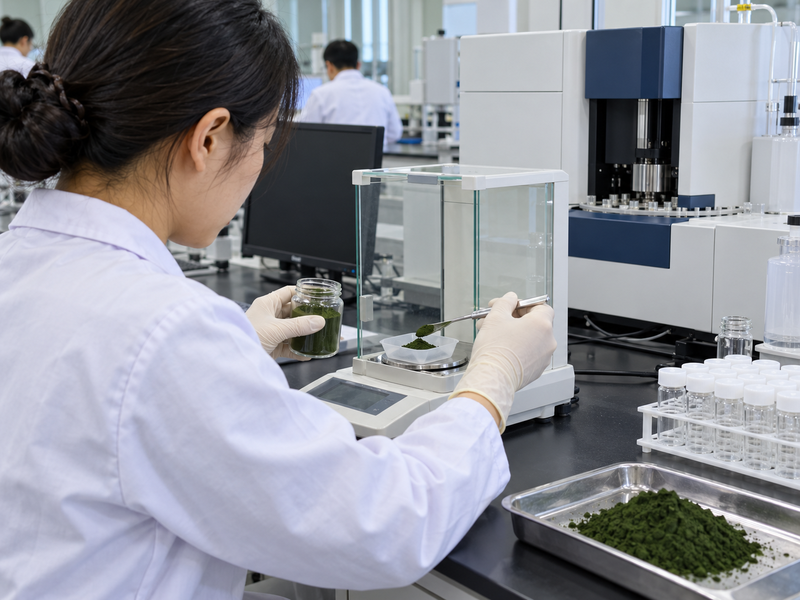
| Buyer check | Evidence to request | Decision it supports |
|---|---|---|
| Species and strain | Identity tied to protein history | Separate biological variation |
| Culture conditions | Nutrient and harvest controls | Interpret drift |
| Lot trend | Recent results with moisture | Set realistic minimum |
An original C. vulgaris cultivation study measured composition under different media, illustrating why one species can yield more than one protein result.
2. How is crude protein commonly estimated?
Read the method
Crude protein commonly comes from measured nitrogen multiplied by a chosen conversion factor. Chlorella biomass also contains non-protein nitrogen, so the factor changes how a laboratory percentage should be interpreted. A direct amino-acid-based estimate answers a different question. The original microalgal protein-method paper explains how a dedicated nitrogen-to-protein factor can be developed rather than assumed. In a supplier comparison, request the nitrogen method, factor, sample preparation and whether the value uses dry or as-received mass. If a COA says only “60% protein,” a buyer cannot reproduce the number or compare it fairly with another grade. Keep total-protein and amino-acid-quality claims in separate review fields.
Here is the evidence check: Put the nitrogen method and factor beside every quoted percentage. Request amino acid analysis when protein quality drives the claim.
3. What does dry basis mean?
Remove moisture from the comparison
Dry-basis protein divides the protein amount by dry matter, while as-received protein includes water in the denominator. If two powders have different moisture, direct comparison of one dry-basis figure against one as-received figure overstates the gap. Use dry matter fraction to convert explicitly. Dry basis removes water from the denominator; as-received basis describes the purchased powder. For example, an illustrative 60% dry-basis result at 5% moisture converts to 57% as received. The numbers are not two assays of different lots; they are two expressions of one result. A buyer should calculate both and use as-received mass for recipe and cost planning. Verify that the COA’s moisture test and protein test refer to the same batch.
Use a simple calculation when quotes differ. If one final powder contains 5% moisture and reports 60% protein on dry matter, its as-received value is 60% × 0.95 = 57%. If another reports 58% as received, the latter is higher on a purchased-mass basis despite the lower-looking headline. These values are illustrative, not typical Chlorella specifications. Write both formulas in the comparison file so a reviewer can reproduce the ranking.
Make the comparison fair: Recalculate each offer on both bases and label the columns. Never compare a dry-basis warranty directly with an as-received competitor value.
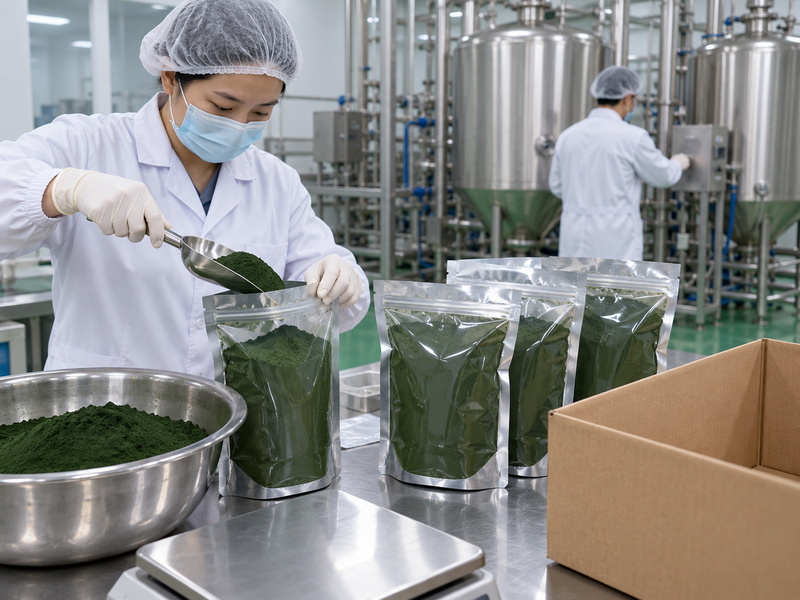
| Buyer check | Evidence to request | Decision it supports |
|---|---|---|
| Dry basis | Protein divided by dry matter | Compare intrinsic solids |
| As received | Protein per purchased mass | Calculate formula input |
| Moisture | Same-lot water fraction | Convert between bases |
4. Can disruption increase protein percentage?
Separate access from quantity
Breaking cells may increase extractability in a particular assay or downstream process, but it does not create protein mass. An apparent increase can reflect removal of other components, changed analytical recovery or a different basis. Research on bead milling measured protein release under defined conditions, which is distinct from total crude protein. Disruption may release more soluble protein in a specified assay without creating additional protein in the biomass. If the supplier claims a higher “protein content” after milling, ask whether its calculation changed, whether non-protein material was removed or whether the result actually measures extractability. These distinctions affect a protein isolate process differently from a whole-powder food. Compare total nitrogen and soluble fraction as separate attributes rather than merging them into one percentage.
Follow the process trail: Ask for paired before-and-after assays with a mass balance. Keep total content and accessible fraction on different specification lines.
The original bead-milling study measured soluble-protein release, a different endpoint from total protein content.
5. Which specification number is useful?
Set a realistic acceptance band
Choose a minimum from supplier lot data, your formula need and assay precision. If protein only informs general nutrition messaging, an extremely tight range may add cost with little benefit. If a protein claim on a finished label depends on the ingredient, include finished-product calculations and safety margin. A useful minimum should reflect the approved supplier’s lot distribution, analytical precision and the finished formula’s needs. An aggressive number copied from one best batch can lead to needless rejects; a loose number can jeopardize a declared claim. If several suppliers are involved, test each with the same method and state whether the minimum applies on dry or as-received basis. Leave an investigation band above the formal failure point if trending would help.
Try this in a pilot: Set a justified minimum and a separate alert level. Confirm the finished product still meets its claim at the low-end accepted ingredient value.

| Buyer check | Evidence to request | Decision it supports |
|---|---|---|
| Minimum | Lowest acceptable tested value | Protect formula claim |
| Alert level | Trend threshold above minimum | Investigate early drift |
| Method precision | Repeatability of nitrogen assay | Avoid false rejection |
6. How should amino acid evidence be handled?
Check the claim behind the number
Total protein percentage does not describe amino acid profile or digestibility. If your commercial claim depends on protein quality, request appropriate amino acid analysis and use the relevant market rules. A species comparison study can guide questions but cannot validate your supplier batch. Protein percentage does not describe the distribution of indispensable amino acids or how much is available after digestion. A buyer developing a protein-positioned product may need amino acid analysis and an appropriate quality evaluation. A general nutrition brand may instead need only a reproducible crude-protein result. Keep the analytical request proportional to the promise on the label. Do not apply an animal study’s ranking to a different commercial strain or finished formula.
Put it in writing: State the intended protein claim before ordering extra assays. Review amino acid and digestibility evidence only under the relevant product rules.
7. What belongs in a lot result?
Capture comparability fields
The COA should show sample identifier, method, conversion factor, measured nitrogen or protein result, unit, basis and moisture. Ask whether replicate testing or a contract laboratory was used. Retest a split sample if the result falls near a contractual limit or diverges from the supplier trend. A lot result should include method, factor, sample basis, moisture and the measured percentage. Check laboratory date and whether the sample came from final powder after all processing. If the supplier uses an external lab, keep its report or a clear reference to it. When a value is close to the minimum, a qualified split-sample retest may resolve uncertainty, but the hold decision must follow the agreed quality procedure.
At receiving, check this: Match each COA result to the shipment and calculate as-received content. Hold any lot whose method or basis differs from the contract.
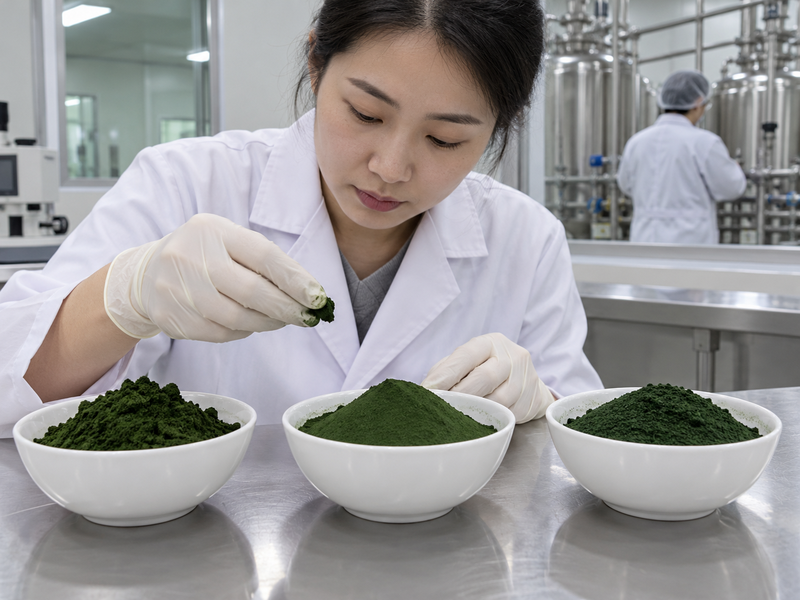
| Buyer check | Evidence to request | Decision it supports |
|---|---|---|
| Nitrogen method | Kjeldahl or Dumas details | Reproduce calculation |
| Conversion factor | Number applied to nitrogen | Compare supplier reports |
| Sample basis | Dry or as received with moisture | Calculate true ingredient input |
For covered US supplement manufacture, FDA’s CGMP guide requires appropriate component verification. Keep the protein method, basis and lot result with that decision.
8. How can a buyer compare quotes fairly?
Normalize price by accepted protein
Calculate protein kilograms per purchased kilogram on an as-received basis, then account for processing yield. This is an economic comparison, not a nutritional claim. A cheaper powder with lower content or high moisture may cost more per usable protein kilogram. Sensory and safety still decide whether the material is fit for use. For sourcing economics, multiply accepted powder kilograms by as-received protein fraction and expected production yield. Divide landed cost by usable protein kilograms only after safety and sensory approval. This calculation can reveal that a cheaper bag contains less usable protein, but it should not override a formulation defect. If two offers have different conversion factors, the derived costs are not comparable until both results use a common analytical basis.
Watch the risk pathway: Create a cost-per-usable-protein worksheet using tested lot values. Keep quality and application acceptance as gates before price ranking.
9. What if the COA result drifts?
Investigate trends
A slow decline can reflect a culture, nutrient, drying or method change. Ask the supplier for an investigation before the lot breaches the formal minimum. Check whether chlorophyll, moisture or other composition measures moved too. Trend rules make a partnership more predictable than surprise rejection at the loading dock. A drift toward the protein minimum may signal a change in nitrogen feed, harvest stage, moisture or assay practice. Plot protein beside moisture and chlorophyll to see whether several attributes moved together. Ask the supplier to investigate early rather than waiting for a failure. Review whether the lot pattern coincides with a new production season or process adjustment. Document actions and a follow-up result so the alert does not become an untracked email thread.
Count usable output: Agree on a trend trigger with the supplier. Request a documented investigation when results move outside the historic band.

| Buyer check | Evidence to request | Decision it supports |
|---|---|---|
| Protein series | Lot values over time | Detect composition drift |
| Moisture series | Same-lot percentages | Rule out basis artifact |
| Process events | Culture or dryer changes | Find cause of movement |
10. What is the purchase-ready decision?
Approve a defined assay
Set species and grade, total-protein method, conversion factor, basis, minimum and lab evidence. Confirm the range across multiple lots, then check the ingredient in the finished formula. Keep marketing claims under separate review. A purchase-ready protein specification identifies species, grade, method, nitrogen factor, reporting basis and minimum. The approval file should also show that multiple commercial lots meet it and that the lowest accepted value still works in the finished formula. Keep claims review separate from procurement release; a passing raw material does not automatically substantiate a finished-food claim. Recheck the basis whenever a supplier changes its laboratory or process.
The decision point: Sign a method-specific protein limit and require lot results. Approve marketing language only after finished-product analysis and market review.
FAQ
Is crude protein the same as measured amino acids?
No. Crude protein often derives from total nitrogen and a conversion factor; amino acid analysis answers a different question.
Why can two COAs report different percentages for one powder?
One may use dry basis and the other as-received basis, or methods and factors may differ.
Does breaking cells create more total protein?
No. It may alter release or assay recovery. Compare total content and soluble fraction separately.
Can one published percentage become a purchase minimum?
No. Use a same-grade commercial lot series, method precision and finished-formula needs to set a minimum.
What should a protein COA include?
Ask for method, nitrogen factor, moisture, result basis, value and the shipped lot number.
Practical next step
Normalize supplier protein results by method, conversion factor, moisture and reporting basis. Test the lowest acceptable ingredient value in the finished formula before setting the purchase minimum. Keep total protein separate from soluble release and amino-acid quality. The powder specification guide shows how to place the final limit on a controlled document. Measured commercial lots, not one attractive catalogue percentage, should drive the protein promise.