
“Broken cell wall chlorella” appears on many quotes, but the phrase rarely tells a formulation buyer how the powder was made. Chlorella cell wall disruption can involve different physical methods and different ways of measuring their effects. This guide helps buyers compare equipment, process records and end-use performance without assuming that a breakage claim proves a health outcome. Published research on wet microalgae processing describes bead milling and homogenization, while FDA preventive-control guidance frames the food-safety hazards a processor must assess.
Contents
- What does cell wall disruption mean in a purchase order?
- How do bead milling and homogenization differ?
- Why does feed condition matter?
- Which process records should buyers request?
- How can a supplier control foreign material?
- What changes during downstream drying?
- How should identity and grade be checked?
- What can a formulation trial reveal?
- Which process changes need notice?
- How should a buyer qualify the supply route?
1. What does cell wall disruption mean in a purchase order?
Replace a slogan with a defined process and result
Cell disruption describes physical damage to cell walls or membranes, but sellers use “broken cell” for several different process outcomes. One powder may contain visibly ruptured cells under a defined microscope method; another may show greater soluble-material release after homogenization. Those are not identical measurements. Start by naming the Chlorella species, source biomass, processing site, method family and intended analytical claim. Ask whether the purchased material is whole biomass with disrupted cells, an extract or a blend with carriers.
A quick test: request a sample specification that states how disruption is measured and what range a released lot must meet. If the supplier cannot provide a method, treat “broken cell” as a marketing description rather than a verified technical grade. The article on microalgae processing documents how processing parameters affect cell disintegration; its reported outcomes do not automatically apply to a supplier’s different strain or equipment. Keep claims about digestion or nutrient availability separate from a process specification. The buyer’s first need is a repeatable material, not an impressive percentage without a reproducible method.
2. How do bead milling and homogenization differ?
Compare the force applied and the controls it needs
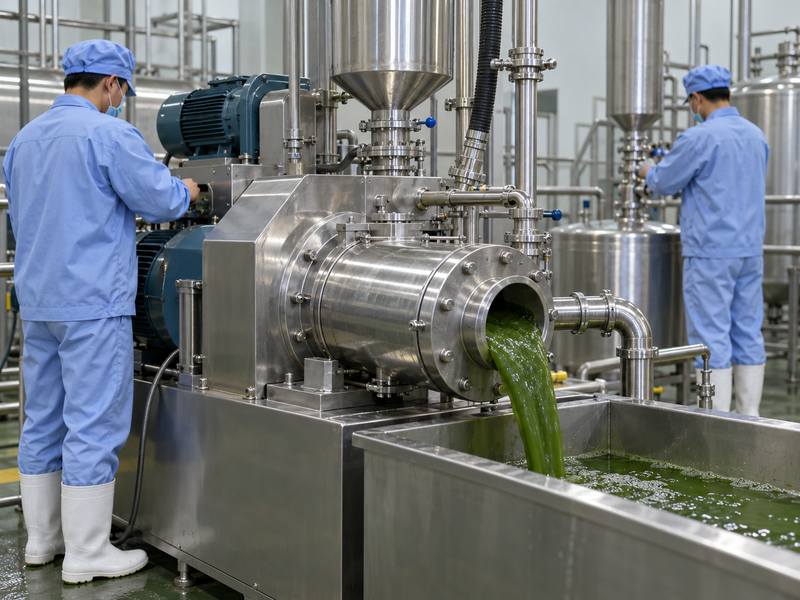
Bead milling moves biomass through a chamber containing grinding media. Impacts and shear can disrupt cells, but media size, wear, speed, solids loading and number of passes influence results. High-pressure homogenization pushes a suspension through a restriction, generating shear and pressure changes; pressure, pass count and inlet condition matter. Neither label guarantees a given disruption rate. Both methods can fit food production when equipment, cleaning, wear and downstream steps are controlled.
Ask for a process map: is the biomass wet or dried before disruption, and does the powder undergo more than one pass? A wet process may require another drying step, creating a different thermal and moisture history from a dry milling route. Peer-reviewed research comparing mechanical disruption approaches explains that different methods serve different recovery goals. For a buyer, the best choice is the one that produces a consistent powder for the intended formulation under documented food-grade controls. Request pilot samples from both routes if possible and compare the same measurable attributes after storage and use.
| Route | Main process variables | Buyer checks |
|---|---|---|
| Bead milling | Media, speed, passes | Wear and separation |
| Homogenization | Pressure, passes, feed | Temperature and maintenance |
| Dry mechanical milling | Screen, energy, feed | Heat and dust |
| Unprocessed biomass | Drying and milling | Baseline performance |
3. Why does feed condition matter?
Control the biomass before it reaches the machine
Disruption results depend on incoming biomass identity, solids content, particle condition and harvest or drying history. A watery feed and a concentrated paste can behave differently in the same machine. If a processor buys dried chlorella from another supplier, the pre-processing route may affect what its “broken cell” result means. Ask for the incoming material specification and a lot genealogy that identifies culture, harvest and any interim storage. The plant should know when feed leaves its accepted range and how it adjusts or holds production.
Look for comparability: a supplier might report a high result from a small pilot batch and apply that number to commercial output without showing scale-up evidence. Request commercial-lot records spanning different feed lots. A useful qualification study measures both feed and output under the same analytical procedure. If incoming material already has damaged cells, the output percentage alone may overstate what the disruption step accomplished. Buyers do not need proprietary machine settings, but they do need evidence that process inputs and outputs stay controlled. Ask how the company handles a new strain, alternate grower or altered drying route before it sends material under the same product code.

4. Which process records should buyers request?
Follow one lot through each pass and hold
A batch record should identify incoming lot, equipment, production date, operator, processing passes or equivalent route, holds, cleaning status and output lot. Ask for calibrated or verified instruments where the process depends on measured pressure, temperature or flow. The supplier should define acceptable operating ranges and record deviations. A finished powder certificate without a corresponding production record gives little evidence that the claimed method ran as approved.
Follow the handoff: after mechanical disruption, is material transferred directly to a dryer or held in a tank? Every hold creates time, temperature and identity questions. Ask the supplier to show one redacted batch record, then compare it with the sample COA and packed lot code. If the process is continuous, the plant still needs a rule for creating lots and isolating output during a machine deviation. A simple mass reconciliation helps reveal unrecorded transfers. Keep a versioned process flow in the supplier file so a later change from milling to homogenization cannot slip in under the same grade name.
| Record | What it links | Why it matters |
|---|---|---|
| Incoming biomass | Source to run | Identity |
| Equipment log | Machine to run | Maintenance and setting |
| Transfer ticket | Wet output to dryer | Lot continuity |
| Pack record | Dried lot to bags | Shipment trace |
5. How can a supplier control foreign material?
Review machine wear, not just final sieving
Mechanical energy can create wear particles from media, seals or metal contact surfaces. Ask how the supplier inspects and replaces bead media, screens and moving parts. A downstream sieve or metal detector may help, but its capability depends on particle type and size. The FDA hazard-analysis resource includes physical hazards in food safety analysis. A processor should assess the particular wear mechanisms of its equipment and document controls suitable for its line.
A useful audit question: what happens when a bead mill loses media or a homogenizer part shows abnormal wear? The answer should cover shutdown, affected-lot boundaries, inspection and disposition. Cleaning between lots also matters because residue can carry over and block equipment. Request one maintenance record and one foreign-material investigation example, if available. Do not assume an attractive finished powder appearance proves particles are absent. Where product is sold for direct consumption, buyers may also request relevant finished-lot checks, but these should complement preventive equipment controls rather than replace them.
6. What changes during downstream drying?
Include the entire wet-to-powder route
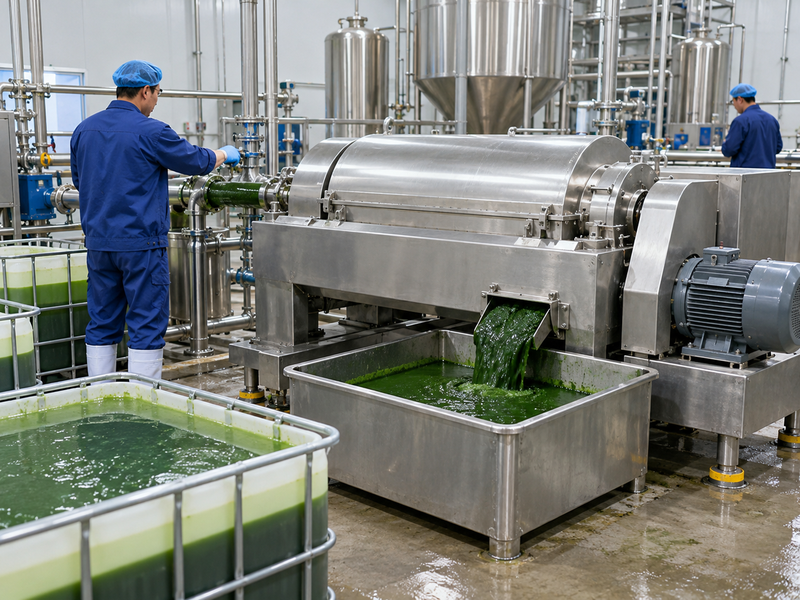
Wet disruption creates a material that often needs drying before it can become a stable powder. Drying conditions can influence color, aroma, particle behavior and microbial control. Ask whether the supplier uses spray drying, drum drying, freeze drying or another route for the exact grade. The choice affects heat exposure, powder texture and economics. A “cold processed” claim needs precise boundaries; a low-temperature disruption step followed by heat drying is not a wholly cold route.
Check the release chain: the supplier should define moisture or water activity and demonstrate that drying output meets its specification. ISO 18787 describes food water-activity measurement principles, but a buyer and supplier must still set product-specific acceptance values. Ask how the dryer is cleaned and how a wet batch links to a dried lot when runs overlap. Sample both start-up and steady-state output when qualifying the process. If powder clumps or loses green intensity during a formulation trial, investigate drying and packaging along with cell disruption. The finished ingredient reflects the whole route, not one machine.
| Downstream stage | Control question | Buyer evidence |
|---|---|---|
| Wet hold | Time and temperature? | Transfer log |
| Drying | Defined condition? | Run record |
| Milling or sieving | Particle target? | Size result |
| Packing | Moisture barrier? | Pack specification |
7. How should identity and grade be checked?
Keep species, disruption and purity separate
The supplier should identify the Chlorella species or approved identity description and use an appropriate method to confirm it. A microscopy image showing damaged cells is not, by itself, a species identity test. Similarly, a protein value cannot prove disruption. Ask for a finished-product specification listing identity, disruption method or result, relevant composition, microbiological limits, contaminants, moisture and particle size as appropriate to intended use. Requirements differ among food, supplement and other markets; buyers should confirm the destination’s rules.
Watch for substituted grades: a seller may offer “broken cell chlorella” in tablets, flakes and powder, each with different carriers or binders. Request a composition statement for the exact SKU. Compare COA, label and sample code; all should name the same grade. A change in culture source or processing site can affect identity and performance, so require notice. If the supplier uses a microscopy-based breakage percentage, ask for its denominator and counting rules. If it uses extractability, name the solvent and endpoint. A useful grade specification tells the buyer what will be delivered repeatedly, not just what one presentation slide showed.
8. What can a formulation trial reveal?
Test the powder in the intended product
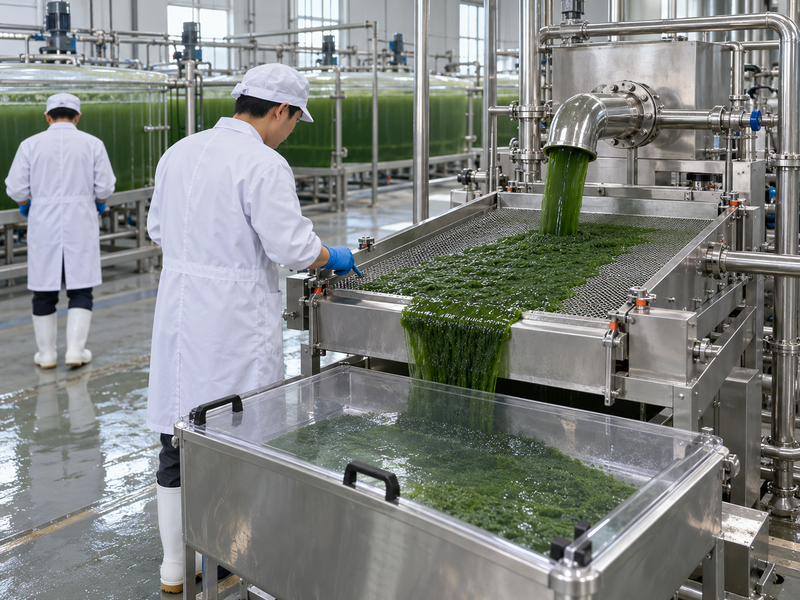
An analytical breakage figure may not predict how powder flows into a tablet press or disperses in a beverage. Run a controlled trial using the same inclusion rate, mixing sequence and process conditions for each candidate lot. Record color, aroma, dispersibility, sediment, dusting, bulk density or tablet behavior as relevant. If a claim concerns extraction or digestion, do not infer a clinical benefit from a mixing trial. The trial answers a manufacturing question: will this grade work reliably in your product?
Compare like with like: use fresh samples with matched pack age and storage history. A broken-cell sample that is finer may behave differently because of particle size rather than wall disruption alone. Ask the supplier to provide a process-control sample or unprocessed comparator if a technical comparison is needed. Document both positive and negative observations; green color intensity can mask sediment and flavor issues in a quick visual check. Retain sealed reference samples from approved trials. When commercial lots arrive, compare them against the trial’s specification and application result, not merely against a single COA line.
| End use | Trial measure | Decision issue |
|---|---|---|
| Tablet | Flow and compression | Consistent fill |
| Beverage | Dispersibility and sediment | Consumer appearance |
| Dry blend | Mix uniformity | Dose distribution |
| Sachet | Fill weight and dust | Packing efficiency |
9. Which process changes need notice?
Define changes before purchase
Cell disruption relies on machine type, wear state, feed condition and downstream drying. A switch from bead milling to homogenization can alter powder behavior even if the supplier reports the same breakage percentage. Require notice for equipment route, culture source, species, processing site, media material, drying method, carrier composition and test method changes. Agree on whether the buyer must approve a change before shipment or merely receive notice and evidence. The decision should reflect product risk and application sensitivity.
Keep the baseline accessible: store the approved flow, specification revision, trial-lot code and test method. When a supplier proposes a change, request side-by-side lots tested by the same procedure, plus an application trial for material differences. A new lab method may produce a different numerical result without any process change, so compare methods before altering the acceptance range. A quality agreement should identify an owner on each side and the minimum notification period. Purchasing alone should not accept a substitute grade on price if the food technologist has not checked its effect on the finished product.
10. How should a buyer qualify the supply route?
Approve a defined material from a defined process
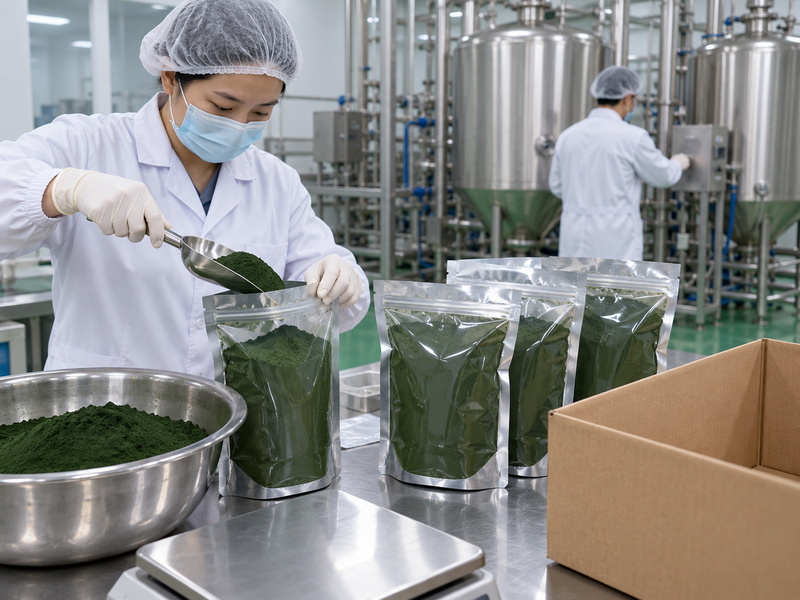
Qualification starts with a current specification and a sample from the same commercial route offered for ongoing orders. Review the cultivation source, disruption method, drying, food-safety controls, laboratory method and packing site. Then run a formulation trial and verify at least one commercial lot against agreed results. Ask for lot genealogy and a signed COA. Audit the processing step if volume or risk warrants it, with attention to equipment wear, sanitation and hold controls.
Before the first large order: write down what “broken cell” means in the purchase agreement. Define the measurement, acceptable range, batch identity, change-notice duty and dispute process. Chlorella cell wall disruption is a processing choice, not a universal quality score. The right supplier can show controlled operations and a powder that works in your application. Request two independently produced commercial-lot samples if variability matters to your line. That small investment can prevent costly reformulation after a seemingly attractive quote becomes a purchase commitment.
| Approval item | Question | Evidence |
|---|---|---|
| Route | Same as sample? | Process map |
| Breakage claim | Reproducible method? | Test protocol |
| Food safety | Hazards controlled? | Plan and records |
| Use-case fit | Works in formulation? | Trial report |
FAQ
Q1. Is bead milling always better than homogenization? No. Each route has different variables and must be judged against the intended powder specification and application.
Q2. Does a higher breakage percentage prove better health effects? No. A process measurement does not establish a clinical outcome.
Q3. Can a microscope image verify the entire lot? It can support a defined sampling method, but one field of view cannot represent a commercial lot by itself.
Q4. Should buyers ask about wear particles? Yes. Mechanical processing warrants equipment-maintenance and foreign-material controls.
Q5. Why review drying after disruption? Drying shapes the final powder’s moisture, color, texture and stability.
Closing note
Ask for a process map, a precise breakage method and samples made on the commercial line. Compare the powder in your real formulation and record the result. A defined route and repeatable specification will do more for procurement than an unsupported “broken cell” claim.