
A factory price can look attractive until freight, customs, testing and handling arrive on separate invoices. Blue spirulina wholesale landed cost is the cost of getting an accepted kilogram to the point where production can use it. Start with the exact grade and pack on the Spirulina CN product page, then build a shipment-specific worksheet. This approach helps procurement compare routes without mistaking a quoted product price for the full cost of supply.
Contents
- What does blue spirulina wholesale landed cost include?
- Which product and pack details must match?
- How do Incoterms change the cost columns?
- Which freight and handling charges are easy to miss?
- How should duties and taxes enter the model?
- Where do inspection and quality release costs belong?
- How should loss and usable yield be treated?
- What does an illustrative worksheet look like?
- How can buyers test freight and currency sensitivity?
- What must be checked before approving a route?
1. What does blue spirulina wholesale landed cost include?
Define the end point before adding numbers
Set the boundary at accepted stock ready for issue from your warehouse or contract manufacturer. That is later than arrival at a port and may be later than physical receipt. Include every buyer-paid cost from the seller’s agreed delivery point through that state: product, main carriage, origin and destination charges, insurance where purchased, customs handling, applicable duty, inland movement, receiving inspection and foreseeable loss. Keep recoverable taxes separate from true expense under your own accounting rules. A quote has value only after both sellers are brought to the same boundary.
Watch the handoff: a supplier may call a price “delivered” while naming an airport or port rather than your plant. Ask for the exact point and who pays unloading, customs broker and final-mile transport. Record each cost as a line, not a percentage hidden inside one landed-cost factor. A visible worksheet can be reused when a route or carrier changes, and it shows which estimate needs refreshing before the next purchase order.

2. Which product and pack details must match?
Start with a named SKU, grade, carrier, net weight per pack and quantity. A different color value can alter finished-product dose, while a different carrier can change labeling and acceptance. The specification checklist provides a related quality review. For landed-cost work, calculate both cost per accepted kilogram and cost per finished unit at an approved dose. Do not compare a 25 kg drum quote with a 1 kg pouch quote as if packaging carried no cost or operational consequence.
Put gross and net weights apart: freight may be charged on gross or dimensional weight, while formulation consumes net powder. Pallet material, drum tare and insulated packing can change transport cost. Note whether the order mixes lots or grades, since an extra lot can mean more certificates and receiving tests. A slightly dearer pack format may reduce open-pack waste at your plant. That benefit belongs in a separate, evidence-based line; it should not be invented as a generic saving.
| Product field | Worksheet entry | Reason |
|---|---|---|
| SKU and grade | Exact approved code | Dose and release basis |
| Carrier | Declared composition | Label and formula fit |
| Net/pack | Usable powder mass | Cost denominator |
| Gross shipment | Freight charge basis | Transport estimate |
| Lot count | Expected lots | Test and document load |
3. How do Incoterms change the cost columns?
An Incoterms 2020 rule allocates delivery, risk and cost duties under the sale contract; it does not supply a complete invoice total. The precise named place matters. Under FCA, the seller delivers at the agreed carrier handoff point; under DAP, the seller bears carriage and risk to the named destination before unloading, while the buyer generally handles import clearance. ICC’s official rule text explains the distinction. Cost and risk can transfer at different stages under C rules, so “freight paid” should not be read as “seller bears all transit risk.”
Write the whole phrase: “FCA [precise facility or terminal], Incoterms 2020” provides more guidance than “FCA China.” Then show which legs the quote includes, and add any buyer-paid legs below it. Ask who arranges cargo insurance and what cover applies. A landed-cost comparison can favor one rule or another only after logistics confirms practical clearance and local delivery arrangements.

4. Which freight and handling charges are easy to miss?
Get a route quote that separates pickup, export handling, main carriage, terminal handling, broker fees, inland delivery and any temperature-protection packaging. Small air shipments may attract minimum carrier charges; a larger sea movement can attract terminal and storage charges. Neither mode has a universal landed-cost advantage. Demurrage or storage can arise when paperwork or inspections delay release. Model those as scenarios rather than pretending every shipment will incur them. Confirm whether quoted freight is based on actual, gross or dimensional weight.
Look at the calendar too: cheap transport that arrives after a planned production date may force an urgent replacement shipment. Compare the normal route with a contingency route and record the decision trigger. Ask the forwarder whether the quote includes fuel, security and delivery surcharges for the booking window. A freight line copied from an earlier shipment can become stale quickly. The safest comparison ties each cost to a quantity, route, term and dated quote, then notes which assumptions could change.
| Charge group | Typical evidence | Common omission |
|---|---|---|
| Origin | Forwarder estimate | Pickup or export handling |
| Main carriage | Carrier quote | Weight adjustment |
| Destination | Local agent estimate | Terminal handling |
| Clearance | Broker estimate | Document review |
| Inland delivery | Truck quote | Waiting and unloading |
5. How should duties and taxes enter the model?
Classify the actual product for the destination with a qualified customs specialist rather than borrowing a code from a marketing sheet. The ingredient’s composition, form, use and destination rules may affect classification and admissibility. Apply the rate that belongs to that classification and origin, using the correct customs value basis. Record any preferential treatment only when origin evidence supports it. Keep import duty, customs fees and tax in separate cells; taxes may be recoverable for one buyer and a real cost for another.
A useful control: have finance and the broker sign off the assumptions before procurement issues a purchase order. Retain the tariff ruling or classification rationale, current rate source, currency rate and invoice terms. Avoid a universal percentage copied across countries. A change in pack size or declared composition can prompt a classification review. The site’s export documentation guide helps frame document requests, though the destination authority decides import treatment.
6. Where do inspection and quality release costs belong?
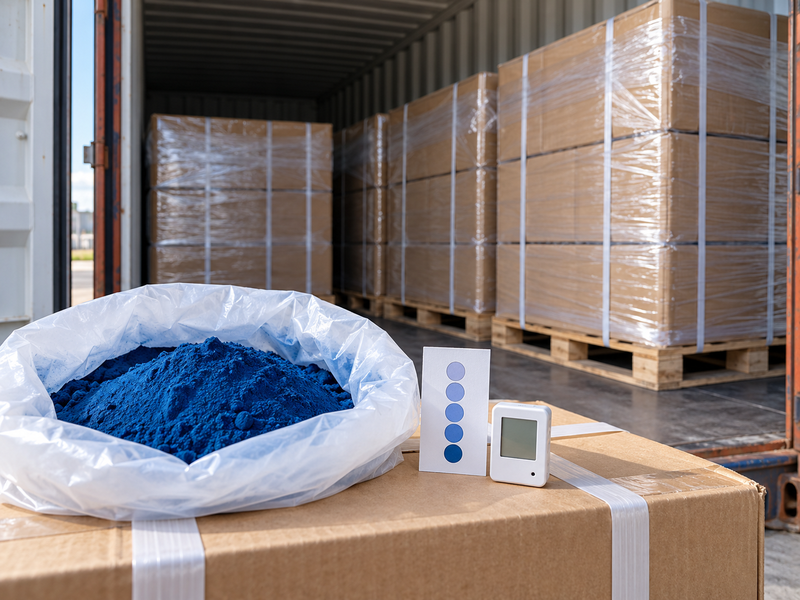
The commercial shipment is not useful until the buyer’s required tests and records pass. Add sampling, laboratory fees, brokered inspection if used, quarantine storage and internal handling where material. If the supplier sends multiple production lots in one delivery, each may create a separate review and test cost. Budget for method-specific checks of identity, color, contaminants and microbiology under your signed specification, rather than an open-ended “QA surcharge.” The COA guide shows why actual results and lot identity matter.
Count the calendar cost: a week of quarantine affects available stock even when it does not create a large external invoice. The buyer may need a buffer or an earlier order. In U.S. food operations, FDA supplier-evaluation guidance describes risk-based verification where applicable. That obligation is separate from the commercial price exercise. Landed cost should include the chosen verification activity without treating a COA alone as automatic release.
| Release item | Cost entry | Scheduling entry |
|---|---|---|
| Document review | Staff or service cost | Expected days |
| Sampling | Consumables and labor | Sample date |
| Laboratory | Test invoice | Turnaround range |
| Quarantine | Storage expense | Stock unavailable |
7. How should loss and usable yield be treated?
Use accepted kilograms as the denominator. Subtract verified transit damage, rejected packs, sampling consumption and any quantity that misses the approved use window. Never install a made-up industry shrinkage rate. A history of clean shipments may justify a small contingency; a new lane may need a wider scenario. Keep supplier credits and replacement terms visible because a damaged pack is not always a permanent buyer loss. Separate warehouse loss from formula process loss so the same kilograms are not counted twice.
Here is the trap: dividing total landed spend by kilograms on the bill of lading understates cost if some stock cannot be issued. Suppose an illustrative 100 kg shipment incurs 12,000 currency units in all costs and 96 kg is accepted. Delivered cost is 125 units per accepted kilogram, not 120. If the four rejected kilograms are replaced at the seller’s expense, revise the model once replacement timing and freight are known. The example teaches the denominator; it says nothing about expected rejection rates.

8. What does an illustrative worksheet look like?
Set up a transparent sheet with product spend, buyer-paid logistics, applicable border charges and quality costs. Divide by accepted kilograms, then multiply by approved dose if a finished-unit comparison is needed. The example below uses arbitrary currency units and invented numbers solely to show arithmetic. It is not a supplier price, freight tariff or duty quote. The actual workbook should link to dated quotations and retain each source document.
Run the check twice: compare the seller’s proposed route with a buyer-arranged route under a different named term, using the same destination and accepted quantity. If the alternatives differ in lot count or pack format, show that difference explicitly. A winning total may be fragile when one charge is estimated. Mark each line as firm, quoted or provisional and ask the responsible party for a refreshed figure before order approval. This simple discipline prevents a precise-looking total built from weak inputs.
| Illustrative line | Currency units |
|---|---|
| Product | 10,000 |
| Freight and handling | 1,000 |
| Duty and broker | 500 |
| Testing and receipt | 500 |
| Total | 12,000 |
| Accepted kilograms | 96 kg |
| Cost per accepted kilogram | 125 |
9. How can buyers test freight and currency sensitivity?
One landed total is less useful than a range showing what could move. Test a freight increase, an exchange-rate change, a partial shipment and a delayed receipt. If the preferred offer loses its advantage under a small, plausible change, seek a firmer quote or change the order pattern. Keep currency conversion at the payment date or contracted hedge rate specified by finance; do not combine rates from different dates. Distinguish supplier currency from local charges so analysts can update one driver at a time.
Ask a focused question: which three inputs account for most uncertainty? They may be final freight, customs classification and accepted yield. Assign an owner and latest confirmation date to each. An urgent air contingency can be modeled separately from the normal route; it should not make every regular shipment look artificially expensive. This sensitivity view is especially helpful for price-tier negotiations because a tier saving may be smaller than the route uncertainty. Present the range to management, not only a single decimal figure.

10. What must be checked before approving a route?
Confirm the exact approved SKU and pack; the contracted Incoterms rule with precise point; the real delivery path; the destination classification review; the required documents; and the inspection plan. Match the landed-cost sheet against the quote and purchase order so no fee is counted twice or omitted. Validate the quantity denominator as accepted powder, not invoiced powder. Give planning the expected date of QA release, since a cheap route that misses production can erase the saving through an emergency purchase.
Close the loop after receipt: replace estimates with actual invoices and accepted kilograms. Record the variance by line and update the next comparison. A useful landed-cost model is a living purchasing record, not a one-time exercise. Ask suppliers and forwarders for line-item offers tied to your quantity and named destination, then approve the route that delivers compliant material when production needs it. That decision protects both margin and supply continuity.
| Final check | Owner | Record |
|---|---|---|
| SKU and pack | QA/R&D | Approved specification |
| Named term and route | Procurement | Contract and quote |
| Border treatment | Broker/finance | Classification basis |
| Release timing | QA/planning | Test schedule |
| Actual variance | Finance | Post-receipt review |
FAQ
Q1: Is product price the same as landed cost?
No. Landed cost adds buyer-paid transport, border, receiving and quality costs through accepted stock.
Q2: Does DAP include import duty?
Generally no under Incoterms 2020. Read the precise contract and named place with the broker.
Q3: Should recoverable tax be included?
Track it separately and follow your finance team’s accounting treatment.
Q4: What denominator should a buyer use?
Use accepted kilograms available for production, with credits or replacements treated explicitly.
Q5: How often should the model be refreshed?
Refresh with every material change in route, quantity, duty treatment, currency or supplier quotation.