
A spirulina wholesale protein guarantee states what protein result a shipment of dried whole biomass must meet. A percentage on a sales sheet can hide different moisture bases, nitrogen factors, and test methods. That gap can turn a routine receiving test into an expensive argument. This guide shows buyers how to write a usable guarantee, check each lot, and resolve a disagreement. It draws on FDA dietary supplement CGMP guidance, which calls for established specifications and reliable verification when applicable.
Contents
- What does a protein guarantee actually cover?
- Which protein basis belongs in the contract?
- How should the assay method be identified?
- What range should buyers accept at receipt?
- How can moisture change the reported result?
- Which lot and sample should represent delivery?
- How should a supplier COA be reviewed?
- What happens when two laboratories disagree?
- How does protein affect commercial value?
- What wording belongs in a purchase order?
1. What does a protein guarantee actually cover?
Specify dried whole biomass, not an isolated fraction
Start with the product. A spirulina wholesale protein guarantee should apply to an identified grade of dried, whole Arthrospira biomass, including its normal nonprotein constituents. It should not quietly cover a concentrated protein fraction, a phycocyanin extract, or a formula containing carriers. A buyer who requests 60% protein from whole powder and receives an extract certificate has no comparable evidence. Put the scientific identity, form, added ingredients, site, and commercial SKU beside the protein term. A declaration for the same SKU should state whether any blending occurs after drying.
Protein percentage also needs a contractual purpose. A brand may use it for formulation arithmetic, a distributor for grade identity, and a tablet maker for consumer-label planning. Those uses create different consequences when a lot lands below target. Agree whether the number is a minimum release limit, a typical value for planning, or a label declaration supported by separate rules. A single brochure figure should never perform all three jobs. Record who can approve an exception and whether that approval changes only one identified lot or the standing grade.

2. Which protein basis belongs in the contract?
Distinguish as-received and dry-matter reporting
The denominator matters. Protein as received uses the actual powder weight, including its moisture. Dry-basis protein removes measured moisture from that denominator. Both may be legitimate reports, yet they are not interchangeable. If a supplier quotes a dry-basis minimum while the buyer checks an as-received sample, both parties can be technically consistent and commercially miles apart. Ask for a single acceptance basis and a companion moisture result from the same lot. State rounding rules as well: 59.95% can become 60.0% on a one-decimal COA, but it should not be accepted without an agreed rounding convention.
For illustration, 62.0% protein on a dry basis with 7.0% moisture corresponds to 57.66% protein as received: 62.0 × 0.93. This is arithmetic, not a recommended spirulina specification. Use your own validated grade limits and contract terms. If a finished product label uses a different basis or jurisdictional calculation, keep that work in the formulation and labeling file. The purchase specification should still make the inbound acceptance calculation reproducible by an independent reviewer.
| Reported basis | Calculation | Buyer question |
|---|---|---|
| As received | Protein mass / sampled powder mass | Was moisture measured on the same lot? |
| Dry basis | As-received protein / (1 − moisture fraction) | What moisture method and result were used? |
| Typical brochure value | Usually unspecified | Is it a binding release limit? |
3. How should the assay method be identified?
Lock the method, factor and report format
A method name alone can be too thin. Most commercial protein tests infer protein from nitrogen. The result depends on the nitrogen method and the multiplication factor named in the specification. Agree whether the laboratory uses a validated Kjeldahl or combustion method, which factor converts nitrogen to reported protein, and how nonprotein nitrogen is handled in the chosen claim. Request the exact method reference or laboratory SOP revision on the COA. If the supplier changes the method, compare paired samples before accepting a new series as equivalent.
The test report should show actual result, units, basis, moisture, method, factor, sample identity, and laboratory. A naked “protein ≥60%” line is hard to audit because it hides the calculation. For US dietary supplement manufacturers, FDA’s CGMP guide explains component specifications and the conditions for relying on a supplier’s certificate of analysis. Those duties depend on your role and product. The procurement clause should support the buyer’s own quality system rather than claim that a supplier COA automatically substitutes for it.

4. What range should buyers accept at receipt?
Separate grade target from a enforceable floor
A useful limit survives real variation. Start with several production lots tested by the same agreed method. Compare measured protein, moisture, production season, and storage age before deciding a minimum. A range borrowed from another supplier may reject suitable material or hide poor performance in your own process. Define the contract floor at receipt, a supplier release target that gives margin for uncertainty, and any separate formulation trigger. Do not set a universal spirulina protein threshold merely because it appears in online product listings.
Suppose a brand uses 58% as its internal as-received formulation assumption. It might require a higher supplier release target to reduce receiving failures, but the gap should reflect real method variation and commercial risk. It must be negotiated. A lot at 57.9% may be a minor formulation adjustment for one buyer and a label-risk event for another. Specify whether the response is rejection, price adjustment, blending approval, or technical review. Never leave an automatic discount formula to be invented during a dispute.
| Contract element | Example wording approach | Why it exists |
|---|---|---|
| Grade target | State an indicative planning value | Supports formulation estimates |
| Acceptance floor | State one basis and method | Creates an objective decision |
| Exception | Written buyer approval for named lot | Prevents silent specification drift |
5. How can moisture change the reported result?
Test moisture near protein and protect the sample
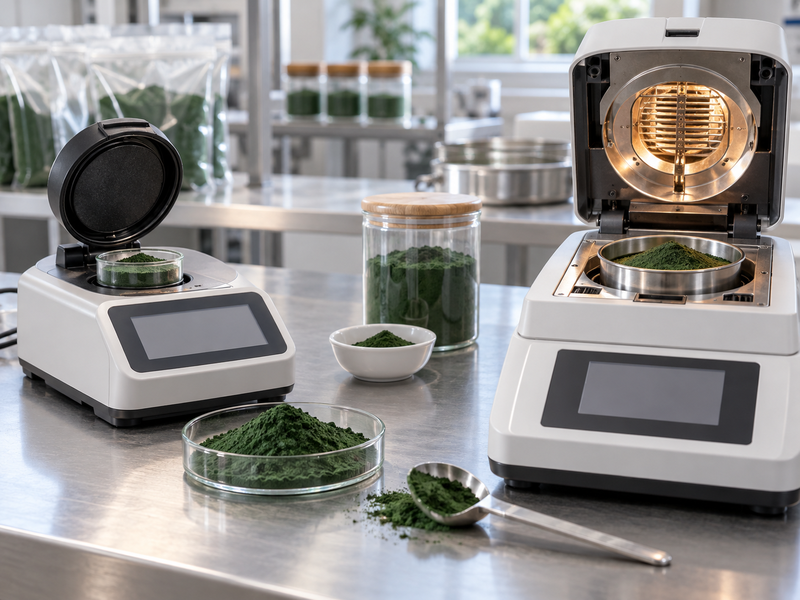
Protein and water move together on paper. More absorbed water can lower an as-received percentage even when dry solids have not changed. Conversely, a dry-basis calculation can make a damp shipment appear nutritionally similar while hiding handling or shelf-life problems. Keep moisture as its own acceptance attribute. A protein guarantee should never excuse wet, caked, or damaged powder. Ask the supplier to report moisture on the same representative lot and describe how sample jars are sealed before analysis.
Packaging and warehouse controls affect this comparison. If the buyer opens one bag on a humid loading dock and later sends a loosely closed sample to a lab, the result may reflect post-delivery exposure. Set a documented sampling window, promptly close or reseal opened units, and retain an unopened reference. The related guide on warehouse humidity control explains the storage controls in more detail. A fair claim requires evidence about material condition at handover, not just a number typed on a COA.
6. Which lot and sample should represent delivery?
Make the lot boundary match the physical shipment
One shipment can contain several lots. If ten pallets carry two production batches, request a result for each defined lot. A composite across both may conceal a failing batch, while a single bag pulled from an unrepresentative location can exaggerate risk. Write the lot definition, number of containers, sampling authority, and procedure into the purchasing file. Match bag labels, COAs, packing list, and retained samples before comparing protein results. An ingredient broker should be able to identify the upstream production lot even when it assigns a warehouse reference.
Sampling design is separate from assay precision. A competent lab cannot repair a poor sample. The buyer may use a risk-based receiving plan and a mutually agreed referee plan for disputes. Note exactly when custody transfers and which party pays for independent testing. For US supplement components, the FDA CGMP guide describes representative samples and quality-control review. Apply the requirements fitting your product and operation, then capture the commercial mechanics in the agreement.
| Sampling decision | Record before shipment | Avoids |
|---|---|---|
| Lot boundary | Production and packed-lot identifiers | Cross-lot averaging |
| Sampling point | Factory, port, or buyer receipt | Ambiguous condition at test |
| Retained units | Seal, custody and storage | Unrepeatable dispute |
7. How should a supplier COA be reviewed?
Reconcile document fields before trusting the percentage
Read beyond the bold number. A COA should identify the exact product, lot, production or release date, method, measured protein, moisture, units, basis, and authorized approval. Compare its lot and pack count with the invoice, shipping marks, and buyer’s specification revision. A mismatch might be clerical, but it should be corrected before the lot enters production. Ask whether testing was performed on a finished packed lot or an earlier bulk intermediate. If the powder was blended afterward, the earlier result may not describe what arrived.
Build a simple review trail: received document, reviewer, date, discrepancy, supplier correction, and release decision. This avoids reinterpreting the same file months later when a customer asks about a claim. An independent check can be scheduled by supplier performance and risk. It need not mean retesting every container. Link the COA review to receiving inspection, where seals and quantity can reveal problems a laboratory number cannot. Quality staff should own acceptance; purchasing should know when inventory remains on hold.

8. What happens when two laboratories disagree?
Use a pre-agreed referee procedure
Disputes are easier before anyone is angry. Put a staged procedure in the contract: verify units and basis, check transcription and moisture, review method revisions, then test a sealed retained sample at an agreed independent laboratory. Define whether a result near the limit triggers duplicate determinations and how uncertainty or rounding enters the final decision. The referee lab should use the agreed method and have suitable competence for that assay. Avoid averaging incompatible dry-basis and as-received numbers into a false compromise.
Set clocks for notice, sample release, analysis, and disposition. If powder is time-sensitive in the buyer’s schedule, specify whether unaffected lots can be used while a disputed lot remains quarantined. Decide freight, testing costs, replacement, and credits in the commercial agreement. A quality agreement can own communication and evidence; the purchase contract can own remedies. Neither document should allow the supplier to replace a failed lot’s number with a fresh sample from another batch. The exact lot under dispute stays central.
| Disagreement | Check next | Decision record |
|---|---|---|
| Same basis, different result | Sampling and lab uncertainty | Referee result for named lot |
| Different bases | Moisture and conversion | Comparable recalculation |
| Different methods | Paired method study | Approved method for future lots |
9. How does protein affect commercial value?
Compare usable ingredient, not a headline percentage
A higher assay is not automatically a better buy. Compare delivered cost per kilogram of usable powder, rejection rates, supply reliability, sensory fit, and actual formulation dose. A slightly higher protein grade may save ingredient weight in a protein-led recipe, yet it may cost more, flow poorly, or shift color. A powder for whole-spirulina tablets may be chosen for compression performance rather than one isolated protein number. Test the commercial use before paying a premium for a brochure claim.
Build scenarios using real supplier quotes. At a fixed addition rate, multiply powder mass by accepted as-received protein fraction to estimate protein contribution; keep finished-product processing losses and labeling rules in a separate model. That estimate is a planning tool, not a medical or nutrition claim. The landed-cost worksheet helps place testing, freight, and rejected kilograms beside invoice price. Document why a protein floor protects the formulation, then avoid chasing tiny assay differences that do not change the final product.

10. What wording belongs in a purchase order?
Give quality staff an executable acceptance rule
Write it so a stranger can apply it. The order should name whole-biomass grade and SKU, minimum protein on a stated basis, assay method and factor, companion moisture limit, lot definition, COA fields, sample plan, and receiving deadline. It should reference the current signed specification by revision. Include a clear path for out-of-spec lots and a referee laboratory process. If the supplier changes method, site, or process, require notice and approval under the change-notification agreement before the new result becomes the commercial baseline.
Read the clause alongside packaging, shelf life, contamination limits, and intended market. Protein alone cannot release an ingredient. Procurement can request a filled sample COA and a sample calculation before signing. Ask quality to try to reject or accept a fictional borderline lot using only the draft documents. If the team must email the salesperson for missing assumptions, revise the clause. This small rehearsal turns a marketing promise into a measurable condition and protects both sides during routine supply.
| Purchase-order field | Minimum detail | Responsible owner |
|---|---|---|
| Product and basis | Whole biomass, SKU, as-received or dry | Buyer and supplier quality |
| Test rule | Method, factor, limit, rounding | Analytical leads |
| Remedy | Hold, referee, disposition, cost | Commercial leads |
Closing recommendation
A spirulina wholesale protein guarantee works when both sides can reproduce the same result for the same lot. Define product, basis, method, moisture, sample, and remedy before ordering. Ask your supplier for a representative COA and review the clause with quality and formulation teams. That preparation saves production time and makes a disagreement less personal when a shipment matters most.
FAQ
Q1: Is a typical protein percentage a guarantee? No. Only an agreed specification or contract limit tied to a stated method and basis creates a clear acceptance rule.
Q2: Can dry-basis and as-received results be compared directly? No. Use the same lot’s moisture value to convert one basis before comparison.
Q3: Must buyers test every lot themselves? Follow the verification duties for your product and jurisdiction; use a risk-based plan and document any reliance on supplier results.
Q4: Does higher protein prove better spirulina? No. Identity, contaminants, moisture, process fit, traceability, and price still matter.
Q5: Should the same limit apply to powder and tablets? Only if their recipes, methods, and basis make the results comparable; write separate grade rules when they differ.