
Spirulina wholesale powder flowability describes how dried whole-biomass powder moves through storage, transfer, and dosing equipment. A grade can meet every chemical specification yet bridge in a hopper or vary at a filler. That loss appears as downtime, giveaway, and poor batch consistency. This guide shows how to define a useful handling target and verify it on a real line. USP’s Powder Flow chapter notes that no single simple method captures all powder behavior, so a bench result needs a process trial.
Contents
- Why does whole spirulina flow differently between lots?
- Which measurements describe powder flow?
- How do bulk density and packing affect the line?
- What should a buyer ask the supplier to report?
- How can a small line trial reveal trouble?
- Which equipment conditions should be recorded?
- How do humidity and time alter flow?
- What acceptance limits are useful?
- When should a supplier change trigger retesting?
- How should buyers qualify a grade for production?
1. Why does whole spirulina flow differently between lots?
Treat flow as a system property
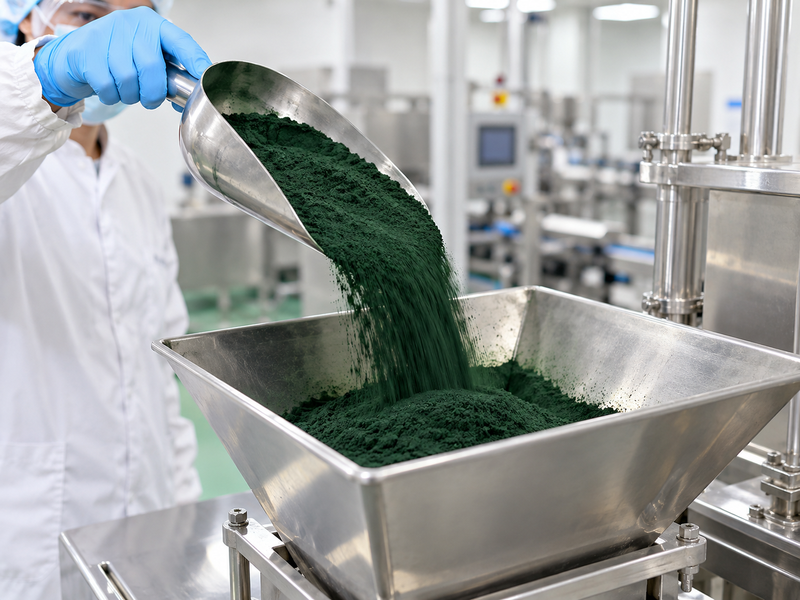
Powder does not read a mesh certificate. Two whole-spirulina lots with similar sieve results can behave differently because particle shape, fines, surface moisture, electrostatic effects, and consolidation differ. Drying and milling history can alter how particles form clumps. Bulk packs experience vibration and stacking, which may increase compaction before arrival. A flowing laboratory jar can therefore become a reluctant hopper discharge after weeks in transit. Record where poor flow appears: transfer line, screw feeder, capsule filler, sachet machine, or tablet blend.
Start with a concise problem statement. “Powder occasionally bridges after an overnight pause” is more actionable than “flow is bad.” Note temperature, relative humidity, bag-open time, hopper level, and throughput during the event. Compare with an approved reference lot under similar conditions. Do not assume a finer grade always solves a feeder problem; it may increase cohesion. The USP Powder Flow chapter explains why multiple methods exist and why powder behavior cannot be reduced to one easy number.
2. Which measurements describe powder flow?
Choose tests that connect with your failure mode
Measure the behavior you need. Angle of repose can offer a quick comparative view but depends on apparatus and technique. Bulk and tapped densities describe packing under different conditions. A compressibility index or Hausner ratio derives from those densities; neither guarantees continuous feeder performance. A shear-cell test may better examine consolidated material and hopper design, though it needs equipment and expertise. Orifice discharge tests can reflect a particular opening size but are sensitive to setup.
Agree sample conditioning, test procedure, replicate count, and reporting units before comparing suppliers. Ask for actual values, not “free flowing.” Run several approved and troublesome lots through the same laboratory method to see which metric predicts your line problem. If none does, use the method only as background and place more weight on a controlled production trial. For tablets or capsules, the relevant blend may contain excipients; measure the final blend separately from incoming pure spirulina. Avoid implying that a raw-material assay predicts every downstream mixture.
| Measurement | Useful question | Main limitation |
|---|---|---|
| Bulk/tapped density | How tightly does powder pack? | Depends on vessel and tapping method |
| Angle of repose | How does a loose pile form? | Weak predictor of a loaded hopper |
| Shear testing | Will consolidated powder discharge? | More complex setup |
3. How do bulk density and packing affect the line?
Convert kilograms into actual fill volume
Your machine handles volume as well as mass. A low-density lot occupies more hopper space for the same kilogram quantity. A volumetric feeder set using a denser reference may underdose when a new lot arrives. Changes in packing can also alter bag fill and pallet utilization. Measure loose and settled density using an agreed procedure, then relate those values to feeder calibration and consumer-pack weight control. The result should guide a setup check, not replace direct net-weight verification.
Suppose one approved lot fills a hopper at 450 grams per liter and a proposed lot at 390 grams per liter under the same test. That illustration suggests about 15% more volume for the same mass, yet it does not by itself prove unacceptable flow. Run the proposed lot and measure actual dose variation. Check if bag inversion, transfer, or repeated vibration changes density before the powder reaches the dosing screw. Use the demand-forecasting guide for mass planning while using density data for equipment capacity.
4. What should a buyer ask the supplier to report?
Request method details with each relevant value
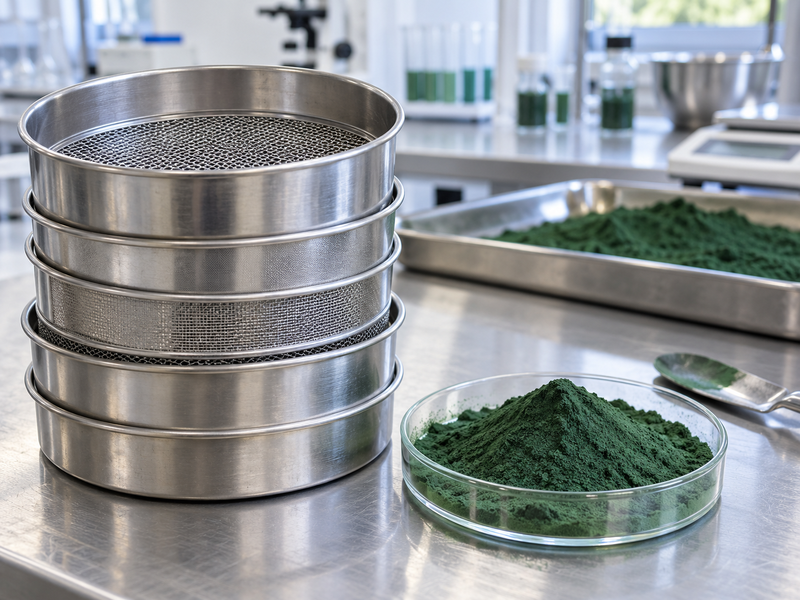
A number without a method is a decoration. Ask for bulk density, tapped density if useful, moisture, particle-size distribution, and any established flow test for the named grade. The report should identify lot, sampling point, sample conditioning, apparatus, method revision, replicates, and individual or summary results. Compare that data with a retained approved lot. A supplier may have excellent production controls yet use a different funnel or tapping procedure; numbers cannot be compared honestly until methods align.
Do not request an elaborate test panel simply because it exists. Choose indicators linked to a known hopper, filler, or blending risk. Put any binding limit into the purchase specification only after trial evidence shows a sensible range. Ask whether the supplier can notify changes in drying, milling, sieving, or packaging before dispatch. A change can shift flow while leaving protein and contaminant results steady. The quality agreement should state who reviews those notifications and what data are needed before a new process is used for your grade.
| Report field | Why request it | Follow-up if missing |
|---|---|---|
| Lot and sampling point | Connects result to delivered goods | Request packed-lot linkage |
| Method and conditioning | Makes comparison repeatable | Run matched side-by-side test |
| Moisture and density | Explains handling shifts | Check pack exposure |
5. How can a small line trial reveal trouble?
Run the same start, stop, and refill pattern
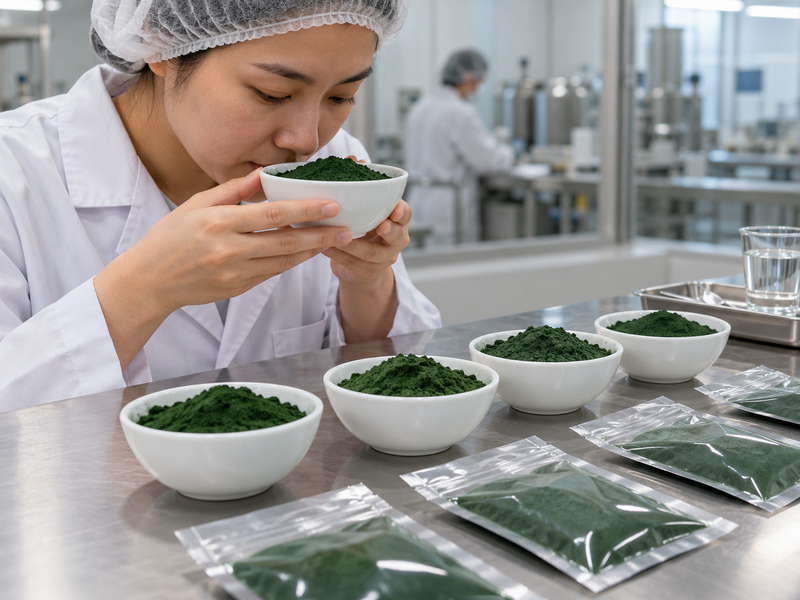
Watch the line after the easy minute. A short pass through an empty hopper may look perfect while trouble appears at low fill, restart, or after a pause. Build a trial that includes bag opening, transfer, stable run, stop, restart, and near-empty discharge. Measure feeder output over timed intervals, net-weight variation, rejected packs, operator intervention, cleanup time, and residual powder. Include at least one representative pack that has undergone the intended logistics route.
Compare the candidate with an approved lot on the same equipment and settings. If a supplier sample is unusually fresh or specially milled, it may not represent routine supply. Request a commercial-lot sample and confirm its lot code. Conduct trials with trained staff and normal dust-control procedures. FDA food CGMP information highlights quality controls for manufacturing and holding; your trial should preserve hygienic handling while testing performance. Document the machine adjustments that rescue a lot, since repeated adjustments have a real labor cost.
6. Which equipment conditions should be recorded?
Make trial results transferable to routine production
The settings are part of the evidence. Record hopper geometry, outlet diameter, feeder type, agitation, vibration, screw speed, room humidity, powder temperature, transfer distance, and fill-weight target. Note whether the equipment was empty, partly full, or packed from a prior shift. A grade may be workable with a specific agitator but fail in a passive gravity chute. Without settings, the phrase “passed line trial” tells a future production manager very little.
Measure output in units relevant to your business: kilograms per hour, packs within weight tolerance, downtime minutes, and powder left in equipment. If operators tap the hopper manually, record that intervention rather than hiding it. Repeat after a realistic hold period if powder stays in a hopper overnight. Build a small comparison report that lists both technical results and practical burden. This allows purchasing to weigh a lower unit price against slower packing or increased giveaway. The landed-cost guide can carry those conversion costs into the buying decision.
| Trial condition | Record | Reason |
|---|---|---|
| Hopper fill level | High, mid and low | Detects bridging at low head pressure |
| Run pattern | Start, stop, restart | Reproduces routine shifts |
| Room condition | Temperature and humidity | Explains caking variation |
7. How do humidity and time alter flow?
Protect closed packs and control opened powder
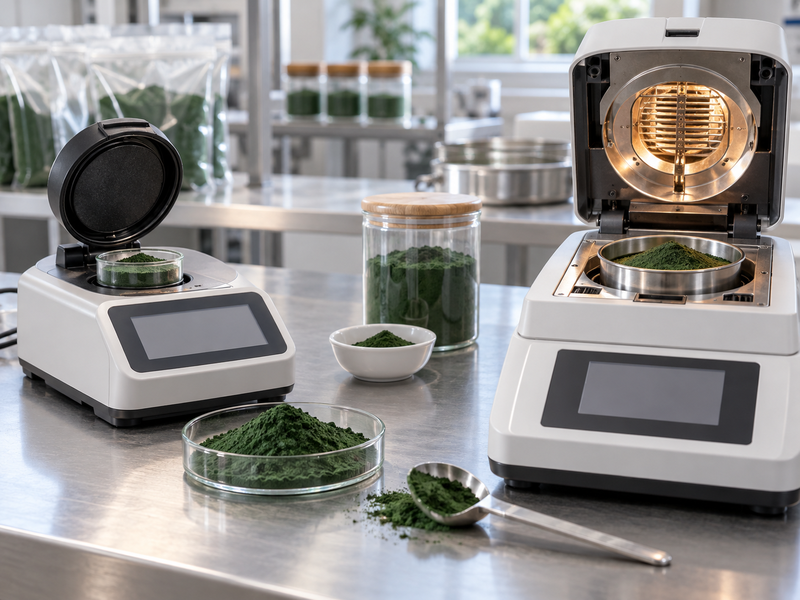
Yesterday’s good flow may change overnight. Whole-spirulina powder can be sensitive to moisture uptake depending on its packaging and environment. A sound unopened barrier pack may protect material through storage, while an opened bag left near a washdown area may cake. Define maximum open time, resealing method, staging conditions, and whether partially used packs return to stock. Record the actual moisture level of a troublesome sample, then compare it with an unopened retained unit of the same lot.
Do not assign one humidity target to every warehouse without pack and stability evidence. Monitor local conditions and validate the packaging and work instructions against your product. Codex food hygiene guidance calls for storage and transport conditions that protect food suitability. The companion warehouse-humidity guide addresses environmental control in detail. For flow qualification, the practical question is how long material can remain open under the actual production environment before discharge becomes unstable.
8. What acceptance limits are useful?
Combine a bench window with a process outcome
Do not worship one index. A buyer can set a density window and moisture cap for consistency, then require the grade to pass a defined line trial. The exact limits should emerge from approved lots, measurement variation, and equipment capacity. A narrow density range may reject perfectly usable powder; a broad range may fail to catch feeder drift. Evaluate the cost of each error before drawing a boundary. A conditional acceptance band can trigger additional trial or setup checks rather than automatic rejection.
Write limits as measured values with method, basis, sampling point, and revision. Decide how to handle borderline results. If an incoming lot falls outside the agreed bench window but runs well on the line, quality may approve a named-lot concession with documented evidence. If it passes the bench test but repeatedly jams, do not force release because the COA looks good. State who may authorize adjustments. A purchase specification should serve the production outcome, not merely produce neat numbers in a table.
| Control | Possible decision use | Evidence needed |
|---|---|---|
| Moisture | Hold for quality review | Lot result and sample custody |
| Density window | Trigger feeder setup check | Matched test method |
| Line performance | Approve routine grade | Repeatable commercial trial |
9. When should a supplier change trigger retesting?
Look past the specification sheet revision
The same specification can hide a new process. Changes in cultivation, harvest, drying, milling screen, blending practice, pack material, or production site may alter particle behavior. Ask the supplier for advance notice of changes with potential to affect handling. Request paired flow data and a representative sample before routine shipment. A minor administrative document correction may need no trial; a new mill or drying profile often deserves one. Define those tiers in the change-notification guide.
Compare a change sample against the approved reference using the same equipment and the same testing conditions. If the buyer also uses tablets or capsules, test the relevant downstream process. Preserve both sample records and approval decision so future personnel understand why a new lot was accepted. A supplier that sends a new grade without notice may cause a line stoppage even if it meets chemical limits. The contract should give the buyer a path to hold and evaluate affected lots rather than argue about whether flow was “always included” in quality.

10. How should buyers qualify a grade for production?
Close the loop between lab, plant and contract
Make approval reproducible. Obtain a commercial-lot sample, record its origin and pack, run agreed bench tests, and complete a line trial with defined acceptance measures. Review at least several lots when supply continuity matters. Put approved ranges, sample conditioning, change triggers, and exception authority into a controlled specification. Train receiving and production teams on what to do when a value or line behavior drifts. Keep an approved reference sample under appropriate storage conditions for future comparisons.
Procurement should also check availability, lead time, and total conversion cost. A powder that flows beautifully but arrives late is not a qualified supply solution. A powder that needs a small standard feeder adjustment may be commercially sound if that adjustment is documented. Review performance after the first production runs and revise the specification only through change control. That is how spirulina wholesale powder flowability becomes a useful purchasing attribute rather than a vague adjective on a quote.
| Qualification step | Output | Release question |
|---|---|---|
| Matched bench tests | Lot values and method | Are results comparable? |
| Commercial line run | Throughput and rejects | Does powder perform? |
| Controlled approval | Spec and change triggers | Can future lots be judged? |
Closing recommendation
Spirulina wholesale powder flowability needs more than a funnel score. Match test methods, packaging, and real equipment behavior. Ask a supplier for commercial-lot data and run a controlled pilot before scaling volume. Your operators will notice the difference long before a spreadsheet does.
FAQ
Q1: Is flowability the same as mesh size? No. Particle size is one influence; cohesion, moisture, shape, and consolidation also matter.
Q2: Does angle of repose predict hopper performance? It can help compare samples, but a line or shear test may better address a loaded hopper.
Q3: Why report bulk density? It helps translate mass into fill volume and alerts the buyer to feeder calibration changes.
Q4: Can a passing COA replace a line trial? No. Bench values cannot reproduce every production condition.
Q5: What supplier change deserves retesting? Any change likely to shift particle behavior, especially drying, milling, blending, or packaging.