
Spirulina wholesale receiving inspection is the documented check between delivery and release of whole-biomass powder or tablets. A matching COA alone cannot show that every bag arrived sealed, labeled, and in the quoted quantity. A rushed unload can also erase evidence needed for a fair claim. This guide gives purchasing, warehouse, and quality teams a shared sequence. FDA dietary supplement CGMP guidance describes component specifications and quality-control decisions for covered operations; each buyer should apply the rules that fit its product.
Contents
- What should happen before the truck arrives?
- What should the dock team check first?
- How are product identity and lot codes confirmed?
- Which document mismatches require a hold?
- How should seals and packaging be examined?
- What quantity and condition checks matter?
- When should the buyer sample or test?
- How should nonconforming goods be handled?
- Who decides that a lot can be released?
- What records make the process auditable?
1. What should happen before the truck arrives?
Prepare a receipt plan from the purchase order
Good receiving begins before unloading. Send warehouse and quality teams the current order, approved specification, expected lot count, pack size, supplier name, shipping reference, and any special storage instructions. Agree who will be available for a temperature or moisture concern, seal problem, or unexpected quantity. Create a receiving record with fields that match the actual order. A generic form that has no place for production lot or inner-seal condition will force staff to record evidence in scattered messages.
Ask the supplier for a shipment notice and lot-specific COA before arrival where practical. Pre-review documents can catch a wrong grade or an expired certificate while the goods are still in transit. Do not mark stock released simply because documents were emailed early; physical inspection still matters. Reserve a labeled quarantine space large enough for the order. If the lot needs a controlled environment, plan movement off the dock promptly. The lead-time guide should include this receipt and QA interval before inventory becomes usable.
2. What should the dock team check first?
Capture vehicle and pallet condition at handover
Look before breaking the wrap. Record arrival time, vehicle or container identity, seal number if used, visible cleanliness, dryness, odor, pest evidence, and signs of mixed incompatible cargo. Photograph pallet condition, crushed corners, water marks, or disturbed stretch wrap before unloading changes the scene. A clean COA cannot explain a soaked carton. If damage is visible, note it with the carrier according to the shipment terms and protect the material from further exposure.
The Codex General Principles of Food Hygiene address transport conditions that protect food from damage and contamination. Apply a risk-based check to the actual route: an ocean container may raise condensation concerns, while a short domestic truck run may involve frequent handling. The dock team need not decide final product safety. It should preserve facts, identify affected pallets, and move goods to a suitable hold area. Quality can then evaluate evidence without guessing what arrival looked like.
| Dock observation | Record | Immediate response |
|---|---|---|
| Wet or crushed carton | Photos and pallet position | Segregate affected packs |
| Seal discrepancy | Seal number and carrier note | Hold for investigation |
| Clean intact load | Arrival checklist | Continue inspection |
3. How are product identity and lot codes confirmed?
Match every physical unit to the approved order
Read the label, not the color. Whole green spirulina powder, tablets, blended products, and blue phycocyanin extract may all appear in one seller’s catalogue. Confirm the approved whole-biomass SKU, form, scientific identity where specified, net weight or tablet count, and production or packed lot on each unit. Compare the labels with order, packing list, and COA. A warehouse relabeling code should retain a traceable link to the original production lot. Do not combine different lots under one local stock number without preserving that link.
Count how many distinct lots arrived and verify that each has its own documents. If some bags have an unexpected code, hold those bags while the supplier explains it. A clerical correction may resolve the matter, but the buyer needs a controlled record of what changed. For US dietary supplement components, FDA guidance describes identity verification and component specifications for covered manufacturers. The receiving process should connect those technical requirements with physical inventory. A correct laboratory result attached to the wrong lot is not useful evidence.

4. Which document mismatches require a hold?
Check revision, lot, result and authorized release
Document errors are not all equal. A misspelled street name may need correction without changing product status; a COA for a different lot or grade prevents release. Compare specification revision, product identity, lot, production date, reported results, test methods where agreed, and supplier approval. Check import or organic documents if the order requires them. A certificate for the factory does not automatically establish that this delivered lot meets the purchase specification.
Create a discrepancy list with severity and owner. Ask for corrected documents through an authorized supplier contact rather than editing a PDF locally. Preserve the original and revised versions, with a reason for correction. If a required result is absent, quality may request testing or hold stock pending a valid record. For US supplement manufacturers, FDA’s CGMP guide explains conditions under which a supplier COA can be relied upon for certain component specifications. That is a controlled qualification decision, not a reason to accept any document sent by sales.
| Mismatch | Likely status | Next step |
|---|---|---|
| Wrong lot on COA | Hold | Obtain corrected traceable COA |
| Missing test method | Review | Check agreed specification |
| Minor address typo | Document correction | Confirm legal entity and history |
5. How should seals and packaging be examined?
Inspect the pack that contacts the ingredient
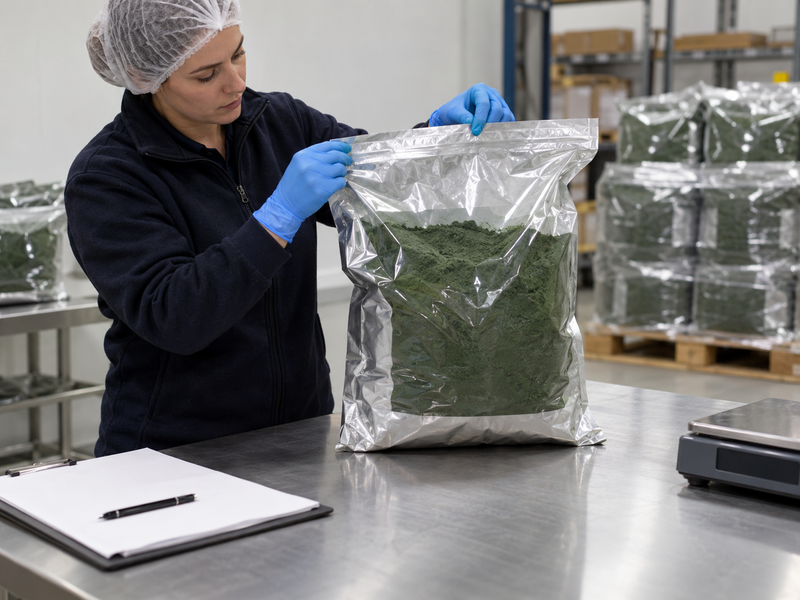
An intact carton can hide a torn liner. Check outer cartons or drums for holes, compression, wetness, and tampering. Inspect selected inner food-contact liners under an agreed plan without unnecessarily exposing powder. Record seal type, closure, liner integrity, and whether the actual package matches the approved configuration. A puncture or broken heat seal may allow moisture or contamination even when a current COA looks excellent. Isolate affected units and preserve their original condition for review.
Photograph any discrepancy before repacking. If a supplier proposes replacing a damaged outer carton at the dock, record who did it and keep evidence. Do not casually transfer powder into an unqualified bag to make inventory fit shelves. The warehouse-humidity guide explains why pack integrity and moisture protection travel together. Where tablets are supplied, inspect for dust and breakage under the agreed tablet-breakage limits as a separate physical attribute.

6. What quantity and condition checks matter?
Reconcile ordered, shipped and received units
Count before the pallets disappear. Verify pack count, declared net mass, pallet count, and any visible short shipment against the purchase order and packing list. Weigh a risk-based selection of packs if the contract or performance history calls for it. A difference between gross and net weight should be understood from the packaging specification. Keep each lot’s quantity separate. Mixed lots can have different dates or test results even when they share one invoice line.
Condition checks include abnormal odor, unexpected color shift, caking, foreign material, and package damage. They are screening observations, not substitutes for laboratory tests. Inspect under clean, controlled conditions and minimize exposure. If cartons show transit damage, count and document the affected units separately from intact stock. Decide whether a short shipment is a commercial claim, a label error, or a traceability concern. Assign each issue an owner. A receiving report with only “OK” hides decisions that matter for the next delivery.
| Reconciliation | Compare | Action on difference |
|---|---|---|
| Unit count | Order, packing list, actual | Shortage claim or correction |
| Lot count | Labels and COAs | Separate lot records |
| Pack condition | Approved packaging spec | Segregate suspect units |
7. When should the buyer sample or test?
Follow the quality plan for the intended product
Receiving inspection and lab sampling are related but different. The dock team records what arrived; trained staff collect representative samples under a controlled plan. Decide which identity, contaminant, composition, moisture, or physical tests are needed from the supplier’s risk profile and applicable rules. A test result from one convenient bag may not represent multiple pallets or lots. Record sampling location, tool cleanliness, container closure, custody, and retention.
Do not pretend every buyer needs the same panel or frequency. US supplement makers have specific component obligations; conventional-food buyers and importers may have different programs. The FDA CGMP guide gives a starting point for covered supplement operations. A supplier COA may support verification where the rules allow and the supplier has been qualified. Quality should document the test plan, exceptions, and release decision. This article focuses on the delivery-to-release handoff, not a full laboratory sampling protocol.
8. How should nonconforming goods be handled?
Keep suspect stock identifiable and contained
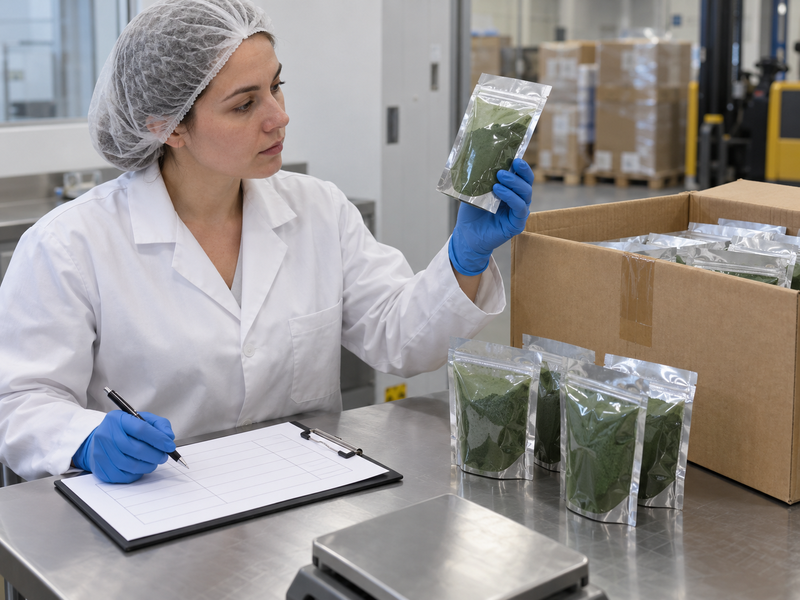
A hold must be physical and digital. Label affected pallets or bags, move them to a controlled location, and block use in the inventory system. Record reason, lot, quantity, discovery time, and evidence. Separate obviously damaged units from intact units while preserving the relationship to the original delivery. Ask quality to assess safety, specification, customer, and legal effects. Purchasing can coordinate supplier communication and commercial remedies, but it should not release material from hold alone.
Potential dispositions include rejection, return, replacement, documented concession, or approved rework. Rework such as screening tablets or repacking powder requires controlled procedures and traceability; it should not be a casual warehouse fix. Set a response time with the supplier so held stock does not occupy space indefinitely. If the same discrepancy repeats, investigate root cause and supplier controls. A quality agreement can name notification timelines and investigation duties, while the supply contract defines credits and freight.
| Finding | Immediate containment | Decision owner |
|---|---|---|
| Broken liner | Isolate pack and lot | Quality |
| Wrong documentation | Hold affected lot | Quality with supplier |
| Quantity shortfall | Record and claim | Procurement |
9. Who decides that a lot can be released?
Keep quality authority visible
Delivery is not release. Warehouse can confirm receipt and storage; quality decides whether specified evidence supports use. It reviews identity, documents, physical condition, testing, exceptions, and any supplier correction. The reviewer records the decision, date, lot, quantity, and approved destination. If only some pallets are released, inventory status must distinguish them. Production should see clear usable stock, not a mixture of pending and approved material under one code.
Define escalation for urgent campaigns before a shipment arrives. A line manager may need material quickly, but urgency does not erase a missing identity check or compromised packaging. If an approved deviation is possible, document its scope and rationale. For covered supplement operations, FDA guidance describes quality-control personnel roles in reviewing and approving decisions. The exact internal workflow may vary, yet the release authority should be named and independent enough to make a defensible call. Include expected QA time in lead-time planning.

10. What records make the process auditable?
Preserve the story of one shipment
A good file answers what happened without retelling it. Keep purchase order and specification revision, advance notice, transport and seal records, arrival photos, count reconciliation, lot labels, COAs, sampling and test records, deviations, supplier correspondence, and release decision. Link documents with the same receipt or lot ID. Protect original evidence and record who changed any data. Set retention according to applicable rules and customer contracts.
Review receiving trends rather than filing reports and forgetting them. Repeated damaged bags may point to a pallet design, repeated COA errors to supplier document control, and slow release to an unrealistic ordering calendar. Share those findings with purchasing and supplier quality. A concise scorecard can track damage, documentation, accepted kilograms, and time from delivery to release. Spirulina wholesale receiving inspection becomes useful when it improves the next shipment, not only when it explains the last one.
| Record | Key link | Future use |
|---|---|---|
| Receipt report | Shipment and lot | Reconstruct arrival |
| Deviation file | Affected quantity | Support disposition |
| Release record | Approved stock | Prevent premature use |
Closing recommendation
Spirulina wholesale receiving inspection should move each lot from arrival through hold to a recorded release. Prepare the checklist before delivery, preserve physical evidence, and let quality decide use. Ask your supplier for a sample document pack before the next shipment. A few careful minutes on the dock can spare days of uncertainty later.
FAQ
Q1: Does a COA replace physical receiving inspection? No. It cannot show transit damage, broken seals, or a short shipment.
Q2: Must every bag be opened? Use a risk-based inspection and sampling plan; opening every bag may create avoidable exposure.
Q3: Can warehouse staff release a lot? Only if your controlled quality system assigns them that authority with required evidence and training.
Q4: What if two lot codes appear on one pallet? Separate and trace each lot before release.
Q5: Should a damaged outer carton cause rejection? Assess inner-pack integrity, exposure, and specification impact before disposition.