
An invoice rate can make a shipment look cheap until freight, border fees, quality release and damaged packs appear. Spirulina wholesale landed cost answers a more useful question: what does each kilogram of accepted whole biomass cost at the point where production can use it? This guide offers a worksheet and a transparent example. The ICC Incoterms 2020 introduction helps buyers identify which transport costs and risks sit with each party; the named point on your actual quotation controls the model.
Contents: 1 · 2 · 3 · 4 · 5 · 6 · 7 · 8 · 9 · 10
1. What does landed cost measure?
Define the point and denominator
Landed cost adds the spending needed to get a product to a named buyer location. For a production decision, divide by usable kilograms released for use. As a result, transit loss, rejected packages and samples no longer count as productive ingredient. Before any freight calculation, identify whole dried Arthrospira biomass and its approved powder or tablet specification. In contrast, a quote for phycocyanin extract belongs in another model because product identity and use differ.
Set the boundary clearly: state whether the worksheet stops at port arrival, warehouse receipt or QA release. Then include only costs borne by the buyer under the actual contract. Ask finance how recoverable tax is handled. A refundable tax may affect cash flow without becoming final product cost. Also attach the date of each rate. Otherwise, a landed figure without route, currency, quantity and destination quickly becomes misleading.
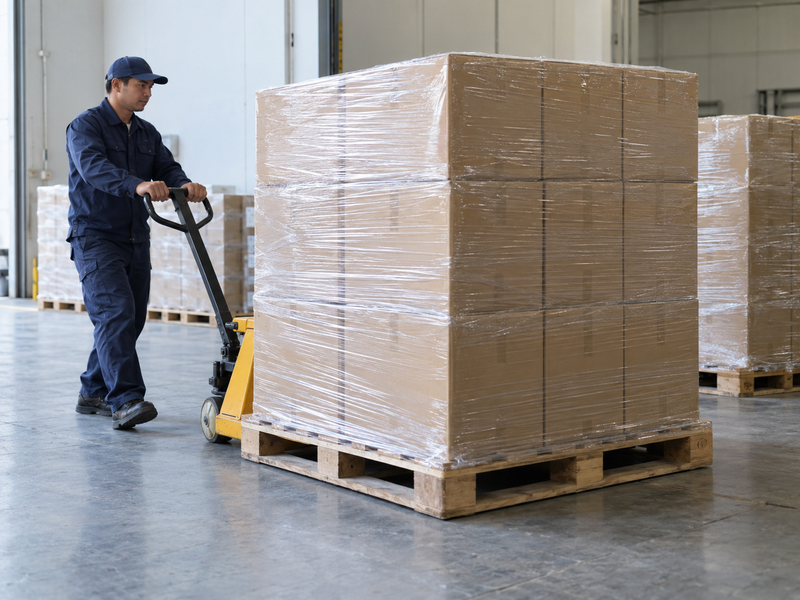
| Boundary | Cost included | Why record it |
|---|---|---|
| Supplier invoice | Product and packing | Starting value |
| Transport route | Freight and handling | Location cost |
| Border | Duty, broker and inspection | Import exposure |
| QA release | Tests and losses | Usable denominator |
2. Which product details must match before two quotes can be compared?
Lock the commercial specification
Two prices are comparable only when they purchase the same useful result. For example, record form, grade, pack net weight, liner, shelf-life evidence and acceptance tests. Note the particle profile if it affects your line. A supplier could quote a lower rate for a coarse powder that performs badly in your blend. Meanwhile, another might include sealed 5 kg packs instead of 25 kg bags that your line opens over several days. As a result, yield and operating costs can differ.
Ask for a matching quote sheet: request the same annual estimate, release size, delivery window and test scope from each seller. Also note any exception next to the price. A product specification and sample COA make the comparison traceable, but they do not guarantee the offered lot. Then review actual lot documents before release. The FAO spirulina production review describes cultivation and processing stages. As a result, a simple product name cannot establish dried-biomass quality.
| Product variable | Quote A | Quote B | Decision impact |
|---|---|---|---|
| Form and grade | Record exact SKU | Record exact SKU | Formula fit |
| Pack net weight | Record kg and count | Record kg and count | Open-pack loss |
| Lot tests | List methods | List methods | Release cost |
| Remaining life | Receipt requirement | Receipt requirement | Consumption window |
3. How do Incoterms change the cost columns?
Identify responsibility at the named point
Incoterms 2020 allocate delivery, risk and certain costs between seller and buyer. Write the exact rule, version and named place, such as a terminal or warehouse address. Otherwise, a three-letter rule leaves the freight worksheet unclear. Under some rules the seller pays for carriage to a destination while risk transfers earlier. As a result, your insurance decision may differ from the invoice’s freight line. Read the ICC explanation, then ask a forwarder to map your route.
A buyer’s check: mark each physical handoff and who pays for loading, carriage, terminal fees, clearance and final delivery. An Incoterms rule does not set title transfer, payment, product acceptance or quality claims. Instead, write those terms into the contract. If two offers use different rules, add missing buyer-borne items until both reach the same endpoint. Then a lower invoice can survive scrutiny or lose its apparent advantage for a clear reason.
4. Which freight and handling charges are often missed?
Build the route from door to door
Start with pickup, inland carriage, export handling, main freight, destination terminal, brokerage and final delivery. Next, ask about palletization, loading, fuel adjustment, minimum charges and storage after free time. A small shipment may incur higher freight per kilogram than a pallet even if it keeps inventory lean. However, a larger shipment may save freight and add warehouse, insurance and expiry costs. As a result, both effects belong in the same scenario.
Inspect the packing plan: moisture protection, liner integrity and pallet stability matter for a dried ingredient. For example, a freight claim may depend on clear evidence of condition at handoff and receipt. Photograph outer damage, record seals and identify affected lot codes. The UNECE CTU Code guides transport-unit packing; it does not certify an individual shipment. As a result, obtain route-specific pack and load evidence from the seller. Include only verified charges from current carriers in your financial version.
Also ask how a route quote handles waiting time, inspection holds and delivery appointments. A basic freight rate can omit storage after a missed customs document. A door-delivery quote may exclude unloading at your warehouse. Next, note minimum billable weight and whether consolidation preserves lot identification. For a pilot, express air shipment might be reasonable even though routine stock travels by sea. As a result, keep those routes as separate scenarios; the pilot’s cost and speed may not repeat at scale.

| Route charge | Ask who pays | Source document |
|---|---|---|
| Origin pickup | Seller or buyer | Incoterms quote |
| Main freight | Seller or buyer | Carrier quote |
| Terminal and broker | Seller or buyer | Forwarder estimate |
| Final mile | Seller or buyer | Local carrier quote |
5. How should duty, tax and currency enter the model?
Use the actual customs classification
Duty is not a universal percentage for spirulina. Instead, it depends on destination, origin, classification and current trade rules. Ask your customs specialist to confirm the declared description and tariff line for the exact whole-biomass product. Then record the customs value basis and fees separately. Do not copy a rate from another importer’s extract or finished supplement. For example, a product may cross several jurisdictions before reaching the buyer, so the import role must be clear.
Keep two views: an accounting cost view and a cash-timing view. Recoverable VAT or sales tax may not become final cost, but it can tie up cash. Meanwhile, currency risk may arise between quotation, deposit and balance payment. Set an exchange-rate date and a range rather than mixing rates. If a seller quotes local currency and a forwarder quotes dollars, convert both using one policy. Then recalculate when the shipment date or customs rule changes. Until final invoices arrive, the result remains an estimate.
6. Where do testing and release costs belong?
Price each lot, not just each kilogram
Incoming quality work often has fixed costs per lot: document review, sampling, lab tests and release. For example, four lots can cost more to test than one lot of the same mass. Ask which tests the seller performs and who pays for confirmation. Also agree how a dispute test is selected. The buyer’s test panel should reflect intended use and destination. FDA describes risk-based supplier evaluation under relevant FSMA rules. However, a low price cannot replace supplier qualification.
Make the hold visible: stock in quarantine consumes storage and cash before it becomes usable. Also add normal QA turnaround to replenishment planning. If a lot fails, enter return freight, disposal, retesting and urgent replacement as separate scenario lines. Do not average them into every shipment without evidence. An ISO/IEC 17025 laboratory may support confidence in test competence, but check its scope for the method. In this way, the worksheet separates routine costs from exceptions.
Lot count also changes sampling cost. For example, a large shipment split among several lots may need more containers, certificates and tests. Ask the supplier to state lot structure before quoting consolidated freight. If the buyer plans a composite sample, quality must approve whether it can detect the hazards and lot differences of interest. The worksheet should follow the actual sampling plan, not invent a one-test shortcut. Otherwise, the model understates cost when each lot needs a separate release decision.

| QA cost | Unit | Trigger |
|---|---|---|
| Document review | Per lot | Every receipt |
| Sampling | Per lot or pack plan | Incoming control |
| Lab panel | Per lot and method | Specification |
| Retest | Per dispute | Exception only |
7. How should loss and accepted yield affect the denominator?
Track kilograms through each gate
Start with shipped net weight. Next, subtract verified shortage, damaged packs and nonconforming material. Then account for samples and measured line loss if you want cost per kilogram in finished product. Do not blend a guessed defect allowance into invoiced weight. Also keep an expected scenario based on history and a separate stress case. This distinction helps when real receiving data arrives.
A useful chain: ordered → shipped → received → accepted → issued → incorporated. Each number answers a different question. For example, procurement may negotiate on ordered kilograms while manufacturing tracks incorporated kilograms. When comparing suppliers, use the same endpoint. A powder with better flow might cost more per accepted kilogram and less per incorporated kilogram. As a result, record how yield was measured and how many pilot runs support it. The trial-order guide explains how to gather that evidence before a larger order.
8. What does a simple worked worksheet show?
Use illustrative figures only
Suppose an illustrative order contains 500 kg at $15 per kg. Then the invoice is $7,500. Add buyer-borne freight and handling of $900, border and broker cost of $300 and routine testing of $250. As a result, modeled spend is $8,950. If 490 kg passes receipt and is expected to be used, landed cost is $8,950 ÷ 490, or about $18.27 per usable kilogram. However, these figures teach the calculation; they are not current market quotes or legal tariff rates.
Now change one input: if only 450 kg can be used before the last practical date, the same spend becomes about $19.89 per used kilogram. As a result, that gap may matter more than a small invoice discount. Ask finance whether carrying cost or tax cash timing belongs in its reporting. Also save each input’s source and date. Without that record, a precise-looking spreadsheet can be less reliable than a simple estimate.
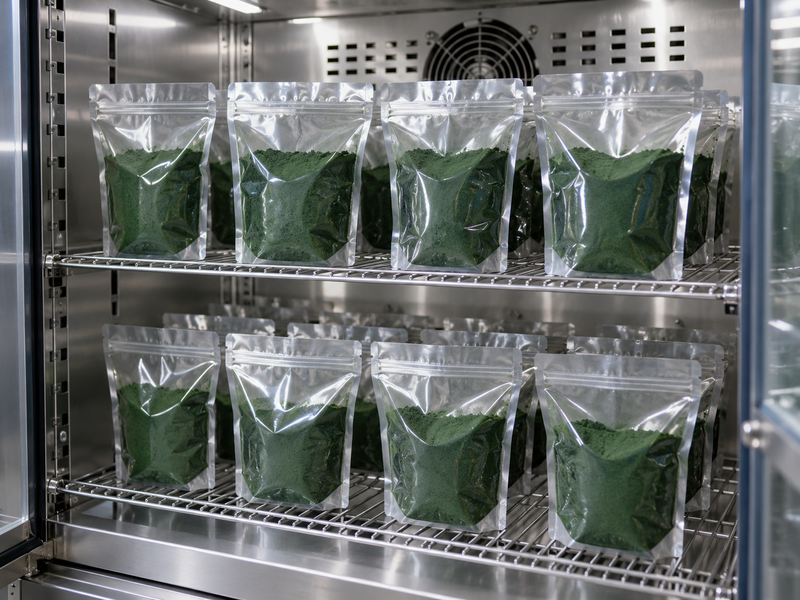
| Illustrative line | Calculation | Amount |
|---|---|---|
| Product | 500 kg × $15 | $7,500 |
| Freight and handling | Example quote | $900 |
| Border and broker | Example assumption | $300 |
| Routine tests | Example assumption | $250 |
| Total / 490 usable kg | $8,950 ÷ 490 | $18.27/kg |
9. How should buyers test freight and currency sensitivity?
Vary the inputs that move most
A single landed-cost figure can hide route and timing risk. For that reason, run a base case, a higher-freight case and a lower-accepted-quantity case. Also add an exchange-rate case if purchase currency differs from revenue currency. Next, compare two shipment sizes under the same demand assumptions. The table should show when freight savings no longer offset storage and expiry exposure. Keep the cases simple enough for a buyer to understand.
Watch the dates: carrier rates may expire before the ingredient quote, and customs estimates may use a different exchange rate. Store quote validity beside each cost line. If a high-risk route repeatedly damages outer cartons, the model needs pack or route redesign rather than a permanent, unexplained loss allowance. Review actual invoices and receiving outcomes after the shipment, then update the next estimate. The price-tier guide applies these scenarios to quantity discounts.
At reconciliation, distinguish forecast error from supplier performance. Excess kilograms may reflect the buyer’s own demand assumption. By contrast, carrier damage belongs to the route and claim process. A rejected lot needs a separate record of test cause and remedy. This breakdown tells purchasing what to negotiate next: order size, pack, freight service or quality controls. Otherwise, a single cost variance can prompt a price concession that never fixes the cause.
10. What should be checked before approving a route?
Reconcile commercial and quality assumptions
Require a current product offer, exact delivery term, named point, pack plan, lot documentation plan, forwarder quote, classification advice and buyer release schedule. Verify the warehouse can receive and store the chosen volume. Confirm who handles import clearance and how damaged shipments will be documented. Ask quality whether the proposed supplier, grade and testing route are approved. A low landed estimate is not a purchase authorization if the ingredient itself has not passed technical review.
The final gate: compare routes using total cost per usable kilogram and the time when material becomes available. The cheapest route can lose value if its longer or less predictable transit forces extra safety stock. Keep the approved version of the worksheet with purchase documents, then replace estimates with actual charges after delivery. Spirulina wholesale landed cost becomes more accurate shipment by shipment. Use the lead-time guide to connect cost and availability in one sourcing decision.
Check the source documents before sign-off
Next, ask the reviewer to check each line against its source document. An invoice may use net weight while a freight bill uses chargeable weight. Both can be correct, but the difference needs an explanation. Also confirm that routine testing was counted once per lot and that recoverable taxes follow finance policy. A short reconciliation note makes the model reusable when the buyer changes supplier, route or shipment size.
For example, keep the forwarder’s final bill beside the original estimate. Mark every changed fee and its cause. The next buyer can then update the route model without treating a one-time customs hold as a normal shipping charge.

| Final check | Owner | Proof |
|---|---|---|
| Product match | Quality | Approved specification |
| Route and rule | Logistics | Named-point quote |
| Border cost | Customs | Classification advice |
| Usable denominator | Operations | Yield and release record |
Next step: fill the worksheet from live quotes and your own batch data. Approve the route that delivers conforming whole spirulina when production needs it at a cost your team can explain.
FAQ
Q1: Does landed cost equal the supplier’s unit price? No. It includes buyer-borne logistics and other costs through the chosen endpoint.
Q2: Are import duties the same everywhere? No. Ask a customs specialist for the exact destination, origin and classification.
Q3: Should rejected stock enter usable kilograms? No. Model the claim and replacement separately.
Q4: Why include quality tests? They are real costs and may occur per lot rather than per kilogram.
Q5: Can two Incoterms quotes be compared directly? Only after buyer-borne costs are normalized to the same location and condition.