
Spirulina wholesale warehouse humidity control keeps whole-biomass powder dry through packing, storage, and use. A clean warehouse can still have a damp dock or open bags that take up water. As a result, powder may cake or fail a receiving test. This guide shows buyers how to set clear controls and check them. The Codex General Principles of Food Hygiene provide a basis for safe food storage and transport.
Contents
- Why does warehouse humidity matter for spirulina powder?
- What should the packaging protect against?
- How should storage conditions be set?
- Where should humidity be measured?
- How should deliveries move through a loading dock?
- What rules apply after a bag is opened?
- How can a buyer detect moisture damage?
- What should happen after an excursion?
- How does humidity affect shelf-life planning?
- What belongs in a supplier and warehouse agreement?
1. Why does warehouse humidity matter for spirulina powder?
Link exposure with handling and quality outcomes
Moisture arrives by more than one route. For example, a weak pack can let in water vapor over time. A torn liner can expose powder at once. Also, an open bag may sit in damp air during a line delay. Whole spirulina may then cake, flow poorly, or give a lower as-received protein result. The risk depends on the powder, pack, time, and local climate. Do not take a storage limit from a generic green-powder listing.
Define the failures that matter: hard lumps, slow feed, odd smell, color change, or a failed moisture test. However, a visual check cannot prove food safety. Use kept samples and past lots to learn which signs predict trouble. The powder-flowability guide shows how a small moisture shift can stop a line. In turn, warehouse control should protect both tested quality and daily factory use.
2. What should the packaging protect against?
Qualify the full pack, not only the liner material
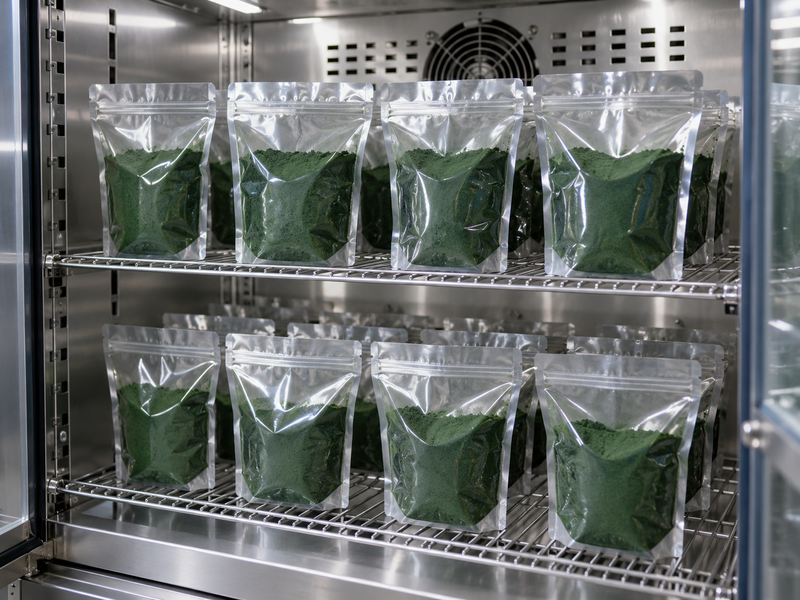
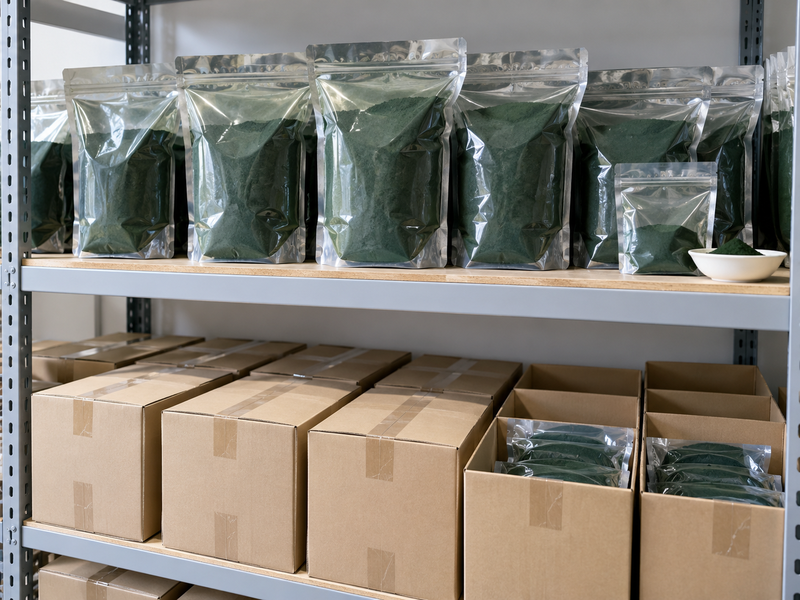
A barrier claim needs a real pack. Ask for the liner, seal, outer pack, food-contact records, and storage tests behind stated shelf life. Film test data can help. However, seams, folds, and holes decide how the filled bag performs. A sturdy carton guards against knocks yet may let vapor pass. Also, check that pallet wrap does not trap water against cartons.
Trial the exact fill and pack size. For example, a small pouch may differ from a 25-kilogram bag held for months. Record seal checks and note any desiccant. Also, decide how staff will spot a torn seal at receipt. Keep loose desiccant away from food unless the pack system allows it. The supplier should name each pack revision. Then a cheaper liner cannot replace a proven one without review. Compare each proposal against your remaining-shelf-life requirement.
| Pack element | Buyer evidence | Failure to watch |
|---|---|---|
| Inner barrier | Material and seal specification | Moisture ingress |
| Outer pack | Carton or drum construction | Puncture and crushing |
| Pallet wrap | Approved loading pattern | Trapped wetness or damage |
3. How should storage conditions be set?
Use product evidence and local building data
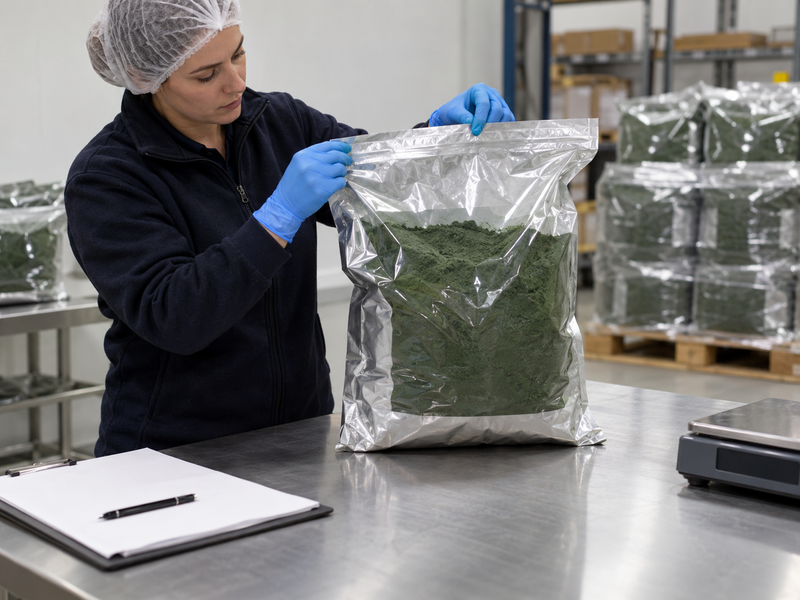
There is no magic RH number. Set a room target using shelf tests, pack data, and site records. Then set a normal range and an alarm point. Track heat as well. Warm air meeting a cold wall can leave water on the surface. Assign a person who can act on an alarm that day. Also, keep packs off floors and away from walls, pipes, wash areas, and open doors.
Separate sealed stock from packs staged for use. A sealed bag may bear a brief damp spell that harms an open bag. However, check pack evidence before making that call. For example, a pallet beside a dock door may face far more wet air than stock deeper in the room. Map that difference before setting one alarm for the whole site. The Codex hygiene text calls for storage that protects food from harm. It gives no single humidity target for spirulina. Your site plan should name the room limits, check times, staff response, and records for your grade and pack.
4. Where should humidity be measured?
Map problem zones instead of trusting one display
The wall sensor may miss the dock. Map the room during wet months and busy shifts. For example, place checked sensors near doors, high racks, cold walls, air returns, and bag-opening areas. A central screen may look steady while cartons by the dock face repeated damp spells. Also, log heat with humidity; both help explain water on a cold surface. Check sensor clocks so an alarm can be matched with a delivery or open door.
Review trends, not just alarms. For instance, short morning spikes may point to a door or fan problem. Set sensor check dates and keep the records your quality plan needs. If a monitor fails, note when its data became unreliable and which stock may be affected. Then use a spare meter to check the area and fix the cause. The aim is to learn what conditions the packs faced each day.
| Monitoring point | Why it matters | Action clue |
|---|---|---|
| Loading door | Outdoor air and rain | Delay unloading or protect packs |
| Storage rack | Long holding period | Review exposure trend |
| Open-pack station | Direct powder contact | Shorten staging time |
5. How should deliveries move through a loading dock?
Protect packs during the highest-exposure minutes
A dry warehouse starts at receipt. Check the truck, pallet wrap, wet cartons, seals, and water drops before moving stock. If a cold container reaches warm damp air, plan its opening before exposing inner packs. Meanwhile, keep goods under cover during rain and move them off the dock soon. Record wet or damaged cartons apart from sound stock. Do not spread suspect packs across storage racks.
Check shipping terms so each party knows who handles a wet-load claim. The Codex food-hygiene code covers safe transport and checks of needed conditions. Also, a receipt form should record truck cleanliness, pack condition, lot, and count. The receiving-inspection guide gives the full workflow. Above all, start humidity control before anyone opens a bag.
6. What rules apply after a bag is opened?
Define exposure time, resealing and return to stock
An opened pack faces new risks. State who may open it, where, how much is used, and how staff close the rest. Use a clean food-contact seal and keep the original lot label. Also, mark the open date and an approved use-by period backed by site records or shelf tests. Do not invent one time limit for every bag. Limit repeat openings if they wear the liner or draw in damp air.
If a partial bag returns to stock, keep it apart from sealed packs. Then state whether staff may sample, retest, or use it for a named product. Record room conditions during a long line stop. A tight seal cannot undo earlier damp exposure. Train operators to report lumps, odd smells, or wet-looking powder. Instead of breaking lumps and carrying on, they should place the pack on hold. Make the rule fit real shifts and pauses so staff can follow it.
| Open-pack rule | Record | Why it helps |
|---|---|---|
| Open date and lot | Label on partial pack | Preserves traceability |
| Exposure limit | Time and room condition | Controls moisture uptake |
| Reseal method | Approved closure | Protects remaining powder |
7. How can a buyer detect moisture damage?
Combine inspection with targeted measurements
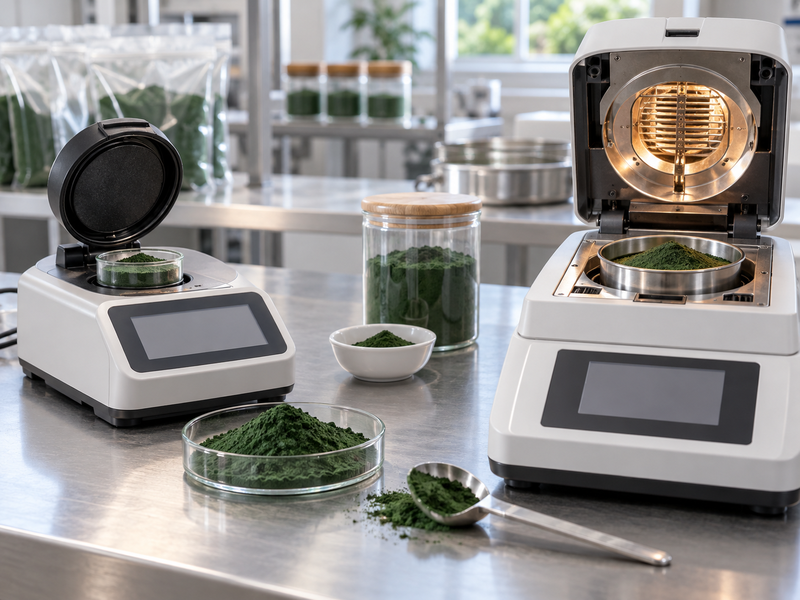
Use your senses carefully. Look for hard lumps, powder stuck to a liner, water marks, wet cartons, bad seals, or an odd smell. Those signs justify a hold. However, they cannot prove that powder is safe or unsafe. Test moisture and, when useful, water activity with sound methods and fair samples. Then compare results with the grade limit and a sealed reference lot. If food safety may be at risk, quality staff should choose the next tests or a disposal path under the hazard plan.
Test a sample from the area that may have got wet. An untouched bag from another pallet cannot clear wet cartons. Also, record pack locations and the time of discovery. Photograph both outer and inner packs before disposal. If protein is reported as received, extra water can lower that value. The dry-basis result may stay much the same. The protein-guarantee guide explains the math. For that reason, moisture needs its own release decision.
8. What should happen after an excursion?
Define affected stock and a documented decision
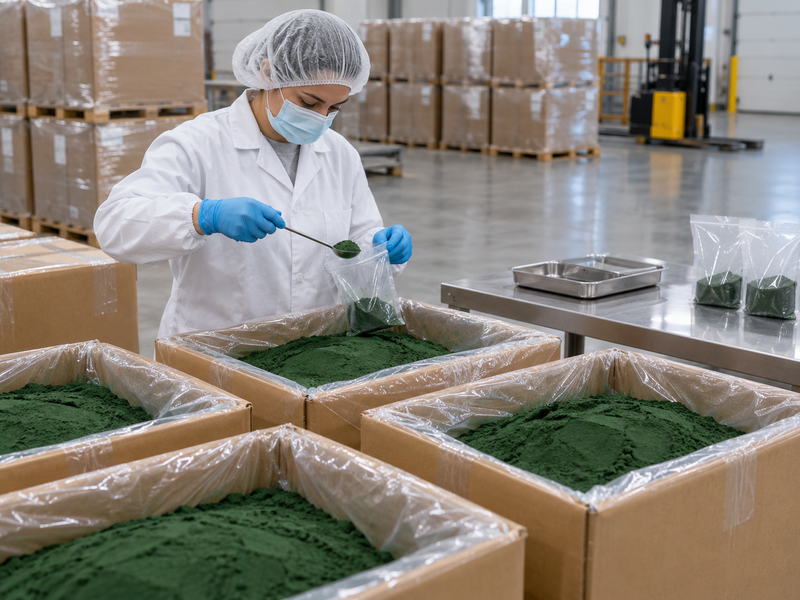
An alarm starts an inquiry. Note how long it lasted, peak readings, sensor place, nearby stock, pack status, and any open bags. Then hold the stock that may have been affected. Keep every lot label intact. Review pack data and what staff saw. Next, decide whether to sample, test, shorten use time, return, or discard stock. A brief damp spell may leave a proven sealed pack sound while harming an open bag in the same room.
Record why quality approved any release. If water may have entered a pack, do not dry powder just to pass a test. Rework needs a safe, approved route with lot records. Also, find the building cause: a failed dryer, open dock door, roof leak, or poor pallet spot. Check later readings to see whether the fix worked. Inform the supplier if its pack may have failed. Keep samples and photos for a fair claim.
| Excursion evidence | Decision use | Owner |
|---|---|---|
| Time and location | Define affected stock | Warehouse |
| Pack integrity | Estimate exposure pathway | Quality |
| Test and trend | Set disposition | Quality lead |
9. How does humidity affect shelf-life planning?
Match shelf-life claims to intended storage
A date assumes conditions. Supplier shelf-life data should name the grade, pack, and storage used in tests. If your warehouse often exceeds those limits, the printed date may no longer guide you well. Ask for shelf-test data on the planned pack and route. Then track time left at receipt and the planned use date. Keep open-pack life apart from sealed-pack life. Even a pallet with ample time left can fail because its liner is torn.
Use first-expiring-first-out where it fits, and avoid holding bulk powder until the last day. Also, plan use around QA release time rather than the printed date alone. The remaining-shelf-life guide gives a buying calculation. A damp spell may call for earlier use, more tests, or rejection. Quality staff should base that choice on evidence. They should not simply print a new date. Meanwhile, planners should check how much stock will remain after each planned production run. That view helps them act before a date problem becomes a write-off.
10. What belongs in a supplier and warehouse agreement?
Make packaging and exposure responsibilities explicit
Write controls that staff can follow. The supplier spec should name the liner, seal, outer pack, pallet layout, shelf-life basis, and shipping rules. The warehouse plan should name room limits, sensor spots, checks, dock handling, open-bag rules, and record storage. Also, decide who checks damage found at receipt and who gets the photos. A change to bag film or seal tools should trigger notice before shipment.
Review the agreement with warehouse and line staff as well as quality and buyers. For example, ask them to walk through a rainy delivery and a stopped shift. If they need a phone call to find a hidden rule, fix the plan. Good spirulina wholesale warehouse humidity control shows up in sound packs, clear logs, and fast decisions. It protects usable stock without setting room numbers that lack product support.
| Agreement area | State in writing | Proof of use |
|---|---|---|
| Packaging | Material and seal revision | Incoming pack check |
| Warehouse | Monitoring and action levels | Trend and alarm records |
| Open packs | Exposure and closure rule | Partial-pack label |
Closing recommendation
Spirulina wholesale warehouse humidity control begins with a qualified barrier pack and continues through the dock, storage rack, and open-bag station. Set conditions from your product evidence, monitor trouble spots, and document excursions. Ask your supplier for pack and shelf-life support before the next order. Your production team will have fewer surprises when powder reaches the hopper.
FAQ
Q1: Is one relative-humidity limit suitable for every spirulina warehouse? No. Use product, pack, climate, and stability evidence to set site limits.
Q2: Does an outer carton provide a moisture barrier? It may protect against physical damage; confirm vapor protection from the complete inner pack.
Q3: Can a visibly dry bag still have a moisture problem? Yes. Packaging integrity and measured moisture may reveal changes that are not obvious outside.
Q4: Should an opened bag return to normal stock? Only under a controlled partial-pack procedure with traceability and exposure limits.
Q5: Does a humidity excursion automatically mean rejection? No. Quality should assess duration, pack condition, exposure, testing, and product evidence.