
A spirulina wholesale quality agreement is a written allocation of quality duties between a whole-biomass supplier and buyer. For example, without one, both sides may assume the other tests a contaminant, keeps a retain, or reports a process change. As a result, those gaps become visible during a complaint or recall, when time matters. This guide turns the agreement into a working set of responsibilities. FDA dietary supplement CGMP guidance explains that contracting work does not erase duties applicable to covered operations; use the requirements relevant to your product and market.
Contents
- What does a quality agreement cover?
- Who owns product specifications and testing?
- Who releases each production and receiving lot?
- How should changes be reported and approved?
- What records and retained samples are needed?
- How should deviations and out-of-spec results move?
- Who handles complaints and traceability events?
- How are audits and subcontractors managed?
- Where should quality and commercial terms meet?
- How can the agreement stay current?
1. What does a quality agreement cover?
Name products, sites, roles and boundaries
Start with scope. For example, identify whole Arthrospira biomass grades, physical forms, pack configurations, cultivation and processing sites, seller and buyer legal entities, and intended markets. If the same supplier also sells blue phycocyanin extract, keep it outside this agreement unless specifically added with its own specifications. Also, list services such as cultivation, drying, milling, testing, packing, warehousing, and export. A party that merely invoices may not perform any of those operations, yet it must know how to get reliable information from whoever does.
Then state which agreement controls if it conflicts with a purchase order or technical specification. The quality agreement should set responsibilities and communication, while the commercial contract can set price, volume, freight, and remedies. Avoid copying a drug-manufacturing template wholesale into food supply. Instead, map the actual food or supplement operations. For US dietary supplement businesses, FDA’s CGMP guide gives practical context for contractor and distributor responsibilities. However, local law and customer rules may add different duties.

2. Who owns product specifications and testing?
Assign each attribute a method and decision owner
The same test should not be everyone’s vague job. For example, list identity, moisture, protein if claimed, microbiological criteria, relevant contaminants, physical form, packaging, and any customer-specific limits. For each, state who establishes the limit, who samples, who tests, which method applies, who reviews the result, and who pays for investigation if results conflict. Also, the test list should follow product hazards and intended use; do not paste an unrelated panel from another algae ingredient.
Next, explain when the supplier may issue a COA and when the buyer independently verifies results. If a buyer relies on supplier evidence under an applicable regulatory scheme, document qualification and reconfirmation. FDA’s supplement CGMP guidance describes conditions for reliance on a supplier COA for certain component specifications. It does not make a generic certificate a universal release pass. Also, require actual lot results and method references where appropriate. Refer to the protein-guarantee guide for an example where basis and conversion factor can change the commercial meaning of a reported number.
| Attribute | Supplier duty | Buyer duty |
|---|---|---|
| Identity | Define and document grade | Verify against approved order |
| Lot testing | Sample and report actual results | Review and verify as required |
| Packaging | Use approved configuration | Inspect at receipt |
3. Who releases each production and receiving lot?
Separate factory release from buyer approval
Two releases answer two questions. For example, supplier release confirms a production lot meets its manufacturing specification before dispatch. Buyer release confirms delivered goods meet the purchase requirements after document, physical, and any laboratory checks. Then write who signs each decision and which records are reviewed. Do not let a supplier’s “released” stamp automatically change the buyer’s inventory status. Conversely, a buyer should not ask a supplier to ship a lot it has not formally released.
Also, name the location of quality holds and the process for partial-lot release. A mixed-lot container may have one acceptable and one disputed batch. Meanwhile, track each separately. State who can approve a deviation and whether it applies to one lot or changes the standing specification. If urgent production forces a quick decision, the agreement should still require the needed evidence and documented approval. The receiving-inspection guide maps physical arrival through buyer release. Putting both decisions in writing helps avoid premature use and delayed payment arguments.

4. How should changes be reported and approved?
Define advance notice by impact
A COA may stay unchanged while the process changes. For example, cultivation water source, growing site, drying profile, milling screen, test method, packaging film, and subcontracted laboratory can affect the supplied grade or buyer controls. Then list changes requiring prior written buyer approval and those requiring timely notice. Set an advance period that allows sample testing and line trials, with an urgent safety-change route for situations that cannot wait. Require effective date, affected lots, reason, risk assessment, and supporting data.
However, do not demand approval for every office address typo or administrative correction. A tiered approach keeps meaningful changes visible. The change-notification guide provides detailed triggers and requalification steps. The quality agreement should identify who receives notices, who replies, and what happens if the buyer does not approve before shipment. Silence should not automatically count as acceptance unless both sides explicitly choose that rule and its consequences. Also, preserve the approved version of each process and package for traceability.
| Change tier | Example | Expected action |
|---|---|---|
| High impact | New drying site | Prior review and qualification |
| Medium impact | New test method | Equivalence data and approval |
| Administrative | Contact detail correction | Document update |
5. What records and retained samples are needed?
Make retrieval possible when a lot is challenged
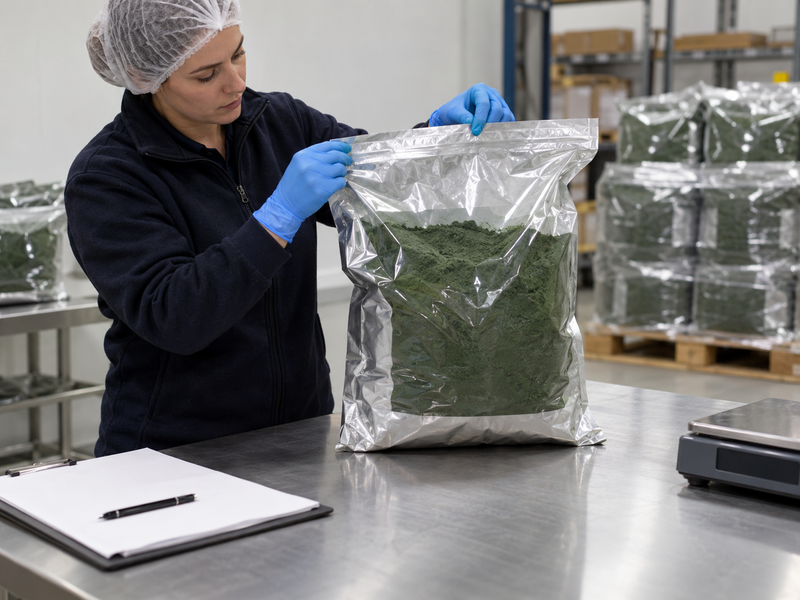
A record is useful only if someone can find it. For example, define the supplier’s batch, cleaning, test, packaging, shipment, and distribution records and the buyer’s receiving, test, use, and customer-trace records. State retention periods based on applicable law, product life, and customer needs. Then agree how quickly a lot history must be supplied during an investigation. Protect legitimate confidential process details while still requiring information needed to assess safety and conformity.
Also, specify retained-sample size, seal, storage, identity, and access. A small dusty jar without a lot label cannot resolve a serious dispute. Consider whether the supplier retains finished packed material and whether the buyer retains a receipt sample. These serve different questions. Codex food hygiene principles emphasize traceability and effective recall systems in food operations. For example, practice a mock lot trace so both sides can produce upstream and downstream links within the agreed time. Retention should support that practical exercise.
6. How should deviations and out-of-spec results move?
Establish notice, containment and disposition clocks
Bad news should not wait for a monthly report. For example, require prompt notice of a failed test, unexpected contamination, breached packaging, missed control point, or shipment that may not match the approved grade. Then state what information the initial notice must contain, how affected lots are identified, and when a fuller investigation follows. Do not insist that the supplier finish root-cause analysis before alerting the buyer to a potential safety issue. Early containment protects both businesses.
Also, define who may hold, rework, retest, reject, or approve an exception. A passing retest does not automatically erase an original failure; investigate sampling and method before disposition. Include escalation contacts for nights and weekends if the supply chain operates then. Instead, tie corrective action to evidence of effectiveness, not just a promise to retrain staff. Commercial costs and credits can sit in the supply contract. Quality staff should retain authority over whether the material may enter production, even when a replacement shipment is expensive.
| Event | Initial notice | Required follow-up |
|---|---|---|
| Out-of-spec lot | Identity and hold status | Investigation and disposition |
| Pack failure | Affected units and photos | Cause and corrective action |
| Data correction | Original and amended report | Reason and approval trail |
7. Who handles complaints and traceability events?
Provide contacts and a two-way information route
A customer complaint may start with a bottle, not a bulk bag. For example, the buyer may receive a finished-product complaint while the supplier holds cultivation and drying records. Then define who investigates what, what samples are shared, and how each side updates the other. Keep customer identities confidential where possible while still supplying enough lot and use data for a meaningful investigation. If a safety concern may affect other customers, set an immediate escalation route and a recall-contact list.
Also, run a mock trace: choose one bulk lot, identify its production inputs and all shipped packs, then identify buyer products that used it. Compare the result with the agreed retrieval time. Meanwhile, include distributor-held stock if the commercial route passes through an intermediary. The Codex hygiene code includes food recall and traceability principles. The agreement should not pretend the supplier alone can manage a buyer’s finished-product recall; each party owns records and decisions within its operation while exchanging needed information quickly.

8. How are audits and subcontractors managed?
Review controls at every critical operation
The sales company may not own the dryer. For example, identify cultivation, drying, milling, packing, testing, and storage subcontractors that affect the grade. Require the supplier to qualify and oversee them. Define what site information, audit summaries, certifications, or remote evidence the buyer may review and under what confidentiality terms. A certificate can support due diligence but may not cover the exact activity, site, or product. Also, record audit findings, corrective actions, and follow-up.
However, avoid unlimited audit language that neither party can operate. Set reasonable notice, frequency based on risk, and access for urgent investigations. If a subcontractor changes, decide whether notice or prior approval applies. For imported food, the FDA FSVP guidance explains risk-based foreign-supplier verification for covered importers. The agreement can make data available, but it cannot transfer an importer’s regulatory program by contract alone. Then check the actual legal role of each party.
| Operation | Evidence to review | Change trigger |
|---|---|---|
| Cultivation | Site and hazard controls | New site or water source |
| Drying/milling | Process and lot records | New equipment or contractor |
| Laboratory | Methods and competence | New method or test site |
9. Where should quality and commercial terms meet?
Keep responsibilities consistent across documents
Contradictory clauses waste time. For example, the quality agreement may say buyer QA must approve deviations while a purchase order lets sales accept substitute grades by email. Then review both documents together. Specify document priority and an amendment route. Quality terms should cover technical decisions and records; commercial terms should cover price, payment, replacement freight, damages, and title. Cross-reference a shared product specification so a revision reaches both teams.
Also, set practical timelines. A five-day claim window for obvious carton damage may work, while an issue discovered during laboratory release may need a different period. Meanwhile, a supplier investigation deadline should reflect complexity and the urgency of containment. Avoid forcing QA to accept a lot because a payment milestone was met. Likewise, establish how disputed stock is stored and who bears costs while evidence is reviewed. The annual-contract guide addresses volume and call-offs; this agreement should keep the grade consistent across those releases.

10. How can the agreement stay current?
Schedule reviews and exercise the procedures
An unsigned template does no work. For example, name document owners, effective date, revision history, and review cadence. Also, revisit the agreement after a serious deviation, new customer market, supplier process change, or repeated receiving problem. Check whether named contacts still work for each company. Run at least a short tabletop scenario: a protein result fails, a liner is wet, or a complaint requires traceability. Can both sides identify contacts and decisions from the text alone?
Then track action items from those exercises. A clause that demands records the supplier does not create should be revised or the missing control established. Quality, purchasing, logistics, and production should all understand the parts they execute. The best spirulina wholesale quality agreement is specific enough to settle an ordinary issue without negotiation and flexible enough to route a new hazard to qualified people. In short, ask your supplier to review a completed responsibility matrix, not a blank form.
| Review trigger | Check | Output |
|---|---|---|
| Annual review | Contacts and methods | Revised signed copy |
| Significant change | Product and process scope | Requalification decision |
| Complaint trend | Response times and records | Corrective action |
Closing recommendation
A spirulina wholesale quality agreement should give every critical quality task one clear owner and a workable information route. Map specifications, release, changes, records, and complaints to the actual supply chain. Review the draft with both quality teams before the next order. Clear responsibilities matter most when a lot is already on hold.
FAQ
Q1: Does a quality agreement replace a purchase contract? No. It handles technical duties; the supply contract should state commercial terms and remedies.
Q2: Can a distributor sign when a factory makes the powder? Yes, if responsibilities and access to factory records are clearly assigned.
Q3: Who approves a lot deviation? Name supplier and buyer quality authorities; scope approval to the affected lot.
Q4: Are audit certificates enough? They help, but check scope, site, activity, and relevant product evidence.
Q5: How often should the agreement be reviewed? Set a planned cycle and revisit it after material changes or recurring problems.