
Spirulina powder wholesale price factors extend beyond the rate per kilogram. A low quote can cost more if it omits testing, sound packaging, import papers, or freight. The powder must also work in your formula. This guide shows how to compare costs for whole dried Arthrospira biomass, not blue extract. For shipment terms, the ICC Incoterms 2020 guidance explains how buyer and seller share costs, risks, and duties.
Contents
- What exactly is being priced?
- How does grade change the quote?
- What does organic certification add to the comparison?
- How do testing and release terms affect cost?
- Why does packaging matter in a bulk price?
- How do volume and contract length change terms?
- What do Incoterms change in landed cost?
- How should defects and usable yield be counted?
- Which hidden services belong in a quote?
- How can buyers compare offers fairly?
1. What exactly is being priced?
Fix the specification before asking for a number
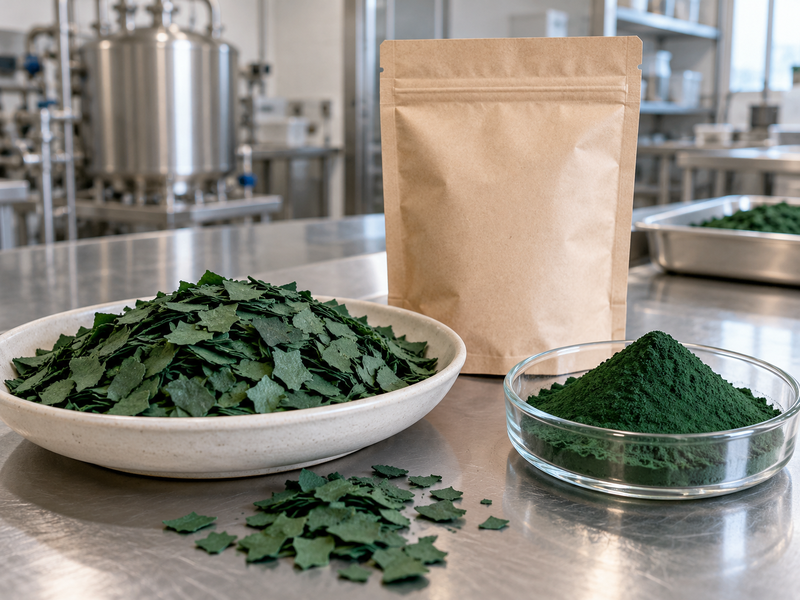
Start with product identity. A whole-biomass green powder, a phycocyanin-rich blue extract, and a carrier-containing blend are not equivalent commodities. Ask every bidder for the same physical form, botanical identity, intended use, target market, pack size, and quality specification. Include protein reporting basis, moisture, particle size, microbial and contaminant criteria where they matter to your process. A quote for a looser grade may appear cheaper because the supplier is not assuming the same rejection risk or testing burden.
Request a current commercial-lot COA and representative sample before treating a number as actionable. The FDA’s dietary supplement CGMP guide explains identity and other component specifications for that product category. It does not establish a universal price premium, but it shows why specification detail has operational value. Avoid comparing one seller’s “organic high-protein food grade” phrase with another’s defined analytical limits. Put technical requirements in a single RFQ revision and make bidders state every exception.
| Quote item | Fix before bidding | Misleading shortcut |
|---|---|---|
| Form | Whole-biomass powder | “Spirulina powder” only |
| Grade | Testable criteria | “Premium” label |
| Market | Destination and use | Generic global claim |
2. How does grade change the quote?
Price the performance you actually need
A grade is a bundle of tolerances. Fine milling, low dust, and a narrow color range can change production cost. So can a tighter protein target or stricter contaminant and microbial limits. Each may reduce usable lot yield. Each requirement should be linked to a real application. A beverage premix may need easy dispersion and steady flavor. In contrast, a tablet line may prize flow and compression. A bakery may accept coarser powder but watch its color after heat. More demanding specifications can increase screening, rework, or rejection cost.
Do not pay for a specification that brings no product benefit. Ask suppliers to quote a base grade and an optional tighter grade against the same test methods. Run a small application trial with sealed representative samples and calculate whether a higher unit cost reduces manufacturing loss or customer complaints. Also ask whether the supplier’s protein percentage is as-sold or dry-basis and which nitrogen factor it uses; nominally superior grades may reflect reporting choices. The goal is cost per usable kilogram under your process, not the most impressive table in a brochure.
3. What does organic certification add to the comparison?
Include the evidence chain and import work
Organic price has a paperwork side. A valid organic offer may involve certified cultivation and handling operations, segregation, traceability, and destination-specific import documents. The USDA organic certification page describes how operations can be certified, while its organic import-certificate page says U.S. organic import shipments need an associated electronic NOP Import Certificate under current rules. Ask who pays for documentation, who requests it, and how the shipment identity is linked to the lot.
An organic certificate does not replace contaminant or microbiology review. If a quote includes an organic premium but the product schedule does not cover the exact whole-biomass SKU, price is premature; clarify scope before signing. For an EU destination, review the current EU organic framework with the importer. Ask whether the seller offers a conventional grade under comparable physical and analytical criteria. That comparison can reveal the commercial cost of certification without treating a logo as a guarantee of batch performance.

| Organic cost item | Confirm | Price implication |
|---|---|---|
| Certified SKU | Current certificate schedule | Avoid invalid premium |
| Segregation | Handling and lot records | Operational cost |
| Import papers | Responsible party | Timing and fee exposure |
4. How do testing and release terms affect cost?
Compare the same analytical burden
A cheap quote can exclude the tests you need. State the analyte panel, methods, reporting limits, sampling plan, laboratory requirements, and frequency in the RFQ. Ask whether cost includes a supplier COA, original independent reports, independent sampling, and retained samples. A bid that uses a generic “pass” line should not be ranked beside one priced for specified microcystin, elemental, microbial, and composition testing. Lab turnaround can also affect working capital if material must remain on hold before dispatch or use.
FDA’s Elemental Analysis Manual and Bacteriological Analytical Manual show the level of method detail possible in food testing. They do not set a common spirulina price. Ask what happens if a lot fails: who pays for retesting, return freight, replacement, and disposal, and whether a referee laboratory is named. A supplier willing to quote a clear quality agreement may offer lower total risk even if its visible unit price is higher.
5. Why does packaging matter in a bulk price?
Price the route and the factory’s handling
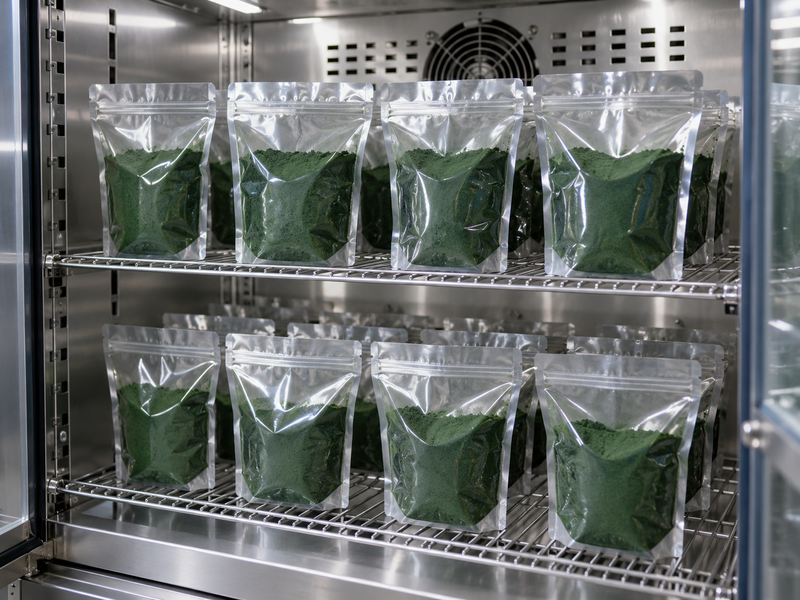
Bags are part of product protection. Compare inner liner material, barrier performance, seal method, net weight, outer container, palletization, and container loading. A thinner pack may lower the quoted kilogram price but increase moisture pickup, caking, punctures, or repacking labor. Ask for pack specifications and a sample of the actual shipping configuration. If your line can only handle 10 kg bags while the quote assumes 25 kg bags, labor and waste belong in the comparison.
The powder’s moisture and water activity should be monitored through the route; the FDA water-activity guide explains why aw relates to available water. A shelf-life claim for one liner may not apply to another. Ask who bears responsibility for condensation, torn sacks, or broken seals under the agreed sales and transport terms. Calculate pallet density and usable net product rather than only nominal bag count. A packaging option that reduces damage may be cheaper after receiving losses and line interruptions are counted.
| Packaging field | Quote detail | Downstream cost |
|---|---|---|
| Liner and seal | Material specification | Damage and shelf life |
| Bag weight | Net kilograms | Handling labor |
| Pallet pattern | Cases per pallet | Freight and storage |
6. How do volume and contract length change terms?
Separate price breaks from supply commitments
A larger MOQ can trap cash. Ask for price tiers at realistic annual demand and call-off sizes, then compare storage cost, shelf-life consumption, and forecast uncertainty. A full-container quote may reduce freight per kilogram but require more stock than your brand can use before its preferred shelf-life window closes. A small pilot order costs more per unit but can validate formula performance and supplier documents before a long contract. Ask how long the supplier will hold a quoted price and whether it can reserve a production window.
Longer agreements should define change control: water source, cultivation site, drying process, pack format, and test laboratory. Ask whether price changes follow an index, currency trigger, or negotiated review; avoid open-ended “subject to market” language. State forecast responsibility and the buyer’s right to reject nonconforming lots. Yet a lower price that permits broad substitutions may erode the grade you validated. Calculate the cost of qualification and inventory alongside the per-kilogram rate. Buyers need flexible supply as well as a competitive number.
7. What do Incoterms change in landed cost?
Compare quotes at the same delivery point
FOB and DDP are different offers. The ICC Incoterms 2020 rules allocate delivery obligations, costs, and risk across named trade terms. Record the exact rule, named place or port, version, cargo-ready date, and what freight, insurance, customs clearance, duties, and local transport the quote includes. Ask your forwarder for independent landed-cost estimates. A unit quote without a named point cannot be fairly compared with a delivered warehouse price.
Incoterms do not settle product quality, payment, or transfer of title. Put those terms in the sale agreement. The ICC introduction explains the delivery, risk, and cost concepts. For a time-sensitive launch, include port delays, sampling hold, and inland transit in the plan. Do not state a current tariff, freight rate, or exchange rate without a dated quotation. Build a worksheet with scenario ranges and update it when an actual shipment is booked.

| Cost layer | Supplier quote? | Buyer estimate? |
|---|---|---|
| Product and packing | Confirm inclusion | Compare base rate |
| International transport | Depends on term | Get forwarder quote |
| Duty and local delivery | Depends on term | Check importer plan |
8. How should defects and usable yield be counted?
Price accepted ingredient, not invoiced kilograms
The denominator can shrink. Receiving loss includes torn bags, moisture damage, nonconforming test results, and powder wasted during handling or screening. Production loss can come from poor dispersion, excess dust, color mismatch, or a formulation that needs a higher inclusion rate to reach the target appearance. Calculate usable kilograms after realistic reject and process losses, using actual pilot data rather than invented industry averages. Add testing, repacking, and rework labor to the cost.
For example, a powder that costs less per kilogram might require more powder per finished serving because its color or sensory effect is weaker in your recipe. The relevant comparison becomes cost per accepted finished unit. Another supplier may offer a higher protein figure that disappears after basis normalization. Document the trial conditions and preserve lot IDs so the pricing model is tied to the material tested. Avoid assuming one lot’s performance predicts every future lot; set a consistency criterion and change-control clause. This is how a technical quality check becomes a commercial decision.
9. Which hidden services belong in a quote?
List deliverables and who owns them
Services consume time and money. Ask which services the seller includes. Examples are formula samples, certificate checks, current specifications, stability data, shipping papers, COAs, lab reports, complaint review, and replacement stock. For organic shipments, clarify import-document responsibility. For private label, separate bulk ingredient cost from OEM services. A quote should state lead time for sample, production, lab release, and transit. If a test failure delays shipment, decide whether the supplier offers a substitute compliant lot and under what conditions.
The buyer also carries internal costs: supplier audit, independent verification, legal label review, warehouse sampling, and launch inventory. These may be justified and should appear in the business case. Avoid paying twice for the same service or assuming a “full service” claim includes everything. Ask for a line-item schedule with exclusions. When bids are close, watch how suppliers answer document requests. Judge the evidence they deliver, not friendly sales language. Keep responsibilities clear enough that a delayed launch has an identifiable owner.
10. How can buyers compare offers fairly?
Build one landed, usable-cost worksheet
Normalize every quote. Start with one approved whole-biomass specification and common quantity, pack, destination, and delivery window. Enter base rate, testing, certification evidence, packaging, freight, import charges, handling, financing, and expected usable yield. Mark unknowns as unknown rather than treating them as zero. Request written clarifications for deviations. Score application performance and documentation separately from price so a low cost cannot conceal a product that fails the line trial.
The Spirulina CN website may be one source of product information, but its public content cannot establish an actual current price, certification scope, or lot performance. Request a dated quote and the offered SKU’s present documents. Recalculate when the Incoterm, freight route, or order volume changes. The final decision should state cost per acceptable kilogram or finished unit and the assumptions behind it. That worksheet gives finance, quality, and operations a common view before a supply contract commits them all.

| Comparison line | Supplier A | Supplier B |
|---|---|---|
| Same approved grade? | Confirm | Confirm |
| Same delivered point? | Normalize | Normalize |
| Same test burden? | Confirm | Confirm |
FAQ
Q1: What is the current wholesale price of spirulina powder? It varies by dated quote, grade, quantity, destination, and terms; request comparable offers rather than relying on an undated figure.
Q2: Is organic powder always more expensive? It may carry certification and control costs, but compare actual quotes with verified scope and identical specifications.
Q3: Should I choose the cheapest per-kilogram quote? Compare landed cost, usable yield, evidence, and formulation performance.
Q4: Why state an Incoterm and named place? They define which delivery, cost, and risk obligations each party accepts.
Q5: Do test costs belong in the quote? Yes. State which panel, laboratory, sampling, and retest obligations are included.
Spirulina powder wholesale price becomes meaningful only after product, quality, and delivery terms match. Build a common RFQ, verify documents and samples, then calculate landed cost per usable kilogram. Ask suppliers to itemize assumptions with their next quote. A transparent offer can save more than a low headline rate that shifts cost and risk downstream.